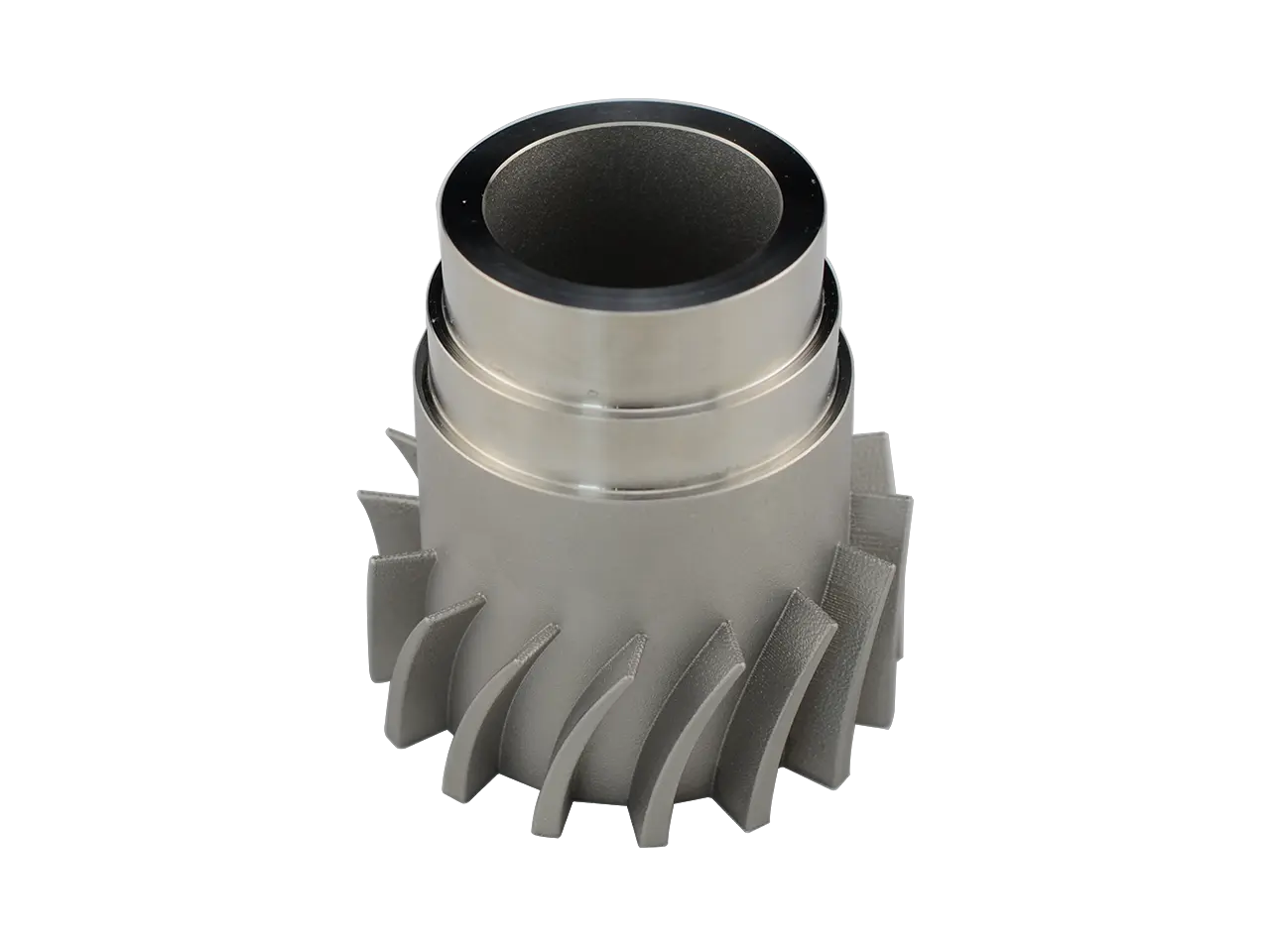
Unleashing innovation: The rise of 3D printed tube clamps
For decades, pipe clamps have been a modest workhorse in the industry from construction and manufacturing to aerospace and energy. These basic components secure the pipes, route critical fluids and provide important structural support. Traditionally, manufactured by subtraction methods such as CNC machining or casting, the production of pipe clamps often involves limitations of design complexity, lead time and cost-effectiveness, especially for custom or low volume requirements. Enter 3D Printing (Additive Manufacturing – AM)game-changing, has changed how we conceptualize, design and manufacture these critical fixtures. There is a revolution in which 3D printed tube clamps are leading.
Beyond Metals and Plastics: Advantages of 3D Printed Tube Clips
Steering pipe clamp additive manufacturing unlocks a set of powerful benefits:
- Unrivaled design freedom: Complex geometry – integrated cooling internal channels, weight-reducing lattice structures without sacrificing strength, organic shapes to optimize load distribution or complex mounting features – becomes possible. AM is built layer by layer, unleashing designers from the limitations of traditional tools and machining paths.
- Complex merge: Now, components previously composed of multiple individually manufactured components (base, fixture, bolts, gaskets) can now be printed as a single integrated unit. This eliminates assembly time, reduces potential failure points and enhances overall part integrity.
- Rapid prototype and iteration: Develop and test fixture designs at unprecedented speeds. The concept of physical verification can occur within a few days, speeding up the development cycle and allowing design optimization before mass production is committed.
- Customized and on-demand production: Easily tailor-made fixtures to suit specific pipe diameters, pressure levels, environmental conditions (heat, corrosion) or unique installation constraints, this is perfect for traditional systems, niche applications or custom engineering solutions. When you need it, produce exactly what you need without the expensive minimum order quantity.
- Performance optimization: Engineering materials and structures to meet the exact requirements. Create lightweight components that are critical to aerospace, use strong and low-density alloys or design fixtures with strategically placed materials only where strength is required. Combine the cooling channel around the tube that directly enters the fixture.
- Reduce material waste: Unlike subtractive manufacturing with subtracted materials, AM is efficient using only the materials needed to build parts. This is both cost-effective and environmentally beneficial.
Powerful country in materials and technology: manufacturing powerful functional fixtures
3D printing is not limited to plastic. For demanding pipe clamp applications, especially in high pressure, high temperature or corrosive environments The metal additive manufacturing industry ruled supremely.
- Leading technology: Selective laser melting (SLM) It is the preferred process for producing fully dense high-strength metal tube clamps. High power lasers selectively fuse fine metal powder particles layer by layer to create powerful components with mechanical properties, usually comparable to or even surpass traditional forging materials.
- Material versatility: SLM handles various engineering metals:
- Stainless steel (e.g., 316L, 17-4 pH): Excellent corrosion resistance and good mechanical strength. Ideal for harsh chemical or marine environments.
- Titanium alloys (for example, Ti-6al-4V): Unrivaled strength to weight ratio and special corrosion resistance, ideal for aerospace and medical applications.
- Aluminum alloy (e.g., Alsi10mg): Lightweight solution with good thermal performance for less required structural loads.
- Nickel alloys (e.g., Inconel 625/718): For extreme temperatures, high pressure environments and high-quality corrosion.
- Tool Steel: For applications that require excellent hardness and wear resistance.
- In addition to printing – Organize touch: Original 3D printed parts often require post-processing to meet the final specification. This can include:
- Support removal: Carefully remove the temporary support structure used during the printing process.
- Pressure relief/annealing: Heat treatment is used to relieve internal stress inherent in the AM process.
- Hot isostatic pressure (hook): In order to eliminate residual porosity and enhance fatigue life in areas that are critical to aerospace.
- Surface finish: Process, grind, polish, bead blasting or specialized coatings to achieve the desired surface roughness, dimensional tolerances and aesthetics.
Design for enhanced success: Key considerations
Maximizing the benefits of 3D printed tube clamps requires the design of additive manufacturing (DFAM):
- direction: Positioning parts on the build board significantly affects strength, finish, support requirements and build time. Optimal orientation minimizes support to the critical surface and favorably aligns the construction direction with the main load path.
- Self-supported perspective: The design function makes it self-support itself at a specific angle (~45 degrees), thus greatly reducing the need for sacrificial support.
- Merge strategy: Determine subassemblies that can be integrated into a single printed part for performance and assembly gain.
- Hollow and lattice: Maintain structural integrity through finite element analysis (FEA), utilizing internal lattices or hollow structures to save weight while maintaining structural integrity.
- Material selection: Choose the alloy that is best suited for the operating environment (temperature, pressure, corrosion, strength, weight).
- Key postprocessing paths: Consider how surface finishes, dimensional accuracy and heat treatment requirements affect the initial design.
Where innovation captures reality: Applications
3D printed tube clamps have an impact on all areas:
- aerospace: Lightweight, high-strength titanium and nickel alloy clips reduce aircraft weight and optimize fluid systems. Complex custom brackets for routing fuel, hydraulic and environmental control system lines.
- vitality: Custom fixtures for oil and gas pipelines, nuclear facilities and geothermal plants designed to withstand extreme pressure, temperature and corrosive environments. Offshore platform for quick replacement of parts.
- Cars and Racing: Custom brackets for fluid lines in high-performance engines, cooling systems and hydraulic technology with emphasis on weight and space optimization. Develop new concepts quickly.
- Industrial Machinery: Custom installation solutions for complex machinery with limited space or standard fixtures are not suitable. Integrated with sensor mounting points.
- Chemical treatment: Highly corrosion-resistant stainless steel or nickel alloy clips for handling aggressive chemicals.
- Ocean and Offshore: Non-corrosive devices for seawater systems and deck ducts.
- Medical Gas System: Clean, customized hospital piping system fixtures.
Realizing the Potential: Case Study
challenge: Manufacturers of dedicated CNC machines require custom pipe clamps to route cooling lines very close to the machine frame in areas with limited space, where standard off-the-shelf clamps are too large. The environment involves exposure to coolant sprays and requires good corrosion resistance.
Solution: Greatlight collaborated on design, using DFAM principles to create a single piece stainless steel (316L) bracket, and combines:
- The optimized geometry closely matches the machine frame.
- Robust pipe integrated fixture functionality.
- Drainage channel to prevent coolant pools.
- Strategically stiff ribs while minimizing overall weight.
- SLM production ensures high strength and corrosion resistance.
result: One-piece 3D printed fixtures provide perfect fit, improved stiffness and enhanced resistance to the environment. After receiving the design, production time is cut to less than one week, eliminating the need for complex tools. Great Rapid prototyping and powerful SLM capabilities provide a high-performance solution that is insufficient in traditional methods.
in conclusion
3D printed tube clamps represent not only another manufacturing method; they represent a fundamental shift in component design and supply chain agility. Utilizing the power of technologies like SLM unlocks unprecedented customization, complexity, weight loss and lead time compression. From rapid prototyping of novel concepts to the production of end-use parts for extreme environments, additive manufacturing has proven to be the future of pipe fixture solutions.
For projects requiring high performance, it is crucial to work with industrial additive manufacturing experts. The company likes it Greattheir advanced SLM 3D Printerrich material expertise and comprehensive One-stop post-processing functionenabling engineers to make full use of AM’s benefits. GRESTLIGHT is good at Solve complex rapid prototyping challenges and effectively deliver customized precise parts at competitive prices. They are the leadership China Rapid Prototyping Companyready to turn your innovative fixture design into a tangible reality.
FAQ: 3D printed tube clamps
-
Are 3D printed metal tube clamps strong enough?
Absolutely. When produced using industrial grade technologies such as SLM/SLS with suitable alloys (stainless steel, titanium, inconel), the mechanical properties may conform to or exceed the mechanical properties of conventionally manufactured counterparts. Strength depends to a large extent on material selection, design optimization and process parameters.
-
How does the cost compare to traditional manufacturing?
For high-complexity designs, custom geometry or low to medium production volumes, 3D printing often proves cost-competitive and even cheaper. It eliminates expensive tools and minimizes waste of material. While the cost per kilogram of material may be higher, the overall value equation (degree of design freedom, lead time, integration) often favors AM. For a lot of simple designs, traditional methods may still be cheaper Each section.
-
Do 3D printed fixtures require special design precautions?
Yes. Success depends on the design of additive manufacturing (DFAM). This involves optimizing directions, minimizing support, utilizing lattice structures to reduce weight, designing self-support angles, and considering post-processing requirements as early as possible. Access to DFAM expertise, e.g. Greatis crucial.
-
What surface finishes can I achieve?
"first aid" Metal parts usually have a slightly rough textured surface (RA ~15-40 microns). However, a wide range of post-processing can be provided:- Temporarily built: Suitable for non-critical surfaces/hidden components.
- Bead blasting/sanding: Smooth surface texture.
- Processing/polishing: Achieve very smooth (low micron RA) surfaces.
- Various coatings (e.g., ni-ptfe, anodizing, passivation): Enhance corrosion resistance or reduce friction.
-
How long does it take to get a custom 3D printed tube clamp?
The lead time is shorter than the tool-related methods. For complex metal clips, digital design approvals have been completed (including post-processing) are generally acceptable 1-3 weeks Providers with providers Greatdepending on design complexity and batch size. Prototypes are even faster. This is compared to weeks or months for casting/mold tools.
-
Can 3D printed fixtures handle high pressure/temperature?
Yes, as long as the correct high performance metal alloy is selected (e.g. Inconel, Titanium, specific tool steel) the part is correctly designed for the load and appropriate post-processing is applied (e.g., heat is pressed – hip hop). AM allows the creation of fixtures designed specifically for extreme services.
- Is there a size limit for 3D printing tube clamps?
Part size is limited by the building rooms of a specific 3D printer. Industrial SLM Machinefor example Greatparts of several hundred millimeters can be built in all directions to suit the most common tube clamp sizes. Large fixtures may need to be assembled or printed in parts designed to be connected.
Explore the future of today’s pipe fixtures. Contact Greatlight to discuss how our advanced 3D printing solutions can bring your projects to life.