Unlocking Innovation: The Final Guide to the Combination of 3D Printer and Scanner
The world of creation and repetition effectively collides with the emergence of 3D printers and scanner combinations. These integrated or complementary settings represent paradigm shifts beyond simple manufacturing to Digital capture, modification and physical copying. Whether you are an engineer, designer, artist, educator or amateur, understanding this powerful pairing is key to unlocking unprecedented creative and functional potential.
Beyond Manufacturing: What exactly is the combination of 3D printers and scanners?
Take this as the core "combination" Refers to the strategic use of both 3D scanner (The physical form of the capture object is digital data) and 3D printer (Turn digital design into physical objects) in the same workflow. While some manufacturers offer integrated all-in-one units, it is more common, it involves the choice of complementary standalone devices.
Why synergy is revolutionary:
- Reverse Engineering and Reproduction: Capture physical parts (gear damage, unique antiques, patient anatomy), create accurate digital models (CAD files), and print replacements, replicas or zoomed versions. This is invaluable for restoring old parts or creating spare parts.
- Customization and personalization: Scan an object (e.g., phone, statue, feet), modify the digital model to your specifications (add text, change shape, resize), and print unique results. Perfect for custom designs, medical orthotics or personalized gifts.
- Prototype and iteration: Quickly scan hand-engraved prototypes or physical models. Use test feedback-based software to perfect the digital model and print the next iteration immediately. This speeds up the huge cycle of design.
- Quality control and inspection: Scan the manufactured parts and compare their digital models to the original CAD design to determine deviations, warpages, or defects beyond the caliper can measure.
- Archive and digital saving: Create digital archives of fragile artifacts, historical objects or biological specimens for research, sharing or future replication without processing the original.
Bringing vision to life: Simplify workflow
Magic happens in a seamless integration of these technologies:
- capture: 3D scanners (using techniques such as structured light, laser triangulation or photogrammetry) capture millions of data points from the surface of the object, resulting in dense "Point cloud."
- process: Dedicated software processes this cloud as a viable 3D mesh model (such as STL or OBJ files). This step usually involves cleaning the noise, filling holes, and aligning the scans.
- Design/Modification: Digital models are imported into CAD or professional grid editing software (such as Blender, Meshmixer, or Zbrush). This is where modification, adaptation or analysis is made.
- Prepare: Modifying the model is imported into the 3D printer’s slice software (Cura, Prusaslicer). Here, the print settings (layer height, fill, support) are configured and the machine description (G code) is generated.
- manufacture: The 3D printer reads the G code and builds the object through layers using the selected material (plastic, resin, or metal).
- (Optional) Post-processing: The printed parts may be subject to cleaning, supporting removal, grinding, curing, painting or other finishing steps.
Choose your power duo: Key factors
Choosing the right scanner and printer pairing is critical to successful results. This is why you need to think carefully:
- Accuracy and resolution:
- scanner: What level of details do you have need? Dental models require micron-scale accuracy; large sculptures may not. Check resolution (point spacing) and volumetric accuracy specifications.
- printer: Layer height (z-resolution) and XY accuracy determine surface smoothness and detail fidelity. Match it with the scanner’s output and your application requirements.
- Scans and object size: Can the scanner handle the size of the object you use (from jewelry to auto parts)? Is the build volume of the printer suitable for scaling or modified scans?
- speed: How fast do you need to capture and process scans? How long are you willing to wait for printing? Speed usually goes against solutions and costs.
- Software compatibility and ease of use: Is the scanner software user-friendly? Does its output format integrate seamlessly with your modeling, slicing and printing software? Avoid workflow bottlenecks.
- Material: What materials does the printer support (PLA, ABS, resin, nylon, metal composite)? Do these meet the functional requirements of the purpose of scanning objects (strength, flexibility, heat resistance, biocompatibility)?
- cost: Consider the total investment: scanner cost, printer cost, software license, materials and post-processing tools. Desktop combo is low ($1K-$5K), and the professional/industrial setup can reach $50K+.
Great Advantages: Metal Prototypes and Excellence Beyond Metals
For those seeking professionals Precision metal parts Data derived from scanned or complex custom designs, working with expert manufacturers can significantly improve the process. This is Great shine.
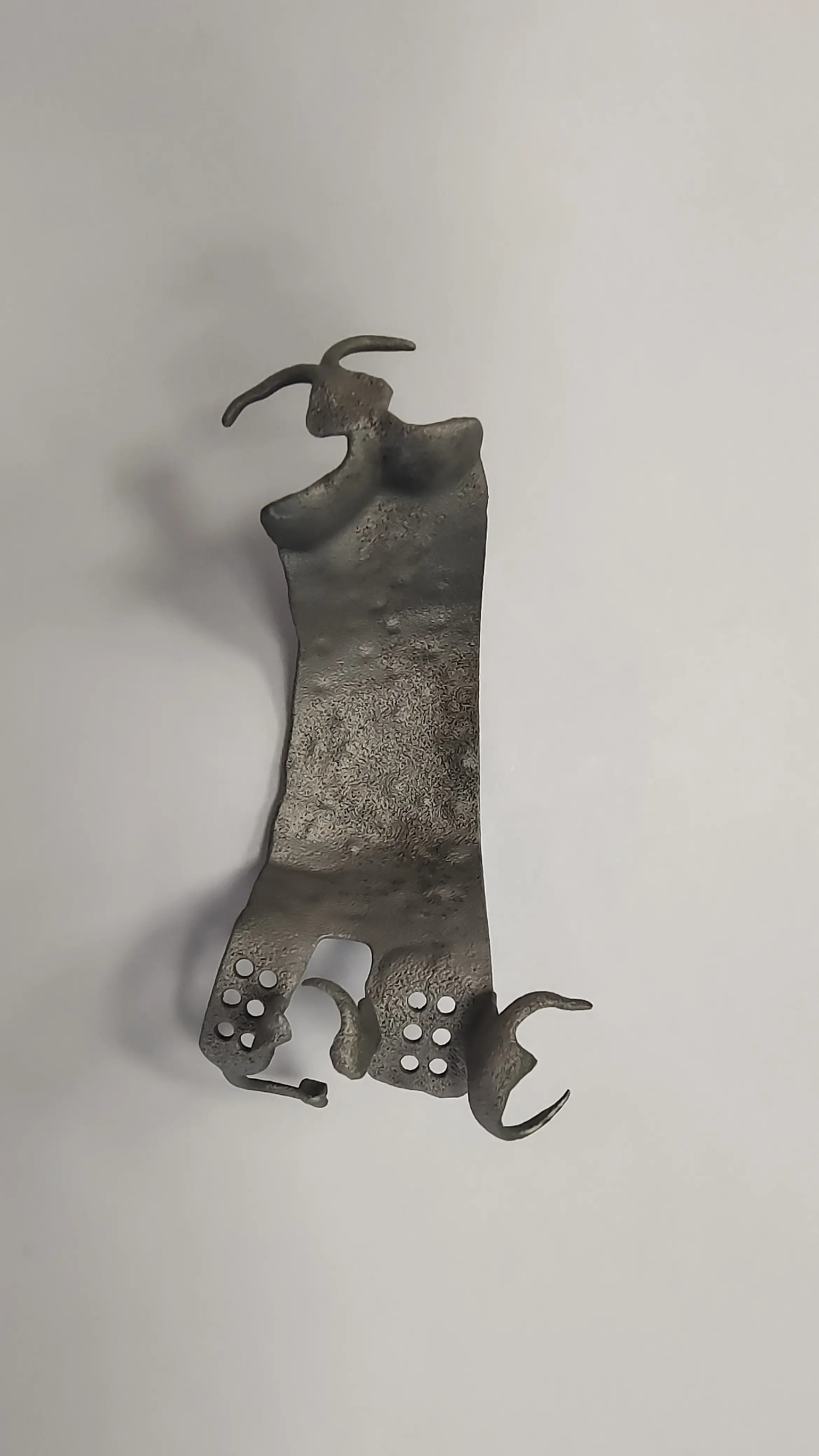
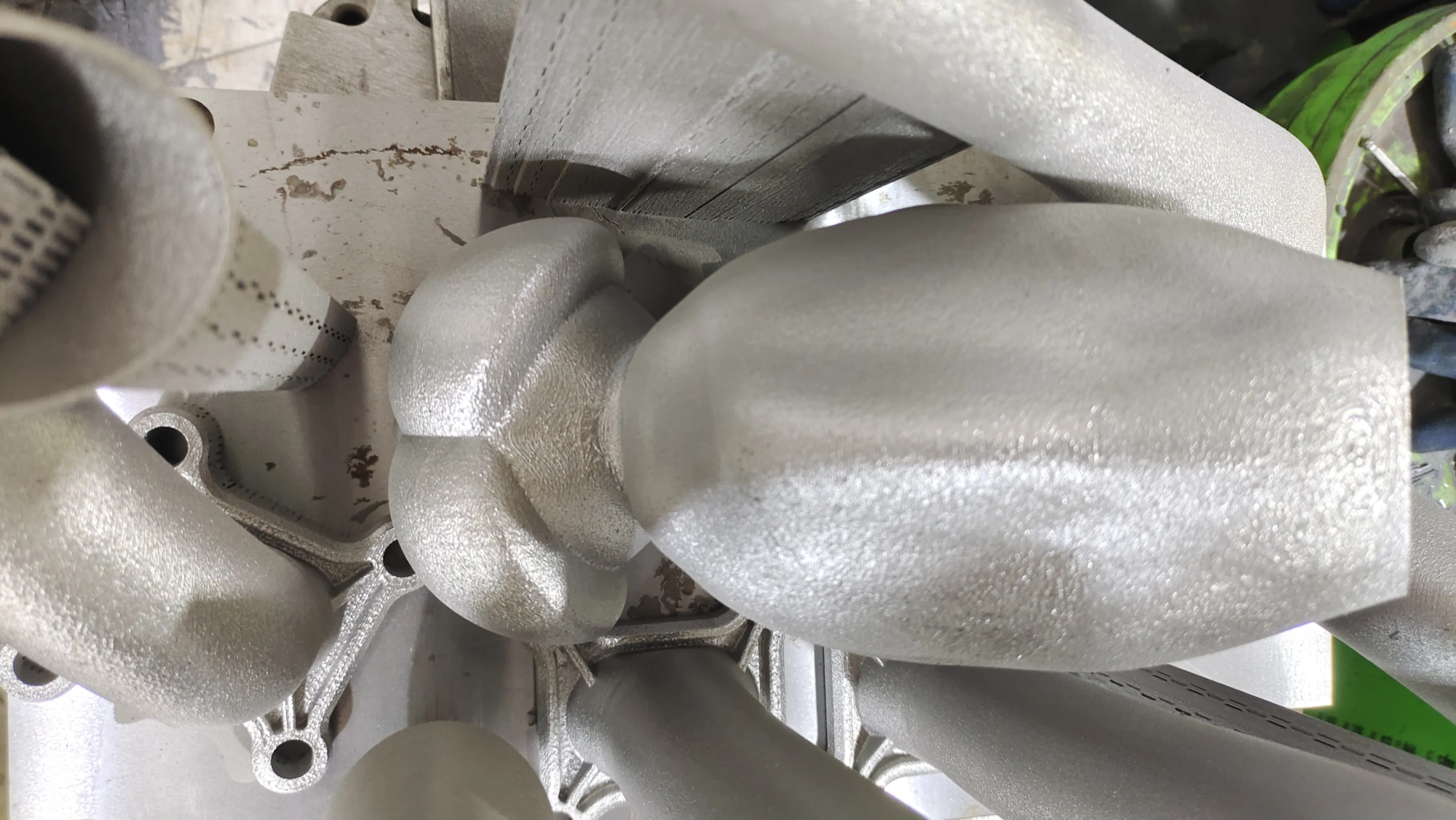
As a leader Professional rapid prototype manufacturerGreglight Leverages’ state-of-the-art SLM (Selective Laser Melting) 3D Printing Technology – A form of metal additive manufacturing is well known for its ability to produce incredibly strong, complex and highly detailed metal components directly from digital models. This allows them to be excellently suited to work on projects derived from 3D scanned data that requires metal reproduction or conversion.
Why consider the greatness of scanning to printed metal projects?
- Advanced SLM expertise: A substantial investment in industrial-grade SLM printers ensures that part composition requires tolerances and material specifications.
- Quickly solve the problem: They specialize in solving complexes Rapid Prototyping Challenge of Metal Parts – Whether it is complex geometry, internal channels, lightweight structures or high strength requirements.
- One-stop post-processing: In addition to printing, GREMLIGHT provides a comprehensive Post-processing and completion of services (Heat treatment, support disassembly, CNC machining, with precise characteristics, polishing, coating) – Functional metal parts are essential.
- Material flexibility: While specializing in metals, they provide Customize and handle various materialsmeet various project needs.
- Commitment to precision and value: Positioned as "One of the best rapid prototyping companies from China, , , , ," They emphasize delivery Custom precision machining and parts Best Price Uncompromising quality.
Whether you are reversing old metal components, creating custom tools through scanned owners, or producing a small number of complex custom parts, Greatlight offers technical expertise and industrial capabilities to convert your 3D scanned data into high-fidelity, functional metal reality. [Include a natural call-to-action depending on where this is posted, e.g., "Explore GreatLight’s capabilities at [Website URL]" or "Contact Greatlight for a quote about your custom metal project"].
Conclusion: Digital Physical Bridges are built
The 3D printer and scanner combination is more than just a tool. They represent the fundamental bridge between the physical world and the digital world. They are able to enable users to capture reality with unlimited creativity or strict engineering, and then return these ideas to tangible forms at unprecedented speed and accessibility.
From accelerating innovation and customization to preserving heritage and solving complex manufacturing problems, applications are huge and growing. While choosing the right equipment and mastering the workflow requires careful consideration, the potential rewards of efficiency, creativity and problem solving are enormous. For metal applications requiring the highest level of accuracy and performance, industrial-grade results are ensured with professional partners such as Greatlight. Embracing this technological synergy is no longer just an option for innovators. This becomes crucial to stay competitive and breaking possible boundaries.
Frequently Asked Questions about 3D Printer and Scanner Combination (FAQ)
-
Q: Can I buy a machine that performs 3D scanning and printing at the same time?
- one: Yes, some manufacturers offer "All-in-one" 3D printer scanner. However, they often involve compromises compared to dedicated equipment. They may have lower scanning resolution/accuracy or limited printing capabilities. Independent, optimal combinations often provide excellent performance for serious applications.
-
Q: What types of objects are difficult or impossible to perform 3D scanning?
- one: Challenges include:
- Highly reflective or transparent surface: These scattered light, confusing scanners. Special sprays can alleviate this.
- Dark or matte black objects: Absorb light, making capture difficult. Spraying helps.
- Objects with thin features or deep cavity: Scanners can be difficult "look." Tags or multiple scans may be required.
- Move object: The scanner needs a stable theme.
- Very large object: Specialized large-capacity scanners or photogrammetry are required.
- one: Challenges include:
-
Q: How accurate is 3D scanners?
- one: Different accuracy hugefrom affordable scanners (0.1mm -1mm) to metrological industrial scanners (microns). Check if the manufacturer specifications have volumetric accuracy and resolution. The expected application determines the level required.
-
Q: I scanned an object and had a model. Can I print it out immediately?
- one: Almost never. Scan the model (grid) usually requires "clean" (remove wandering points, fill holes), and may "repair" (Make sure the grid is watertight/expandable). They may also need to make significant modifications in CAD to function. Preparation is always required in slicing software.
-
Q: Can I scan people or animals?
- one: Yes, a dedicated handheld scanner is perfect for scanning faces, bodies and even pets. However, they require the object to remain very static during the capture process. Structured light scanners are usually most effective for this. Mobile apps are also present, offering convenience but with lower quality.
- Q: Why choose a professional service like Greatlight instead of desktop printing?
- one: for Metal parts Or prototype High precision, strength, temperature resistance, complex geometry or specific certification (e.g., medical, aerospace)professional service is crucial. Greatlight uses industrial grade selective laser melting (SLM) machines that provide certified materials (e.g. titanium, inconel, stainless steel), provides expert design optimization for additives and handles complex post-processing (pressure-tolerant, machining, surface treatment) that desktops cannot match. The desktop option is perfect for plastic or initial concepts in simple resins.