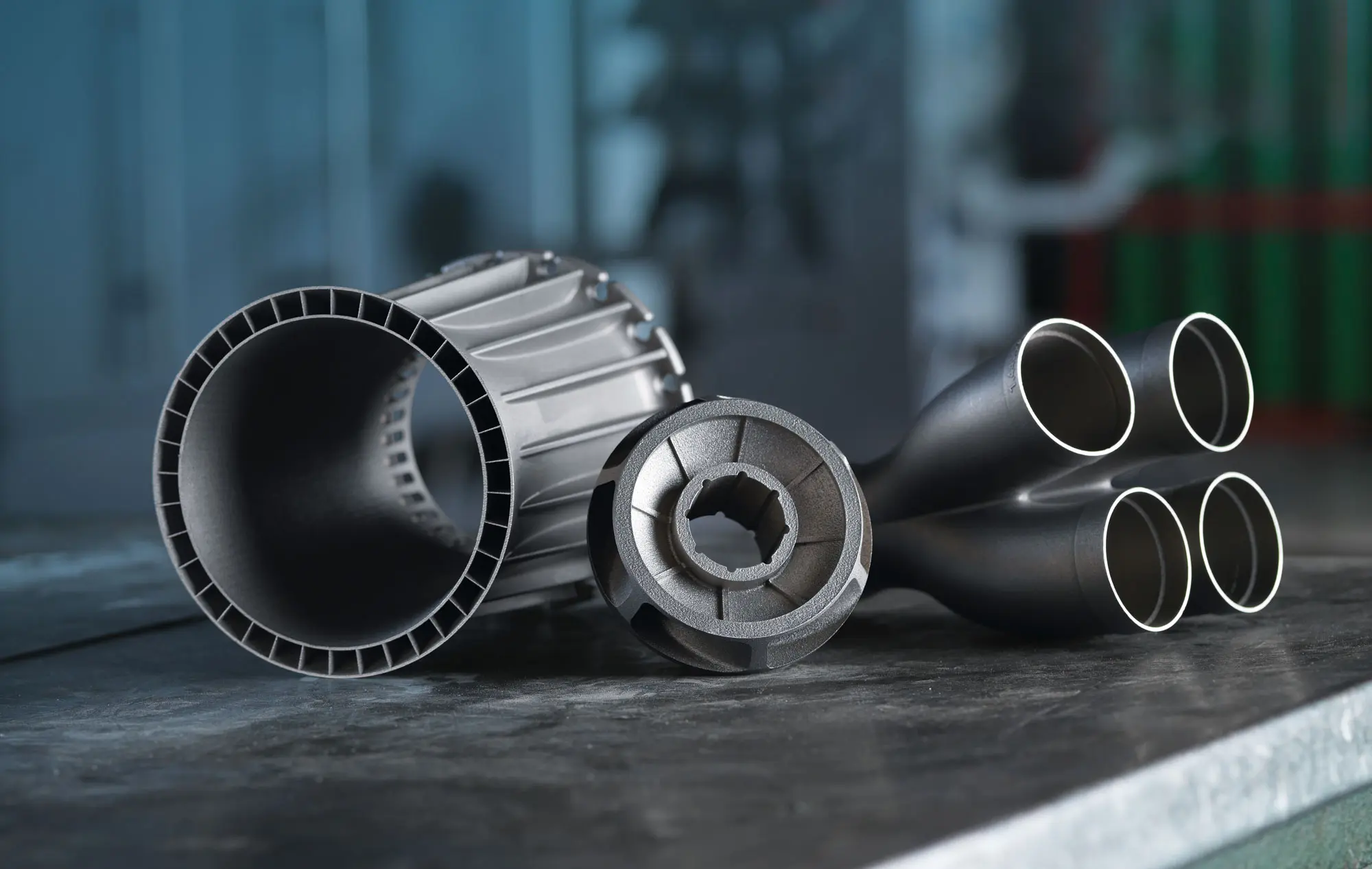
Evolution of Accuracy: Unlocking Multi-Laser Stitching Technology in SLM 3D Printing
The unremitting pursuit of efficiency and quality of metal additive manufacturing drives continuous innovation. The most transformative progress is Multi-laser suture technologycommonly known as "Sew" Technology in a professional SLM (Selective Laser Melting) ecosystem. This complex approach fundamentally changes the construction of high-precision metal parts, thus breaking the boundaries of industries that require complex geometry, strict tolerances and strict mechanical properties.
The precise coordination involved in the core of stitching technology Multiple high-power lasers work simultaneously in a single build room. Unlike a single laser system where a laser scans the entire powder bed in turn, a stitch-enabled printer divides the build area into overlapping areas assigned to a single laser. These lasers work simultaneously, melting the metal powder to build complex parts faster. But the true genius lies not only in parallel processing, but in the perfect integration of the boundaries where these laser zones meet – "Sew" Wire. Ensuring perfect metallurgical bonding, consistent mechanical properties and seamless surface finishes at these junctions are key challenges in defining the success of the technology.
The main features of modern stitching technology
-
Significantly improve productivity and speed: This is the most direct impact. Stitch technology cuts 2, 4, and even more lasers working simultaneously on building a single part or multiple parts within an envelope, Stitch Technology cuts time. The time that once took several days can usually be completed in a few hours, greatly accelerating the prototype cycle and production throughput. For fast prototype experts, this means faster iteration and faster customer time.
-
Uncompromising part quality and consistency:
- Seamless overlap: Advanced algorithms and calibrations ensure accurate thermal management and laser path optimization in the stitching area. This prevents defects such as porosity, rupture, inconsistent melt pools or visible seams, ensuring that the bulk material characteristics of the entire section are kept uniform.
- Top surface finish: Precise laser control minimizes the need for over-post-processing, providing a smoother textured surface even in the stitch area.
- Reduce thermal stress: Distributing heat inputs on multiple lasers can significantly reduce local overheating and associated residual stresses, thereby increasing dimensional accuracy and minimizing warping of complex geometries.
-
Scalability of large and complex parts: Historically, the construction of large numbers of, complex metal components has been historically hampered by settling time and single laser power limitations. Multi-laser sutures can effectively produce larger parts by effectively distributing complex geometries into coordinated laser areas without sacrificing construction integrity or necessary assembly.
-
Material versatility and optimization: Stitching technology is not substance-specific. It effectively deals with a variety of harsh metal alloys that are critical to the aerospace, medical and automotive fields, including titanium (Ti6al4v), aluminum alloys (such as Alsi10mg), various unsatisfactory steels (316L, 17-4PH), Inconel (718, 625) and Colome. Precise thermal control is also beneficial for reactive materials that require strict atmospheric management.
- Best resource utilization: Faster build cycles translate directly into each part to reduce energy consumption. Furthermore, the ability to pack the build chamber more intensively (each part benefits from laser processing simultaneously) can maximize powder utilization and increase overall equipment efficiency.
Application Edge: Empowering rapid prototyping and production capabilities
Suitable for such companies Greatinvesting in an SLM platform equipped with exquisite multi-laser stitching technology, not just buying faster machines; here is about converting service features:
- True rapid prototype: Accelerate the design verification cycle. Receive functional metal prototypes a few days ago, allowing for quicker design and decision-making.
- Complex geometric shapes unlock: Confidently generate complex internal channels, lattice structures, thin walls and organic shapes are integral to advanced applications, knowing that thermal stress is minimized and maintains integrity throughout the build volume.
- Production efficiency: Effectively bridge the gap from prototype to low to medium volume. Stitching technology makes additive manufacturing a viable and economical production route for complex end-use parts.
- Material performance guarantee: Providing consistent, certified mechanical properties parts – critical for aerospace, medical implants and high-performance automotive components.
Improve great advantages
In a crowded market, using cutting-edge tools defines a fast prototype leader. Greatlight’s strategic integration of multi-laser needle SLM technology provides a tangible competitive advantage. Plus:
- Deep material expertise: Understand the behavior of alloys under the added conditions.
- Advanced post-processing: Provides comprehensive finishing (processing, heat treatment, surface polishing, hip joints, paint).
- Design of Additive Manufacturing (DFAM) Insights: Cooperate to optimize the design and performance of the design through AM.
- Speed and customization: Take advantage of stitch speed to quickly turn around and custom solutions.
This comprehensive approach transforms the commitment of multi-laser technology into real-life value to customers (supervised parts) backed by expertise and strict quality assurance.
in conclusion
Multi-laser stitching technology represents a quantum leap in 3D printing of metal SLM. It removes the traditional tradeoffs between speed, part size, geometric complexity, and material integrity. By enabling concurrent work of precise lasers, seamlessly integrate on the build platform, "Sew" Technology can unlock unprecedented production speeds and consistency for demanding metal applications. For organizations that rely on rapid prototypes and precision metal parts, work with service providers equipped with this advanced capability, e.g. Greatis crucial to maintaining the forefront of innovation and achieving tangible competitive advantages through additive manufacturing. This is no longer just an option; it is crucial to breaking through the boundaries that metal AM can be effectively and reliably achieved.
Frequently Asked Questions about Multi-Laser Needle SLM Technology (FAQ)
Q1: Do "Stitch thread" Create a weakness in a part?
one: No, using precise calibration and overlap strategies ensures a complete metallurgical bond between the laser areas, enabling the correctly implemented multi-stimulation stitching technology. Material properties, including tensile strength, fatigue resistance and density, remain uniform and consistent throughout the section and meet strict industry standards. this "Sew" It is invisible in microstructure.
Q2: Is stitching technology only used to build huge parts?
one: While very beneficial for large parts (significantly reducing build time), it is equally beneficial for medium parts and large capacity construction. The key benefit is parallel processing – multiple lasers build different parts or different areas of parts At the same time. This speeds up production regardless of the size of a single part.
Q3: Compared to single-focus SLM printers, is the stitching faster?
one: The velocity gain height depends on the specific part, material, machine configuration (number of lasers), and laser power. But pure scan speed is not the whole story. The benefits usually range from 2 times to 4 times more than 4 times For the same build volume, convert to overnight builds instead of days, or reduce the week-long work to several days.
Question 4: Can stitch technology handle all SLM metal powders?
one: Yes. The design of stitching algorithms and thermal management strategies is impossible for materials. It effectively treats common alloys such as titanium, aluminum, stainless steel, inconels and cobalt chromium without compromising the unique treatment requirements of each chromium. Parameter adjustments are based on the material.
Q5: Print with multiple lasers "Sew" Reduce accuracy?
one: On the contrary, modern stitching techniques emphasize precision. Advanced calibration systems ensure spot alignment (<10 microns) between lasers. Distributed heat input minimizes thermal warping and stress, Enhanced The dimensional accuracy and stability of complex parts compared to single-radio systems with local overheating.
Question 6: Why should I choose a service provider like Greatlime with multi-laser stitch capability?
one: Choosing a partner to this technology ensures:
- Significantly faster turnaround speed: Get prototypes and parts when needed.
- High quality consistency: Proven devices ensure uniformity in even the largest/most complex builds.
- Competitive pricing (each section): Faster builds can be translated into lower energy/labor costs per unit.
- Proven expertise: Providers like Greatlight combine cutting-edge hardware with deep DFAM and material knowledge for optimal results and post-processing. Don’t meet the limitations; take advantage of true rapid manufacturing capabilities.