Navigation of the complexity of 3D printed 9mm suppressors: Laws go deep into diving
The fusion of 3D printing technology and gun accessories is undoubtedly innovative. The idea of making precise components like 9mm suppressors (usually inaccurate, called "Silencer") Have a certain charm at home: customization, fast iteration and perceived cost savings. However, such technological advances exist in strict regulatory legal minefields, especially in the United States. Understanding these laws is crucial for anyone exploring this path. Ignorance is by no means defense, and the consequences of violations are serious.
Understand the core: What is a suppressor?
Suppressors are devices connected to or integrated into the barrel of a gun to reduce noise generated by shooting and visible muzzle flashes. It works by capturing and slowing down the expansion of propellant gas, thereby reducing the intensity of the muzzle explosion. While popular media perpetuate the myth of complete silence, suppressors mainly make shooting safer, unheard and reduce noise pollution- they don’t cause whispers "pfft" The sound is often depicted.
The charm of 3D printing
Additive manufacturing provides unique advantages for prototyping complex geometric shapes:
- Quick iteration: Design changes can be tested quickly without expensive tools.
- Complex internal structure: The baffle stack is critical for suppression and can be printed using complex internal geometries that can be difficult to use.
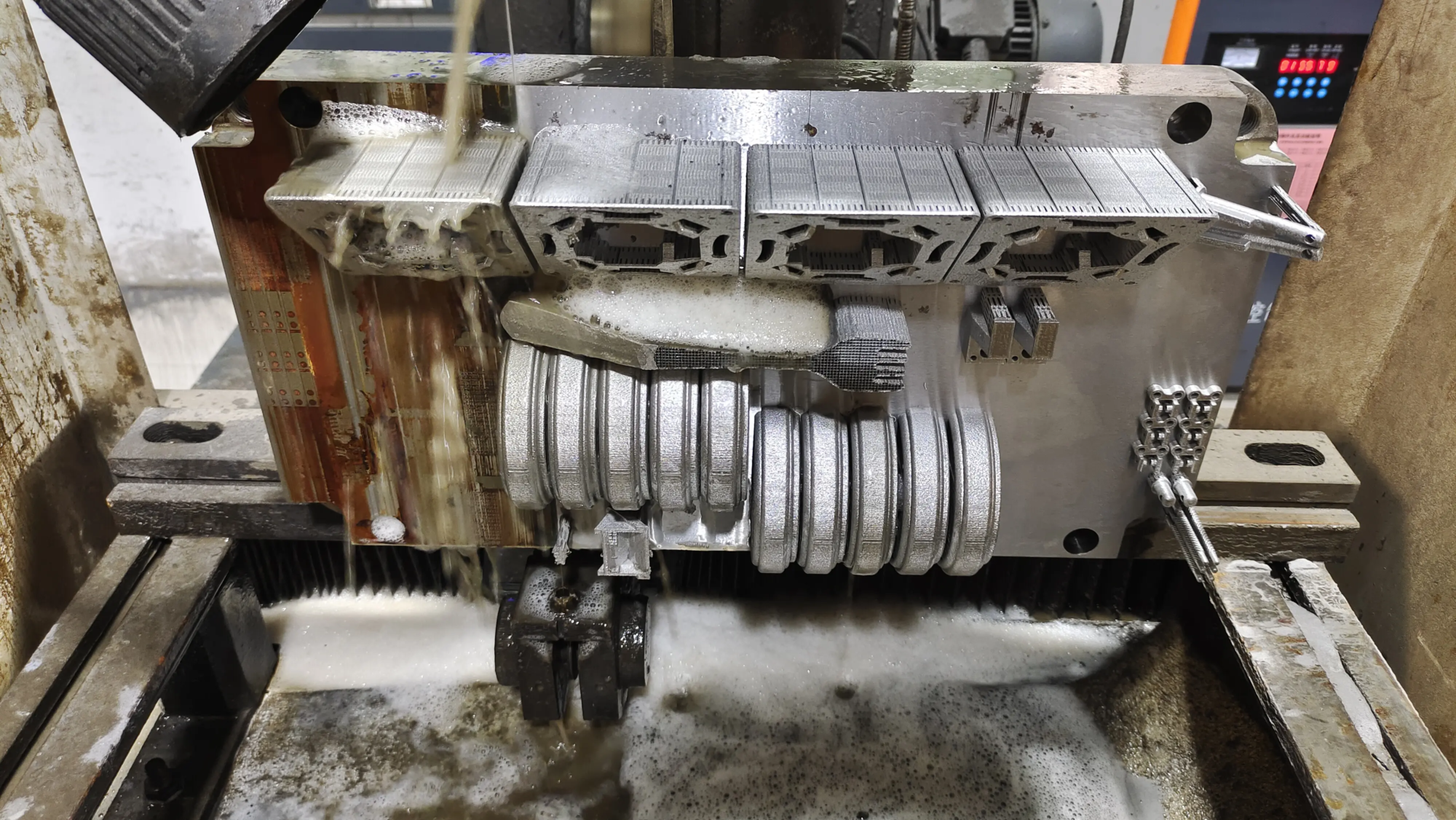
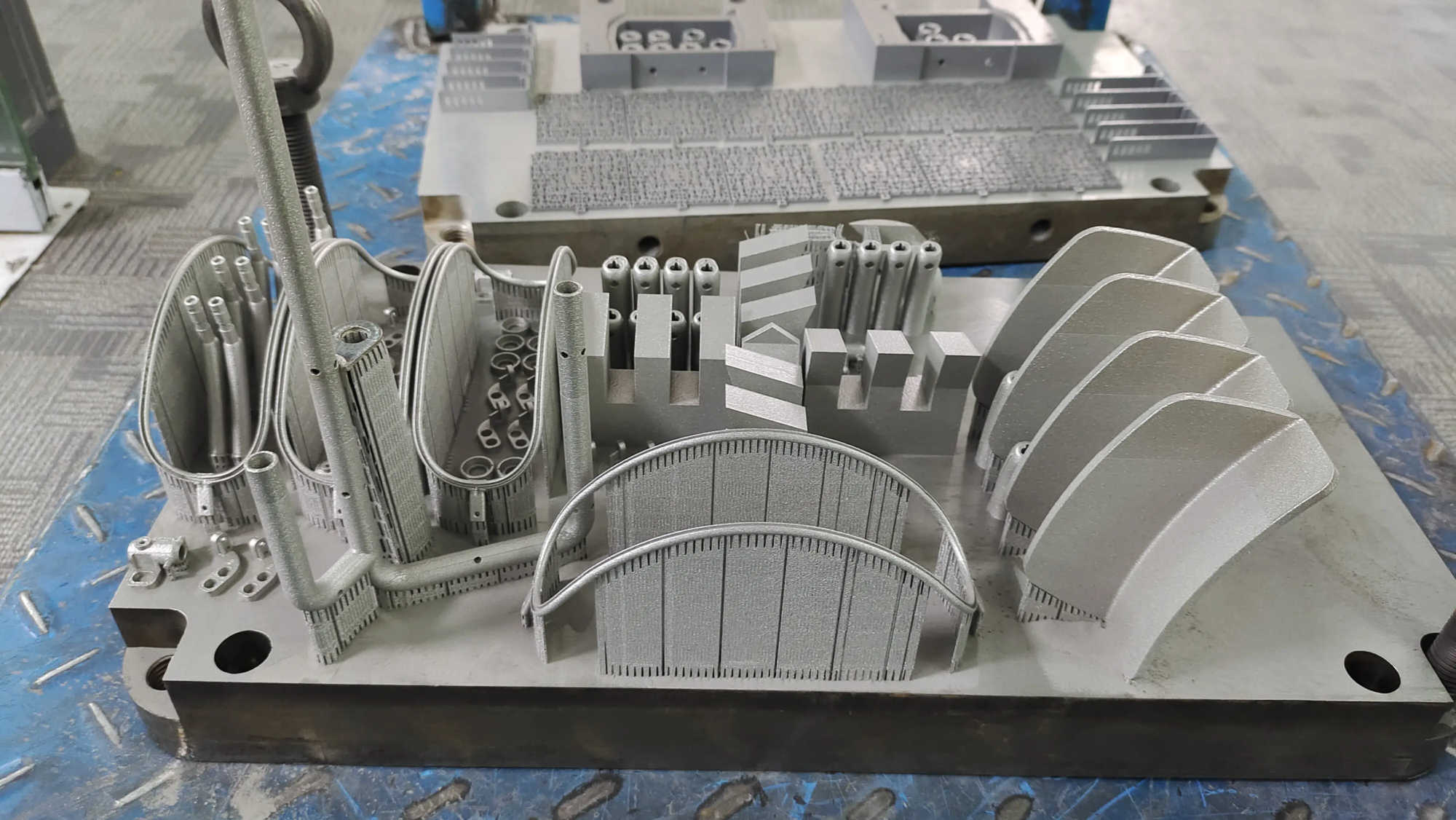
- Material Exploration: From durable plastics (such as high temperature resins or Peek) to advanced metals (stainless steel, titanium, inconel), such as selective laser melting (SLM) or direct metal laser sintering (DMLS), 3D printing allows exploration beyond traditional materials.
- Custom: Design for specific host or performance goals.
The weight of the law: The National Firearms Act (NFA)
This is where the attractive concept collides with strict reality. In the United States, suppressors are regulated The National Firearms Act of 1934 (NFA)supervised by alcohol, tobacco, guns and explosives (ATFs). Main legal points:
- Suppressor is NFA "firearms": Legally, the suppressor itself is classified as a gun under the NFA, whether it is attached to another gun or not. This classification brings strict regulation.
- Registration is required: Each suppressor must be registered with the ATF in the National Gun Registration and Transfer Record (NFRTR). forward It is made.
- Taxes: The manufacture or transfer of the suppressor requires a $200 federal tax voucher. This applies to commercially purchased suppressors and privately manufactured suppressors.
-
Manufacturing requirements: Making NFA guns (including suppressors) requires:
- Approval through ATF Table 1: Create NFA projects for individuals, trust or companies.
- Background check: Performed by fingerprint and FBI background check.
- Chief Law Enforcement Officer (CLEO) Notice: or certification requirements.
- engraving: Once approved, the manufacturer must draw specific identification information on the suppressor in accordance with the ATF regulations (manufacturer’s name, city/state, serial number). This is crucial for homemade equipment.
- Comply with technical specifications: Designs must produce functional suppressors that meet legal definitions; attempting certain designs may inadvertently create unregistered destructive devices.
- State and local laws: The NFA is federal law. Many states and territories have their own radical ban or other restrictions on the possession and manufacture of suppressors. Even with federal stamps, it can be illegal to manufacture or own a suppressor in your jurisdiction (e.g., California, Illinois, New York, Washington, DC). It is absolutely necessary to inspect state and local laws.
3D printing makes legally dangerous compounds
NFA frame control suppressor manufacturing in spite of Methods, 3D printing introduces specific problems:
- Perception of anonymity: The digital nature of 3D printed files can create a false sense that manufacturing can be hidden. The ATF actively investigates and prosecutes illegal manufacturing, including through 3D printing.
- Design Ambiguity: Is printing a single bezel considered a manufacturing suppressor? ATF ruling Even incomplete core components designed to suppress the device can constitute illegal manufacturing. Print prototype "Solvent Trap" Intentionally convert it? It may also be illegal and not registered. Technical drawings or digital files are not regulated only, but the intent to register is key.
- Material Limitation: Many printable plastics lack the durability and heat resistance required for continuous use of suppressors, posing a safety risk. Even printed metal components require advanced printers (such as SLM/DML) and are subject to rigorous post-processing to withstand pressure and heat.
- Quick repetition: The distribution of digital documents for suppressor designs greatly reduces the barriers to global attempts to illegal manufacturing, thus causing rigorous scrutiny from law enforcement and decision makers.
Legal ways to control suppressors
it yes Legally, you can make your own suppressor through ATF approval:
- Submit ATF Table 1: Explain intentions clearly "Production" Suppressor.
- By background check: Fingerprint, photo, background check.
- Pay $200 tax: Send payments with forms or use the Eforms system of ATF.
- Approved Form 1: Do not start manufacturing any parts until the approved tax coupons at hand. It is illegal to have parts with intentions before approval.
- Made and engrave: Build the suppressor according to your design (in state law) and draw the required information correctly.
- Keep the documentation: Always keep your approved form 1 in contact with the suppressor during shipping.
Risk of non-compliance: Not worth it
The penalties for illegally manufacturing, possession or transfer of unregistered suppressors are serious:
- Felony conviction: In federal prison for up to 10 years.
- fine: Up to $10,000.
- Losing civil rights: Including the right to vote and the right to own a gun.
- Asset Confiscation: Confiscated guns and equipment.
Law enforcement agencies attach great importance to NFA violations. The convenience of 3D printing does not prevent prosecution.
Conclusion: Innovation is based on compliance
The potential for 3D printing to rapidly prototyping in gun accessories is huge. However, the manufacturing of functional 9mm suppressors is subject to some strict regulations in the U.S. gun laws – the National Gun Act. While approval through Table 1, the process involves law, personal manufacturing (when permitted by state law), but the process involves meticulous paperwork, substantial costs ($200 stamp + material/time + version), security engineering, and strict compliance with proof of identity requirements.
There is no clear suppressor for 3D printing suppressors, and prior ATF approval is a federal felony with life-changing consequences. Material restrictions and state bans further complicate the landscape.
Responsible Exploration of This Technology in the Requirements of Gun Space The greatest respect for law and security. Consulting with a qualified gun attorney specializing in NFA affairs is always the first step to recommend, even before downloading a design file or starting a print.
The integration of advanced manufacturing and guns requires not only technical skills, but also a firm sense of law. Prioritize compliance; this is the only safe path forward.
FAQs for 3D Printing 9mm Suppressors
-
Q: Is it legal to 3D printing my 9mm pistol suppressor?
one: Only if you have obtained ATF prior approval and paid $200 in tax stamps by applying for approved Form 1 forward You made any part of it. Unregistered manufacturing is a federal felony. -
Q: Can I print it out in plastic?
one: Although technically prototyping, ordinary plastics (such as PLA or ABS) are not usually suitable for functional suppressors due to extreme heat and pressure. Even high temperature resins or engineering plastics often fail. Metal printing (SLM/DML) is the only viable method for durable suppressors that require specialized industrial equipment. Plastic inhibitors also pose a significant safety risk. -
Q: Are solvent traps legal? Can I print one?
one: Solvent Traps are legal equipment if They are strictly used as cleaning tools for manufacturing, selling, selling and use. But, having solvent traps intention Modifying it to a suppressor of Form 1 without approval constitutes an illegal intention to manufacture an NFA project and is illegal. Even if it is called an inhibitor, only parts that are obviously designed only can be printed "trap," It is a huge risk. -
Q: I found a CAD file for a suppressor online. Can I print here?
one: Having digital design files is not illegal in itself. However, convert the design into a feature suppression device that is not approved by the ATF and convert it into the required tax stamps in advance Absolutely illegal. If you continue to make the item illegally, possessing the document alone will not save you from prosecution. -
Q: What information does the home-control suppressor need to be engraved?
one: Once approved by Form 1, the manufacturer (individual, trust or company) must permanently burn the following on the suppressor itself: the name of the manufacturer (or the name of Trust/Corp/Corp), the location of the city and state manufacturing, and the unique serial number. ATF requires size, depth and placement specifications. -
Q: My status allows suppressor ownership, but can I legally print there?
one: State law replaces federal law If more restrictive. Some states that allow ownership of commercial purchase suppressors may have specific restrictions or bans manufacturing They are private. Always verify your specific state and local laws Production NFA programs, not just own. - Q: Can Greatlight print suppressors for me?
one: As a professional rapid prototype manufacturer complies with international and local laws, Greatlime will not manufacture, assist in manufacturing or service the production of unregistered gun components controlled in regulations such as the U.S. NFA or similar frameworks. We focus solely on legal prototypes and production in compliance industries and applications. We strictly screen all projects to ensure compliance with export controls and domestic laws of our customers.
Unlock complex metal parts potential and Greatlight
Navigating complex manufacturing challenges requires expertise and cutting-edge technology. Great Standing at the forefront of rapid prototyping, equipped with the latest Selective laser melting (SLM) Functional and advanced production technology. We specifically address the required metal parts prototype problems for the industries from aerospace to medical equipment.
Our Commitment:
- Precision SLM/DML: Complex geometry, internal channels, lightweight structures? We have achieved the difficulties of traditional methods.
- Material mastery: Handle a variety of metals – from stainless steel (316 liters, 17-4ph) and aluminum alloys to titanium, inconel, etc. Explore custom materials.
- One-stop shop: In addition to printing, we offer comprehensive post-processing – precise CNC machining, delicate finishing (hot spots, hips, surface treatments (such as anodization or coating), inspection and assembly.
- Speed and Agility: Fast turnaround time is our signature to bring functional prototypes and end-use parts into hands faster.
- Problem Solver: Technical challenges are opportunities. Our team excels in delivering manufacturing feedback and innovative solutions for design.
Focusing on precision and quality, Greatlight is always available where it matters. Customize critical metal prototypes and efficiently customize end-use parts at competitive prices.
Ready to transform your vision into a reality of precise design? [Contact GreatLight today to discuss your project requirements.]