Mastering 3D Printing Bed Adhesion: A Flawless First Layer Comprehensive Solution
A stubborn curly corner, a spaghetti mess on the build board or a print that makes the middle Job fall off – these are frustrating signatures for poorly bonded beds. It can be said that this is the most common ic-knocking in FDM/FFF 3D printing, and it is also the bane of amateurs and professionals. Achieve perfection "extrusion" Where plastic encounters is not only convenient; this is crucial for dimension accuracy, preventing distortion, ensuring the integrity of layer bonding, and finalizing the overall printing success. exist GreatAs we push precise boundaries day after day through industrial metal 3D printing (such as our advanced SLM process), we are keenly aware that prints are only as good as their foundation. Let’s dig into practical, effective adhesion repair programs that work in a variety of settings and materials.
Why adhesion fails: core issue
Printing disengagement stems from interactive factors:
- Thermal stress: Materials like ABS shrink greatly when cooled, creating a tensile force to pull the edge upwards (warping).
- Surface energy and pollution: Building surfaces requires high surface energy to attract molten plastic. Oil in the skin, dust or residue can greatly reduce this.
- The first layer of contact difference: Incorrect nozzle height, speed or extrusion can destroy critical material to surface bonds.
- Material characteristics: PLA requirements are different from PETG or foreign filaments such as polycarbonate or nylon. Adhesion of temperature non-conformity wreckage.
- Environmental factors: Drafts can cause uneven cooling; ambient humidity/cold can aggravate distortion and shrinkage.
Your adhesion library: a proven solution
1. Basic Preparation: Cleanliness is Crucial
- Gold Standard: Science supports the power of pure isopropanol (IPA, 90%+). wipe Cold Before each print, lie thoroughly on the bed with a hairless microfiber cloth to remove invisible oil.
- Stubborn residue: For glass or PEI, periodic washing with warm soapy water followed by IPA drying to restore the surface. use Pure Acetone has very little PEI The only one When the responsiveness test confirms that it is safe; over time, it reduces untreated PEI.
- High-tech help: Consider a dedicated adhesion starter cleaner designed specifically for printing beds.
2. Proper bed platform/calibration: Accuracy is important
- Manual adjustments are detailed: use "Paper resistance test" The method is always at all points (including the center on the larger bed). To achieve unity, slight resistance is the key. Not negotiable format (make sure the bed is parallel to the nozzle motion plane).
- Proficient in sensors: The ABL (Automatic Bed) system is a valuable ally, but requires correct Z-offset calibration. Recalibrate the nozzle after recalibration or use the touch table meter to construct the surface variations to make the paper ultimately accurate.
- Visual Verification: Print Peripheral Single Layer Test Mode only and check for gaps, bumps or inconsistencies.
3. Optimized slicer settings: Perfect dial
- The first layer of magic:
- Height and Width: Slightly increase the layer width (eg, nozzle diameter is 200%) for more surface contact. If there is a problem, print one layer slightly thicker than the subsequent layer.
- speed: Critical! drastically reduce the first layer speed (usually 20-50% of the printing speed). Molten plastic takes time to blend.
- Temperature increase: Set the bed temperature of the first layer to 5-10°C above the standard. Nozzle temperature can also benefit from slight initial dents in materials such as PETG/nylon.
- Fans Close: Use the part cooling fan for the first 2-5 layers of disability to prevent rapid curing and shrinking before the adhesion set.
4. Build surface selection and enhancement: tacks with release
Strategically select surfaces and adopt AIDS:
- PEI (Flex): Excellent adhesion for PLA, ABS, ASA, PETG (although PETG may require a gentle release agent such as a glue stick to prevent excessive adhesion/adhesion too well). Clean carefully with IPA for optimal grip. Prone to scratches. Greglight’s engineering team prefers textured PEI, which can be quickly released in the interior to prototype the surface.
- Glass (borosilicate>Standard): Provides original, smooth bottom layer. While warm, the PLA is very good. It is crucial to use adhesives such as glue or hair spray. Heat assists and even heats up, but preheating time is required. The potential of debris.
- buildtak/vollersurf/various paints: Textured or coating solutions provide high bonding "Use out of the box." Easy to apply/replace. Follow the manufacturer’s cleaning/using guidelines.
- Functional adhesion promoter:
- Glue stick (based on PVA): Cost-effective, create consistent barriers and have excellent nails. Messy, needing regular renewal.
- Hair Spray (Aqua Net Extra Hold Type): Provides cheesy, durable layers. Apply the light coat to a warm bed to distribute evenly. Pay attention to residues or visibility optics in the printer.
- Magigoo and Synthetics: Specially designed adhesives that provide specific adhesive/release curves that are adjusted for material type (e.g., adhesion of fanatic materials with ease of release of PETG). If maintained by instructions, the edge holding and clean release performance is maintained.
- Painter’s tape (blue tape): The PLA in the bed in question is accessible and valid. Create a micro-textured surface. A layer of overlap and replacement is required after several printings. Poor effects are made for materials requiring higher bed temperatures.
5. Advanced Structural Strategy: Including Warp
- edge: 5-20+ lines enclose the object on the first level. The anchoring edge greatly increases the surface contact area. Preferred for planar objects or stability enhancement. Easy to delete.
- raft: A complete sacrificial lattice is printed under the object. Excellent adhesion guarantees and lifts the twist force, ideal for complex bottom geometries or highly curved materials such as ABS/Nylon. Use more material/time; bottom surface texture requires post-treatment. Greatlight is essential for complex metal additive construction.
- Mouse ears: Small isolated discs are optionally added to sharp corners in slicer software. Provides local reinforcement without the need for comprehensiveness.
- Case Advantages: ABS, ASA, PC is absolutely required. Maintain an elevated ambient temperature to greatly reduce thermal gradients and stresses. It is crucial for large prints or uncontrolled environments.
Accuracy beyond prototypes: Complex solutions collaboration
Implementing a reliable bed adhesive means your mastery of core additive manufacturing principles – understand materials science, temperature dynamics and interface chemistry. But engineering-level verification requires extremely high tolerance metal components or complex multi-material versions? Such accuracy requires special infrastructure, tight process control, and high-temperature powder bed fusion systems such as SLM.
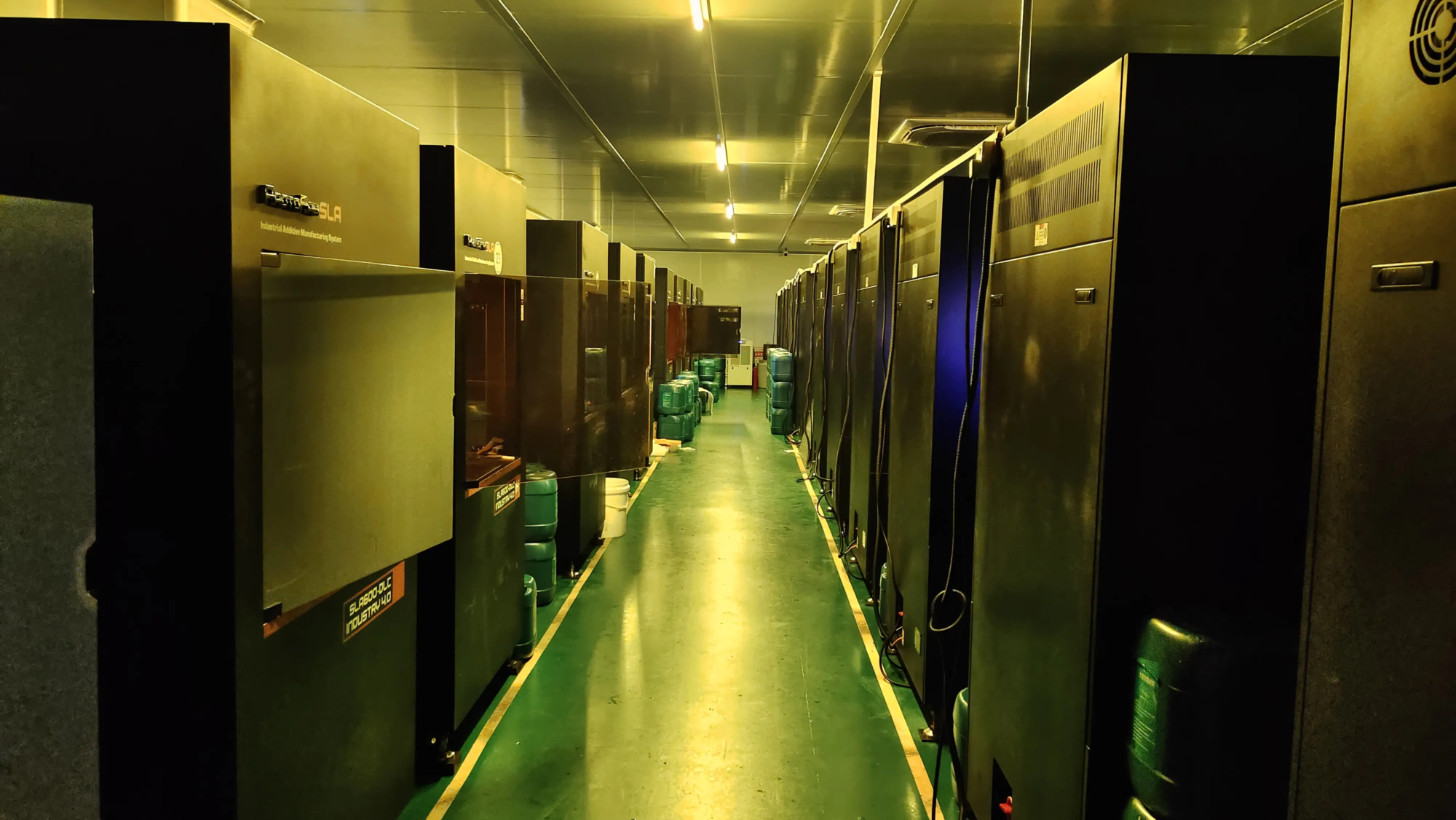
exist Greatwe have upgraded rapid prototyping and production beyond the limits of amateurs. As China’s leading rapid prototyping manufacturer, our commitment combines Tip-in-one SLM 3D printer Deep metallurgical expertise can solve the demanding structural challenges of aerospace, MEDTECH, automotive racing, semiconductor tools and consumer electronics. Plus our comprehensive Post-processing service – Processing, heat treatment, polishing, surface finishing (shooting, anodizing, coating) – We cannot obtain certification of dimensional accuracy and surface perfection in conventional methods, end-using metal parts.
Outsourcing technology barriers, has the potential complex design buckled of the project? Does the temperature gradient damage the integrity of titanium? Customized materials prove temperament? Greatlight navigates these realities every day. Skip the frustrations of adhesion and engineering compromises – Fix your most challenging metal prototyping or mass production requires our integrated workflow with a focus only on metrological quality.
Customize your precision fast prototype now. Leverage our scientific approach and competitive pricing with productively driven results. Contact Greatlight now – Adhesion anxiety gives way to engineering solutions.
Frequently Asked Questions about 3D Printing Adhesion Errors (FAQs)
Q1: My PLA prints were valid yesterday, but not today. Re-upgrade. What to give?
A1: Carefully cleaned with IPA. Fingerprint/oil residue accumulates inherent adhesion overnight.
Q2: The PETG stick is great, it blends into my PEI sheets! How to avoid damage?
A2: Apply light release agent (diluted glue stick washing, specialized release spray or specially built surfaces adjusted for PETG). Let the bed cool completely before removing the parts.
Q3: Why do it sometimes curl upward?
A3: Usually tracking the regression of the continuous bending force exceeds the local angle of the edge holding – verify correct bed temperature uniformity or consider active closure/angle specific mouse ears.
Q4: Which adhesive generally works between filaments?
A4: Hair spray (high temperature type) provides extensive compatibility and responsiveness to medium bed temperature variations – although special optimizations are made to filaments such as PETG/nylon, it is recommended.
Q5: Can grinder improve grip?
A5: Moderately polished surfaces such as exposed aluminum enhance the mechanical latch, but uniform heat conduction across the surface is reduced. I prefer engineered surface preparations such as special coatings.
Q6: The heated bed nozzle/exhaust pipe dissipates near my printer, affecting the print – How important is airflow damage?
A6: High influence! Draft prevention is generally prevented; no matter the type of material, the walls must be deployed with minimal environmental stability.
Q7: A bed that can be upgraded sometimes Is it working well? Why keep calibrating?
A7: Differences in extrusion pressure across unbalanced gap areas can cause inconsistent contact/extrusion – Margins accumulates through layers, resulting in slice artifacts after 50 layers.
Q8: What is reasonable is the upgrade of computational thermal simulation in complex prototypes?
A8: Early compromise of twisted hotspots in high temperature alloys or super-large geometry Engineering compromises – Compositions can be verified to support and build directions digitally.
Integrate scientific verification with operators to solve adhesion reliability outside of plug-in solutions. Now equipped with a comprehensive troubleshooting tool, Explore combinations provide unique optimizations for your specific environment (challenge complacency, embrace science school accuracy) and build a foundation worthy of masterpiece layer deposition.