Unlocking the potential of 3D printing: the science and practice of annealing
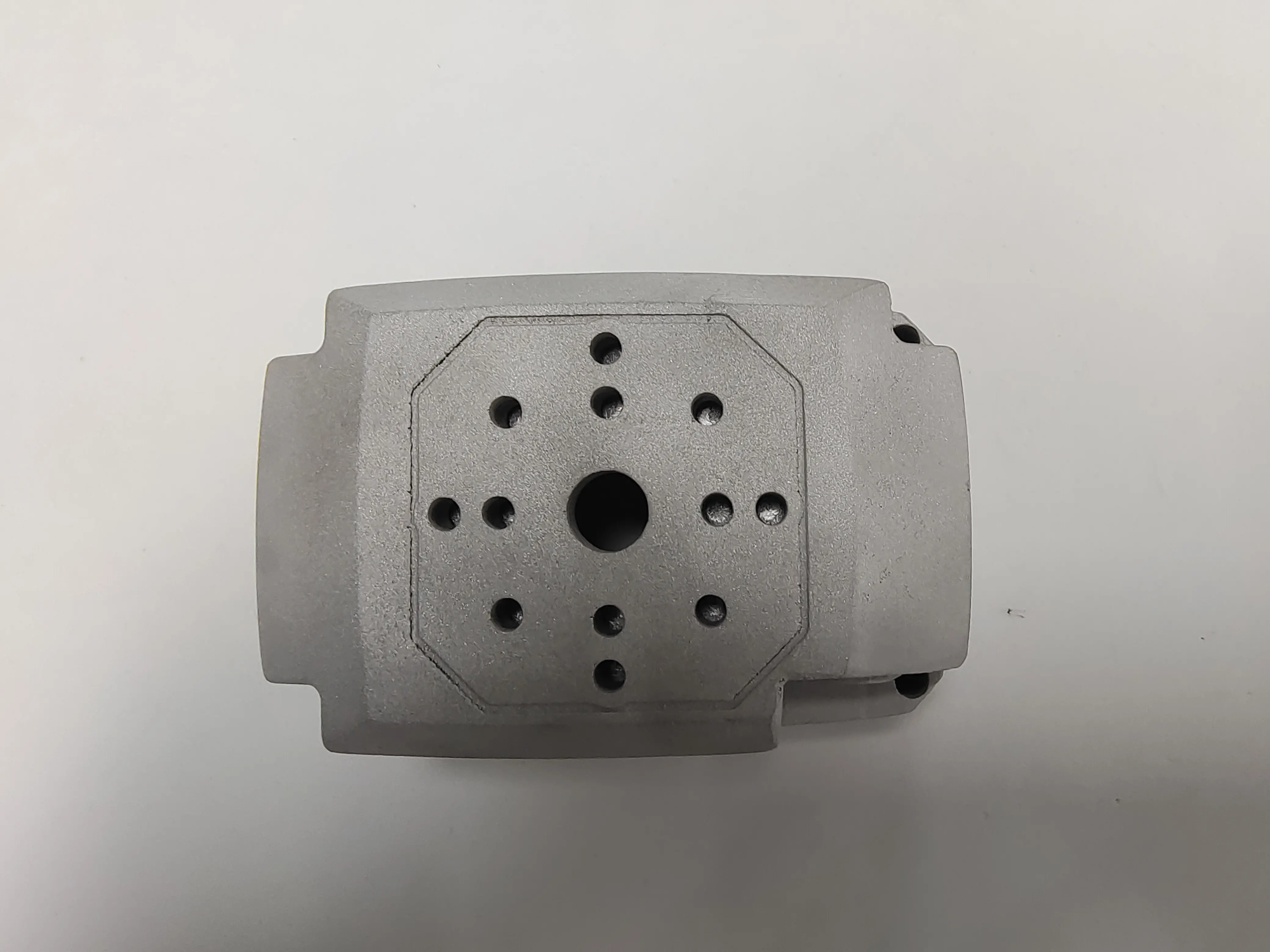
3D printing, especially metal additive manufacturing, such as selective laser melting (SLM), has revolutionized prototyping and production. But usually, when the print is over, the journey does not end. To achieve parts with optimal mechanical properties, dimensional stability and long-term reliability, critical post-processing steps often work: annealing.
Why anneale your 3D printed parts? Beyond the build board
Despite the incredible design freedom of 3D printing, the rapid melting and solidification inherent in processes such as SLM can put parts in a less desirable state:
-
Internal pressure: Strong local heating and cooling during printing have produced important Residual stress In the material. These stresses may cause:
- Distortion and distortion: Parts can be twisted when cooled or removed from the build board.
- Premature failure: Pressure concentration makes the parts more likely to break under load.
- Processing Challenges: In subsequent machining operations, the pressure parts will be unpredictable.
-
Fragile microstructure: Some metal alloys, especially those commonly used in SLM (such as tool steel, steel steel and certain aluminum alloys), cure them to metastable state or have very fine, sometimes brittle grain structures. These microstructures often lack the toughness required for demanding applications.
-
Mechanical characteristics inconsistent: Properties such as strength, ductility, and hardness may vary throughout the entire section due to the complex thermal history of additive manufacturing.
- Poor dimensional stability: Residual stress can cause the parts to slowly deform over time, especially when exposed to temperature changes or environmental factors. Annealing provides dimensions "Pressure preference."
Annealing steps as a solution:
- Stress relief: The main goal of many 3D printing metals. By heating the part below its melting point (usually within the range defined by the alloy) and maintaining sufficient time, these harmful internal stresses can be greatly reduced or eliminated by controlled atomic rearrangements and local plastic flow.
- Microstructure optimization: For many alloys, annealing is more than just pressure relief. This is about Phase change. Controlled heating and cooling cycles can convert brittle microstructures into the required phases provided:
- Improved ductility and toughness: Makes the parts less brittle and can absorb energy without breaking.
- Increase in homogeneity: Create a more unified structure throughout the section.
- Achieving target hardness/tempering: A specific annealing cycle (commonly called steel tempering) is essential for fixing screws, molds, molds or structural components to achieve the necessary balance of hardness and toughness after initial hardening.
- Enhanced long-term stability: Annealed parts are unlikely to distort or change dimensions over time or under operating conditions, ensuring reliability and fit.
How to perform 3D printing annealing? Controlled hot journey
Annealing is not easy "Throw the parts into the oven." This is a controlled, scientifically defined process tailored from precisely tailored materials and desired results. Here is a general overview:
-
Material identification and process selection: This is the most critical step! The annealing parameters are Highly specific To the materials:
- Metal alloy: Each alloy (e.g., stainless steel 316L, Inconel 718, Ti6Al4V, aluminum ALSI10MG, Maraging Steel 300) has a unique recommended annealing temperature range, retention time and cooling rates defined by the Material Standards (ASTM, AMS) and printer manufacturer’s guide. Like tool steel, treat the inappropriate parts as the same way or catastrophic.
- Polymer (sintered plastic/SL): While the focus here is on metal, some SLS nylon parts may experience "Adjustment" Cycles reduce stress and improve chemical resistance; however, the true annealing effect is more dramatic in metals.
-
loading: The parts are carefully placed in the precision furnace. Consistency is key – parts should not be in contact with each other or the furnace walls are excessive to ensure heat distribution.
-
heating: The furnace rises to the target temperature at a controlled rate. Quick heating can be introduced New Pressure, so carefully programmed rates. The furnace must provide excellent temperature uniformity (±5-10°C or better) throughout the chamber.
-
Soak (hold): Once the target temperature is reached, save the parts (“soak”) for a predetermined time. This time it is calculated based on the thickness of the part – the thicker parts require longer soaking time to allow the heat to penetrate completely. It is common to several minutes to hours.
-
cool down: Crucially, cooling must be controllednot just shutting down the stove. The cooling rate can greatly affect the final microstructure:
- Furnace cooling: The furnace is slowly tilted downward at a specific speed (e.g. 50°C/hour), or maintained at moderate temperatures.
- Air cooling: The parts can be removed to cool stationary or forced air. This cools faster than the furnace, but slower than quenching.
- Quenching (for some processes): For some hardening/tempering cycles (such as tool steel after solution annealing), quenching (water, oil, gas) is necessary to quickly cool the parts to achieve a very hard phase. This is different from standard stress relaxation annealing, requiring very precise control to avoid cracks.
- Important: Slower cooling can usually reduce stress, but may reduce the strength of some alloys. Achieving the correct final attribute requires an expert to choose the cooling method and rate.
- Inspection and post-processing (optional): After annealing, the part may be:
- Dimensional check: Ensure that any dimension changes are within tolerances or predictable subsequent machining.
- Processing/final completion: Annealing makes the parts easier and easier to predict the machine, eliminating the pressure that can cause distortion during tool chat or cutting.
- Quality verification: Advanced methods such as X-ray diffraction (XRD) can quantitatively measure the levels of residual stress.
Key considerations for successful annealing:
- Expertise is crucial: Inadequate temperature, incorrect time or uncontrolled cooling can make the parts unusable (too soft, too brittle, twisted or cracked). No universal recipe book – Deep materials science knowledge and process expertise are crucial.
- Equipment quality: With excellent temperature uniformity and high precision with programmable profiles, well-calibrated furnaces are not commercially acceptable, especially in the case of reactive metals such as titanium (such as titanium).
- Demolition support structure: Ideally, the support structure should be removed forward Annealing, because the pressure trapped in them can twist the parts during heating.
- Atmosphere control: Annealing-sensitive alloys (titanium, certain steels) usually require an inert (argon, nitrogen) or vacuum air atmosphere to prevent oxidation or adverse chemical reactions. For many aero alloys, soluble hydrogen content is also a key factor.
Conclusion: Improve your parts performance with strategic post-processing
Annealing is far from an optional additional feature in high-risk metal additive manufacturing. Usually one Project necessity. By carefully designing and performing precise annealing cycles, we transform modern components from fragile, stressful artifacts into reliable, reliable, high-performance parts ready to demand real-world applications. It bridges the gap between additive manufacturing and functional reality.
Complexity lies in the details – the interaction of material nuances, geometric considerations, and temperature-time profiles require rigorous expertise and sophisticated equipment. At Greatlight, our proficiency in Advanced SLM 3D printing seamlessly extends to our comprehensive post-processing capabilities. Our experienced engineers understand the annealing science of every material we process. We utilize state-of-the-art, atmospheric controlled furnaces and strict process controls to ensure that your SLA metal parts not only print, but also appear optimization – No pressure, dimensional stability, and precise mechanical properties required by design.
From initial rapid prototyping to precisely machined final components, Greatlight provides the end-to-end expertise and quality assurance required for mission-critical metal parts. Don’t let internal pressure hurt your innovation. Let our advanced annealing solutions unlock the full potential of 3D printing.
Frequently Asked Questions about 3D Printed Annealing (FAQ)
-
Q: Does each 3D printed part need to be annealed?
- one: no. A simple prototype for visual fit inspection may not require it. However, functional prototypes for testing, end-use parts, components experiencing mechanical loads, or parts requiring precise dimensional stability Almost always Annealing is required, especially metal parts made by SLM. Polymer parts such as SLS nylon benefit more "Adjustment" Instead of the real metal annealing effect.
-
Q: Can annealing make parts weaker?
- one: It can change power, but it can often be beneficial. Annealing relief pressure may slightly reduce the final tensile strength (UTS) of some metals, but Significantly Improve ductility and resilience – a crucial trade-off. Processes like backfire back Solution Annealing (for hardenable steel) actively reduces strength/hardness to the desired, controlled level In exchange To significantly improve resilience. The goal is to achieve The correct balance property.
-
Q: Will annealing change the size of the part?
- one: Yes, some dimension changes are common. Removing internal stress can relax the material to a more stable shape, which can lead to smaller dimension changes or slight transversions. Experienced manufacturers bake it into a design/tolerance stack and utilize predictive modeling where possible. Parts are usually measured back Anneale before any final processing.
-
Q: What is the cost of annealing?
- one: Costs vary according to material, part size/quantity, furnace requirements (e.g., vacuum/inert), and specific cycle complexity. Delivery times include heating, soaking (hours) and controlled cooling. Annealing is usually much cheaper than partial failure of service while increasing time and cost. This is a strategic investment in some performance and reliability. Working with providers like Greatlight, integrating annealing into streamlined post-processing streams can optimize efficiency.
-
Q: Will annealing improve the surface finish?
- one: Not direct. Annealing mainly affects internal structure and a large number of characteristics. The finish is improved by other post-treatment methods such as bead blasting, processing or polishing. However, by stabilizing the parts and reducing pressure, annealing prevention Surface defects caused by post-cycle distortion.
-
Q: Can I anneale parts at home or in a regular oven?
- one: This is Highly discouraged, especially for metal parts. Consumer ovens lack precise temperature control (usually fluctuate ±25°C or more), uniformity, and the ability to create an inert/vacuum air atmosphere. Applying incorrect or uncontrolled heat permanently damages the part (in some cases excessively soluble, brittle, oxidative, dangerous smoke). Annealing is always attributed to professionals with specialized industrial furnace and metallurgy expertise. Greatlime uses it as its core service.
- Q: Will annealing affect material certification?
- one: Absolutely. Heat treatment conditions (including annealing) are defining characteristics of certified materials (such as AMS specifications). Like Greatligh, well-known manufacturers strictly follow annealing procedures traced to material standards to ensure that your parts meet specified mechanical properties and are accompanied by relevant process certification documents. Using uncertified or improperly annealed parts means risking catastrophic failure and loss of traceability.