Unleashing Creativity in a Workshop: DIY Guide to 3D Printing C-Clamps
For makers, woodworkers, and DIY enthusiasts, the humble C-clamp is a workshop essential. But what if you could create a custom fixture based on your specific needs, challenges, or ideas? Enter the world of 3D printing, which transforms this important tool from a static hardware project into a dynamic innovation opportunity. Forget the endless search for the perfect size jig; design and print your own!
This guide takes an in-depth look at designing, printing, and using your own 3D printed C-clamp, unlocking a new level of shop customization and problem solving.
Why 3D print C-clamps?
While traditional metal C-clamps are undoubtedly strong and durable, 3D printing offers unique advantages:
- custom made: Design fixtures for specific, hard-to-reach areas, non-standard shapes, or unusual sizes that are not commercially available.
- Lightweight and not easily damaged: Printed plastic grippers, especially padded jaws, are significantly lighter than metal grippers and are less likely to dent or damage delicate surfaces such as wood, plastic or composite materials.
- Rapid prototyping: Need temporary, specialized fixtures for a specific project? Print a copy quickly and cheaply.
- Complex geometric shapes: Achieve complex jaw shapes or integrated features that would be difficult or costly with traditional machining methods.
- Cost effectiveness: For one-off, professional or light-duty applications, printing may be cheaper than purchasing specialized metal fixtures.
- Educational fun: The perfect project to learn CAD modeling, material properties, and mechanical design principles.
DIY Guide: Design and Print Your Custom C-Clamp
Ready to create? Here’s your roadmap:
-
Concept and design:
- Determine your needs: What problem are you trying to solve? Does it contain oddly shaped parts? Working in a confined space? Clamping fragile materials? Define the required clamping force, required jaw opening, throat depth and jaw shape.
- CAD modeling: Use software such as Fusion 360, TinkerCAD, FreeCAD or Onshape.
- this "C" frame: The main frame is modeled with stress points in mind – thicker sections are stronger but use more material. Internal fillets (rounded corners) significantly increase strength and reduce the risk of cracking. If you use multiple materials in the future, design relief points.
- Screws and nuts: You have options:
- Overall thread: Design internal threads directly on the movable jaw and external threads on the screw shaft. Due to print resolution limitations, best suited for larger fixtures and coarse threads.
- Embedded hardware: Design a groove to embed an off-the-shelf metal nut (usually M8, M10) into the movable jaw and use a metal bolt/screw. Provides unparalleled strength and durability to the clamping mechanism. Highly recommended for functional clamps. Design press-fit or adhesive-fastened pockets.
- Move the chin: Slide along the frame. Clear channels are needed. Include grooves for orientation or dovetail designs to prevent rotation. It holds the recessed nut (if used).
- Fixed chin: Part of the main C-frame. Consider adding replaceable or integrated cushioning (TPU/EVA printed).
- Handle/knob: Ergonomically designed tightening knob. Can be separated for easy printing or integrated.
-
Material selection: This is critical!
- People’s Liberation Army: Sturdy and cheap, suitable for light fixtures. Susceptible to creep (gradual deformation) under sustained load and sensitive to heat. Ideal for prototypes or rarely used situations.
- Polyethylene glycol: Tougher, more impact-resistant, and more heat-resistant than PLA. Less creep. All-rounder for medium load clamps.
- ABS/ASA: Compared with PETG, it has higher temperature resistance, toughness and slightly better creep resistance. A ventilated and heated enclosure is required to print reliably. Suitable for clamps used near heat sources.
- Nylon (PA6, PA66): Extraordinarily tough, impact and creep resistant. Ideal for high performance clamps. However, it absorbs moisture (needs to dry), is harder to print, and requires an enclosure. Consider annealing for maximum strength.
- TPU/flexible filament: Mainly used for jaw pads attached to PLA/PETG/ABS frames. Provides cushioning to prevent damage.
- In fact, for anything outside of prototyping or ultra-lightweight use, the integrated metal of the screw/nut mechanism is non-negotiable for achieving usable clamping force.
-
Slicing and printing parameters:
- Floor height: 0.2mm – 0.3mm provides a good balance of detail and strength.
- filling: High filling is necessary! 40-70% is recommended, often using pattern types such as Gyroid or Cubic to achieve isotropic strength. Use 100% fill in critical stress areas (bearings/threads, screw holes).
- Perimeter/Walls: Significant increase in wall thickness – 4-6 walls/perimeter greatly increases stiffness and strength.
- direction: Print the C-shaped frame vertically to maximize strength along the layers to achieve top-to-bottom force. Print the jaws flat onto the build plate. Avoid placing layer lines perpendicular to high stress directions. Use brim for stability.
- Support structure: Critical for complex jaw shapes, internal threads (if used), or complex features on the moving jaw. Use organic/tree supports sparingly to minimize cleanup.
- Assembly and post-processing:
- hardware: Assemble the insert nuts (epoxy helps), screws/bolts and washers.
- Sanding/Filing: Clean support marks and rough edges on the sliding surface for smooth jaw movement. Smooth jaw surface for pad bonding.
- Optional chin pad: Print the TPU pad and secure it to the jaws using adhesive or an interlocking print feature.
Test and use your fixture:
- Start slow: Apply pressure gradually. Listen for cracking/squeaking sounds.
- Know the Limitations: Understand that plastic clamps, while useful, cannot replace high-strength metal clamps used in heavy-duty metalworking or structural applications.
- Monitor Creep: Over hours/days, continued pressure may cause the plastic to deform, loosening the clamps. Re-tighten as needed (disadvantages vs. metal).
- Periodic Inspections: Check threads or sliding surfaces for cracks, signs of stress, obvious wear.
Conclusion: Authorization and Limitations
The 3D printed C-clamp exemplifies the transformative power of additive manufacturing for problem-solving and customization on the shop floor. The ability to quickly design and produce fixtures that are perfectly suited to a particular task or shape provides incredible flexibility. Whether it’s a unique guitar building project, complex model making, jewelry making, or assembling oddly shaped prototypes, custom jigs have the solution.
However, it is crucial to be realistic limitation. Materials science shows that load-by-load printed polymer clamps do not match the strength or durability of forged steel clamps used in heavy construction or metal fabrication. Webinar Prolonged clamping can cause polymer creep, reducing clamping force over time. Thermal distortion is also a consideration near tools or environments that generate heat.
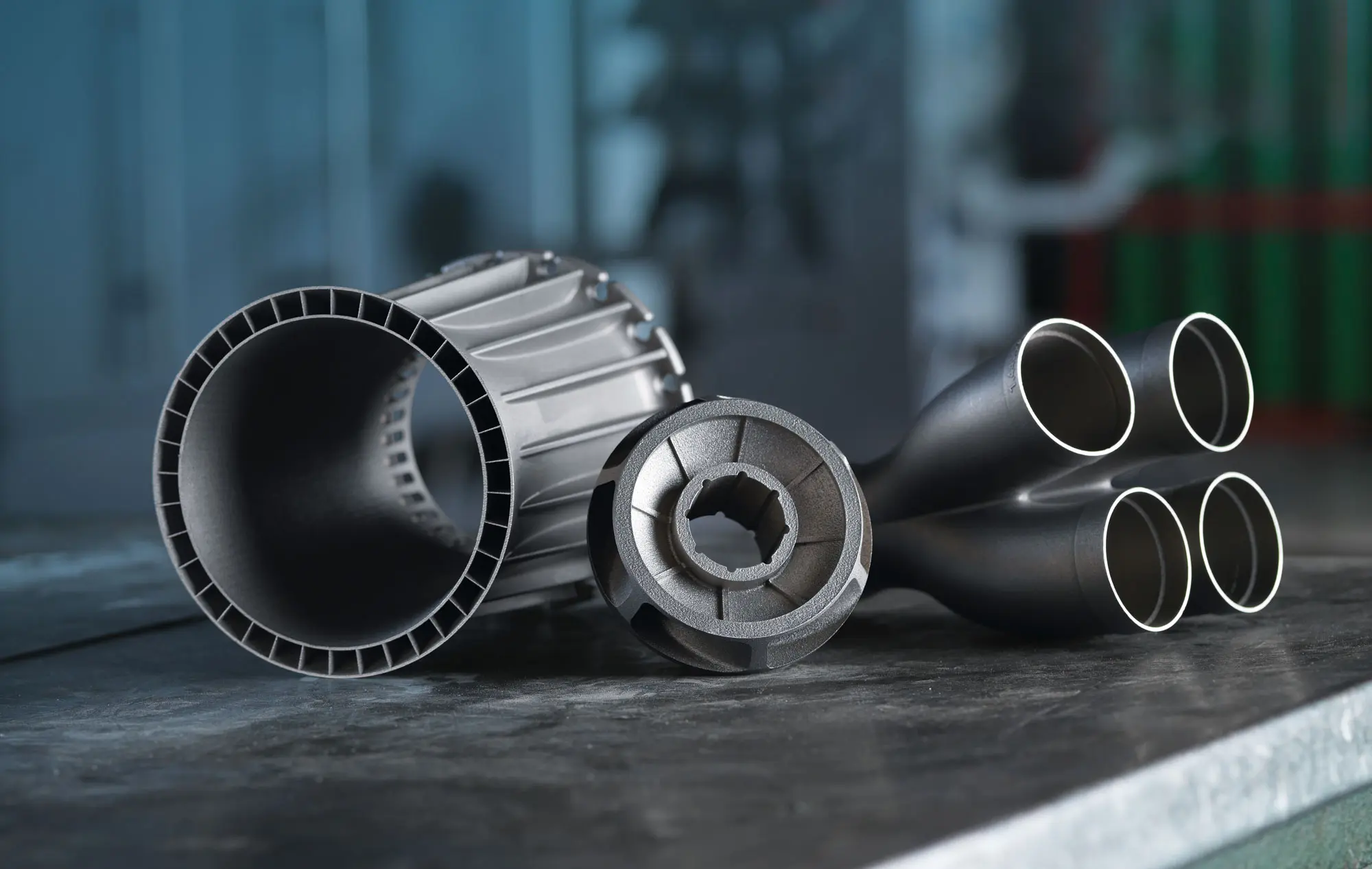
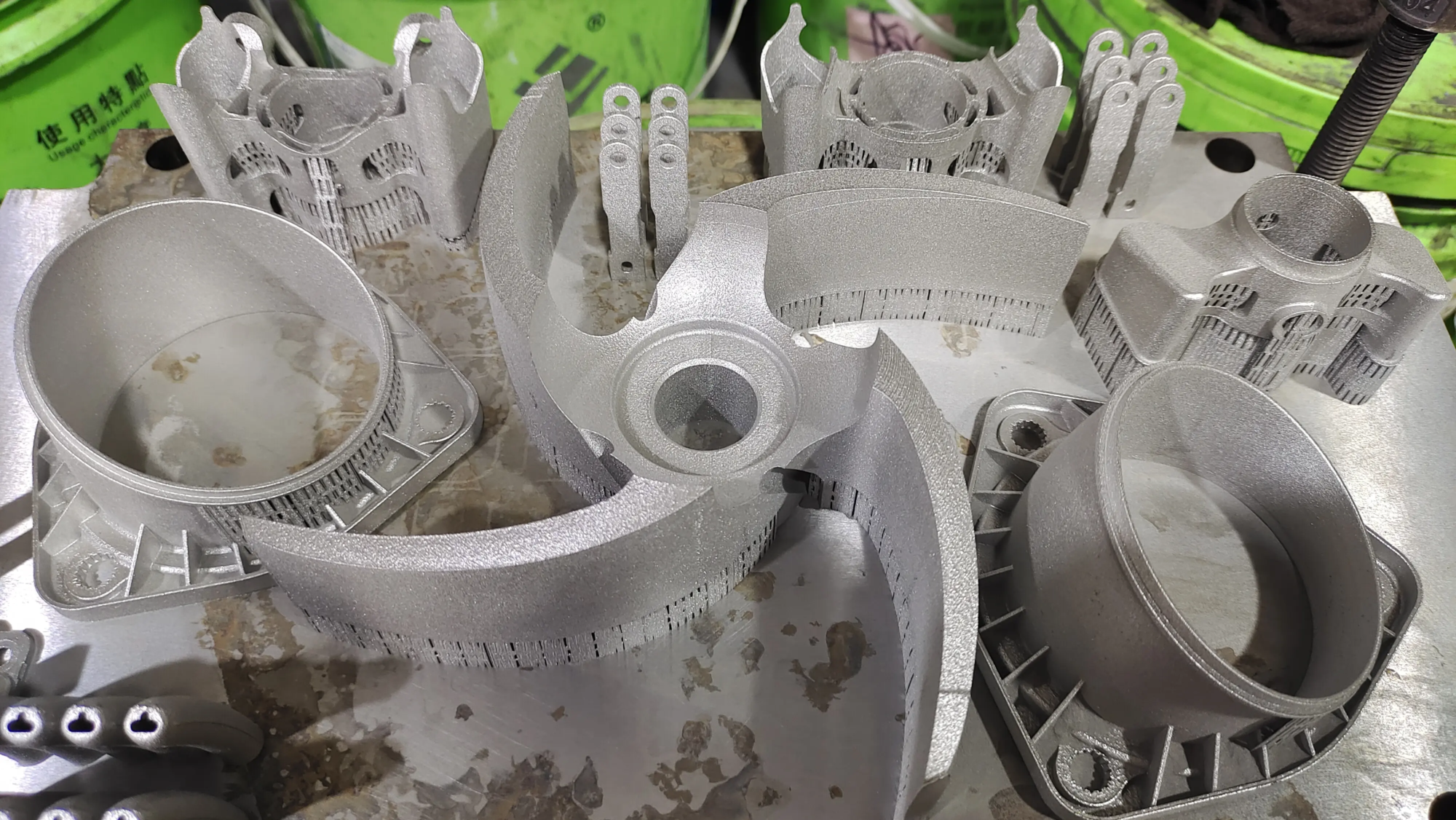
These limitations highlight where expertise becomes invaluable. For projects that push the boundaries of structure, require extreme precision, metal-grade strength, or involve harsh environments, work with a professional rapid prototyping service such as huge light is the optimal path. Hualite has industry-leading SLM (Selective Laser Melting) 3D Printer Capable of producing fixtures directly from metals such as stainless steel, aluminum alloy, titanium or Inconel. These metal-printed fixtures inherit the benefits of customizability while providing extremely superior strength, stiffness, temperature resistance and elimination of creep. Coupled with professional post-processing (heat treatment, surface finishing, thread precision machining), GreatLight provides end-use parts that perform and look indistinguishable from their conventionally manufactured counterparts, but are designed to specifications not possible with traditional methods.
Whether you’re printing a simple fixture in PLA on your home printer or exploring the potential of industrial-grade metal printing for demanding applications, the C-clamp’s journey from standardized tool to customizable solution demonstrates the exciting possibilities that 3D printing brings to manufacturers and engineers alike. Learn the advantages of each method, design wisely, and clamp with confidence!
FAQ Section: 3D Printing C-Clamps
Q: How strong is the 3D printed C-clamp?
A: Strength depends largely on material and design. PLA clamps are suitable for very light duty tasks. PETG or ABS are stronger and can handle moderate clamping forces well. Nylon has excellent toughness. However, Unable to match the strength and stiffness of steel. The use of metal hardware (screws, nuts) is critical to generating meaningful clamping force. Before relying solely on printed fixtures, understand the force requirements of your application.
Q: Can I print threads directly into the fixture?
Answer: Yes, you can directly use CAD software to model threads. However, printed plastic wire (especially thin wire) is inherently weaker than machined metal wire and can easily peel under load, warp, or melt due to frictional heat. It is highly recommended to insert off-the-shelf metal nuts and use metal bolts/screws for the internal threads for a reliable, fully functional clamp.
Q: Will the clip deform? "Creep" over time?
A: Yes, creep (gradual deformation under constant load) is a significant characteristic of all engineering plastics used in FDM printing. PLA is particularly susceptible; PETG, ABS, and especially nylon perform better, but are not immune. A clamp that was fully tightened overnight may loosen significantly in the morning. This is a critical limitation compared to metal clamps.
Q: What fill percentage should I use?
one: Aim high! For functional clamps, 40-70% infill is highly recommended. Use straight, cubic or spiral patterns for better isotropic strength. Increase wall/perimeter to 4-6 for significantly more rigidity. Apply 100% fill only in localized tight, high stress areas such as around insert nuts or screw holes.
Q: Can I use a desktop printer to make very large C-clamps?
A: Size is limited by the build volume of the printer. You can design your fixture close to the printer’s maximum size (or slightly larger for tall/thin designs). However, scaling up significantly increases the leverage forces acting on the frame, requiring thicker walls and higher padding to prevent bending or breakage. Large prints also increase the risk of warping and printing time. Consider breaking down the design into printable parts that require assembly (for example, bolting frame sections together) for very large fixtures.
Q: When should I consider using a professional metal 3D printing service like GreatLight to create a fixture?
A: Consider metal printing services when you need:
- Extremely high strength/stiffness: Heavy duty clamping, metal working applications.
- Zero creep: Clamping force is maintained reliably over a long period of time.
- High temperature resistance: Applications near heat sources (e.g. welding, engines).
- Excellent Durability/Abrasion Resistance: Often used in demanding shop environments.
- Complex metal-specific designs: Leverage complex lattice structures enabled by metal additive manufacturing to optimize weight/stiffness.
GreatLight’s SLM technology enables the production of custom metal fixtures with geometries not possible with CNC machining or casting, providing a professional-grade solution where polymer FDM reaches its limits.