Art and Engineering of 3D Printing Daggers: Expert Design Tips
3D printing unlocks the unrivalled possibilities of custom creations, making daggers is a compelling project for amateurs, role-players or collectors. However, converting digital models into safe, visual daggers requires meticulous design and manufacturing expertise. Critical Note: All designs discussed here are strictly used for display, artistic or costume purposes – never as functional weapons. Let’s dissect the design process, materials science and post-processing essentials.
Why design matters in 3D printed daggers
The slender geometry of the dagger (bottom-line blades, guards and complex handles) faces unique challenges: stress concentration, distortion and support demand. Poorly performed designs lead to weak joints, layer separation or printing failures. Prioritizing these elements ensures structural integrity and aesthetics:
-
Security and legality of the design
- Intentional weakness: For display daggers, design blades with rounded edges (> 1 mm thick) and blunt tips to eliminate clarity. Avoid copying realistic cut geometry.
- Legal compliance: Embed aesthetic identifier (e.g. "For display only" Engraving) complies with the law of copying weapons. Use non-metallic materials for personal printing to avoid legal risks.
-
Material selection: Balance the appearance and function
- Plastic (DIY printing): PLA or PETG is enough to accommodate lightweight props, but lacks realism. Resin (like ABS, for example) provides details, but is brittle.
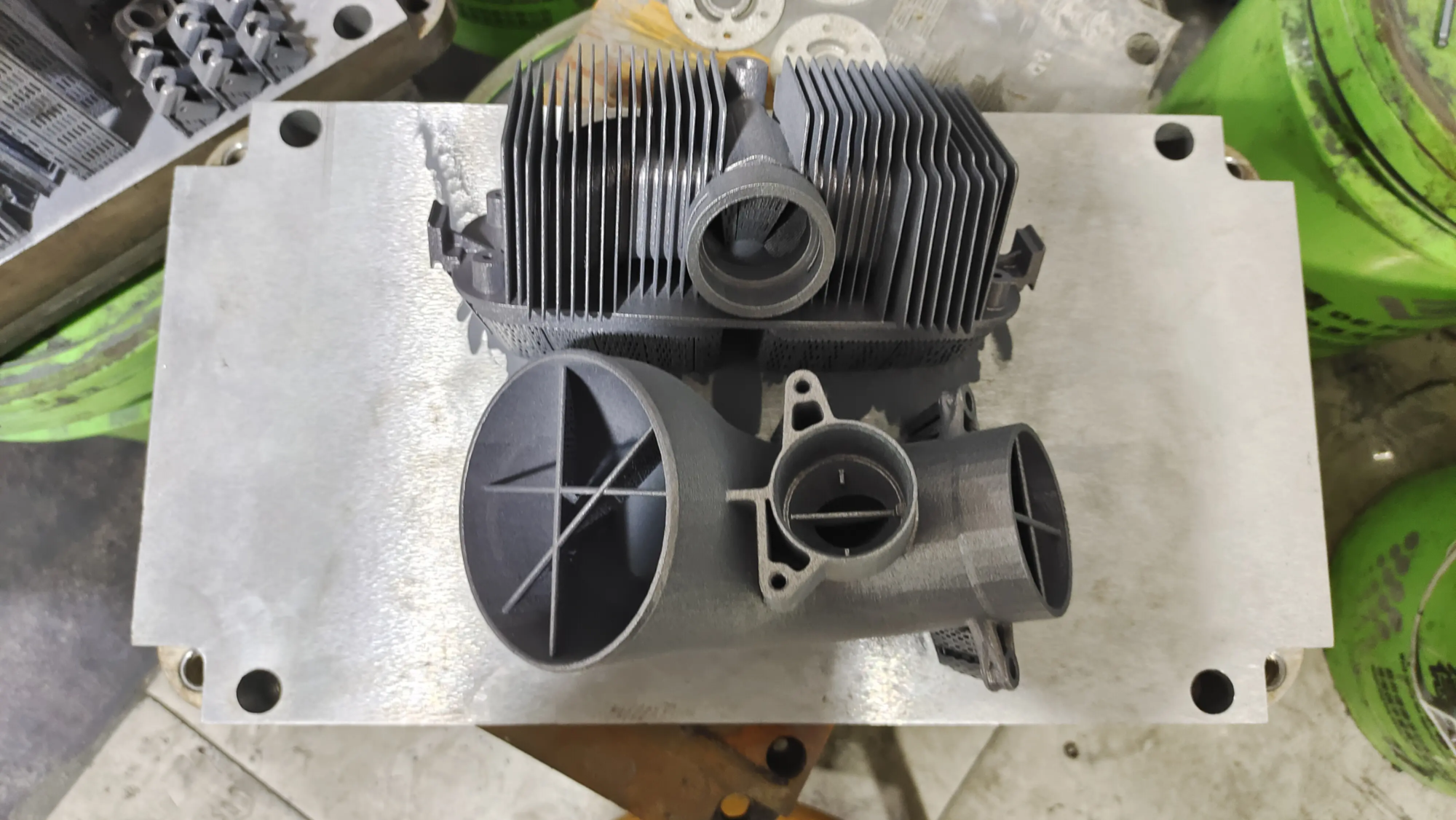
- Metal (professional manufacturing): For durability and weight, aluminum, stainless steel or titanium are ideal choices. However, metal printing requires SLM (selective laser melting) technology to fuse the layers without weaknesses. Greatlight’s industrial SLM printers enable complex metal dagger printing using aviation-grade alloys such as ALSI10MG, ensuring dimensional stability even under thin cross sections.
-
Core structure design principle
- Blade geometry: Avoid long-term flat spans. Combine subtle introversion curves or ridges to improve stiffness. Minimum wall thickness: 1.5 mm metal and 2 mm plastic.
- Pressure distribution: Aggregate the stress simulation of the model (in the FEA tool) to identify the fault zone. Use a rounded transition between the blade and the handle (radius ≥3 mm) to spread the load.
- Assembly optimization: Divide the design into modular parts. Self-crumbing features such as dovetail joints or embedded magnets for precise assembly. Output assembly with 0.2 mm bonding key or pins.
-
Slice orientation and support
- Position the blade vertically with the chamfered edges to minimize support. Fishing a dagger at 30–45° reduces overhang.
- For metals, internal porosity is controlled in a directional manner. Greatlight optimizes the printing angle with a proprietary thermal algorithm to ensure near perfect density of blade slices (>99.9%).
- Post-processing: The secret to professional results
Plastic parts require grinding (200→1000 grain size), primer and metal effect painting. For metal daggers:- smooth: Stainless steel blocks are electrochemically polished to obtain a mirror image.
- detail: CNC engraving adds edge pattern or badge.
- Protect: DLC (diamond-like carbon) coating prevents oxidation without changing color.
Greatlight’s one-stop post-processing includes a full service from heat treatment to decorative finishes – saving for weeks of manual work for customers.
in conclusion
Design a 3D printed dagger that combines creativity with strict engineering. Success depends on purpose-driven design: safety-driven geometry, meticulous material selection and keeping designs consistent with manufacturing limitations. Although DIY plastic prints are used for quick props, professional SLM metal printing promotes the project to heirloom quality art, especially for complex blades or museum-grade replicas.
Work with experts to ensure your vision becomes a reality without compromise. As a top rapid prototyping expert, Greatlight combines over 20 years of experience, ISO certified metal printing with precise finishes to provide custom daggers that can be displayed in 5-10 days. We assist at each stage: From Design Verification to Polishing – Reduce your blueprint to today’s no-obligation project evaluation.
FAQ: Your question, answer
Q: Can I legally print metal daggers?
Answer: The law varies by country/state. Only explicitly mark the blade as a non-functional artwork. Greatlight avoids the use of contracts involving replicas of weapons unless the customer provides compliance documentation. Always consult the regulations first.
Q: What wall thickness can prevent the metal dagger from rupturing?
A: For SLM-printed steel/aluminum, 1.0–1.5 mm is feasible, but professional thermal calibration is required during the printing process to prevent stress fractures. Greatlight recommends using 2mm as the best choice for consumer projects.
Q: How do you print smooth blades without support?
A: Support is inevitable for steep angles, but it is minimized by smart slicing. Greatlight uses soluble support structures for metals to prevent surface scarring. Polished to achieve a seamless finish.
Q: What is the cost and lead time of the 10-inch metal display dagger?
A: Average Cost: $250–$500 for aluminum (based on complexity, post-processing). Turnover: 3-5 days printing + 2-5 days completion. Contact Greatlight’s instant quote using our online TCO calculator.
Q: Does Greatlight print multi-metal daggers (e.g., steel blades and gold handles)?
A: Yes, by mixing: Print individual parts using SLM and then connect via micro-welding. Plating/Embroidery Service Adds Custom Metal Finish.
Q: How to strengthen the plastic dagger?
A: Use PETG material 100% filled. For critical joints, insert metal pins. Avoid ABS unless annealed – it is easily twisted.
Explore unlimited design innovation with professional support. Greatlight uses cutting-edge SLM machines and inspect certified finishing to quickly deliver precision metal prototypes. Dozens of materials are ready to ship – today you can customize the dagger prototype!