Unearthing Prehistory from Your Desk: A Guide to 3D Printing Dinosaur Bones at Home (And When to Call the Professionals!)
Millions of years ago, the Tyrannosaurus rex roared, its massive skeleton buried in rock. But what if you could sit at your kitchen table and grasp a part of this history right now? With easy-to-use 3D printing technology, creating extremely detailed replicas of dinosaur fossils is no longer limited to museums, but is an exciting possibility for educators, hobbyists, model enthusiasts, and the curious. This guide will take you through the journey of printing your own dinosaur bones.
The door to deep time: the search for real models
The cornerstone of any good dinosaur bone print is an accurate digital model. Thankfully, paleontology has embraced the digital age:
- Museum glory: Leading institutions around the world are digitizing their valuable collections. Platforms such as Smithsonian Open Accessthis Natural History Museum (UK)and sketch factory Preserve thousands of carefully scanned fossil files. These range from complete skeletons to complex bone fragments such as claws and teeth. Licenses vary – some allow free personal/educational use. Always verify usage rights.
- Paleontology platform: Specialized websites, e.g. Source of form Provides scientific-grade scans typically uploaded directly by researchers. Registration may be required for access, but these models represent cutting-edge research and fossil forms.
- Designer repository: Communities thrive on the following sites universe of things, Cult 3Dand my mini factory. Talented designers create stylized or highly accurate reconstructions. Levels of accuracy vary widely, so look for cited sources or creators who have collaborated with paleontologists.
Bringing bones to life: Home printing technology
Two mainstream technologies dominate the cottage industry:
-
FDM (Fused Deposition Modeling)/FFF (Fused Filament Manufacturing):
- How it works: A spool of plastic filament (such as PLA or PETG) is melted and deposited layer by layer through a nozzle.
- advantage: Most affordable printer; wide material selection; long-lasting results; available in queen bed sizes.
- shortcoming: Visible layer lines; lower resolution limits reproduction of fine details (think rough bone textures or tiny teeth); requires extensive post-processing (sanding, filling, priming) to achieve a smooth fossil-like look. Best suited for larger skeletons, display models or prototypes in educational settings.
- Resin printing (SLA/DLP/LCD):
- How it works: Uses a liquid photopolymer resin that is cured layer by layer via UV light.
- advantage: Exceptional detail and surface finish; perfect capture of complex textures; limited visible layer lines.
- shortcoming: Typically more expensive printer; resin handling requires care (gloves, ventilation); prints are generally more fragile than FDM; parts require cleaning and post-curing handling; build volumes are usually smaller. Ideal for highly detailed skulls, teeth, claws, vertebrae and smaller specimens that require museum-quality surface reproduction.
Choose your materials:
- People’s Liberation Army: Easy to print, biodegradable (conditions apply), multiple colors. The first choice for FDM beginners. Bones can be simulated in white, tan, or gray.
- Polyethylene glycol: Tougher and more heat-resistant than PLA. More suitable for handling or workpieces requiring extra strength.
- Resin: Offers a high detail finish. Standard resins work well; specialty resins include "ABS-like" Offers tough or flexible options for sections that require slight yielding. Translucent resin mimics glimpses of fossilized amber.
The limitations of home printing (and where the pros step in)
While hobbyist printers unlock incredible possibilities, they are inherently limited:
- Material restrictions: Plastic/resin only. True metal reproduction (like iron casting replacement) is not possible.
- Dimensions and scale: Printing a life-size T. rex femur would require an expensive, industrial-scale printer that is not suitable for home use. It’s common to segment large models for home assembly.
- Structural integrity: Replicas designed for museum handling or large static display often require engineering grade materials other than plastic/resin.
- ULTIMATE DETAILS AND AUTHENTICITY: accomplish precise Replicas intended for scientific validation or museum-quality display often require the highest precision mechanical and professional finishing.
- Complex multi-material replicas: Bones are often embedded in matrix rock. Replicating this realistic, multi-material look convincingly outside of professional professional settings is extremely challenging.
This is where the expertise of a rapid prototyping partner like GreatLight becomes invaluable.
Imagine needing a replica of a dinosaur skull for display:
- Made from actual metal for heft and realism.
- Scanning accuracy is required to reach micron level.
- Complex internal structures need to be replicated.
- Seamless integration with Fossil “Matrix” components.
- Requires professional grade polish, antique or custom patina.
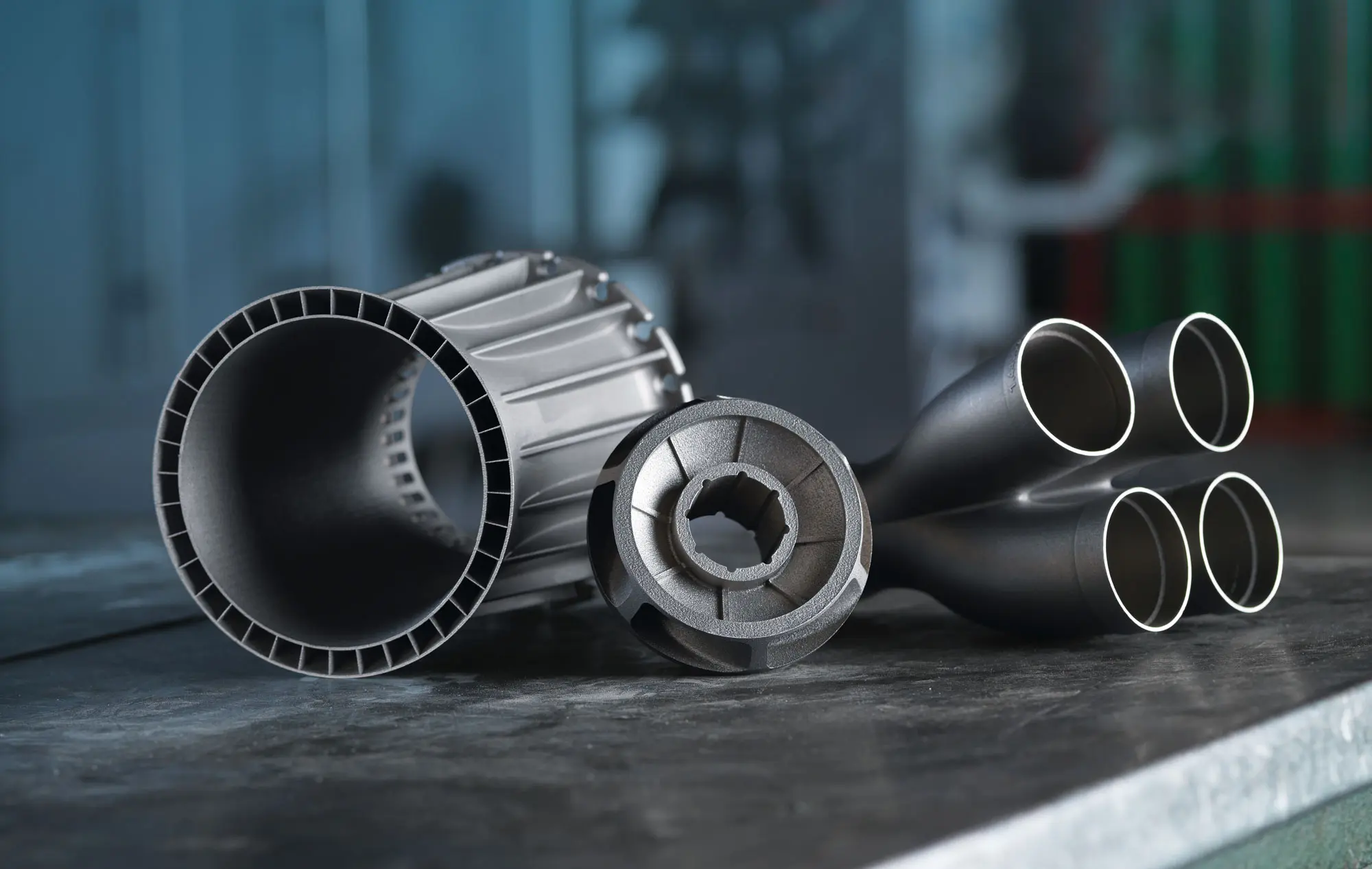
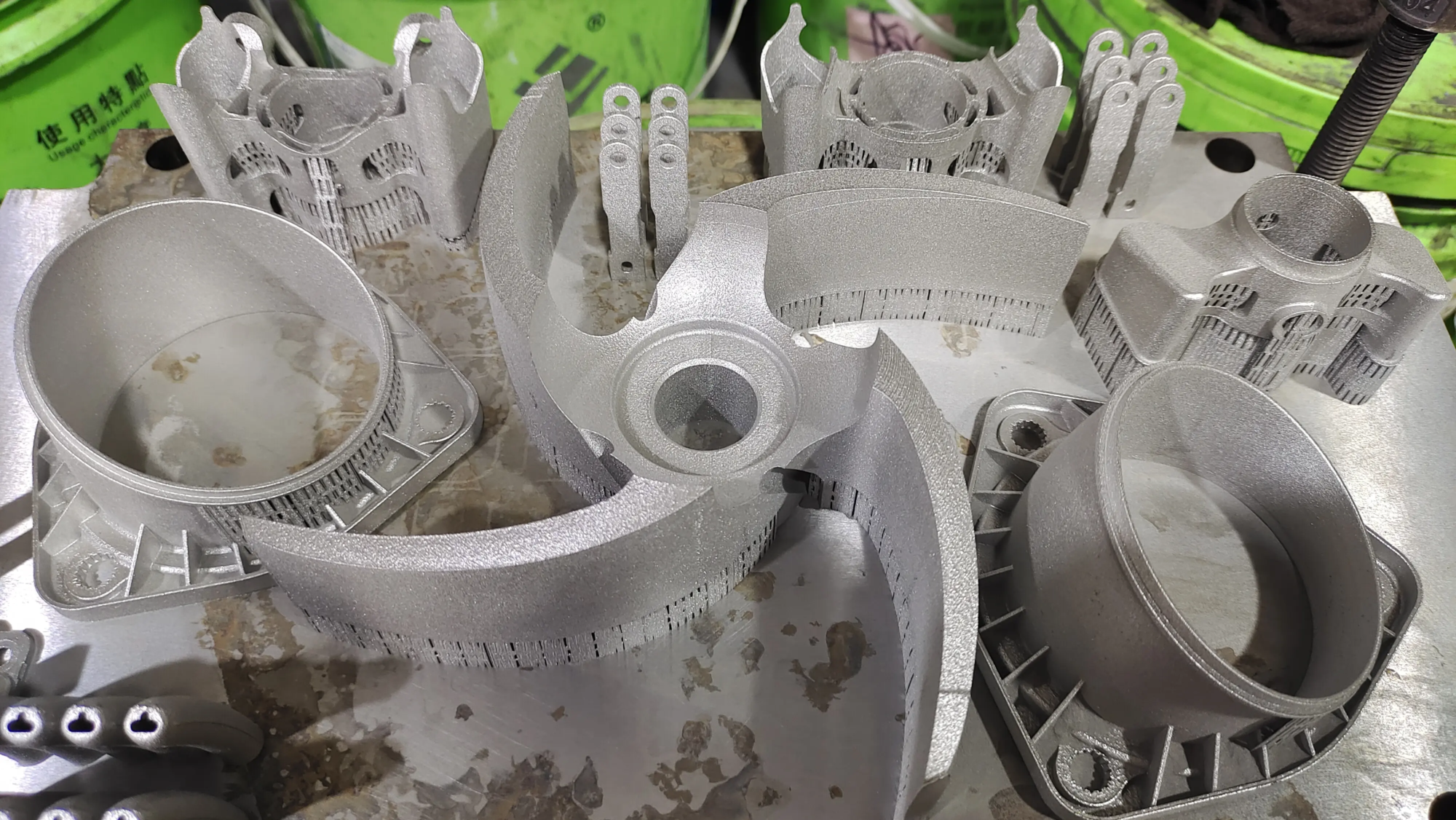
At GreatLight, we focus on pushing these boundaries. Take advantage of professional-grade SLM (Selective Laser Melting) Metal 3D Printer and other advanced technologies, we solve projects well beyond the confines of a home setup:
- Metal printing expertise: SLM allows the creation of extremely complex, dense metal parts directly from CAD files, ideal for industrial displays, animatronic functional prototypes or custom replicas where authenticity and durability are required.
- Ultra high resolution: Our machines exceed hobbyist SLAs and achieve the resolution required for scientific review or flawless visual reproduction.
- Material Versatility: In addition to metals (stainless steel, titanium, aluminum alloys, Inconel), we also process advanced engineering plastics/composites that are not generally available commercially.
- Full spectrum post-processing: Sand blasting, precision fit CNC machining, heat treating, professional painting/staining, stone/rock effect finishing, custom installation. We transform prints into finished exhibits.
- Size and volume: Efficiently produce life-size dinosaur skeletons or entire partial skeletons.
- Quick customization and consultation: We work closely with paleontologists, museum curators, model makers and filmmakers to quickly solve complex replication challenges.
Conclusion: A combination of passion and precision
The ability to 3D print dinosaur bones at home is a triumph for accessible technology, advancing education and igniting a passion for paleontology. Start with an accurate file, choose a printing method that suits your goals (FDM for robustness/accessibility, Resin for details), and employ post-processing to unlock creative potential. This is a tangible connection to deep time from the desktop.
However, when projects require material authenticity beyond plastic, museum-grade structural integrity, ultra-high precision, complex multi-material solutions, or professional finishes that appeal to audiences, working with a dedicated rapid prototyping expert is the way forward. Companies like GreatLight bridge the gap between complex digital paleontology and stunning physical reality, utilizing advanced metal printing and exquisite finishing to create replicas that stand the test of time like their prehistoric counterparts.
FAQ: 3D Printing Dinosaur Skeletons
-
Is it legal to download and print museum fossil scans?
- answer: It all depends on the source and its license. Many museums explicitly offer scanning Creative Commons License (CC0, CC BY, CC BY-SA) Allowed Personal, educational and sometimes commercial use. Always, always check for specific licenses On the platform where you downloaded the scan. Never assume that files are free to be used.
-
Which 3D printer is best for beginners who want to print fossil replicas?
- answer: one Low cost FDM/FFF printer (using PLA filament) is usually the best place to start. It’s affordable, relatively easy to learn, durable, and perfect for large, sturdy models where super high detail isn’t important. As you progress and desire finer details (teeth, claws, intricate textures), consider transitioning to resin printing.
-
How to make 3D printed dinosaur bones look realistic/aged?
- answer: Post-processing is crucial, especially for FDM:
- Polishing: Gradually remove the layer lines with finer and finer grits.
- Primer: Apply filler primer to further smooth the surface.
- painting: Used acrylic paint – bone white/tan/grey base coat, added depth with brown/black wash to fill gaps and highlight texture (dry brushing). For resin prints, washing directly onto the original print will work wonders.
- “Fossil” effect: Try mixing a small amount of fine sand/grit into the paint or glue in specific areas.
- answer: Post-processing is crucial, especially for FDM:
-
Can I print fossils out of plastic/resin?
- answer: Normally, not at home. Home printers are designed for polymers. While experimental filaments containing metal powders exist, they mostly appear as plastic composites and require sintering that is beyond the reach of amateurs.
- Professionally: Yes. Companies like GreatLight use industrial metal 3D printers (SLM, DMLS) to create replicas in actual metals such as steel, aluminum or titanium. Ceramic 3D printing can also be achieved professionally.
- answer: Normally, not at home. Home printers are designed for polymers. While experimental filaments containing metal powders exist, they mostly appear as plastic composites and require sintering that is beyond the reach of amateurs.
-
Can GreatLight print fossil replicas directly in metal?
- answer: Absolutely! Ferrite’s core expertise lies in Metal 3D printing (SLM/DMLS)and advanced plastic/composite technologies. We specialize in projects that meet the following requirements:
- Exact anatomical reproduction for research/exhibition.
- Durable metal replica for industrial/museum display.
- Complex geometries require high-strength materials.
- Professional finishing (metal polish, rust, embedded in replica rock matrix).
- Scalability from single bones to partial bones.
Contact us to discuss turning your digital fossil model into a high-fidelity metal or professional-grade replica.
- answer: Absolutely! Ferrite’s core expertise lies in Metal 3D printing (SLM/DMLS)and advanced plastic/composite technologies. We specialize in projects that meet the following requirements:
- Are printed fossil replicas sturdy enough for handling/museum display?
- answer: Depends on material and printing method:
- HomeFDM/PETG: Generally sturdy and used for mild Handle and display frames. Large/thin parts may be fragile.
- Household resin: May become brittle; small/thin parts break easily unless special “tough” resin is used. Handle with care.
- Specialty metals (such as GreatLight): Highly durable for frequent handling, structural installations and long-term display applications requiring ruggedness.
- answer: Depends on material and printing method:
Ready to bridge the gap between digital scans and museum-quality metal dinosaur replicas? Contact Gretel now Get expert consultation to bring your most ambitious fossil projects to life with unparalleled precision, material versatility and expert finishing. [Link to Contact Page/Quote Request].