Revolution on the Wheels: The Future of 3D Printed Ferrari and Supercar Manufacturing
Ferrari’s iconic Pride Horse has long symbolized the perfection of the car – exquisite design, excellent performance and handmade art. But what if the future of Maranello’s masterpiece is not just in the hands of skilled artisans, but in the exact lasers of industrial 3D printers? The concept of 3D printing Ferrari is not science fiction. This is an evolving reality that shapes the next generation of supercars.
Beyond Prototype: Metal 3D Printing Hits the Track
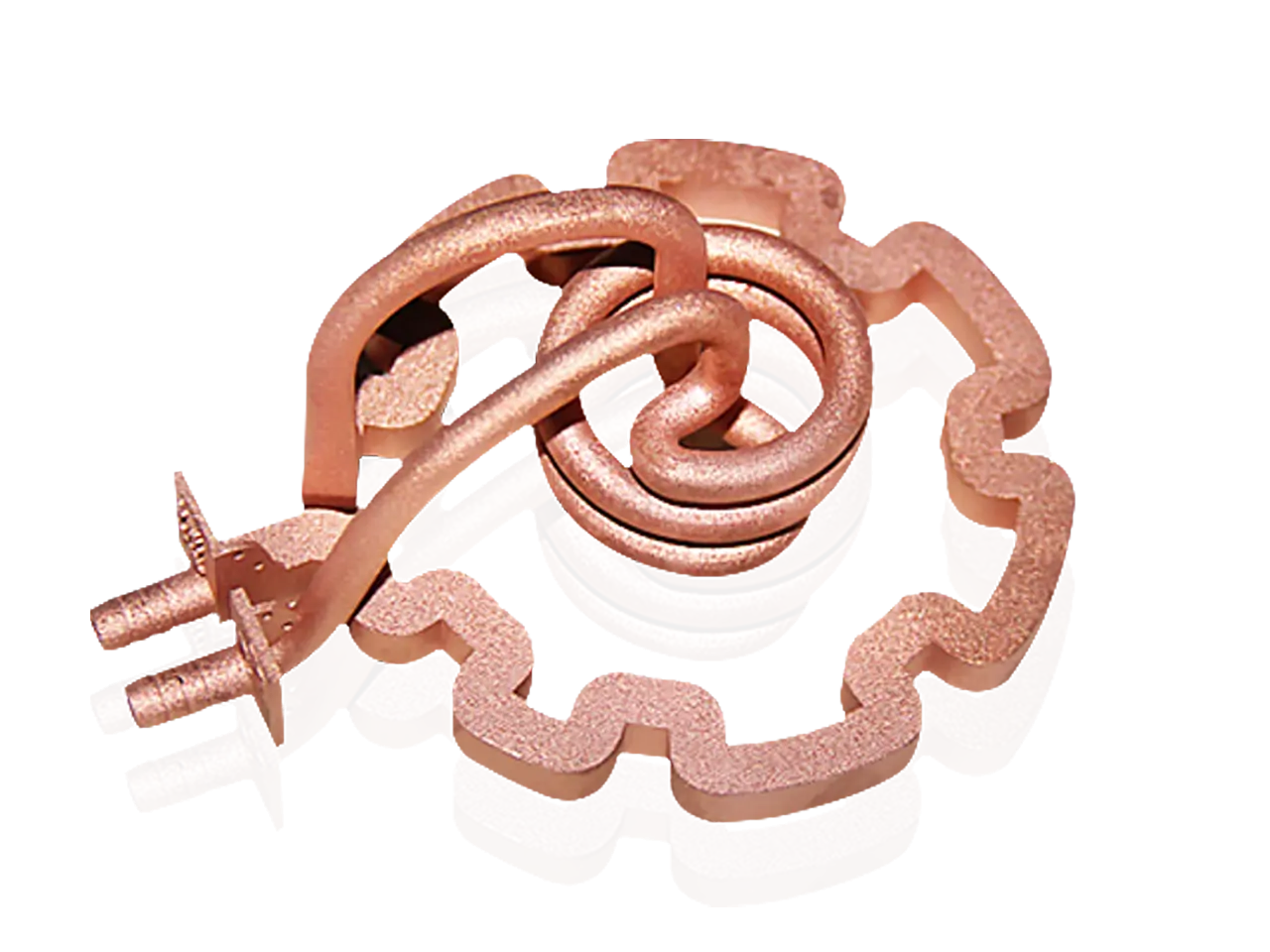
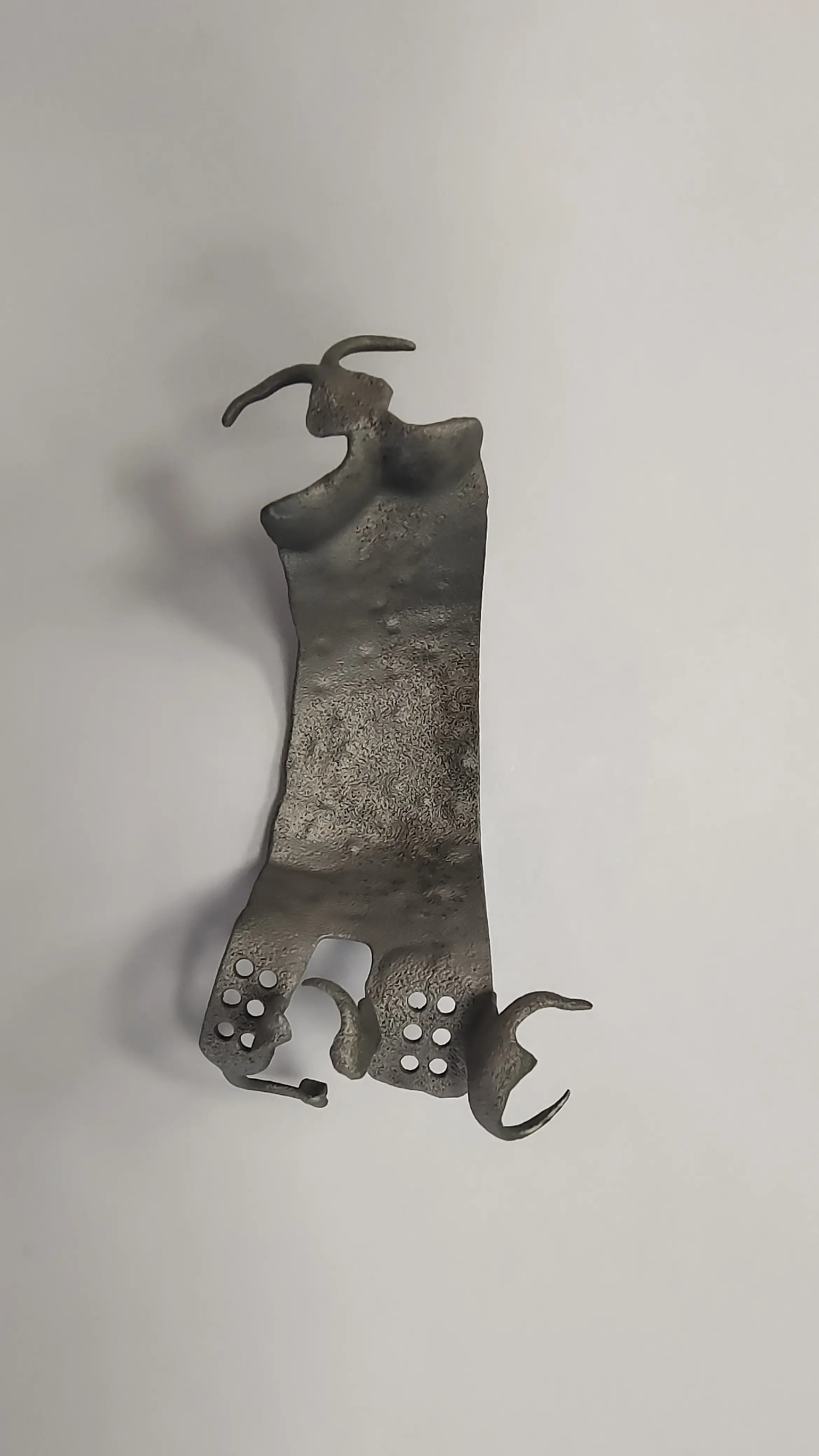
Although 3D printing (Addgen Manufacturing – AM) initially revolutionized rapid prototyping, its role has rapidly expanded into end-use production, especially for high-performance sectors such as Formula 1 and the growing number of road supercars. Companies such as Ferrari are leveraging AM technologies, especially selective laser melting (SLM) and direct metal laser sintering (DMLS) to create key components that were once impossible or expensive.
Why Ferrari (and supercars) embrace AM:
- Free design freedom: Traditional manufacturing usually imposes limits. He is a liberation engineer. Complex lattice structure to reduce automatic weight? ✔️Complex internal cooling channels in the cylinder head for optimal thermal management? ✔️Organic, aerodynamic shapes will resist conventional molding or processing? SLM builds parts layer by layer from metal powder, thus enabling the structure to achieve an advantageous strength ratio and performance that was previously unavailable.
- Radical lightweight: Each gram is counted in the supercar. SLM allows to create topologically optimized parts – place materials The only one Where structurally needed, the components are significantly lighter than the parts they milled. This translates into faster acceleration, improved processing, better fuel efficiency and higher top speeds.
- Unprecedented customization: The dream of a truly customized Ferrari becomes more realistic. Imagine custom intake manifolds, personalized brake calipers, and even unique structural elements that target a specific driver’s weight distribution preference. AM manufactures small volumes, highly customized parts economically feasible.
- Performance optimization: SLM can produce parts with optimized material properties. Controlled heating and cooling during printing can allow microstructures to be microstructured with specific requirements such as increased hardness, thermal resistance in critical engine components, or excellent fatigue strength of suspension parts. This directly improves performance and reliability.
- Speed and agility of development: AM’s rapid prototyping capabilities directly accelerate the R&D cycle. Ferrari can design, print, test and iterate components such as turbocharger housing, exhaust manifold, or aerodynamic elements in a few days rather than months. This agility is crucial in a competitive world of high-performance automotive design.
Current status: Beyond the concept car
Full 3D printing chassis Due to strict safety and regulatory barriers, Ferrari on the Highway may still be a few years away, so AM has been fully integrated:
- Equation 1: Scuderia Ferrari uses extensively SLM/DML for complex, lightweight parts (e.g., complex water pumps, headers), suspension components and aerodynamic elements. Performance growth is measured in a critical tenth threshold.
- Limited series and special edition: In exclusive models such as the Monza SP series, high value, low volume components (brackets, air intake sets, personalized elements, personalized elements) benefit from the design and production flexibility of AM.
- Tools and fixtures: Ferrari relies on 3D printing tools and fixtures to simplify the manufacturing process of traditionally manufactured parts, thereby improving the efficiency and accuracy of the assembly line.
The road ahead challenge:
Scaling AM for mass production Each Components in cars raise barriers:
- speed: Printing large structural parts can be time-consuming compared to stamping or casting.
- Material consistency and certification: Ensuring strict metallurgical characteristics and achieving management (safety certification) of critical load parts remains an important task that requires rigorous testing.
- cost: Metal powder and SLM/DMLM machines are expensive. Although feasible for small, high-value components, scaling reduces costs over time.
- Skills and Infrastructure: The transfer paradigm requires substantial investment in expertise and new manufacturing infrastructure.
Greghime: Accelerating the 3D printing car revolution
At Greatlight, we are at the forefront of metal additive manufacturing, providing advanced capabilities that enable innovation to be as good as the innovation seen in high-performance cars. As a professional rapid prototyping and cutting-edge production expert SLM 3D Printerwe not only understand this technology – we master it.
- Precision metal solution: We specialize in handling the complex geometry inherent in automotive performance parts, using advanced SLM technology to produce components with excellent accuracy and resolution (including aluminum alloys, titanium, tool steel, inconel).
- Prepared for production applications: From conceptual models and functional prototypes to end-use production parts for testing and niche vehicles, we bridge the gap between innovation and reality. We focus on solving demanding metal parts challenges.
- One-stop excellence: Our service is more than just printing. We provide comprehensive Post-processing and completion of services – Includes pressure relief, precision machining (CNC), heat treatment (e.g., aging, annealing), surface treatment (polishing, shooting, nail plating, electroplating) and meticulous quality control. This ensures that the parts meet the strictest performance and aesthetic standards required in the automotive field.
- Materials and speed flexibility: Are specific alloys required for optimal thermal or mechanical properties? Most materials can be custom made. Do you need fast parts to speed up your development schedule? We specialize in research Quick turnaround No damage to quality.
- Deep technical expertise: Our team has in-depth knowledge to optimize the design of AM (DFAM), select ideal materials and process parameters, and ensure productivity of even the most complex geometric shapes.
For automotive engineers and designers pushing the boundaries that can be possible, Greatlight is not only a supplier, but also a strategic partner for innovation. We are recognized One of the best rapid prototyping companies from Chinacommitted to delivery Customized precision rapid prototyping parts Quick and fast Competitive Price.
Conclusion: Mixed Vision
In the near future, it is unlikely that Ferraris completely spit out by 3D printers. But Ferrari’s future is undoubtedly Made By 3D printer. Adoption of SLM and other metal AM technologies will continue to accelerate, and is critical to key components that are critical to weight, complexity and performance. result? Ferrari (and supercars) are lighter, faster, more efficient, more powerful, more powerful, and even more personal than ever before. This technological shift does not represent a replacement for the Ferrari soul, but is enhanced – leveraging the precision and possibilities of modern manufacturing to further enhance the art and science of the automotive excellence. Revolution is additive and is happening now.
FAQ: 3D Printed Ferrari
Q1: Does Ferrari actually use 3D printing?
A1: Absolutely, broad. While not suitable for the entire car, the Ferrari F1 utilizes metal 3D printing (SLM/DMLS) for many critical high-performance components, such as complex engine and suspension parts. Their road cars, especially limited editions and prototypes, are increasingly incorporating 3D printed elements for stands, air intake systems and custom functions.
Q2: Is a fully 3D printed Ferrari chassis?
A2: Technically, yes – the prototype exists. However, mass production Highway Lawonly passed the safety certification faced by AM, a large number of chassis faced with major challenges related to costs, production speed, material certification for major structures, and compliance with strict collapse regulations. This is the main engineering obstacle to mainstream production.
Q3: What are the main metals used in 3D printing for cars such as Ferrari?
A3: High-performance alloys are the key:
- Aluminum alloy (e.g., Alsi10mg): Lightweight, good strength for shells, brackets, pipes.
- Titanium alloys (for example, Ti-6al-4V): Special strength to weight ratio and corrosion resistance, ideal for critical suspension parts or load-bearing components.
- Nickel-based superalloys (e.g., Inconel 718): Excellent high temperature strength and corrosion resistance are crucial for exhaust components and turbine components.
- Tool Steel: Used for durable fixtures, fixtures and certain functional internal components.
Question 4: What are the biggest advantages of using AM for supercars?
A4:
- Lightweight: Topology optimization creates parts with the smallest material.
- Complex geometric shapes: It is impossible to turn machine parts into reality (lattice, internal channel).
- Performance optimization: Customized material properties and improved thermal/hydrodynamics.
- Rapid prototype and iteration: Rapidly accelerates the development cycle.
- Custom: Feasible customization, production of low-quality parts.
Question 5: How does Greatlight specifically support innovation in automotive 3D printing?
A5: Gremply
- Advanced SLM technology: Accurate printing of complex metal components.
- Material expertise: Consult and produce various automotive grade alloys.
- Comprehensive production services: In addition to printing: precision processing, heat treatment, surface finish, quality inspection.
- Designs supported by AM (DFAM): Optimized design and manufacturable design.
- Speed and flexibility: Quick turnaround on custom parts to adapt to demanding project schedules. Greglight is a solution provider for rapid prototyping and production needs of complex metals.
Ready to bring your high-performance automotive innovation to life? Contact Greatlight today to discuss your custom metal 3D printing project and experience the benefits of precision, speed and expertise.