3D Printed Glock 17: Complexity of Navigating Gun Prototypes (Technical Exploration)
The concept of 3D-printed guns, especially something as ubiquitous as the Glock 17, is surrounded by intense fascination, major technical obstacles, complex legal minefields and profound moral considerations. It represents a collision with cutting-edge manufacturing technologies of long-term regulations and social norms. While some corners of forums and internet buzzing with DIY projects, the reality that generates reliable, safe and Legal The polymer pistol frame made from additives is far from simple. The exploration aims to dissect multiple realities from an engineering and professional rapid prototype perspective, emphasizing the key role of expertise and regulatory compliance.
Beyond Blueprint: Glock Framework as Engineering Challenge
The framework of Glock 17 is a seemingly complex component. It’s not just a simple plastic shell; it’s the core structural basis of the gun, which bears the huge stress generated during the shooting cycle:
- High impact: During operation, the recoil spring assembly and the sliding reciprocating force hit the frame bar with significant kinetic energy into the frame bar. Injectable polymer frames achieve strength through precisely designed geometry, fiber reinforcement and reliable locking mechanisms.
- Shear and tensile pressure: Shooting creates the force that attempts to pull the barrel/chamber assembly horizontally and longitudinally. The frame must resist these shear and tensile forces, where the locking blocks and rail interface.
- Continuous loop loading: Unlike many static prototypes, gun frames endure thousands of cycles of high pressure loads. Fatigue failure is a major problem with 3D printing polymers.
- Thermal stability: Repeated emissions heat the chamber area and while the frame is not usually exposed to direct heat, the surrounding components can generate higher temperatures, while the frame material must withstand without deformation.
Material Reality: Why Ready-made Silk Failed
Most desktop Fusion Deposition Modeling (FDM) printers use thermoplastics such as PLA, ABS, and even PETG.
- Insufficient strength: These standard wires lack the necessary tensile and impact strength, especially in key track parts of the metal that slides violently. PLA is affected and vulnerable. ABS has better toughness but lacks stiffness.
- Anisotropy: FDM parts have anisotropic properties. Layer adhesion weaknesses, especially along the Z-axis (building direction), create potential fault planes under complex load conditions seen in the gun frame.
- Creep and dimensional instability: Under constant load and heat (even moderate), thermoplastics creep (deform over time) or expand, causing key dimensions to move. Loss of tolerance in tracks or pin holes quickly renders the frame unsafe or non-functional.
- Absorb moisture: Many thermoplastics absorb moisture from the air, further degrading mechanical properties and dimensional stability.
this "Enhanced polymer" Solution (and its skeleton):
Some platforms recommend using "high temperature," "High intensity," Or reinforced filaments such as nylon-CF (nylon carbon fiber) or PEKK-CF.
- Claimed improvements: These materials provide better layer adhesion, higher temperature resistance, higher stiffness and improved strength than standard wires.
- Verification Questions:
- Pressure concentration: Even strong materials are intrinsic with microscopic voids (inherent to FDM) and non-metals that are inherently acute angular stress concentrations.
- Railway fatigue: The continuous hammering action of the slide on the weakly reinforced printing track remains the main point of failure. Multiple real-world tests show that these tracks crack, stratify, or shear well below expected circular counts in catastrophic circumstances. This is not a "It may fail" Imagine; the evidence strongly implies "Will fail" For long-term use.
- Layer adhesion limit: Although better than PLA/ABS, layer adhesion in reinforced nylon remains a limiting factor under anisotropic load.
- Interface combination: The bond strength between polymer and critical embedded metal locking block insertion or track reinforcement kit is critical and difficult to be perfectly secured by the printing process on the desktop.
- Dimensional Accuracy and Installation: Consistently inserting reliable sliding assembly, triggering features and magazine insertion required sub-mm tolerances, especially warping trends in nylon, is challenging and heavily dependent on printer calibration and skills.
Metal additive manufacturing: Power and Accuracy – Warning
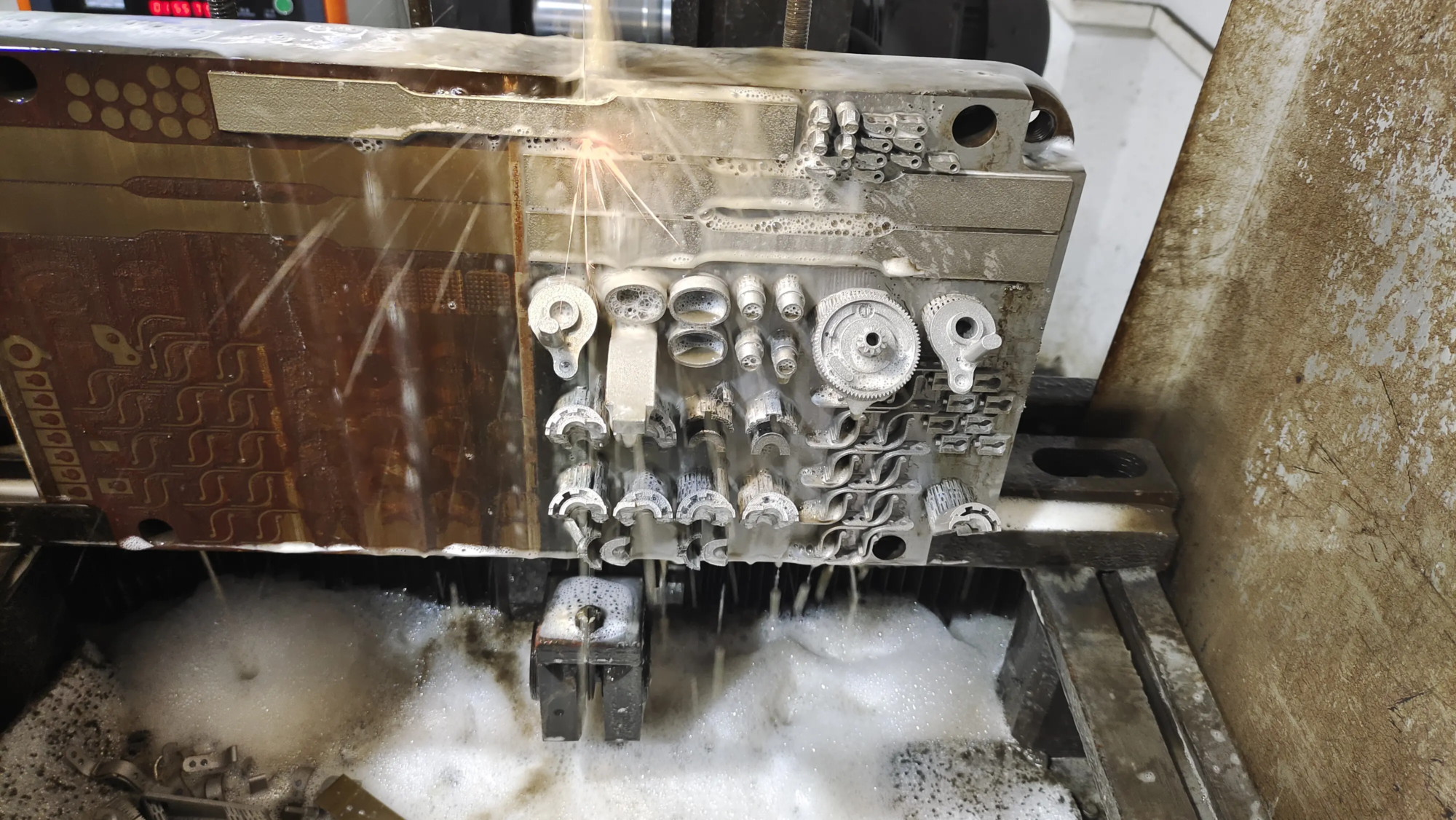
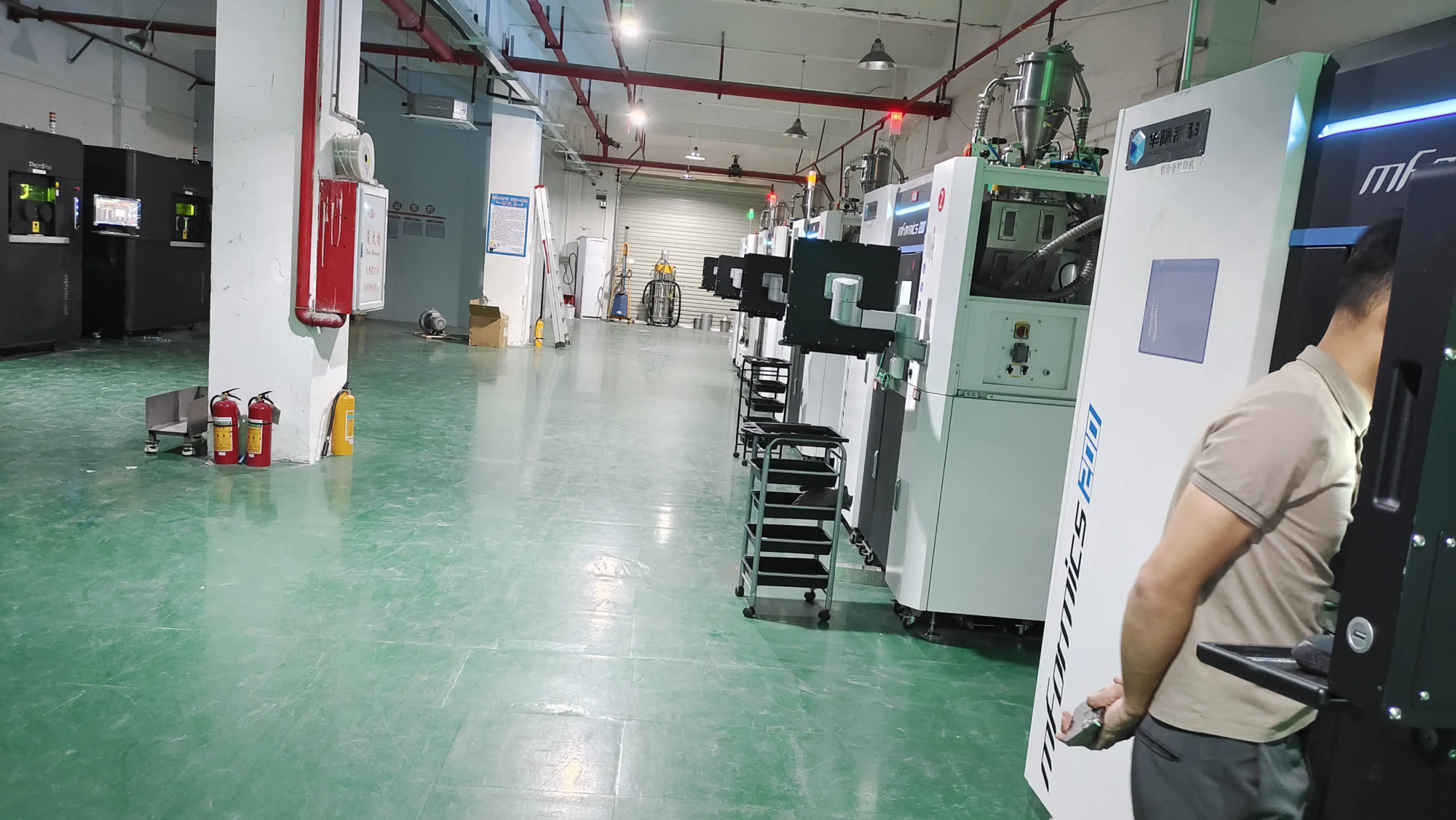
For professional prototype manufacturers and regulated manufacturers, metal additive manufacturing (such as selective laser melting-SLM) provides avenues for potentially viable polymer frame replacement. Companies like Greatlight use SLM technology to directly use powdered metal printing parts such as stainless steel (17-4 pH, 316L), titanium alloy (TI6AL4V), aluminum alloy (ALSI10MG), and even professional materials such as Maraging Steel.
-
promise:
- Excellent strength and durability: SLM metal parts approach or exceed the mechanical properties of forged steel, allowing them to handle gun stress easily. Fatigue life has been significantly improved.
- Complex geometric shapes: SLM can create complex internal channels and complex shapes that bypass traditional machining restrictions.
- High precision and repeatability: Compared to FDM, SLM has excellent dimensional accuracy and near mesh shape of the surface surface, minimizing the post-processing needs of critical interfaces.
- Potential for comprehensive features: Design iterations can be assumed to include lightweight lattice structures or other topological optimizations that are impractical with machining or molding.
- Obstacles (especially guns):
- Classification transfer: Print frame (regulated gun serialization part) fundamentally changes classification in metal and may regulate the adjustment of components.
- ITAR and Exit Control: Technical data on gun design and production, including CAD files for components such as frameworks, are strictly controlled under U.S. ITAR (International Transportation in Weapons Regulations) and similar systems around the world. It is illegal to transfer or own such files without authorization. Even discussing the details of internal use for internationally engaged companies such as Greatlight requires strict compliance procedures. Without clear, proven legal authorization and regulatory permission, Greglime will not and will not print the gun frame.
- Serialization and traceability: Legal gun manufacturing requires strict serialization and traceability protocols that may not be inherently integrated into the AM workflow without the need for extensive adaptation and regulatory approvals.
- Professional background only: SLM is expensive, complex and requires a lot of expertise – stay away from DIY efforts. It is used for gun components only in highly regulated, licensed manufacturing environments, no Private printing.
Legality: The inevitable maze
Ignoring the legal landscape is not an option. Regulation has changed a lot around the world and even within countries:
- Regulated Components: The gun frame (receiver) is always legally classified as firearms In most jurisdictions. Making this part, regardless of the method (including 3D printing), almost always requires a federal manufacturing license.
- Without permission "Ghost gun": Create a gun without a serial number ("Ghost gun") is illegal in an increasing number of countries and in many U.S. states. Deliberate production of this weapon can be punished with serious felony punishment.
- itar/ear: As mentioned earlier, technical data control is crucial. It is illegal to distribute or use controlled defense technology to produce technologies.
- Local police inspected: Even uncontrolled prototypes, similar to real guns, can cause dangerous encounters by police.
- Greglight’s position: As a well-known and legally compliant international manufacturer, Greatlight strictly complies with all applicable export control regulations (ITAR, EAR) and national gun laws. We do not create, prototype or provide services that can be identified as components that require serialization or any part of a functional weapon system under the Weapons Act without explicit authorization and licensing. Our expertise is for authorized, legal industrial applications only.
Where Greatlight is good at: Controversy beyond guns
Greatlight has very powerful advanced SLM technology, material expertise and precise completion capabilities Legal Engineering Challenges. Think about it:
- High performance brackets and mounts: Complex, super-brackets for aerospace, automotive or robotics applications.
- Conformal cooling plug-in: Advanced SLM enables complex internal cooling channels in injection molding tools to improve cycle time and part quality.
- Biocompatible medical implants: Customized surgical guide or titanium printing of bone fixation plates.
- Lightweight structural components: Topologically optimized parts that combine minimal weight with maximum strength of a robot or drone.
- Heat-resistant engine assembly: Powered by turbine blades or complex fuel system parts.
- Customized industrial tools: Fixtures, fixtures and instruments require high precision and durability that can be optimized for specific production lines.
Conclusion: Knowledge, Responsibility and Ethics Application
3D Ideas to print Glock 17 into a theme that enhances technology capabilities and DIY creativity. However, the actual implementation of functional guns is irreconcilable with the huge technical barriers on desktop FDM printers and the legal and ethical constraints on all platforms. Desktop strives to take the risk of catastrophic failures and users. Professional metals are as technically capable as SLM, but operate in a strictly regulated environment, gun assembly manufacturing requires clear licensing and compliance with complex export controls.
As a leader in professional rapid prototyping, Great Supports SLM technology to solve complex engineering problems. We utilize advanced equipment, deep material expertise (17-4 pH, Ti6al4v, Alsi10mg, Maraving Steel, etc.) and a comprehensive post-processing service to deliver high-quality metal prototypes and end-use parts. However, this capability is deployed with a firm commitment to legitimacy, security and moral responsibility. We apply our expertise to Accelerate legal innovation In aerospace, medical, automotive, industrial automation and countless other progressive fields, not important protections around controlled technology.
FAQ: 3D Printing Glock 17 and Greatlight Features
-
Can I legally print out Glock 17 frameworks at home?
- In most countries, increasingly at the state and federal level in the United States, gun frameworks without manufacturer licenses (regulated parts) are illegal. It is also illegal to manufacture firearms. Distributing CAD files (canonical defense data) usually violates ITAR. Desktop printers also often lack the ability to make Safety works frame.
-
Is the 3D printed Glock framework actually reliable?
- Frames printed on standard FDM printers using standard FDM printers typically fail on dozens of critical slides for at least hundreds of turns due to insufficient strength and layer adhesion under dynamic impact loads. They continue to be used reliably or safely. While professional metal AM can theoretically be used, this is inaccessible or legally authorized by the factory.
-
Can Greglight 3D print metal Glock frames for me?
- No. Greatlime strictly complies with all International Trafficking Regulations (ITAR/EAR) and national gun laws. We do not manufacture, prototype or service components regulated for firearms, or do not require explicit, verified legal authorization and necessary manufacturing licenses from relevant authorities.
-
What metal materials are used in SLM printers?
- Greatlight utilizes a range of industrial grade metal powders, including stainless steel (316L, 17-4 pH), titanium alloy (TI6AL4V), aluminum alloy (ALSI10MG, ALSI7MG), Nickel Alloys and tool steel (including Maraging Steel). Material selection is driven by application requirements for strength, corrosion resistance, biocompatibility, weight or thermal properties.
-
What kind of post-processing services does the good metal 3D printed parts provide?
- Greatlight offers a comprehensive aftertreatment kit to meet demanding specifications: precise CNC machining, for tight tolerance, heat treatment (annealing, aging, solution treatment, hip), various surface finishes (bead blasting, polishing, tumbling), EDM, EDM, surface coating, components, assembly and size/size/size/size/size/size/test reports. We offer true one-stop manufacturing.
-
Which industries of Greatlight mainly use its metal 3D printing?
- GreatLight’s professional SLM services are utilized across industries requiring high-performance prototypes and production parts: Aerospace (brackets, ducts), Automotive R&D (lightweight components, tooling), Medical (implants, scientific guidelines – with biocompatible materials & certifications), Robotics & Automation (complex structural parts), Industrial Machinery (heat-resistant components, tooling), and consumer electronics research and development.
- What are the advantages of choosing Greatlight for complex metal prototyping?
- Customers from our Advanced multi-laser SLM system Achieve larger builds and faster speeds, Deep material expertise Cross-functional alloys, Comprehensive internal organization functions, Specialized engineering team for design optimization (DFAM), Strict quality control Throughout the process, and Quick turnaround time and Competing Price. We have effectively solved complex production problems.