Beyond the Hype: The Engineering Reality of 3D Printing Gun Barrels
The rise of additive manufacturing, especially metal 3D printing (AM), has continuously pushed the boundaries and has sparked innovation and controversy. One theme that guarantees the debate is feasibility 3D printing function, reliable gun. And fully printed images "Ghost gun" Rich online, metal barrels remain the final crucible of pressure and physics. As a leader in industrial rapid prototyping with extensive expertise (SLM) in selective laser melting, we go beyond the hype to explore real engineering challenges and current reality.
The brutal operating environment of the barrel
Before dissecting printability, understand the barrel’s ability to withstand during shooting:
- Extreme pressure: Centerfire rifles can generate More than 60,000 psiimmediately apply huge radial stress on the chamber and barrel wall.
- Strong calories: The combustion gas temporarily reached thousands of degrees Celsius, resulting in severe thermal gradients and cyclic fatigue.
- Abrasive wear: The high-speed propellant gas and the projectile itself will (erode) the surface of the hole over time.
- Tensile pressure: The twisting force of the rifle imparts huge torsional stress.
- Precision dimension stability: Microscopic deviations in the diameter of the drill hole or the geometry of the rifle can greatly affect accuracy, speed and safety.
Forged or processed barrels from heat-treated steels such as chromic acid alloys (4140, 4150) or stainless steel (416R) have been developed for centuries to meet these needs. Can the printed barrel match?
SLM printing function: potentially encounter traps
SLM combines fine metal powder with high power laser, building parts layer by layer. Its advantages over complex parts are undeniable. But for the gun barrel:
-
Advantages:
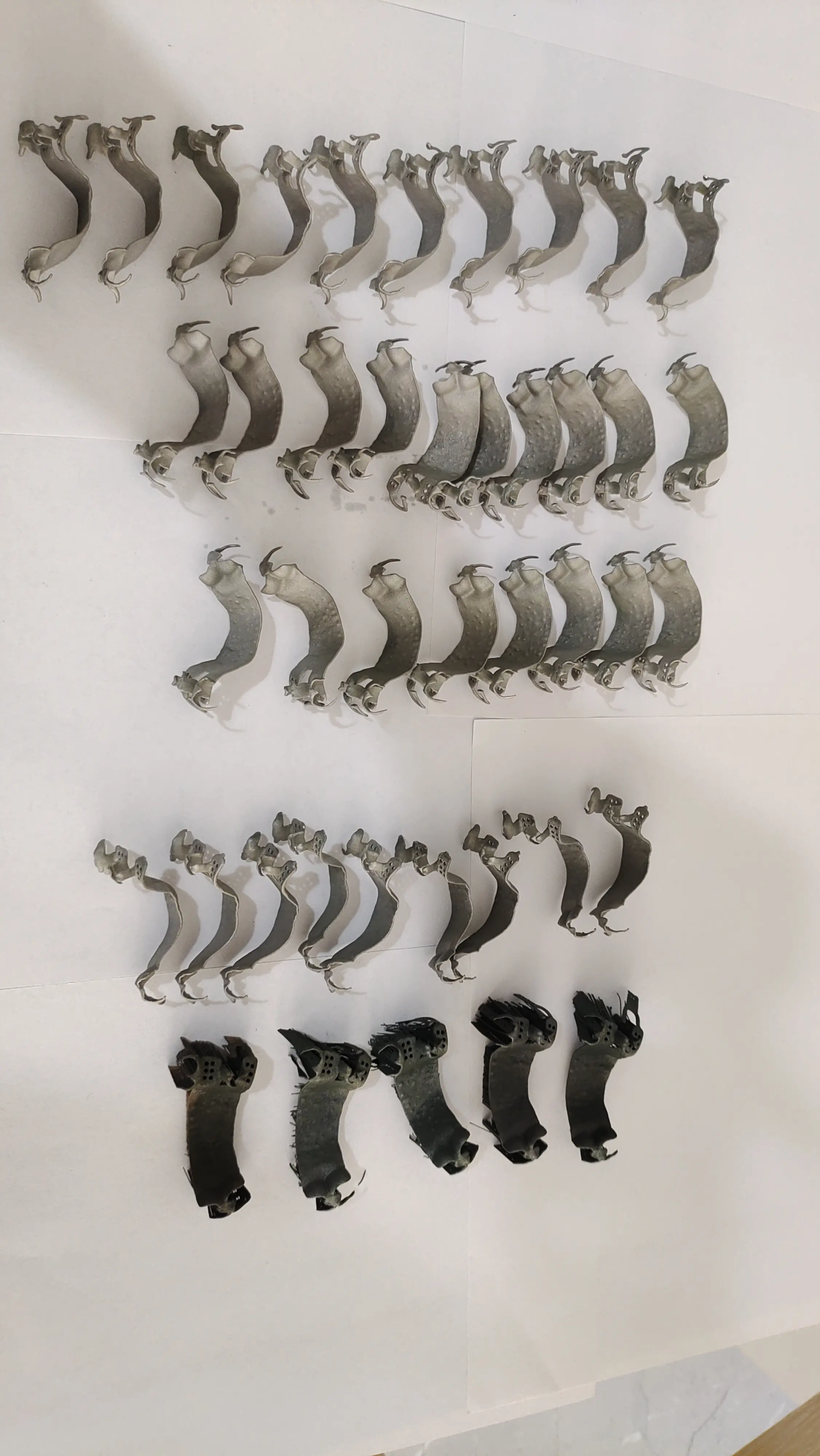
- Complex geometric shapes: The potential of integrating features or optimizing cooling channels is possible by machining new pore shapes that cannot be achieved. Greglight’s SLM system can produce complex internal profiles.
- Material versatility: Print high-performance alloys such as Maraging Steel, tool steel or specific nickel superalloys yes Possible. We usually work with demanding aerospace alloys.
- Rapid prototyping: Rapid iteration of new designs for testing concepts (low voltage experiments).
- Key Challenges and Limitations (Current Status):
- Material integrity is crucial: Printing introduces microscopy Porosity, impermeable particles and inclusions. These are the stress concentration points. Under the enormous, instantaneous pressure of gun discharge, these defects can act as nucleation sites for catastrophic failures (a "Burst bucket").
- Anisotropic characteristics: Compared to the construction plane (XY), SLM parts usually have different mechanical strengths along the printing direction (Z axis). For barrels, this means that the circumferential strength (processing pressure) may be compromised due to the direction of printing.
- Residual pressure and distortion: The strong local heating/cooling inherent in SLM creates internal stresses within the metal. This may result in removal from the build board or distortion during subsequent heat treatment, which may impair dimensional accuracy that is critical to the barrel function.
- accomplish "Barrel quality" Surface finish: The newly made barrel has very smooth, polished holes for low friction and continuous interaction with the projectile. The inherent layer lines and powder adhesion in SLM leave a rough surface texture (average surface roughness, RA). This original surface greatly increases friction, accelerates wear/erosion, reduces speed and impairs accuracy. Post-treatment laser polishing or flow drilling is both complex and expensive.
- Heat treatment complexity: Achieving optimal strength in complex alloys through AM (through hardening and tempering) requires a highly specialized, usually customized heat treatment cycle. Warp and oxidation control have become a huge challenge. Greatlight uses advanced annealing and heat treatment solutions, but barrel-level consistency is difficult.
- Material Qualifications: Materials specified for gun barrels have very tight chemical composition tolerances and performance standards (e.g., MIL Spec AA-52142 / MIL-B-11595 for barrels). Based on these reliability and safety, a specific 3D printed alloy batch qualified to these standards Very complex and expensiveeven for industrial manufacturers.
- rifle: Using standard SLM parameters, it is still very difficult to print accurate, consistent, hardened spiral rifle grooves inside (especially as a drilling shrink).
Where is the feasibility today?
Let’s make it clear:
- Directly replace the service-grade barrel? Unsafe and unrealistic. Combination of pressure integrity, life, accuracy and consistency required for safe and reliable service in high pressure guns, as well as parts and parts produced by widely available SLM systems and known materials/practices Not feasible at present. The risk of catastrophic failure due to undetected internal defects or material inconsistencies is too high.
- Proof of concept and low voltage applications? There may be warnings. Under controlled conditions, the clever man has successfully fired hundreds of low-voltage rounds (e.g., .22 LR fired from solid steel barrel blocks). Newbie prototypes often suffer rapid erosion, poor accuracy or premature failure. This proves the technology possibility But far from practical reliability or performance.
- Prop gun/replica? Excellent application. For non-shooting props or display purposes that do not involve pressure bearings, 3D printing is perfect – providing significant details and complex shapes through forging.
- Research and development tools? Very valuable. AM allows for rapid experimentation on new lightweight structures, cooling concepts, or alternative transplants that can inspire future designs. Print test concept Even if the final production barrel is still being processed, it will make a significant contribution to innovation.
- Make SAMMI prevent load from invalidating? Not likely immediately. Reputable manufacturers verify the barrel, exceeding the standard pressure. Current printing barrels strive to meet standard The pressure of safety, not to mention the tour that lasts consistently. The Defense Logistics Agency maintains strict standards (MIL-STD-171) to prove that the current AM process cannot be commercially satisfied with conventional barrels.
- Mixed method? Potential future paths. Combining printed near mesh parts (including complex internal functions such as baffles) with traditional machining and honing of holes may lead to performance advantages, but pressure-rich structures (primary barrel tubes) may still rely on traditional materials and processes for real safety and life.
Conclusion: The engineering mountain to reach the top is still there
And 3D printing, especially SLM, offers huge potential for guns Element Prototyping and innovation, printing Reliable, safe, high-performance barrel, capable of handling repeated high pressure The current use of services is still beyond the scope of current mainstream industrial metal AM functions. The obstacles to material consistency, microstructure integrity, anisotropy, residual stress management, and achieve pore tolerance and surface finish are enormous.
At Greatlight, we leverage our advanced SLM technology and a deep understanding of alloy behavior every day to solve complex rapid prototype challenges. Even though for us, consistently producing metal parts that can reliably replace advanced forging/mechanical barrels involves overcoming fundamental materials science and structural engineering challenges, we have not yet cracked in large-scale applications. Although ruthless R&D pushes boundaries, responsible engineering decisions confirm current limitations.
The barrel of the gun operates under the most extreme conditions of any mass-produced mechanical parts surface. Replicating the centuries of metallurgical exquisite and precise manufacturing in the printed section is a daunting task. 3D printing offers a revolution, but may be reshaping About The current barrel, rather than temporarily replacing its core forging legacy – at least when life depends on its absolute reliability.
FAQ: 3D Printed Gun Barrel
-
Q: Can you actually fire a 3D printed metal barrel?
- one: Technically speaking Possible Transmit low-voltage ink cartridges (e.g. .22 LR) Metal In controlled conditions, maybe multiple rounds. But, Unreliable, undustable, much less precise, and a significant risk of catastrophic failure (explosion) when first shot or when used with standard/high pressure caliber.
-
Q: What are the main technical reasons for 3D printing buckets unreliable?
- one: Internal material defects It is the main problem. Microscopic voids (porosity), incomplete melting of powder particles or impurities inherent in the SLM process (various degrees) can create weaknesses. Under instantaneous and extremely stress of the shooting event, these defects can immediately turn into cracks, resulting in rupture. This is different from surface defects.
-
Q: Are materials like steel steel strong enough when printing?
- one: Printed steel able After proper heat treatment, high ultimate tensile strength (UTS) Strength is not the only factor. this toughness (Resist the spread of cracks), Depthymosiscrucial, Internal integrity (The lack of critical flaws) is also crucial. Achieving consistent defect-free toughness with forged barrel steel throughout the barrel volume is a huge obstacle, not just the title UTS numbers. Different metallurgical control pressure control.
-
Q: After printing, can’t you drive the drill to make it smooth and accurate?
- one: You absolutely must After printing, the machine and grind the holes just to get close to the necessary dimensional tolerances and finishes (ideally, RA <0.8 µm). But, this The potential potential of undetected internal defects (porosity/inclusions) will not be eliminated Deeper inside the barrel walls, it can still cause failure under pressure. It only holds the interior finish. Deep hole drilling, rifle and precision holes in grinding printed metals can also face unique challenges due to the underlying material structure. Greatlight provides processing and grinding post-processing for CNCs, but it does not overcome the basic material integrity issues upstream.
-
Q: Didn’t the polymer gun frame be successfully printed? Why not bucket?
- one: In cases such as mergers and acquisitions, polymer frameworks (such as FDM printed frameworks) "destroy" Litigation is mainly used for structural housing Metal Element. them No high pressure gas Just like the chamber and the barrel. The pressure involved is an order of magnitude lower when distributed on the lower frame surface. Polymer parts buckle, the barrel experienced annular bursts of over 50,000 psi, concentrated in small areas. Material requirements are completely different.
-
Q: Is this all due to cheap printers? Can industrial SLMs like Greatlight be solved?
- one: Compared to enthusiast machines, industrial SLM systems offer excellent process control, repeatability and material handling, but Basic materials science challenges remain. Aerospace SLM parts are strictly inspected/tested (X-ray CT scan, ultrasound-UT, penetration test) because internal defects are still occurring. Barrel holes specifically used for high-energy radiography imaging are difficult and expensive. While Greatlight has advanced features, it always guarantees economical resistance to repeated proof pressures of DOD standards, which are defective at all times that are not within the standard manufacturing feasibility.
-
Q: Are printed barrels feasible?
- one: Materials science and process control in AM are developing rapidly. Techniques such as heat (hip) can reduce porosity, and specialized alloy and printing parameters are being studied. However, achieve absolute reliability, lifespan, performance and economy The manufacturing of replacing forged/processed barrels in high-performance guns remains a distant goal, rather than near future certainty. The bar (Saami Specs) is very high.
- Q: What about low-pressure applications such as black powder or air gun?
- one: As the pressure decreases, the feasibility increases greatly. Air rifle’s printed barrel (~3K PSI peak pressure) or black powder revolver (~10K-15K PSI peak) is Closer It is actually possible, although lifespan and precision may still lag behind traditional barrels. Surface finishes are still crucial for accuracy and friction reduction. The performance of machining holes is still strongly recommended. Greglight can certainly prototype the functional components here.
[GreatLight Logo/CTA Placeholder]
Greghime: Responsibly pushing precise boundaries
We specialize in research High-performance metal rapid prototyping use Advanced SLM and near mesh technology. While the feasibility of printing high-pressure gun barrels faces significant obstacles, we excel at creating complex, structurally-on-metal components that meet demanding aerospace, automotive, medical and industrial requirements. Rely on our expertise Materials Science, Precision Printing and Professional Post-processing For your key projects. Contact Greatlight today for a quote about your precise manufacturing needs. We solve Real Engineering Challenges.