

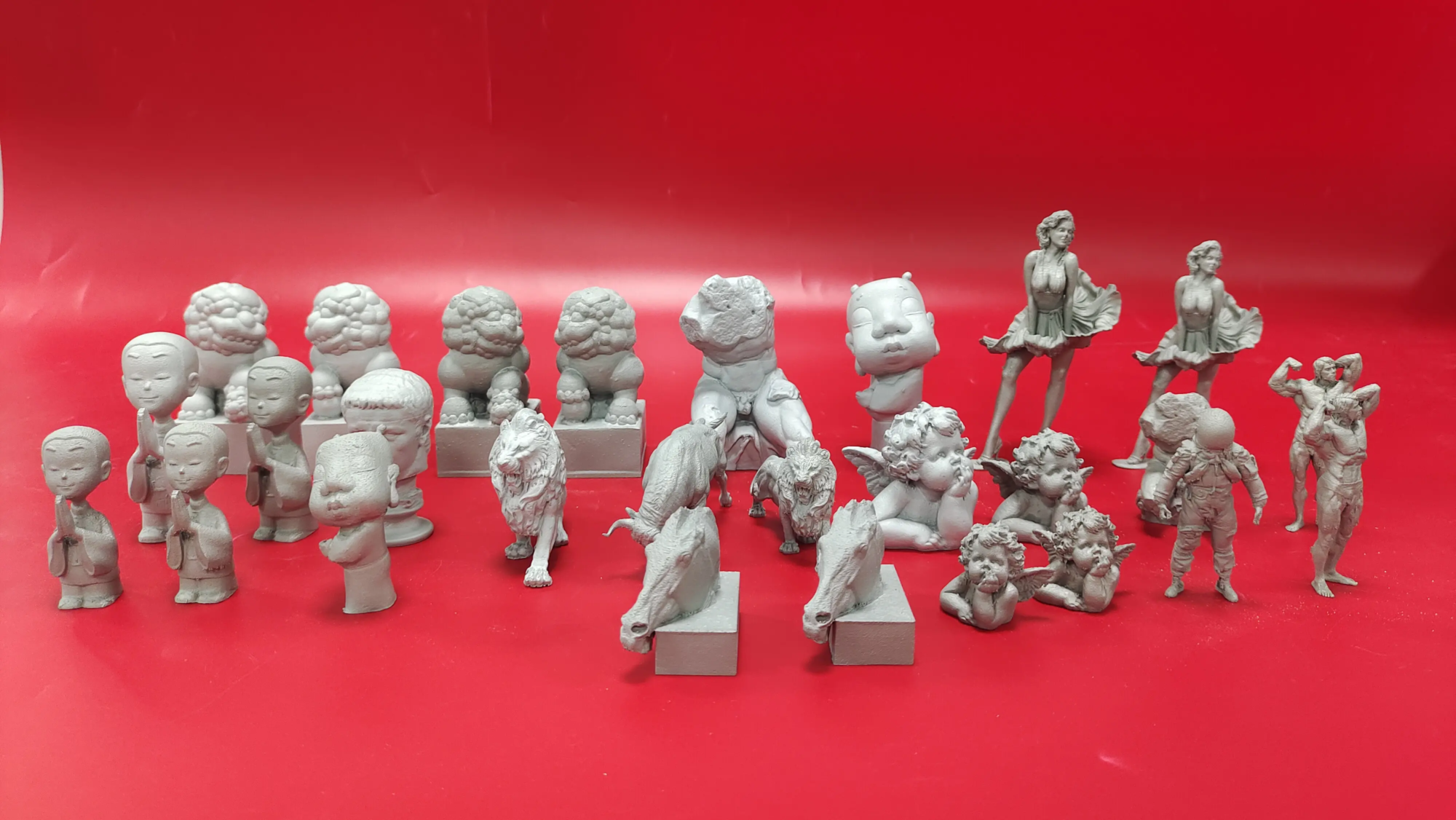
Perfectly Made: The Complete Guide to 3D Printing Gunpla Parts (And When to Turn Pro!)
The world of gunpla (Gund wartime plastic model) building is an exciting hobby that combines complex assembly, detailed painting, and endless customization. For experienced builders looking to push the boundaries—repair rare broken parts, recreate elusive variants, or design fully customized mobile suits—3D printing opens up endless possibilities. But where do you start? This comprehensive guide will walk you through the process of 3D printing Gunpla parts, from digital design to final completion, and explore whether working with a professional service like GreatLight may be your best option.
Why choose 3D printing Gunpla parts?
- Replace hero: Salvage a valuable piece of kit that’s damaged beyond repair, or find parts for a discontinued model that’s no longer available.
- Custom creation: Design unique weapons, shields, accessories, and even entire limb assemblies to personalize your mobile suit beyond the standard kit.
- Enhance details: Print highly detailed surface textures, complex vents, or tiny geometries that can be simplified in injection molded plastic.
- Testing and prototyping: Quickly prototype a new joint design or joint system before committing to a more permanent solution.
- Scale variance: Create parts for non-standard scale or large diorama elements.
Your DIY 3D Printing Journey: Step by Step
Before turning on the printer, let’s understand the basic steps:
- Digital Blueprints: Find or create your model
- Get STL: Explore platforms like Thingiverse, Cults3D or the dedicated Gunpla forum. Specific search ("MG Nu Gundam replacement funnel," "Custom Zeon Shield"). Validation of size and printability review (if applicable).
- CAD design: For true customization, mastering CAD (computer-aided design) is crucial. Tools such as Fusion 360, Blender (for organic shapes) or Tinkercad offer different levels of sophistication. Focus on:
- Forge AssassinationSize and fit: Use calipers to match pin/hole size exactly (Absolutely key!). Consider material shrinkage (see below).
- geometry: Make sure the model is watertight (no holes). Wherever possible, avoid unsupported overhangs exceeding 45 degrees. Designed with support removal in mind.
- Wall thickness: Keep wall thickness to a minimum (typically 1.2mm+ for FDM and 0.8mm+ for resin) to ensure durability. Thinner sections can easily fail.
- direction: Optimize positioning on the print bed to minimize supports and maximize structural strength along stress


