introduce
The integration of 3D printing and guns has sparked heated debate and innovation, raising questions about the role of technology in manufacturing, while challenging regulatory frameworks. As a leader in metal 3D printing, Great Drive these complexities every day, focusing on legal, high-risk industrial applications such as aerospace and medical devices. This article analyzes the technological reality of 3D-printed guns, separating hype from engineering truth.
Technical breakdown: How to work
Materials and methods
- Plastic Polymer Printing (FDM/FFF):
DIY design like "Savior" Thermoplasticity (PLA, ABS) was used by fusion deposition modeling. Although accessible via desktop printers, these materials lack the structural integrity of repeated shots. Stress fractures and barrel deformities are common and risk catastrophic failure. - Metal additive manufacturing (SLM/DML):
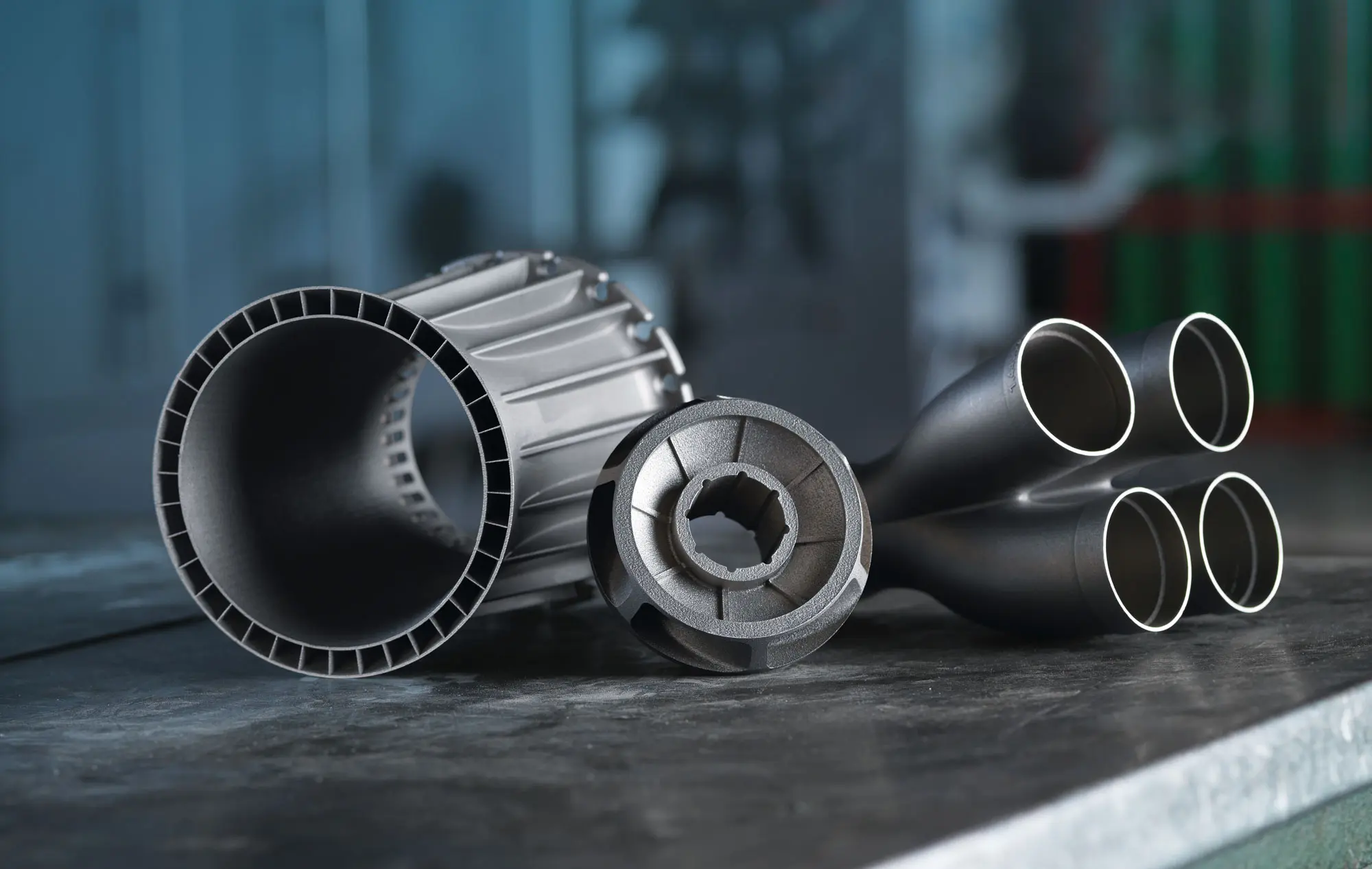
Industrial-grade process Selective laser melting (SLM)–Greglight’s professionalism– One layer of stainless steel, titanium or inconel powder. SLMs create dense, heat-resistant components that can withstand gun pressure. However, this requires a $100K+ printer and controlled environment, not a garage setup.
Design and file distribution:
Digital blueprints (for example, from Defcad) loop through a decentralized platform. Unverified, untested designs lead to unpredictable performance.
Post-processing:
Original printing requires grinding, heat treatment and surface finish. Crucially, Greglight’s one-stop post-processing (Shot Peening, CNC machining) Ensure dimensional accuracy that is critical to critical safety components – this step is often skipped in DIY builds.
Technical Challenge: Why Reliability Fails
- Material fatigue:
The polymer is degraded at periodic pressure and heat. After a limited turn, even reinforced nylon (e.g., carbon fiber PA). - Pressure tolerance:
The chamber pressure in a standard ink cartridge (e.g. 9mm: ~35,000 psi) exceeds the thermoplastic limit. Metal-printed parts work better, but precise metallurgical agents are required to avoid microcrack breeding. - Regulatory compliance:
Serialization and detection: The U.S. Undetectable Guns Act prohibits plastic guns without metal embedded. Professional SLM printing uses detectable metals essentially, but is still strictly regulated.
Legality and Ethics: Navigating the Gray Area
- Ghost gun:
In some U.S. states, unlicensed DIY guns are legal, but are banned in the EU, Australia and Canada. Manufacturing, sold without a license, violates global federal laws. - Professional background:
Licensing entities (such as defense contractors) use metal 3D printing to make prototypes or custom components. Greglight specializes in cooperation with the compliance industryimplement strict project reviews to prevent illegal use.
Greglight’s Role: A Role of Excellence in Professional 3D Printing
While DIY guns have dominated the headlines, Industrial Metal AM converts regulators:
- aerospace: Lightweight, topologically optimized components.
- Medical: Biocompatible implant with complex lattice structure.
- car: Durable brackets and heat exchangers.
Our SLM features deliver:
- Material versatility: Stainless steel (17-4ph), Titanium (Ti6al4v), Aluminum (ALSI10MG).
- accurate: ±0.1mm tolerance and RA3.2μm surface finish is completed.
- Security Agreement: Complete traceability, ITAR compliance and DRM saved files.
in conclusion
3D printed guns represent a double-edged sword of technology: enhancing innovation capabilities while requiring strict supervision. Technically, plastic variants are still unreliable, and professional metal printing has made breakthroughs in high-scale industries. For regulated prototyping, the ambition and integrity of the Greglight Bridgeprovides accuracy without compromising security or legality. The future depends on balanced regulations – abuse while cultivating industrial progress.
FAQ
Question 1: Is 3D printed gun legal?
A: Making firearms for individuals have jurisdiction (for example, permitted in parts of the United States), but it is illegal to sell or distribute them without a federal license. Professional Services Great End-use authentication is required.
Q2: Can plastic guns escape metal detectors?
A: The uniform plastic design violates the undiscovered gun laws. Many DIY builders insert metal parts (e.g., shooting pins) to comply. The SLM printed metal gun is inherently detectable.
Q3: How many rounds can a 3D-printed gun fire be carried out?
A: The polymer frame may fail within 1-10 shots. If handled correctly, professionally printed metal parts can match the lifespan of traditional guns.
Q4: Can I use Greatlight to print gun components?
one: No. We specialize in compliant industries (medical, aerospace, robotics). All projects undergo strict ethical and legal review.
Q5: Which materials have the strongest pressure parts?
A: Maraging Steel (for example, 1.2709) or titanium alloy, SLM with aging treatment is processed by SLM. Great Use these in high pressure applications.
Q6: If there is a traditional approach, why use 3D printing as a gun?
A: For legal departments, AM can achieve complex geometry (such as internal cooling channels) through machining, weight reduction and assembly steps.
Responsible partner: exist GreatWe combine cutting-edge SLM technology with firm ethical standards. For industrial grade metal prototypes that comply with global regulations, please contact us for a quote. Accuracy is not only a promise – it is a protocol.