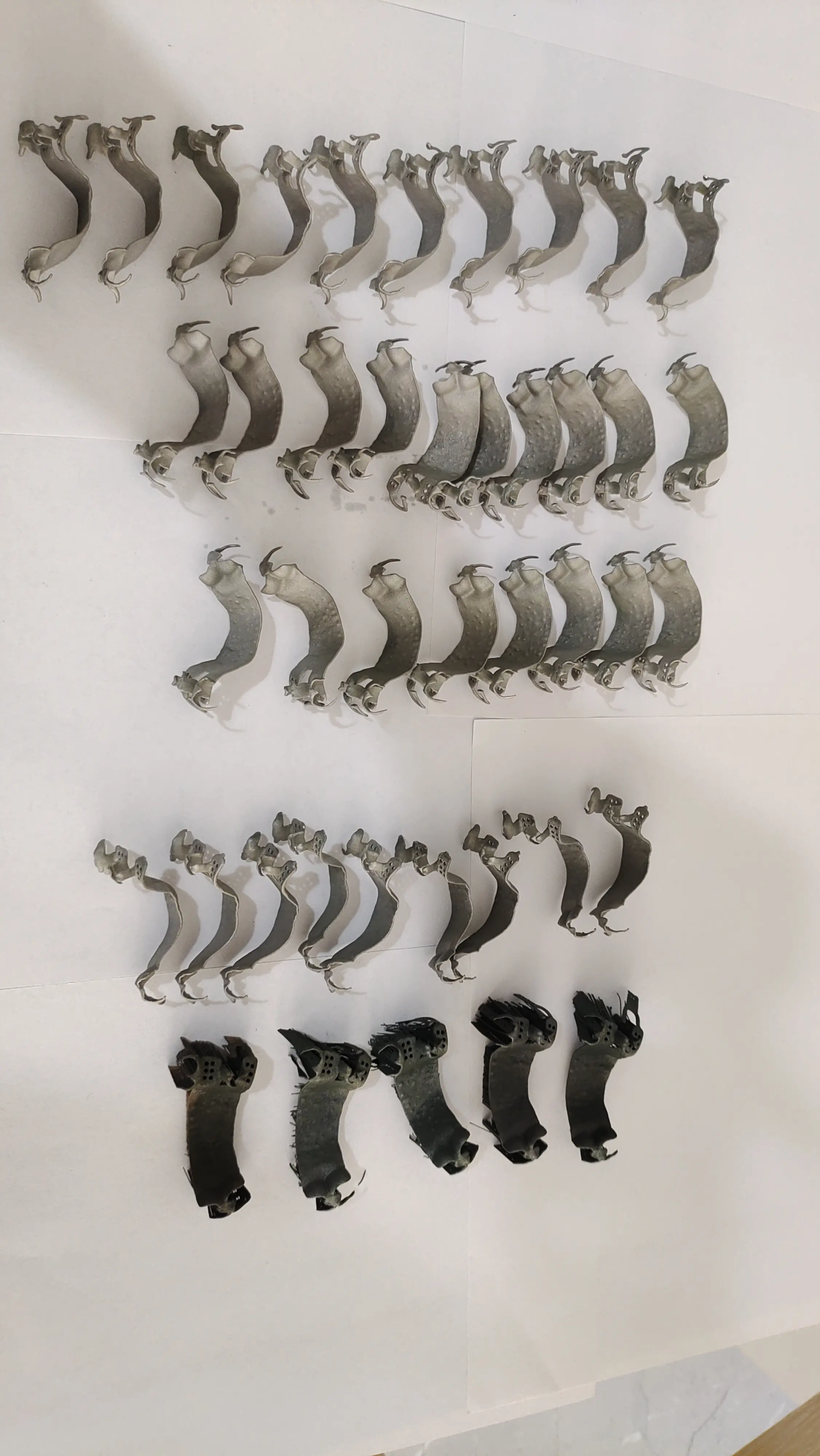
Innovations that take advantage of narrow spots: 3D printing hose clamp guide revolution
Anyone who wrestled in a narrow engine bay, under a sink or deep in industrial machinery knows the fight. A sliding screwdriver, skin-toned knuckles, and limited access frustration can make a simple task a tribulation. But what if there is a smarter, more elegant solution? enter 3D Printing Hose Clip Guide – A custom engineering tool that changes the way professionals and DIY enthusiasts deal with this common challenge.
The issue of tightening of traditional fixtures
Standard worm gear hose clamps are ubiquitous and effective, but tightening and loosening them in tight spaces creates great difficulties:
- Limited access: In tight or recessed positions, it is usually not possible to place a screwdriver, socket drive or pliers directly into the tightening screws of the clamp.
- Sliding and damage: The tool can easily slide, damage the screw slots, scratch the surrounding components or stab your hand.
- Inefficiency and fatigue: Awkward angles can lead to slow, laborious work, increasing project time and physical stress.
- Lack of professional tools: Despite the presence of specialized fixture tools, they are often expensive, versatile, and may not meet the exact configuration of a specific fixture or access point.
Why 3D printing solves the fixture problem
3D printing, especially using advanced metal technologies such as selective laser melting (SLM), is an ideal manufacturing solution for custom hose clamp guides:
- Radical customization: This guide can be designed precisely for the exact size and type of fixtures and is critically suited to unique access constraints that fit the specific locations required. Consider unique angles, specific offsets and complex contours perfectly mated with the surrounding components.
- Unrivaled visit: By designing the guide as a slim extension or adapter with an integrated drive socket, it bridges the gap between the wrench/screwdriver and the fixture nut. It winds into spaces where traditional tools (or hands) simply cannot use.
- Enhanced durability and torque transmission: These guidelines are very strong when printing from robust metals through SLM techniques such as stainless steel, titanium or tool steel. They can resist bending or shear at high torque, ensuring reliable and safe tightening without slipping.
- Speed and cost-effectiveness: For complex one-time designs, 3D printing eliminates the need for expensive custom machining tools and setups. Need a specific guide to unique machine parts? It can usually be faster and cheaper than traditional methods.
- Ergonomics: The designed extended length and handle significantly improve grip and leverage, reduce fatigue and improve control.
Guide to designing the ideal hose clamp
Creating effective guides requires careful consideration:
- Fixture interface: How will it interact with the nuts of the fixture? Common options include:
- Hex socket: The nut designed to be driven by the standard hexagon key is completely attached to the nut.
- Flat blade slot: Mimic the screwdriver slot to be compatible with existing screwdrivers or drill bits.
- Custom drive: A unique interface for a specific driver.
- Bias and angle geometry: Accurate measurements are crucial. This defines the path of the tool from the drive to the fixture. Complex composite angles can be mathematically modeled and perfectly printed.
- Driver interface: How would you connect a wrench, ratchet, screwdriver handle or drill? Standard square drives or hexagonal handles are common. Ergonomics are important for comfort and torque transfer.
- Material selection: Metal 3D printing is crucial for demanding applications such as high torque in automotive or industrial environments. SLM printing produces fully dense, high-strength parts.
Material Problems: The Strength of Metal 3D Printing
Although the basic prototypes can be printed in plastic for proof of concept, the functional life and performance of the hose clamp guide requires robust materials. This is where Greatlight is good at:
- SLM technology: Our advanced selective laser melting printers use high-power lasers to fuse fine metal powders, creating parts that can be mechanically comparable to (or sometimes exceed) traditionally forged or machined mechanical properties. This is crucial for parts with significant torque.
- Materials Portfolio: We offer a wide range of engineered metals:
- Stainless steel (316L, 17-4 pH): Excellent corrosion resistance and good strength. Perfect for most industrial/auto environments.
- Tool Steel (H13, Maraging Steel): For extreme hardness, resistance to drug resistance and high torque capability.
- Aluminum alloy (ALSI10MG): When weight is crucial while maintaining good strength.
- Titanium (Ti6al4v): Final strength-to-weight ratio and biocompatibility.
- Precision and details: SLM enables incredibly fine features and complex internal geometry, which is critical to accurately capture fixture nut features and drive interfaces.
How to use 3D printed hose clamps (easy steps)
- confirm: Determine the specific hose clamp position and the offset/angle required for tool access.
- Select/Safe: If you have multiple guides, choose a guide designed for that specific fixture type and location. Sit the guide firmly on the nuts of the fixture.
- Additional driver: Insert the appropriate drive bits (hex keys, screwdriver bits, square drive adapter) into the handle interface of the guide. If precise tightening is crucial, use a torque wrench.
- Tighten/loosen: Rotate the driver normally. This guide transfers torque smoothly to the clamp nut case without slipping.
- Delete and store: Once done, just remove the driver and guide. Store the guide safely on this specific accessory for future use.
Why collaborate with Greatlame as your custom hose clamp guide?
Designing and manufacturing truly effective, durable fixture guides require expertise and advanced features. Gremight is a leader in this field:
- One-stop rapid prototype has strong control: From your initial concept sketch or CAD file, we handle everything: expert design consultation (if needed), precise 3D printing using state-of-the-art industrial SLM machines, and a comprehensive set of post-machining techniques (CNC machining smoothing, heat treatment, shooting, exploitation, peeling, polishing, polishing, coating/painting).
- Metal Printing Mastery: We specialize in high-quality metal additive manufacturing. Our machines and processes are calibrated to produce powerful, accurate in size and reliable functional metal parts, not just prototypes. Your hose clamp guide will be built for a long time.
- Speed and customization: Forgot to wait for custom processing for weeks. We speed up your development cycle. Do you need to adjust according to the secondary design fit for the test? Quick iteration is our expertise. "Most materials can be quickly customized and handled."
- Standard accuracy: Each guide meets strict tolerances, ensuring a perfect fit for the clamp nut and maintains smooth operation with the driver. "For custom precision machining… Now quickly prototyping parts at the best price!"
- Solve your toughest challenges: We’re good at "Professionally solve the problem of rapid prototyping of metal parts." Is it difficult to be affected by seemingly impossible access issues? Our engineering team thrives, turning complex challenges into elegant 3D printing solutions.
- Commitment to quality and value: "One of the best rapid prototype companies from China," We offer world-class quality at competitive prices, providing exceptional value for custom engineering tools and components.
Conclusion: A gadget has a huge impact
The 3D printed guide to hose clamps reflects the power of innovation in the goal. It brings tangible benefits by overcoming the inherent limitations of common tools and narrow workspaces with custom design and robust metal additive manufacturing:
- Save time and energy: Rapidly accelerate assembly, maintenance and repair.
- Reduce frustration: Eliminate combat with inaccessible fixtures.
- Enhanced security: Minimize sliding and potential hand damage.
- accurate: Allows the use of controlled torque, protection fixtures and pipes.
- Custom features: Solve unique access issues that are not possible with ready-made tools.
Embrace the future of effective mechanical work. Whether you are a professional mechanic, industrial technician or a passionate DIYER, consider design and 3D printing tailor-made hose clamp guides and be as trusted as a partner as Greatlight. Go beyond frustration and work smarter in those inevitable tight spots.
FAQ: Mystery 3D Printed Hose Clip Guide
Q1: Is the plastic 3D printing guide strong enough?
A1: For very low profile applications or proof-of-concept models, engineering plastics such as nylon or PETG possible It’s enough for the time being. However, for reliability, long-term use of standard worm gear clips requires obvious tightening force, Metal (especially printed by SLM) It is the recommended solution. Plastics can crawl, deform or eventually break under load.
Q2: How to design a hose clamp guide? What software do you need?
A2: Design function guide requires CAD (Computer Aided Design) software. Common professional packages include solid work, Fusion 360, Catia or Siemens NX. The critical steps involve precisely modeling the fixture nut interface (hex slots, screw slot drivers), designing offset extensions to navigate around obstacles, and creating handles for the driver of your choice. Detailed measurements of fixtures and surrounding space are crucial. Greatlight is usually used directly from customer CAD files, but it can also provide design support services.
Q3: Is 3D printing guide expensive?
A3: The cost depends to a large extent on design complexity, material (plastic vs. metal), size and quantity. Although SLM metal printing costs more material than plastic, it provides unparalleled strength and life for functional tools. Compared to the cost and time involved in processing solid metals, 3D printing is often more economical, especially for low-volume or one-time custom tools. Greatlight’s purpose is to provide "Best Price" For high-quality parts.
Q4: Can you print guides that fit several different fixtures/types?
A4: Yes, spring pins (such as spring pins) can be used to adapt the design of adjustable guides for mechanisms for different fixture nut sizes. However, these add to the complexity of high torque and potential failure points. Customized guides that simplicity and robustness often favor design A specific fixture type and location. A series of dedicated guides may be the most effective solution if you deal with multiple consistent fixture sizes.
Q5: How durable is the metal 3D printing guide compared to the machining guide?
A5: SLM printed metal parts made of high-quality powders such as stainless steel or tool steel and properly handled (including heat treatment if needed) with excellent mechanical properties. They are very close in strength and durability, sometimes even better than equivalent machined parts, especially when machining parts require welding. They are designed to withstand specific torque requirements of the application.
Q6: In addition to hose clamps, what other tools can be printed for mechanical work?
A6: 3D printing (especially metal) is perfect for custom wrenches, professional sockets, alignment tools, fixtures and fixtures, actuator links, inspectors, and non-rotating bushings/locking plates. Its advantage lies in solving unique access, functionality or small-volume production challenges with over-cost traditional tools. Greglight’s capabilities extend to all of these "Rapid prototyping" and custom manufacturing needs.