Unleashing innovation: The future of LS engine buildings with metal 3D printing
The iconic LS Engine family respects everything from Chevrolet trucks to tracking monsters for their power potential and adaptability. However, pushing the boundaries of performance often requires customized parts to drive manufacturing limitations. Enter Metal 3D printingalso known as additive manufacturing (AM). This technology is no longer a science fiction novel, it revolutionized the construction of LS, providing unprecedented design freedom and solving complex engineering challenges.
Why choose metal 3D printing for LS construction?
Traditional processing subtracts the material from solid blocks. Especially 3D printing Selective laser melting (SLM)use high-power lasers to build parts layer by layer to melt metal powder. For LS engines eager for peak performance or unique configuration, this unlocks key advantages:
- Unlimited design freedom: Using CNC machining is impossible to create geometric shapes such as complex internal cooling channels in cylinder heads, integrated pipes or optimized lattice structures for ultimate lightweight without sacrificing strength.
- Rapid prototype and iteration: Quickly test new intake manifold designs, custom brackets or turbine equipment. Modify the CAD model overnight and print the revised parts faster than conventional tools allow.
- Integrated components: Print multiple components as a solid component (such as a sensor mount integrated into the pump housing) to reduce assembly time, potential leak points and failure risks.
- Weight optimization: The material is strategically removed using topology optimization software based on precise stress analysis to remove persistent shaving volume.
- Performance Materials: Utilize high-performance aluminum alloys such as ALSI10MG or custom mixtures, titanium or professional alloys with excellent strength to weight ratio and thermal characteristics suitable for high pressure engine environments.
- Custom and legacy support: Manufacture precise replicas of rare parts, or create custom components for applications with only swaps and insufficient parts.
Your guide to building an LS engine using 3D printing components
Getting started with 3D printing LS projects requires careful planning. Here is a roadmap:
-
Concept and Design (CAD&FEA):
- Determine the requirements: What problems are you trying to solve? Lose weight? Improve cooling? Custom decoration? A specific component failure?
- Detailed CAD modeling: Create accurate 3D models with professional CAD software. Consider fit, tolerance, thermal expansion and stress. Make sure the model is diverse (watertight).
- Simulation is the key (FEA): Finite element analysis is used to simulate real-world stresses (heat load, combustion pressure, vibration). Optimize design digitally forward Print to ensure structural integrity. For critical components, this step is not negotiable.
-
Material selection: Success is crucial
- Aluminum alloy (ALSI10MG, ScalMalloy®): Ideal for intake manifolds, valve covers, brackets, pipes and lightweight structural components due to good strength to weight ratio and thermal conductivity. ALSI10MG is a common, cost-effective main force.
- Stainless Steel (316 liters, 17-4ph): Provides corrosion resistance and good strength. Suitable for non-critical brackets, fuel rail components or fixtures.
- Titanium alloy (TI6AL4V): The final choice of components requiring optimal strength to weight ratio and high temperature performance. Ideal for high performance valve assembly, connecting rod (prototype/professional racing) or turbo hardware. However, it is much more expensive.
- Expert guidance: For the best alloys for applications and budgets, consult your 3D printing service provider.
-
Printing process – SLM advantages:
- SLM technology: LS parts are preferred because it is able to create fully dense high-strength metal components with excellent accuracy. The SLM machine uses a high-energy laser to accurately fuse the metal powder.
- Directions and support: The parts must be oriented with the best quality and the least support structure. Support is essential for overhanging, but needs to be removed later. Direction affects material properties and surface finish.
-
Essential post-processing: This converts the original print to the functional part.
- Remove powder: Thoroughly remove trapped powder from the channels and cavity.
- Support removal: Carefully remove the support structure (usually wire EDM or CNC).
- Heat treatment: The mandatory nature of metal engine parts. Annealing, solution treatment or aging can relieve internal stress and achieve the optimal mechanical properties of the material.
- Precision machining: Although SLM provides good accuracy, critical sealed surfaces, lines and holes often require CNC machining to achieve the final dimensional tolerances and surface finishes required for combustion engines.
- Surface finish: Options such as CNC machining, bead blasting, polishing or coating improve durability, sealing, appearance and fatigue resistance.
- Verification, assembly and testing:
- Test fit: Before the final engine assembly, carefully test the fit assembly.
- Functional test: Stress testing components such as water jackets or water inlets. If critical (e.g., internal porosity X-ray), perform non-destructive tests (NDT).
- assembly: Follow best practices. Please note the torque specifications, especially on 3D printed parts – consult a material expert. Use proper sealant and threaded storage cabinet.
- Tracking and Monitoring: During initial operation, closely monitor the 3D printed components for pressure, leakage or abnormal behavior. Dyno tests provide important data.
Beyond Print: Greatlight Advantage in Engine Innovation
Building an LS engine with 3D printed components requires cutting-edge technology and deep expertise. This is not a garage DIY project; it requires industrial capacity. This is Great Good at it. As a leading rapid prototyping manufacturer in China, specializing in custom metal parts, we have:
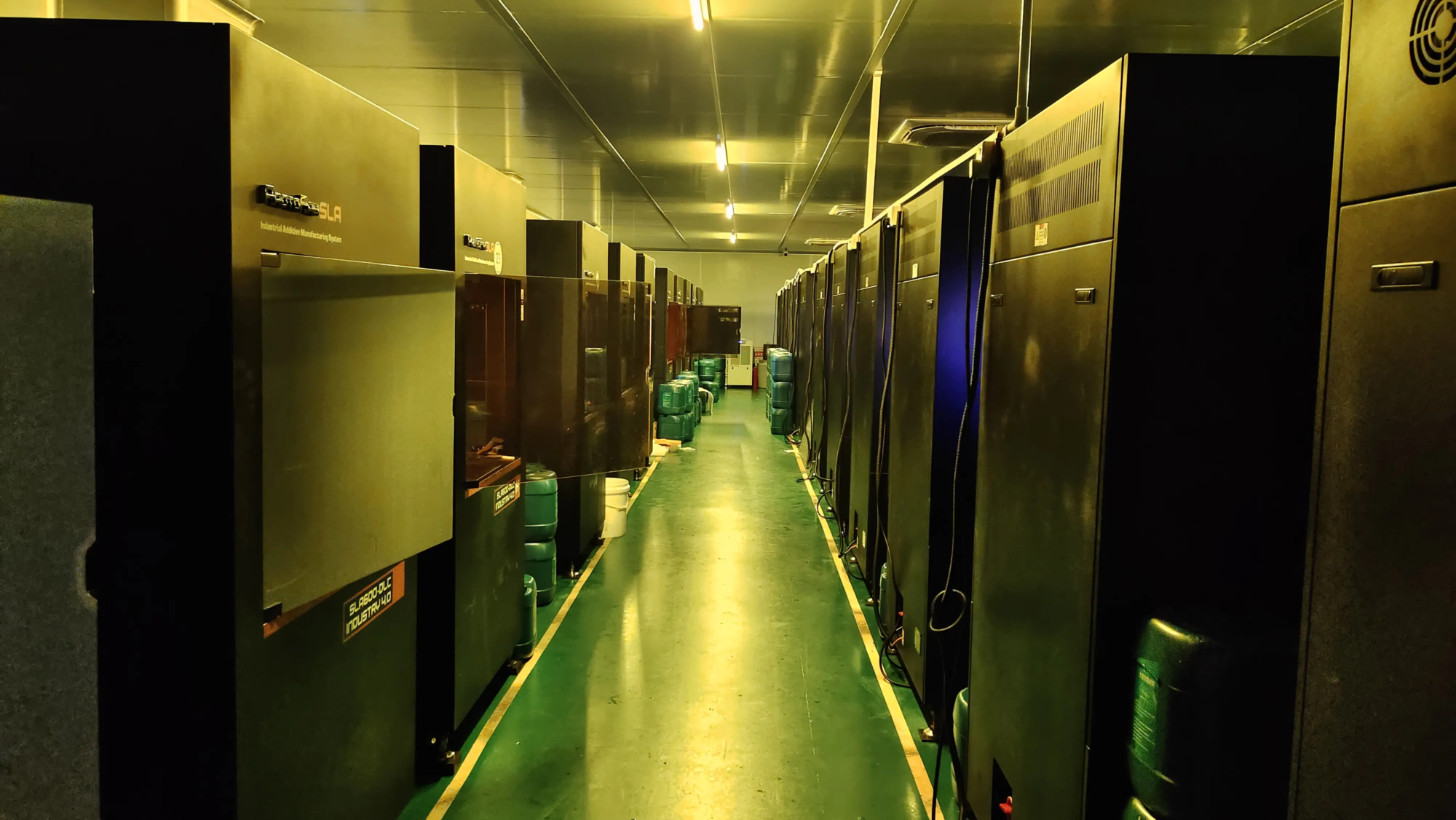
- Advanced SLM printer: Our state-of-the-art selective laser melting fleet provides excellent density and accuracy.
- Material mastery: From standard ALSI10MG to exotic high-performance alloys, we offer a comprehensive selection of materials and expert guidance.
- A true one-stop solution: In addition to printing, our integration Post-processing center Key steps for processing: Precision machining (CNC), meticulous heat treatment, comprehensive finishing (bead blasting, polishing) and quality inspection. This ensures that 3D printed parts are seamlessly integrated into high-performance components.
- Speed and flexibility: We specialize in fast turnaround times for prototype and small volume production runs, quickly adapting to design iterations or unique requests.
- Deep expertise: Our engineering team has a unique understanding of the intersection of additive manufacturing and demanding automotive applications such as LS Engine Builds.
Imagine using a custom intake manifold with optimized airflow channels only through AM, or shaving a valuable weight titanium valve spring holder when dealing with high RPM. With great lights, these are more than possibilities; they are manufacturing reality.
Conclusion: Reimagined Engine Construction
3D printing fundamentally changed the construction of LS engines, allowing enthusiasts and engineers to deal with challenges that were previously deemed impossible. It enables unparalleled customization, lightness and performance improvements. While a well-thought-out approach around design, materials science, and powerful post-processing is required, the potential benefits are enormous.
If you are pushing the boundaries of LS builds – whether it’s a professional competition team, seeking various competitive advantages or visionary builders to make a unique exchange – Metal 3D printing, professionally performed by experts like Greatlight, is the key to your next breakthrough. Explore potential, overcome the limitations of traditional manufacturing, and reimagine what your LS can do.
Ready to power your vision?
Customize Precision LS engine components using Greatlime today. Leverage our advanced SLM technology, comprehensive post-processing and commitment to quality – all delivered at competitive prices. Contact us for consultation and quote.
FAQ (FAQ)
-
Is 3D printing enough to achieve real engine parts?
- Absolutely, when using a right gold alloy (eg ALSI10MG, TI6AL4V) and proper post-treatment (especially heat treatment) when printing using metal SLM. The strength of properly printed and processed metal parts can reach or exceed many conventionally manufactured parts, especially for complex geometries that can only be used with AM. Critical analysis (FEA) and choosing the right material is crucial.
-
Which LS engine parts are best for 3D printing?
- Excellent candidates include: Intake manifolds, valve covers, engine covers, custom brackets, sensor mounts, cooling system components (like thermostat housings or coolant pipes with integrated sensors), oil system components (breathers, catch can internals), turbocharger components (housings, manifolds – careful material selection needed), and custom pistons or conrods (advanced applications, requiring expert design and Ti alloy). avoid Very stressed Components like crankshafts or block power supplies unless specially designed and verified for your specific application by AM’s experts.
-
How much does 3D printing compare to traditional processing?
- for Complex, small size or custom disposable parts, 3D printing can be cost-competitive or even cheaper. It eliminates expensive tools and reduces material waste. For mass production of simple parts, traditional methods (casting, CNC) usually win. this "cost" It also includes the value of unique design functions that can only be achieved through AM.
-
Why is post-processing so crucial for 3D printing of engine parts?
- Original printed metal parts usually have rough surfaces, internal stresses, adhered powder and support structures. Post-treatment (heat treatment, processing, surface finish):
- The required material strength is achieved through microstructure optimization (heat treatment).
- Ensure accurate dimensions and sealed surfaces (CNC machining).
- Removes pressure risers and improves fatigue life (surface finishes are like polish).
- Prepare parts for functional purposes (clean, remove support/powder).
- Original printed metal parts usually have rough surfaces, internal stresses, adhered powder and support structures. Post-treatment (heat treatment, processing, surface finish):
-
How durable is 3D printed parts under high heat and pressure?
- Durability depends to a large extent on substance selection, post-treatment (especially heat treatment), and design/stress analysis. Engine alloys such as the ALSI10MG and TI6AL4V provide excellent thermal and mechanical properties upon correct handling and are suitable for most engine environments. Proper FEA ensures that the part design does not exceed material stress limits during operation.
- Can Greatlight print my custom LS part design?
- Yes! Greatlight specializes in custom metal parts, including complex LS engine components. We provide DFAM (Design for Additive Manufacturing) analysis support, substance consultation, SLM printing and a critical post-processing suite. We welcome unique and challenging projects. Providing your CAD model, we will provide manufacturing solutions.