V8 Symphony Reimagining: How 3D printing forged the future of LS engines
The Chevrolet LS engine has been a beating in American performance for decades. Its legendary durability, huge after-sales support, and relative simplicity make it a cornerstone of thermoplastics, restoration and even racing. Now, a technological revolution (metal 3D printing) is expected to redefine the possibilities of LS platforms, pushing the boundaries of design, performance and customization in ways that were previously unimaginable. Welcome to the era of 3D printing LS engines.
Beyond Casting: Manufacturing is not fixed
Traditionally, LS engine components, especially complex parts such as cylinder heads, intake manifolds or complex brackets, are limited by the limitations of casting and subtraction machining (CNC). Although effective, these methods are:
- Geometric complexity: Internal channels, optimized cooling jackets or real organic shapes are difficult or too expensive.
- Weight optimization: With processing access, material is strategically lightly removed while maintaining strength.
- Quick iteration: Prototype iteration is slow and expensive, hindering the development cycle.
- Low volume customization: Custom parts for niche applications or experimental designs are economically unfeasible.
Metal 3D printing, especially Selective laser melting (SLM)dissolve these obstacles. A layer, high-power laser is carefully fused with fine metal powder according to digital 3D models. This additive process unlocks unprecedented freedom.
The power of additives on LS performance:
So, what will 3D printing bring to your LS build?
- Weight reduction: SLM allows the creation of complex lattice structures and topologically optimized designs. Imagine that the cylinder head or valve covers the inner cavity and thin walls, accurately calculating the smallest weight and maximum stiffness – scraping off the most important critical pounds.
- Complex cooling and process: Designers can design coolant channels that optimally surround the combustion chamber and exhaust ports, greatly improving thermal management. Intake runners can adopt boundary-breaking geometry that cannot be cast or processed, thereby increasing airflow efficiency for more power.
- Integrated features: Multiple parts can be combined into a single, lighter, stronger unit. Take the intake manifold thinking, which contains the throttle body mount, fuel rail and sensor boss, as a seamless print. This reduces leakage, assembly time and potential failure points.
- Final Customization: One-time experimental header optimized for specific chassis? Custom Accessories Bracket for Unique Installation? Lightweight high-strength pulley setup? SLM makes custom manufacturing a reality, opening the door to true personalization and solving packaging nightmare.
- Rapid prototype and niche production: Quickly test aggressive head designs, turbine manifolds or dry slurry assembly. Proof of concepts with functional metals in a few days rather than months. For small batch racing cars or specialized manufacturing, short-term production runs become feasible and economical.
Conquer the Challenge: More than just printing
Although the potential is huge, generating functionally reliable engine components through 3D printing requires expertise and a strong process. Metal 3D printed parts are not "Get your printer ready." The main challenges include:
- Resolution and finish: The surface printed in the current period needs to be completed. Post-treatment is critical for sealing surfaces (such as gasket faces), bearing journals, or fluid ports.
- Internal pressure and distortion: Strong thermal processes can cause stress. Complex construction simulations and precise parameter control are crucial for dimensional accuracy.
- Material characteristics: Ensure that printed metals (usually aluminum alloy, titanium or special steel) meet the strength, fatigue life and thermal performance required for engine responsibility, require optimized SLM parameters and rigorous testing.
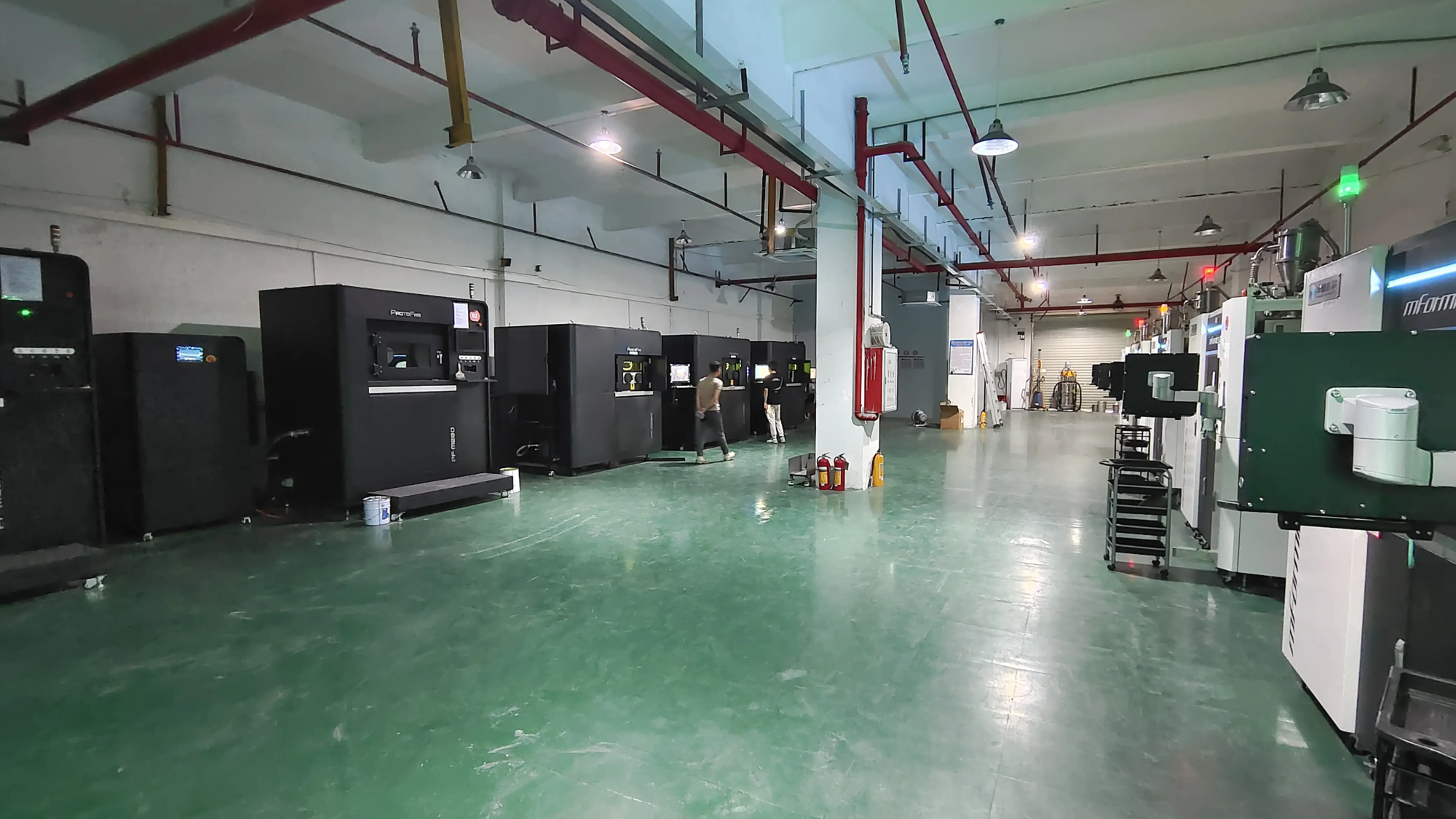
This is where to work with experienced manufacturers Great Become essential. Our state-of-the-art SLM 3D Printer and in-depth understanding Metal additive manufacturing Specially targeted to overcome these obstacles.
GRESTLIGHT: Your partner in 3D printing LS innovation
Built on precision engineering and advanced rapid prototyping solutions, empowering LS enthusiasts and engineers to take advantage of 3D printing:
- Advanced SLM features: Our cutting-edge equipment delivers the resolution, repeatability and material quality required for critical engine parts.
- Materials Science Mastery: We use a wide variety of high-performance alloys suitable for automotive thermal and mechanical stresses.
- One-stop post-processing: From precise CNC machining of sealing surfaces and threads to advanced finishes (smoothing, polishing, coating) and strict quality control, we can handle the entire workflow.
- Quick customization and speed: Accelerate your project. From concept to finished functional metal parts, our rapid prototyping expertise can quickly deliver solutions.
- Solve complex problems: We thrived to address challenging geometry and applications that traditional manufacturing cannot do.
The road ahead: the future is printed (metal)
Evolution does not stop the components. We are rapidly approaching the survivability of a fully 3D printed LS engine piece – Light, strong, impossible by casting, with optimized cooling gallery and oiling system. The integration will be deeper: embedded sensors, conformal cooling in the cylinder walls, and mixed-matter structures.
In addition, additive manufacturing can achieve distributed on-demand production. Rare LS variants, producing external components or geolocating custom spare parts becomes an achievable reality. The barriers to engine innovation are collapsing.
in conclusion
The legacy of the LS engine is secured, but its future is fundamentally reshaped by 3D printing. SLM Technology offers innovators, racers and builders an unparalleled toolkit to push performance boundaries, reduce weight, enhance cooling and create designs that are once considered impossible. Although there are still challenges in completion and material certification, the trajectory is clear: additive manufacturing is destined to play an increasingly important role in the high-performance engine landscape.
Working with technologically advanced providers such as Greatlight, equipped with sophisticated SLM printers, material expertise and comprehensive post-processing capabilities are the key to unlocking the future. It’s not just making parts; it’s about redefining the potential of one of the world’s greatest powerplants. The symphony continues, but the instrument is being remade – a thin layer at a time.
FAQ: 3D Printing LS Engine Parts
Q1: Are 3D printed LS engine parts durable enough to achieve reality?
one: Absolutely, When done correctly. Metal 3D printing (particularly SLM/DML) can produce high strength dense alloys such as aluminum (ALSI10MG, ALSI7MG), titanium (TI6AL4V) and stainless steel (316L, 17-4PH)). Through optimized printing parameters, appropriate post-processing (such as heat treatment and pressure and density reduction), and precise machining of critical surfaces, these parts can satisfy or exceed the strength and fatigue of conventionally manufactured components. Greatlight specializes in ensuring production quality meets strict automotive standards.
Question 2: Which parts of the LS engine are best for 3D printing?
one: Currently, non-local stress or less hot extreme components are the most common and proven:
- Intake manifold
- Valve cover and coil mounting seat
- The engine cover and billet exterior accent
- Custom stand and mount (alternator, PS, AC, accessories)
- Exhaust pipe flange/collector
- The body and adapter of the throttle
- Water pump inlet and thermostat housing
- Dry sewage tanks and components
- Prototype cylinder head and custom block sleeves/function
* As technology and material certification advances, pistons, connecting rods, cylinder heads and ultimately for dedicated applications will become more feasible.
Question 3: Is 3D printing cheaper than CNC machining or casting LS parts?
one: Cost depends to a large extent on complexity, quantity and material. For simple high volume parts such as basic brackets, casting or CNC may be cheaper. However, 3D Printing Shine:
- Complex geometric shapes: It eliminates expensive tools (molds) and complex multi-axis machining setups.
- prototype: It is fundamentally cheaper and faster than processing complex prototypes.
- Low capacity production: Ideal for custom parts where CNC setup costs dominate (e.g., single-use race components).
- Integrated parts: Combining multiple functions into one printed part saves overall cost/assemble and make several CNC parts.
Therefore, while the unit cost of a simple project may be higher, the overall project cost and time savings of complex, small batch or integrated designs can make 3D printing very economical. Greatlight offers competitive pricing for precise rapid prototyping and production.
Question 4: How long does it take to make a custom 3D printed LS part?
one: "Rapidly" It is relative, but much faster than traditional tooling methods. Timeline factors include:
- Design and document preparation
- Machine build time (can be 5-50+ hours depending on part size/complexity)
- Post-treatment (cleaning, support removal, heat treatment, processing and finishing)
At Greatlight, using streamlined processes and dedicated equipment, functional metal prototypes can often be delivered in days to weeks, much faster than purchasing tools or complex manual manufacturing.
Q5: Can Greglight 3D print the entire LS engine block?
one: Technically, printing functional prototype blocks are increasingly likely, albeit highly complex and require important engineering, post-processing and verification. While feasible, it is currently in the field of advanced R&D, racing and concept building due to the cost and strict certification required for street engine structural parts. Greatlight has SLM expertise and large format capabilities to carry out such demanding projects for partners in the technology field. Talk to us about your ambitious ideas!
Unlock the next generation of LS performances with Greatlime. Leverage our advanced SLM 3D printing technology and end-to-end collation expertise to create the revolutionary LS components you envision. Contact Greatlight today for a quote about your custom metal rapid prototyping project.