Complex engineering behind customization of private equipment: professional research on high-precision production
The landscape of intimate health and sexual technology is rapidly evolving, driven by the growing demand for personalized experiences. This evolution is increasingly intersecting state-of-the-art manufacturing, especially metal additive manufacturing (AM), commonly known as 3D printing. Although specific applications have caused different discussions, Fundamental engineering and production challenges From a technical perspective, serious attention is needed.
For manufacturers and innovators who want to develop complex, reliable and high-performance equipment in any field (including sensitive areas of intimate health products) Metal 3D printing provides unique opportunities and needs expertise. Let’s explore complexity from a professional manufacturing perspective.
Beyond the Basic Plastic Prototype: Why Metal?
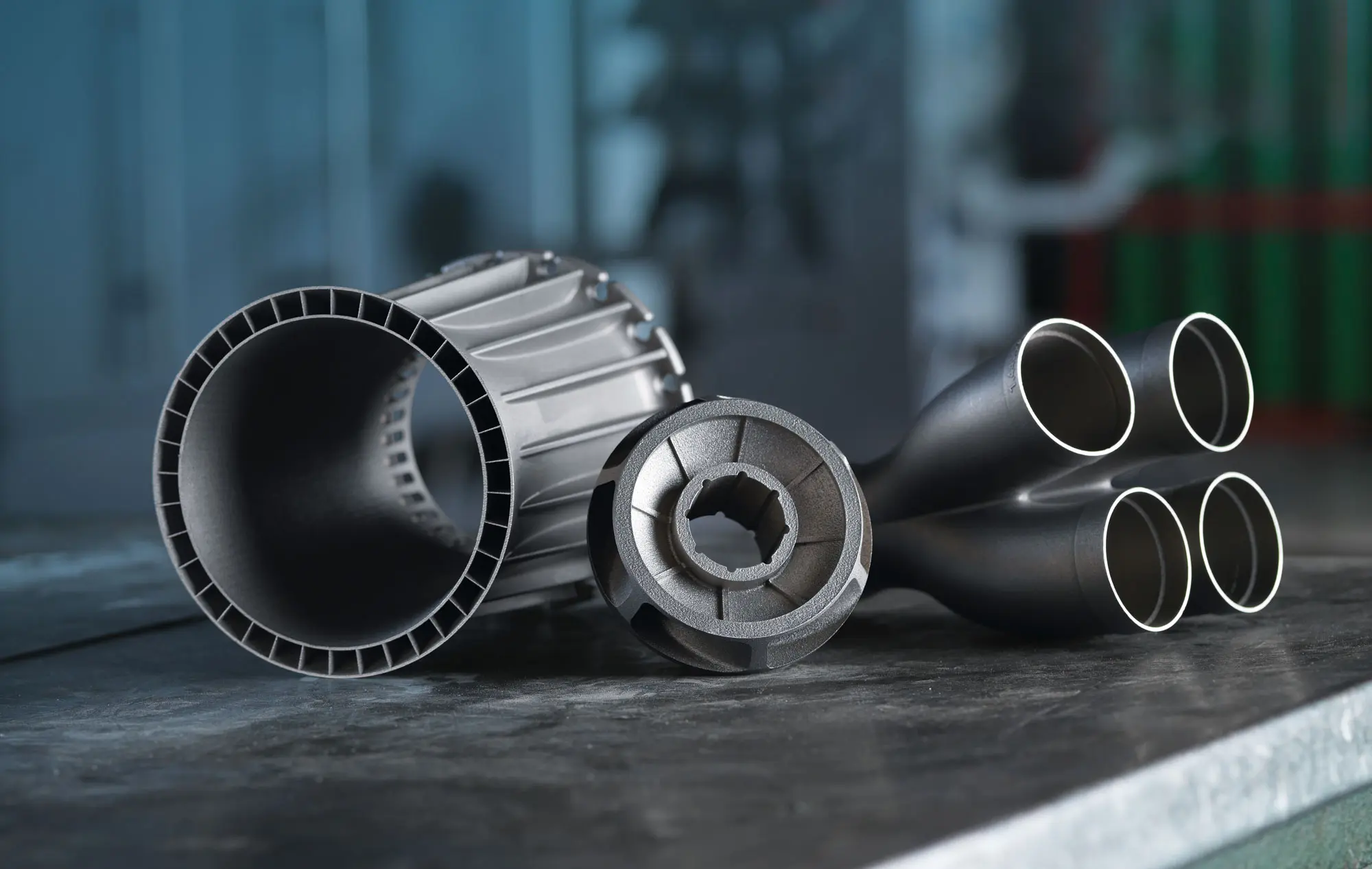
Early iterations of many devices often utilize plastic, benefiting from lower costs and simpler processes, such as FDM or SLS. However, for the required core components Excellent strength, complex internal geometry, biocompatibility, thermal conductivity or special durabilitymetals are often necessary for evolution. This is what technology likes Selective laser melting (SLM) shine. SLM is a powder bed fusion process that uses a high-power laser to fuse fine metal powder particles layer by layer, resulting in completely dense, complex metal parts that have characteristics close to or match traditional manufacturing methods.
The key role of advanced 3D printing (particularly SLM)
For complex mechanisms, whether designed for medical, therapeutic or personal health applications, SLM offers different advantages:
- Unrivaled design freedom and internal complexity: Create previously impossible geometry: an internal coolant channel for the motor, a lightweight stereotyped structure for the ergonomic grip, and an integrated mounting point hidden inside the housing. These features can significantly improve performance, reduce noise or improve user comfort in compact designs.
- Excellent strength and durability: Aircraft grade titanium alloys (such as TI6AL4V), stainless steel (such as 316L) and specialized aluminum alloys can be printed to withstand high annular stresses, torques and mechanical fatigue – moving parts and reliable long-term operation are crucial.
- Massive customization (possibly): SLM enables the production of cost-effective personalized components without changing tools. Although true quality customization involves complex logistics, low to medium volume production tailored to specific requirements (e.g., customized ergonomic interfaces) is feasible.
- Material purity and biocompatibility: High-quality SLM processes with proper post-machining (e.g., electropolishing, passivation) can achieve excellent finishes and utilize certified biocompatible alloys such as ASTM F136 titanium or 316LVM steel, which is critical for safety in any device designed to be used for easy-to-use.
- Merge parts: SLM allows multiple complex components to be combined into a single printed part. This reduces assembly time, minimizes fault points (screws, joints), enhances structural integrity, and leads to a more compact, simplified final product. Print a complex transmission or motor housing as a unit.
Necessity of advanced post-processing expertise
The original SLM parts are the starting point. One-stop post-processing function cannot be transmitted for precise functional devices:
- Key support removal: Complex SLM parts require careful and precise removal of support structures without damaging delicate features – demanding professional tools and operator skills.
- Surface reinforcement: The surface of the measuring table is very rough. A set of technologies is required: CNC machining, precision grinding, vibrating finishing, media blasting (bead/glass/liquid) and advanced polishing (electropolishing, chemical polishing, abrasive flow processing) for critical mating surfaces. Goals: Excellent smoothness of hygiene, friction reduction, biocompatibility, visual appeal and user comfort.
- Pressure relief and heat treatment: To obtain optimal mechanical properties (strength, ductility) and to alleviate residual stress during laser melting, either solution annealing/aging is essential according to standard protocols (e.g., hip joint-isostatic pressure on heat and other thermal pressures for critical medical components). Greatlight usually specializes in these advanced heat treatments.
- Tolerance machining: Achieving micrometer accuracy on critical dimensions (drilling, bearing seats, lines) requires high-precision CNC machining to 3D printed mesh shapes. This hybrid approach (AM + CNC) ensures functional reliability.
- Cleaning and Certification: Strict cleaning (e.g., ultrasonic, steam) to remove all powders and process agent residues, followed by careful inspection and material certification, is critical for safety and compliance, especially for intimate health or medical applications.
Why collaborate with professional rapid prototyping services such as Greatlight?
Developing complex devices requires more than just access to SLM machines. it takes:
- Deep SLM Process Proficiency: Optimize laser parameters (power, speed, hatching pattern), scanning strategies and building direction expertise to challenge multiple challenges of geometry and materials (titanium, aluminum, stainless steel, stainless steel, Maraging Steel, Maraging Steel, Inconel). This minimizes defects and ensures material properties.
- Materials Science Expertise: Understand the nuances of how different alloys behave in SLM and subsequent treatments to ensure that the final performance meets stringent requirements.
- Integrated Advanced Post-processing: Seamless workflow includes all Necessary steps – Support removal, surface finish (multiple technologies), heat treatment, precision machining, cleaning under strict quality control. This avoids the expensive delays and quality risks of outsourcing steps.
- Measuring and quality assurance: Advanced inspection equipment (CMM, optical scanner, surface roughness tester) and protocols to verify dimensional accuracy, surface quality and material integrity.
- Confidentiality and discretion: Professional manufacturers prioritize Ironclad confidentiality agreements and security processes, respecting the sensitive nature of equipment applications.
- Regulatory and biological awareness: Guidelines for material selection and handling to comply with relevant biocompatibility standards and best practices for manufacturing sensitive applications.
Conclusion: Accurate engineering is the driving force for innovation
The potential of metal additive manufacturing revolutionizes the design and production of exquisite intimate health equipment. Beyond plastic to a strong, highly engineered metal components can enable new levels of performance, reliability, security and customization. However, unlocking this potential depends on working with expert rapid prototype manufacturers.
Greglight Lovers’ state-of-the-art SLM equipment and deep technical expertise Professionally solve complex metal parts prototyping challenges. Our comprehensive one-stop service covers the entire journey: design of AM consultation, a wide range of materials in Precision SLM printing, and every critical step of advanced post-processing and completion. We understand the need for precision, biocompatibility, discretion and rapid turnaround.
Professional finishing can provide if your innovative equipment requires only the strength, complexity and quality of advanced metal 3D printing Contact Greglight now. Let our engineering expertise transform your vision into a reliable reality.
FAQ: Professional metal AM is used in complex equipment manufacturing
-
Q: Is 3D printed plastic not good enough for these devices?
A: Plastic printing (FDM, SLS) is ideal for prototype housing or non-structural parts and is cheaper. However, for core mechanical components that require high strength, thermal stability, complex internal characteristics, biocompatibility, precision bearings or resistance to significant wear/pressure, durable metal alloys produced through SLM/DML are critical to performance and life.
-
Q: Which metals are available for biocompatible or skin ligation components?
A: Certified results are crucial. Commonly used biocompatible materials in SLM include Ti6al4v Eli (ASTM F136), 316L/316LVM stainless steel (ASTM F138/F139) and specific cobalt-dye alloys. Surface finishes (electropolishing) are equally important for safety and hygiene. Greatlight recommends material selection and completion based on specific applications.
-
Q: How smooth is the final surface surface? How to achieve it?
A: The achievable RA (roughness average) depends on the starting conditions and the required finish. SLM parts usually start around RA 10-30 µm. Greatlight adopts a set of technologies: CNC machining for critical surfaces, precise grinding, extensive vibration finishes, media blasting (glass beads, ceramic media) and advanced polishing (electropolishing, AFP, AFP, CMP) for highly smooth smoothing effects until ra <0.1 µm, or even mirror-like effects (<0.1 µm), whether necessary (
-
Q: Can Greatlight ensure that assembly tolerances are very tight?
A: Yes. Although the SLM itself has inherent tolerances (+/- 0.1mm- +/- 0.2mm is common depending on part size/geography), the key functional characteristics (bearing seats, shafts, mating interfaces) are Complete strategically Milling and rotating with high precision CNC. This allows Greatlame to reach tolerances to ±0.025mm (±0.0004)" To ±0.001") ensures reliable assembly and function of moving parts.
-
Q: How does Greatlight handle the confidentiality of sensitive designs?
A: Client confidentiality is crucial. Greatlight implements strict NDA (not public protocol) before any project discussion. Protect IT systems, controlled physical access to production areas, and dedicated project management ensures design and prototypes are kept confidential. We treat all projects with the utmost professionalism and discretion.
- Q: What is the typical turnover time for complex metal prototypes?
A: Turnover varies greatly with part complexity, size, material and required post-treatment. Simple SLM components may be ready within a few days. Complex, highly finished parts go through multiple stages (printing, supporting removal, machining, surface finishing, heat treatment, inspection), so it usually takes weeks. At Greatlight, we focus on fast but thorough processing and provide realistic timelines upfront. We utilize internal capabilities to minimize latency caused by outsourcing steps.
Disclaimer: Greglight is a professional rapid prototyping and contract manufacturing service. We provide customers in various industries with advanced engineering and production capabilities. It is the customer’s entire responsibility to manufacture the specific end-use application of parts and they must ensure that all designs comply with local laws, regulations and safety standards in their intended market.