When 3D printing feels like a nightmare town: Overcoming prototyping pitfalls
We’ve all been there. CAD model looks perfect, slicer settings seem Make the call and as printing begins so does the anticipation. But instead of emerging victorious from the build room, you’re met with a twisted, cracked, or structurally unsound mess. welcome to 3D printing nightmare townThe last place any product developer or engineer wants to be is where time, budget, and sanity disappear in the vortex of failed prototypes. These nightmares often stem from pushing technology beyond its limits, underestimating materials science, or lacking strong process controls—especially when working with complex, mission-critical metal parts. Understanding these traps is the first step to escaping.
Living in Nightmare Town means facing recurring horrors:
- Problems with inaccurate dimensions: You design a component that requires micron-level precision, only to find that warpage, shrinkage, or inconsistent tolerances distort your view. Instruments do not match, mating parts cannot be assembled, and critical functional testing becomes impossible. This specter thrives on uncontrolled thermal stress and inadequate calibration. Plastic printers often run into difficulties; the metal sintering/melting process is much more complex.
- The curse (and its scars) of weak supporting structures: Complex geometries require support. But a poor bracing strategy can lead to dire results—braces permanently fused to the part, unable to be removed cleanly, or causing deep scars on critical surfaces. Removing them may even destroy subtle features or change tolerances, causing the prototype to fail. Metal supports fused to internal channels are a particularly scary situation.
- Solids with internal voids and pores: Your part looks perfect from the outside…until non-destructive testing reveals the cavity or pores hidden on the inside. These internal defects act as stress concentrators, greatly weakening the component under load and can cause catastrophic failure during operation. They are insidious and result from trapped gas, improper powder spreading (in powder bed melting), or suboptimal melt pool dynamics. Often invisible until it’s too late.
- The specter of material inconsistency: You select an alloy known for its strength and corrosion resistance, but the print results in brittle fracture or unpredictable fatigue life. Nightmare Town mentions contamination during powder handling, unintended alloying due to insufficient process control, or microstructural inconsistencies caused by fluctuations in the thermal history during printing—problems rarely encountered with forged materials.
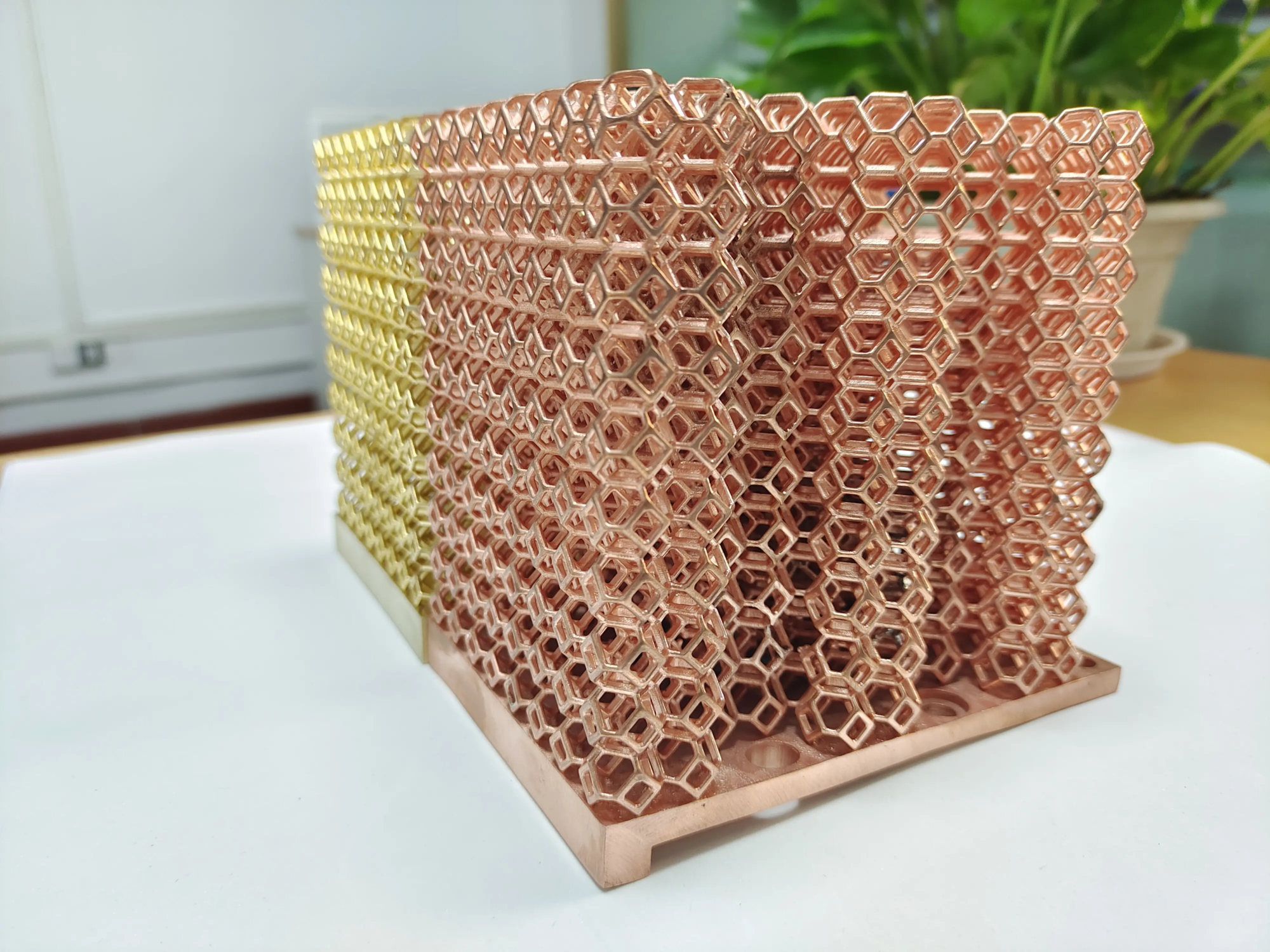
- The specter of failure with overhangs and complex geometries: That elegant lattice structure or network of fluid channels becomes a droopy, droopy monstrosity. Complex internal features collapse during the print process, thin walls disappear, or intricate details blur into an unrecognizable mess. Overcoming gravity and managing heat in unsupported areas requires advanced machine capabilities and deep expertise in parameter optimization, especially for metal additive manufacturing where rework is costly or impossible.
Escape the Nightmare: Highlights of Precision Turnkey Prototyping
Facing these horrors alone can be daunting. Giving up on prototyping is not an option. This is where working with expertise changes the journey.
huge light Serve as your guide out of Nightmare Town. We specialize in turning complex prototyping challenges, especially demanding metal applications, into smooth, predictable success. how?
- SLM (Selective Laser Melting) Mastery: Our advanced metal 3D printers operate with extremely high precision. Advanced laser control, inert atmosphere management and carefully calibrated thermal profiles ensure melt pool consistency and minimal thermal distortion, directly eliminating dimensional inaccuracies and porosity ghosts.
- Materials Science Expertise: We don’t just print metal; We know this very well. From titanium alloys (Ti64), stainless steel (316L), nickel superalloys (Inconel), aluminum alloys (AlSi10Mg) to custom alloys, we optimize parameters for the nuances of each material, ensuring consistent microstructure and mechanical properties – eliminating the ghost of material inconsistency.
- Engineering-driven support strategy: Our team doesn’t just provide automation support; We design them. Leveraging advanced simulations and deep practical experience, we strategically design supports to minimize contact and maximize ease of removal while maintaining critical surface integrity and dimensional fidelity, lifting the curse of weak supports.
- Uncompromising process control and inspection: Nightmare Town feeds on the unknown. Our rigorous quality control includes process monitoring, comprehensive dimensional verification (CMM), surface roughness analysis and advanced NDT (such as X-ray or CT scans) to find internal voids and ensure every part meets specifications, eliminating surprises.
- Conquer complexity: We thrive where others fear to tread. Our expertise in orientation optimization, parameter tuning of challenging geometries, and mastering factors such as thermal dissipation allow us to successfully print complex lattice structures, high aspect ratio features, and complex fluidic channels, overcoming the specter of overhang failure.
- True turnkey post-processing: Escape from Nightmare Town means getting the completed parts. We offer seamless integration of critical post-processing: expert support removal, complex surface finishing (vibration, sand blasting, CNC machining, polishing), heat treatment (stress relief, HIP) and precision machining of critical interfaces – all under one roof.
Conclusion: From horror story to success story
"3D printing nightmare town" It’s not inevitable. This is often the result of pushing limited equipment or processes too far without the necessary expertise, especially for high-risk metal prototyping. The complexities of thermal management, metallurgy and complex geometries require specialized knowledge, advanced equipment and strict process control.
GreatLight provides a way out. By leveraging cutting-edge SLM technology, deep material understanding, engineering support solutions, meticulous quality control and comprehensive post-processing, we turn prototyping nightmares into well-executed realities. We become your partner to help you navigate complexity, reduce risk and ensure your prototypes are not just built, but made correct – Reliable, accurate and ready to drive your innovation forward.
Don’t let prototyping plague your development cycle. Partners huge light Step out of Nightmare Town with confidence and into the light of predictable, high-quality rapid prototyping.
FAQ: Guide to Escape Nightmare Town
Question 1: What are the most common root causes of metal 3D printing failures?
one: The culprits often include thermal stress (causing warping/cracking), Powder contamination or degradation (resulting in inclusions or porosity), Machine calibration is incorrect (affects laser power/speed/overlap), Sub-optimal print orientation/support (dragging or scarring leading to failure), Inappropriate parameters for geometry/materialand Insufficient environmental controls (Oxygen/moisture content affects melt pool stability).
Q2: Why are metal additive manufacturing prototypes particularly easy to appear? "nightmare"?
one: Metal additive manufacturing processes such as SLM involve extremely high local temperatures, rapid melt/solidify cycles, and complex interactions between lasers, powders, and inert gases. Slight parameter deviations or material inconsistencies that are tolerated in simpler plastics can lead to catastrophic failure of the metal (cracks, voids, severe deformation) due to higher stresses and more stringent mechanical property requirements.
Q3: How does GreatLight prevent pores and voids from appearing inside metal parts?
one: We take a multi-pronged approach:
- Use powders that are highly pure, carefully processed, and frequently sifted.
- Optimize laser parameters (power, speed, hatch spacing) to ensure complete melting and proper melt pool overlap.
- Utilizes inert gas atmosphere purging and precise gas flow dynamics.
- Adopt specialized contour scanning strategies.
- Applying hot isostatic pressing (HIP) post-treatment is absolutely critical to eliminate residual porosity, especially in demanding aerospace or medical applications.
Question 4: Can GreatLight handle really complex geometries with overhangs and internal features?
one: Absolutely. Complex geometries are our specialty. We leverage advanced simulation tools to predict potential problems, carefully optimize part orientation to minimize unsupported spans, design specialized thin support structures using proprietary strategies, and fine-tune laser parameters specifically for challenging features such as thin walls and lattice structures. Our machines and expertise are calibrated to push the boundaries of design-driven manufacturing.
Q5: What are the advantages? "Turnkey post-processing" Do you propose to handle it yourself?
one: Turnkey processing eliminates critical handoffs and risks:
- Seamless integration: Our team understands specific post-processing needs Start with the printing direction strategyensuring minimal scarring and effective removal.
- Expertise: Handling sintered metal stents requires different techniques than handling plastic stents. We have specific tools and knowledge.
- Surface finish consistency: Achieving a specific Ra (average roughness) or appearance finish requires a controlled process.
- Heat treatment verification: We ensure that key treatments such as HIP or stress reduction are implemented and verified correctly.
- Save time and costs: Eliminate the risk of coordinating multiple suppliers and shipping/logistics.
Question 6: Why should I choose GreatLight over other prototyping services, especially metal prototyping services?
one: Giant Light United Cutting-edge SLM capabilities, Deep materials and process engineering expertise, Strong internal quality assurance through advanced NDTand True turnkey service including precision finishing and secondary machining. We focus on predictable success Suitable for complex, high-value metal prototypes, backed by rigorous EAT principles: expertise, authority and trustworthiness, minimizing risk and reducing time to market for parts. Get a quote for custom precision metal prototypes today!
Ready to make your way around Nightmare Town? Bring your toughest prototyping challenges to GreatLight—a marriage of precision metal additive manufacturing and engineering excellence.