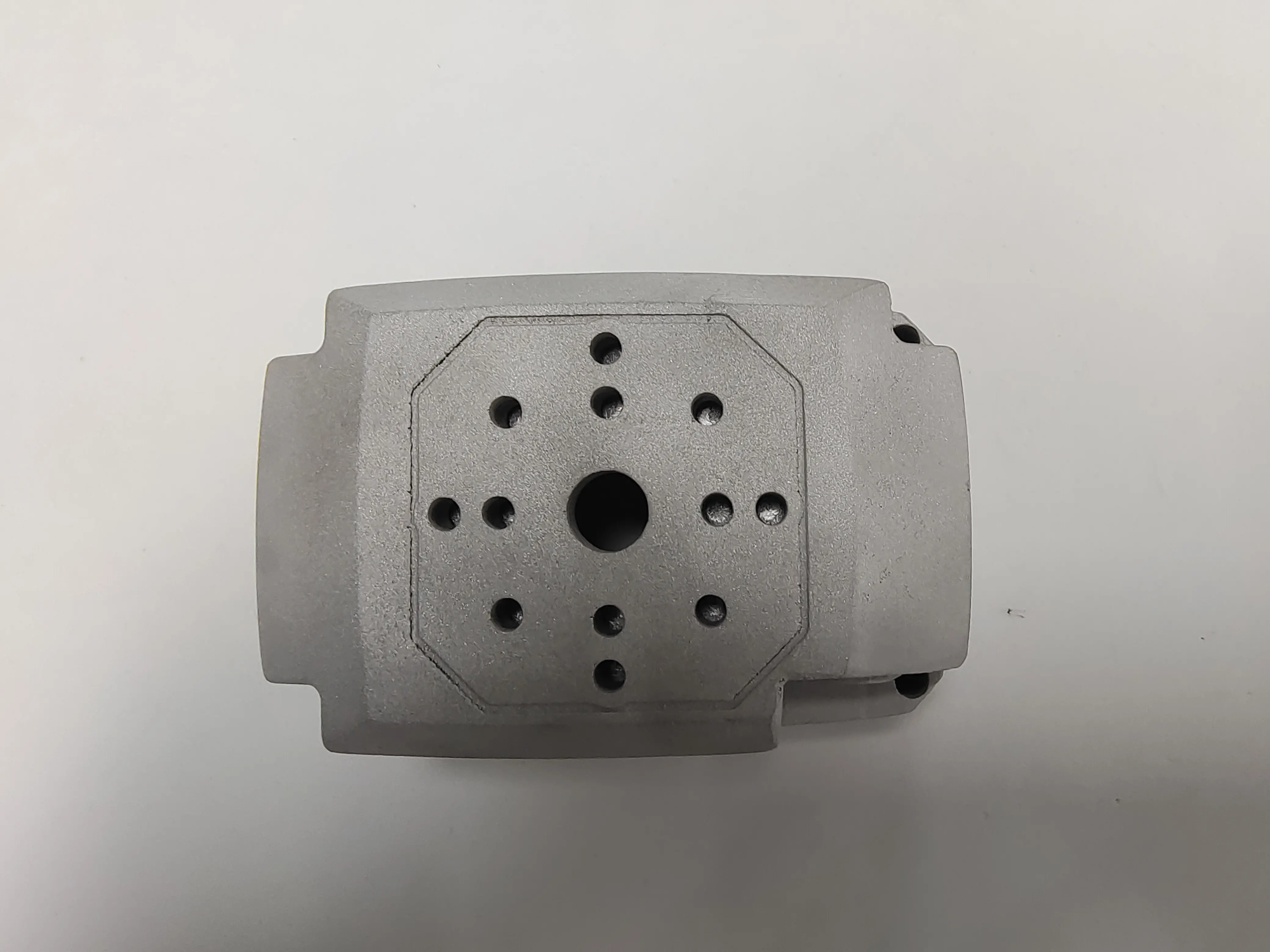
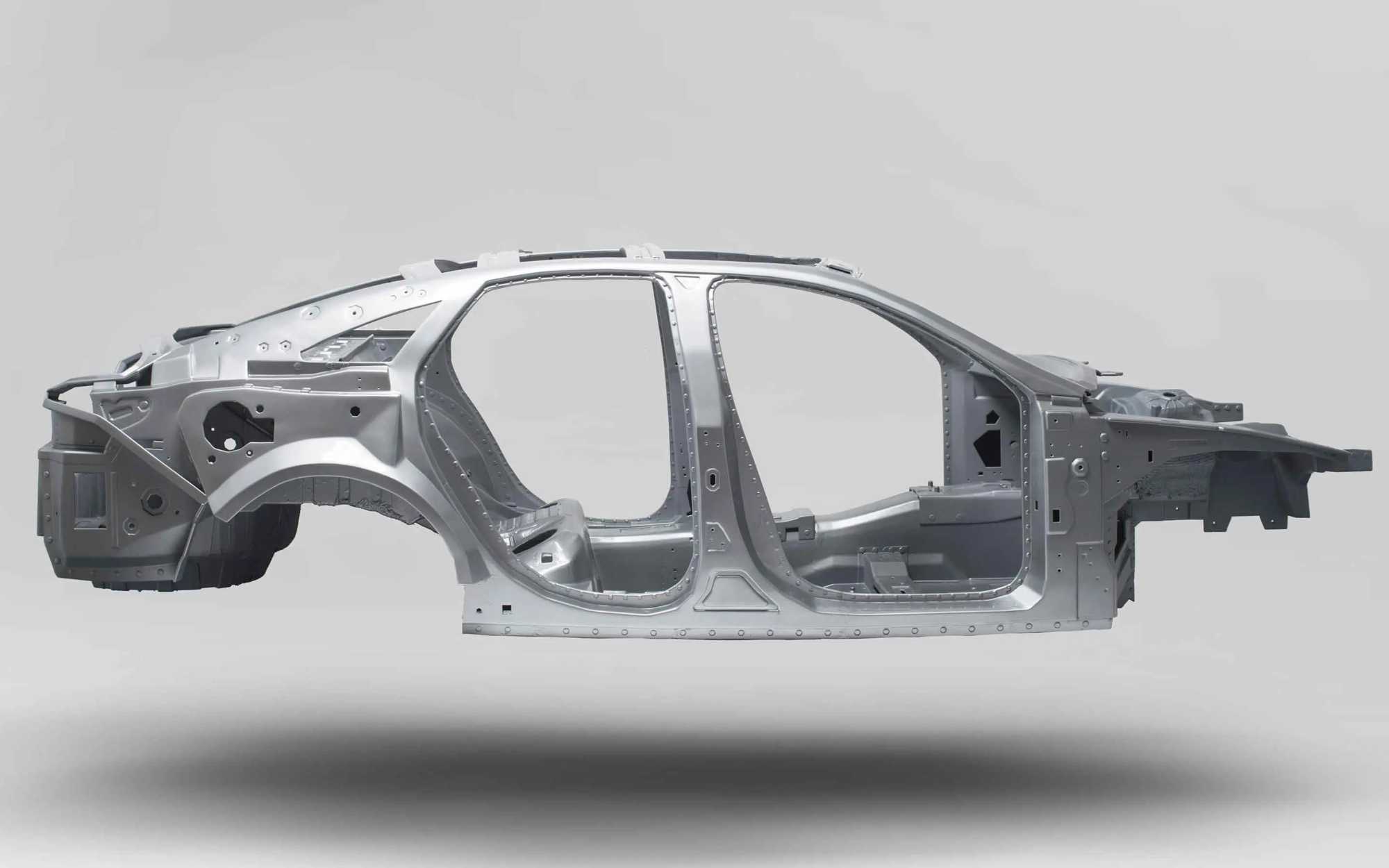
The Future of Manufacturing: How 3D Printing Operator Innovation Changes Games
The transportation and logistics industry faces unremitting pressures: heavier payloads, complex geometry, demanding operating conditions, and ongoing demand for efficiency and cost reduction. Traditional manufacturing methods of carriers and structural components, often involving casting, forging, or subtraction processing, may be difficult to maintain pace. Enter Metal 3D printingspecifically Selective laser melting (SLM)become a transformative force in designing and producing next-generation carrier systems.
Beyond Prototype: The Power of the End-Use Carrier of SLM
3D printing has long been synonymous with rapid prototyping. However, technological leaps, especially in SLM, have been ejected into the field where functions carry the end-use part. SLM uses high-power lasers to build complex metal components layer by layer to completely melt high metal powder, resulting in excellent mechanical properties, high density and complex internal features of the parts that are not possible through traditional means. For carriers (the key structure responsible for supporting, transporting or guiding loads), this will unlock paradigm transfer.
Key innovations powered by 3D printing operators:
- Unprecedented design freedom and topological optimization: Say goodbye to the limitations of traditional tools. SLM allows engineers to design carriers based solely on functional requirements. With topology optimization software, the material can only be distributed when the pressure flow determines, creating an incredibly lightweight but incredibly strong lattice structure, organic shapes and integrated functionality. This directly translates into Lose weight loss – Fuel efficiency or automobiles that are critical in aerospace to increase payloads – without sacrificing strength or rigidity.
- Integration features and complexity merge: Components that used to be multiple machining parts, brackets and fasteners can now be combined into a highly complex 3D printing carrier. Channels of coolant, hydraulic or electrical wires can be embedded directly into the structure. Fixed points, sensor mounts and complex cooling functions become integral to the design. this Reduce assembly time, minimize failure points, improve reliability and simplify logistics.
- Quick iteration and on-demand production: The agility offered by SLM is unparalleled. Design modifications can be implemented and validated in a few days with fully functional metal prototypes, accelerating the development cycle of next-generation carrier solutions. For small batches of high-value applications, such as customized industrial equipment, professional robotics or defense systems, SLM enables true on-demand manufacturing There is no substantial investment in tools that makes custom operator design economically viable.
- Performance by Materials Science: SLM is compatible with a wide range of high-performance metal alloys that are critical to demanding carrier applications:
- Titanium alloy (TI6AL4V): Provides excellent strength to weight ratio and corrosion resistance, ideal for aerospace and medical carriers.
- Aluminum alloy (ALSI10MG, ALSI7MG, ScalMalloy®): Excellent lightweight choice for automotive, robotics and drone frames or antenna carriers.
- Stainless Steel (316 liters, 17-4ph): Known for its corrosion resistance and good strength, it is suitable for marine or chemical industrial carriers.
- Nickel-based superalloy (Inconel 718, 625): Surviving extreme temperatures and harsh environments, it is ideal for jet engine carriers or high-speed industry applications.
- Lifetime expansion and repair: By enabling on-demand production spare parts, SLM extends the operating life of critical device carriers even for older systems where tools are outdated. It also provides advanced repair technology by rescuing expensive components by precisely adding materials only when needed.
GRESTLIGHT: Your Senior Operator Manufacturing Partner
Turning these innovative concepts into tangible high-performance parts requires state-of-the-art technology and deep expertise. This is Great Good at it. As a leading professional rapid prototyping manufacturer specializing in advanced SLM 3D printing, Great is the forefront of providing reliable solutions to complex metal carrier challenges.
- Industrial-grade SLM platform: Using the most advanced SLM machines, Great Ensure consistent, high-quality metal parts with excellent mechanical properties and dimensional accuracy, capable of withstanding real-world loads and stresses.
- Rapid Prototyping Excellence: In addition to simple models, Great Specialized for production of functional prototypes of carriers for stress testing, thermal verification and realistic simulation, so that designs mature faster.
- Comprehensive one-stop service: Optimized parts from expert DFAM (Additive Design) consulting to professional Post-processing and completion of services (Heat treatment, pressure relief, depression, CNC machining, for precise interface, polishing, coating), Great Handle everything.
- Material mastery and customization: Visit a wide range of certified metal powders or explore Highly customizable material options Customized to specific carrier application requirements (strength, weight, temperature, corrosion).
- Speed and scalability: Combine in-depth SLM process knowledge with effective workflows. Great deliver Quick turnaround timeis crucial for the prototype of key vectors and low to medium yields to run.
Great Representing one of China’s leading rapid prototype companies, it is committed to pushing possible boundaries in metal additive manufacturing for demanding applications such as advanced operators.
Conclusion: Embrace the operator revolution
The carriers of 3D printing are not only novel. They represent a fundamental shift to more efficient, intelligent and adaptable manufacturing industries. SLM unlocks innovations – unprecedented lightness, functional integration, geometric freedom and accelerated production – directly address the core challenges of aviation, automotive, energy, industrial autism and robotics. As SLM technology continues to mature and costs become more competitive, its adoption of critical load carrier components will become increasingly mainstream. Work with experienced technology providers Great Enables businesses to leverage this revolution to open up new performance, customization and speed for their most demanding operator applications.
FAQ About 3D Printing Carrier
-
Q: Are 3D printed metal carriers strong enough to replace traditionally made metal carriers?
one: Absolutely, use the SLM process to correctly design and manufacture. The portions of the mechanical properties produced by SLM are nearly completely dense and can be comparable to those of cast or forged equivalents. Topological optimizations can often make them better than conventional designs in strength to weight ratios. -
Q: How complex are 3D printed carriers really?
one: SLM provides great freedom. You can design highly complex internal lattice structures to save weight for complex internal channels of cooling or fluid paths and integrate features of dozens of parts and components using traditional methods, all integrating them into a powerful component. -
Q: Are 3D printing carriers cost-effective compared to casting or processing?
one: It depends on volume and complexity. For highly complex geometric shapes, low to medium throughput or custom designs for traditional methods that require expensive tools, SLM is usually Significantly More cost-effective and faster. It eliminates tool costs and minimizes material waste. For very large quantities of simple shapes, traditional approaches may still maintain advantages, although overall system benefits must be considered (weight loss, assembly reduction). -
Q: What kind of post-processing is usually required for SLM printing carriers?
one: It is crucial to remove the support structure. Critical post-treatment often involves reducing pressure to prevent distortion/cracking, thermal static pressure (HIP), used in critical aerospace components to eliminate internal porosity, and precise machining of critical functional surfaces (such as CNC milling), requiring tight tolerances and smooth surfaces. The finish may then be polished or bead blasted. Great Provide a comprehensive solution covering all necessary steps. -
Q: Which industries benefit the most from 3D printing operators?
one: Aerospace (engine mounts, drone chassis, airframe components), Automotive & Motorsport (lightweight brackets, suspension carriers), Robotics (complex structural carriers for arms and bases), Energy (custom brackets for pipelines, turbines), Industrial Automation (highly customized machine tool carriers, fixtures), and Medical (high-strength, lightweight equipment support). - Q: Why choose the Greatlight of 3D printing carrier?
one: Great Combined Advanced SLM equipmentdeep professional knowledge Rapid prototyping and manufacturing of metal parts For functional applications, Certification and qualityand a complete set of kits One-stop post-processing service. They focus on solving complex metal parts problems and provide highly customizable materials that enable them to provide powerful innovative carrier solutions efficiently and reliably. Customize your precision fast prototyping parts now at the best prices!