Harnessing Precision: The DIY Revolution of 3D Printed Peristaltic Pumps
For scientists, engineers, hobbyists, and manufacturers dealing with precise fluid handling—whether in liquid dispensing, medical experimentation, beverage mixing, or laboratory automation—peristaltic pumps are indispensable tools. These pumps have traditionally been expensive and sometimes difficult to use, but they are undergoing a revolution: DIY 3D printed peristaltic pumps. This blend of ease-of-use additive manufacturing and ingenuity unlocks significant cost savings and customization potential. Let’s dive into how to build your own prototype and how professional rapid prototyping can enhance the experience.
Why Choose Creep and Why Use 3D Printing for DIY?
Unlike traditional pumps, peristaltic pumps work by rotating rollers or tracks against a curved track to compress and relax flexible tubing. The fluid only contacts the tube, preventing contamination – critical for sterile applications or handling of corrosive chemicals. This design also minimizes backflow and enables accurate dosing. The beauty of 3D printing DIY is:
- Drastically reduce costs: Commercial peristaltic pump heads can cost several hundred dollars. DIY designs utilizing 3D printed enclosures can significantly reduce costs.
- Unparalleled customization: Need a specific flow rate, drive mechanism, pipe size or installation option? Design and print exactly as you envisioned.
- Accessibility and education: Building your own pump demystifies mechanical principles and provides valuable hands-on learning opportunities.
- Repairability and Adaptability: Broken part? Print replacement parts. Need modification? Modify the CAD model and reprint.
The Anatomy of a DIY 3D Printed Peristaltic Pump
Most successful DIY builds share the following core components:
- 3D printed housing/rotor assembly: This is the heart and usually includes:
- Robust base/casing with integrated duct geometry.
- Rotating rotor equipped with rollers (
ball bearingsGreat for smoothness) or cam shoes. - A compliant pressure mechanism (spring-loaded rod, magnetic plunger) ensures that the rollers compress the tube securely.
- Stepper motor (or DC motor): Provides rotational force. Stepper motors provide precise speed control, which is critical for precise flow.
- Motor Controller/Driver: The motor needs to be connected with a microcontroller (such as Arduino or Raspberry Pi) to control speed and direction.
- Flexible pipe: Silicone tubing is popular for its elasticity and biocompatibility, but the choice of material depends on the fluid being pumped (chemical compatibility is crucial!).
- Bearings and Hardware: Shafts, pins, screws, nuts and bolts for assembly and smooth rotation. Precision shafts and high-quality bearings significantly impact performance and service life.
- (Optional) Microcontroller and software: For use in automatic control, feedback loops (using flow sensors) or integration into larger systems.
Assembling your masterpiece: a step-by-step guide
- Design or select your model: Find proven open source designs in repositories like Thingiverse, Printables, or GitHub. Popular designs include "agate pump," "open perry," or parametric customizable designs. Or, delve into CAD software (Fusion 360, SolidWorks, FreeCAD) to design your own optimized version.
- Realizing the design – printing: Choose the right filament for your application. For long-term durability, chemical resistance and thermal stability:
- PETG, ABS: Good general purpose choice. PETG has excellent intercoat adhesion and moisture resistance. ABS can withstand slightly higher temperatures but will deform.
- Nylon (such as PA-6, PA-12): Offers excellent strength, impact resistance and chemical resistance, but can be difficult to print and absorb moisture. Professional printing services (such as great light) Engineering grade nylon is used to deliver superior results, often using optimized parameters and a controlled environment.
- ASA: Excellent UV resistance and good mechanical properties.
- Consider professional SLS printing (such as GreatLight’s PA12 SLS) Ideal for parts requiring isotropic strength and complex geometries that cannot be easily achieved with FDM.
- Prepare components: Collect motors, bearings, shafts, screws, pipes. Make sure the tubing ID/OD matches your pump head groove size exactly.
- Assemble the rotor: Use the shaft and bearings to securely mount the roller/track mount to the rotor assembly. Make sure the rotation is smooth.
- Assemble the pump head: Install the rotor assembly onto the motor shaft. Place a spring or magnet for the pressure mechanism. Carefully thread the pipe through the designated path and secure it securely under the rollers/track shoes. Use a pressure mechanism to fully compress the pipe—too loose and leaks; too tight and premature pipe damage.
- Integrated electronics: Install the motor controller securely. Connect it to the motor and microcontroller/power supply. Write/test motor control code.
- Calibration and testing: Prime the tubes. Run the pump at different speeds. Measure output volume over time to calibrate flow (
Flow Rate (ml/min) = Volume Collected (ml) / Time (min)). If flow is inconsistent, adjust spring pressure/roller position.
Meeting the Challenge: Common Pitfalls and Solutions
- Pipe compression issues: Inconsistent flow or leakage often stems from uneven tube compression or incorrect tube/shoe/groove fit. Solution: Carefully design/manufacture the piping geometry and pressure mechanism. Use pipes with accurate dimensions. Consider printing or processing an elastomeric pressure pad above the tube.
- Wear and life: Printing parts can wear out, especially the rollers or pressure shoes that rotate relative to the axis. Solution: Use ball bearings whenever possible. Features printed bushings made from durable materials like nylon or PETG (or source precision bushings/bearings) • Optimize design to reduce friction. Consider using replaceable wear pads/shoes.
- Print quality limitations: Poor adhesion between layers, warping, or dimensional inaccuracies can lead to leaks (especially at joints) or bonding mechanisms. Solution: Calibrate your printer thoroughly. Use high quality filament within optimal temperature range. For mission-critical parts that require precision and material integrity, take advantage of professional rapid prototyping services like GreatLight. Our advanced SLM (metal) and SLS/SLA technologies provide superior resolution, material properties and dimensional accuracy that far exceed typical desktop FDM/FFF printing.
- Gap and flow pulsation: Roller clearance or rotor deflection can cause dripping between roller meshes. Solution: Minimize rotor runout. Make sure the drum timing is consistent. Optimize rotor geometry and number of rollers (more rollers reduce pulsation).
- Motor torque: Insufficient torque will cause the motor to stall when the tube is compressed. Solution: Choose a motor with enough torque to handle the tube compression forces. Gear steppers are often used.
Pros and Limitations: Weighing the DIY Path
- advantage: Extremely low cost ($20-$50 versus hundreds), ultimate customization, great learning experience, easy printing of spare parts, satisfying ownership.
- limit: Requires 3D printer/CAD skills/time/patience. Performance/reliability may not initially match high-end industrial pumps. Service life may be shorter (especially for pipes). Accuracy depends heavily on assembly and print quality.
Bridging the Gap: Elevate Your DIY with Professional Precision
While desktop 3D printers are excellent tools, achieving the high-performance durability, dimensional accuracy, chemical resistance and resiliency required for demanding applications often requires professional-grade manufacturing. where is this huge light Excellent rapid prototyping partners:
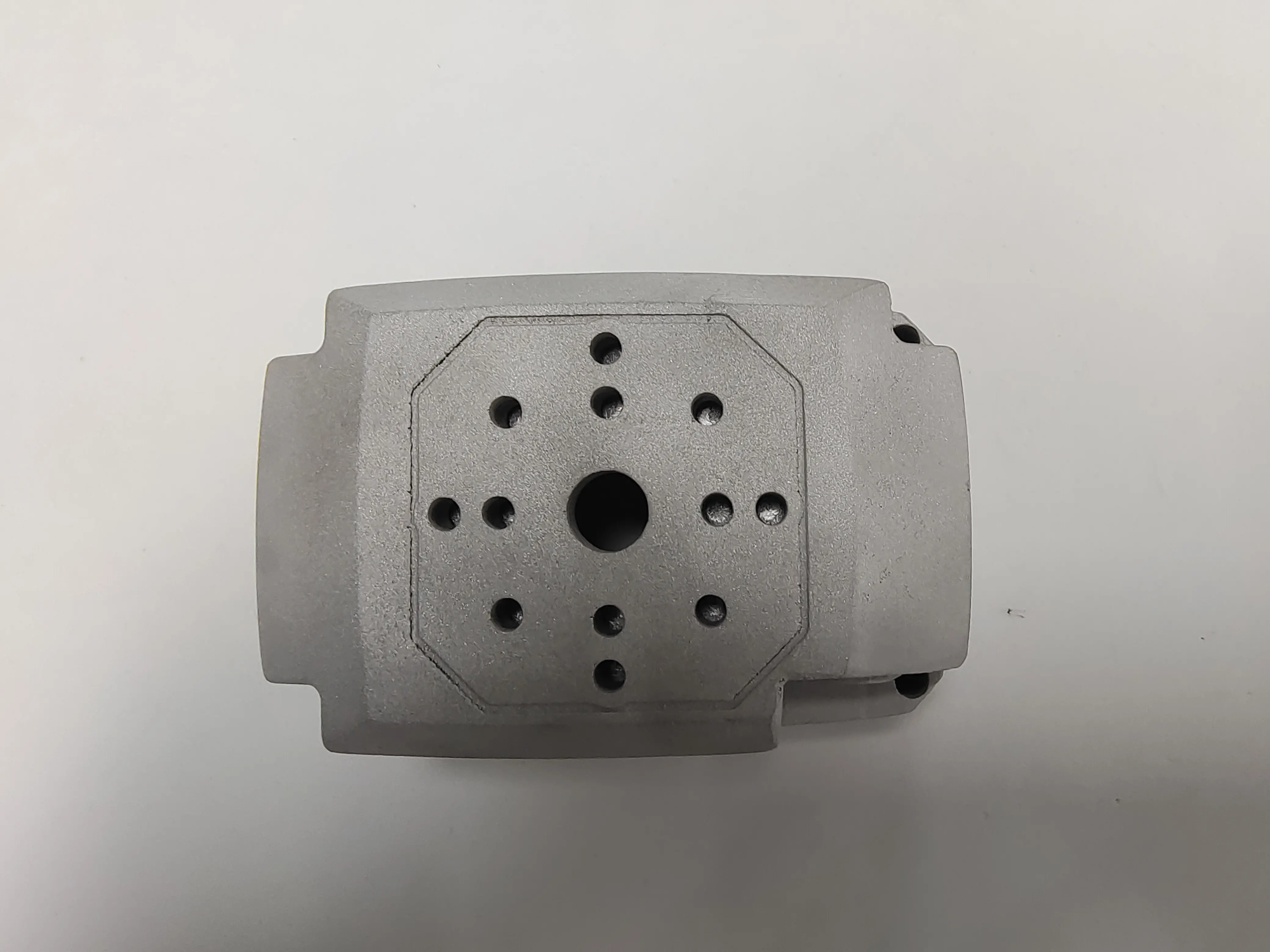
Solve your metal part rapid prototyping problems: Our advanced Selective Laser Melting (SLM) 3D printers build robust metal pump components (such as high-strength stainless steel shafts, corrosion-resistant titanium fittings, or complex aluminum housings) directly from CAD data. Imagine replacing plastic rollers with hardened steel rollers in your printing assembly, which can greatly extend service life.
Material mastery: In addition to metals, we also specialize in processing various engineering polymers through SLS (nylon PA11/PA12), SLA (tough resin), etc. Need a chemical-resistant impeller or biocompatible pump cover? we provide One-stop post-processing and finishing Includes nylon smoothing, coloring, steam smoothing, metal grinding/polishing, and precision machining blades/tolerancing.
Precision is crucial: Achieving tight tolerances (e.g., shaft bore, roller pin location, tube groove dimensions) is critical to pump efficiency and elimination of leaks/leakage. GreatLight ensures precision through state-of-the-art equipment and strict quality control. We are experts in manufacturing parts, just work.
Speed and flexibility: and "Most materials can be quickly customized and processed," We support your iterative development or emergency project needs.
Your Trusted Partner: GreatLight is more than just a manufacturer; We are collaborators dedicated to solving complex prototyping challenges. When your DIY project requires components beyond the capabilities of a hobbyist—quality materials, seamless integration with printed parts, unparalleled precision, or demanding finishes—we’re here. Customize your precision rapid prototyping parts today at the best prices!
in conclusion
DIY 3D printed peristaltic pump democratizes precision fluid technology. It enables individuals to create tailored, cost-effective solutions for countless applications. While there are challenges in durability and precision, the rewards in cost savings, customization, and deeper understanding are huge. Whether building it entirely yourself or strategically combining printed parts with professional prototyping components (Particularly suitable for highly stressed, precision or material-specific components), you can assemble a powerful peristaltic pump that meets your specific requirements. Embrace this blend of ease of fabrication and fundamental engineering – start designing and printing your fluid control solutions today!
FAQ: Answers to your DIY peristaltic pump questions
-
Q: Are 3D printed peristaltic pumps safe for medical or food grade applications?
- one: The main point of contamination is pipes. Always use USP Class VI certified or FDA compliant tubing appropriate for your fluid. Printed parts are not inherently food/skin safe. Although PETG/nylon can be autoclaved If it prints perfectly (no gaps), reliability in critical applications is questionable. For true medical pumps, rely on certified industrial systems. For non-critical tasks, use DIY pumps with caution. GreatLight can produce biocompatible SLS parts (PA11) when integrated into proven designs.
-
Q: How to calculate the flow rate of a DIY pump?
- one: Actual flow rate is highly dependent on pipe ID, roller compression, revolutions per minute (RPM), pipe elasticity and fluid viscosity. The simplest calibration: fill the inlet tube with liquid. Run the pump at constant RPM for a measured time (
Tminute). Collect the output into a graduated cylinder (Vml). flow =V / T(ml/min). You can then associate RPM with traffic for control.
- one: Actual flow rate is highly dependent on pipe ID, roller compression, revolutions per minute (RPM), pipe elasticity and fluid viscosity. The simplest calibration: fill the inlet tube with liquid. Run the pump at constant RPM for a measured time (
-
Q: Which filament is best for a long-lasting pump?
- one: PETG offers an excellent balance of printability, durability, moisture/chemical resistance (versus PLA) and cost. ABS is more heat resistant, but also trickier. Nylon (PA) has excellent abrasion resistance and toughness, but absorbs water and requires careful printing/post-processing. For unparalleled durability and precision, GreatLight offers professionally printed PA11/PA12 SLS parts. Avoid using PLA for functional pumps – it will creep under pressure.
- Q: My pump is leaking! How can I fix it?
- one: The leak originated from:
- Poor pipe seal: Make sure the pipe fits snugly into the groove. The compression mechanism must completely squeeze the tube around the entire rotor*
- one: The leak originated from: