

Racing Revolution: Designing the Porsche 911 GT3 with Advanced Metal 3D Printing
Porsche 911 GT3. The name is synonymous with pure motorsport, precision engineering and a relentless pursuit of performance. Traditionally, making parts for such machines requires extensive machining, complex tooling, and compromises dictated by traditional manufacturing constraints. But what if we could take advantage of the unlimited design freedom of metal additive manufacturing (AM) to reimagine key elements of this icon? Enter the ambitious world of 3D printing the Porsche 911 GT3, a project that pushes the boundaries of rapid prototyping and demonstrates the huge potential for automotive innovation.
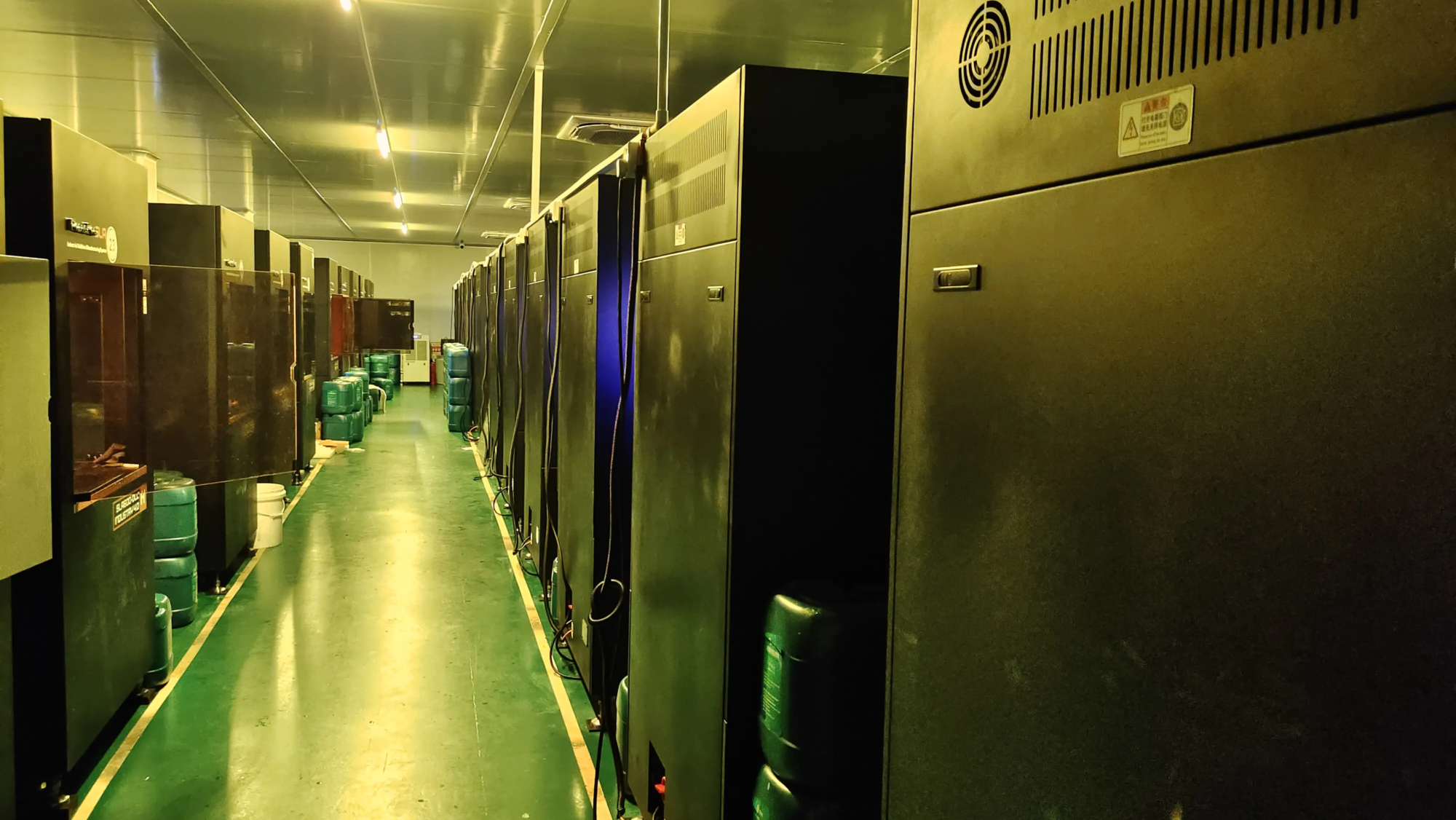
This isn’t just about printing plastic scale models; it leverages industrial-grade selective laser melting (SLM) technology to produce functional, high-performance metal parts that are optimized in ways not possible with CNC machining or casting. At GreatLight, we specialize in solving complex metal rapid prototyping challenges using advanced SLM equipment, and projects like this demonstrate the transformative power of additive manufacturing.
Why GT3? The perfect testing platform
The Porsche 911 GT3 is an ideal candidate to explore the potential of AM:
- Keep an eye on your weight: Every gram of weight saved translates directly into lap times. Additive manufacturing enables complex lattice structures and topology optimization to achieve significant weight savings without compromising the strength of critical suspension, chassis and gearshift components.
- Performance requirements: Components face extreme heat (exhaust), stress (suspension, engine mounts) and complex geometry (cooling ducts). Advanced alloy printers, such as GreatLight’s industrial SLM systems, can meet these challenges.
- Complex fluid dynamics: Optimized intake manifold and exhaust geometry—critical to horsepower and throttle response—are made possible through additive manufacturing’s ability to produce complex internal passages and optimize flow paths.
The Art of the Possible: Using Additive Manufacturing to Transform Porsche GT3 Parts
- Topology-optimized suspension: Imagine that an A-arm or knuckle is designed not by machining a block of metal, but using software algorithms to strategically place material only where the stress path dictates. Eliminating unnecessary bulk creates a stunning, organic structure that is significantly lighter than CNC-machined structures, improving unsprung weight and handling responsiveness.
- Integrated cooling solutions: The GT3 engine and brakes generate a lot of heat. Additive manufacturing allows designers to combine multiple components into a single integrated part with complex internal cooling channels that perfectly match the heat source. This eliminates gasket interfaces (potential leak points), improves thermal efficiency, and reduces assembly complexity.
- Next generation intake manifold: Adjusted flow paths, optimized plenum shape and pressure wave manipulation are crucial for high-revving engines. Additive manufacturing allows for the creation of complex runner geometries with smooth internal surfaces and minimized butt joints, promoting laminar airflow and maximizing volumetric efficiency beyond the limitations of molded or cast parts.
- Lightweight structural mounts and engine mounts: Brackets for fixed subsystems or engine mounts using lattice and hollow section designs can significantly reduce mass while maintaining precise stiffness and damping requirements. Design freedom allows for perfect geometric alignment and integration points.
- Prototype exhaust parts: It became feasible to explore radical designs for headers, collector boxes and even lightweight mufflers using heat-resistant alloys such as Inconel. Internal acoustic chambers can be optimized for sound attenuation while maximizing exhaust gas flow—often requiring a hollow design that cannot be machined.
The GreatLight Advantage: Bringing Prototype Performance Parts to Reality
Designing functional GT3 components requires more than just a 3D printer. It requires deep expertise, advanced technology and meticulous post-processing – which is where GreatLight’s rapid prototyping services shine.
- Cutting-edge SLM technology: Take advantage of high-power industrial SLM printers capable of processing aerospace-grade aluminum, titanium, Inconel, stainless steel and maraging steel. Key metrics such as laser power (500W+), build volume (400x400mm+) and precise atmosphere control ensure the stability of large, demanding builds such as suspension components.
- Expert parameterization: Each material and geometry requires fine-tuning of laser parameters (power, speed, incubation distance), layer thickness, scanning strategy and support structure. Our engineers have specialized metallurgical knowledge to ensure that the laser-melted layers bond perfectly, minimizing internal porosity and achieving near-full theoretical density – critical for structural integrity.
- Comprehensive post-processing package: Printing is just the beginning. Removal of support structures, thermal stress relief (critical for large aluminum parts), hot isostatic pressing (HIPping) to eliminate micropores, precision CNC machining of critical interfaces (drilled holes, mounting surfaces), and surface finishing (media blast polishing, coating) are all performed in-house. This ensures that the parts not only meet dimensional tolerances (±0.1mm standard allows for tighter requirements), but also achieve the surface finish and fatigue performance required for automotive testing.
- Iterate quickly: Found a resonance issue with your prototype intake manifold? Additive manufacturing significantly shortens iteration cycles compared to traditional tools. Design adjustments are implemented digitally, and modified components can be printed and processed faster, accelerating the entire chassis development process.
- Materials Science Expertise: It is critical to understand the unique microstructure and anisotropic properties (strength changes with build direction) inherent in additively manufactured materials. We guide customers through material selection (AlSi10Mg for lightweight stiffness? Ti6Al4V for ultimate strength-to-weight ratio? Maraging steel for ultimate durability?) and ensure processing is consistent with part function.
Conclusion: Beyond Prototyping to Radical Reimagining
The pursuit of a 3D printed Porsche 911 GT3 is more than just a vanity project; it’s a glimpse into the future of high-performance automotive engineering.
- Unparalleled design freedom: Break free from the constraints of traditional manufacturing and unleash true performance-optimized geometries.
- Significant weight reduction: Complex load-bearing components can often reduce weight by more than 30-50%.
- Integrated features: Consolidate parts, eliminate assembly steps and improve system reliability.
- Accelerate development: Rapid prototypes become functional testware, proving concepts faster than ever before.
While there are regulatory hurdles to fully road-legal additively manufactured structural components, motorsport and prototyping are already beginning to embrace the revolution. The knowledge gained is fed back into the development of production vehicles, gradually pushing boundaries.
Ultimately, metal additive manufacturing requires deep engineering expertise, cutting-edge equipment and meticulous quality control. It’s not just about "Print car parts";It is the rigorous application of advanced physics and materials science to redefine what is possible. At GreatLight, we work with visionary engineers to transform ambitious concepts, such as redesigned icons, into tangible, high-precision realities. We provide an ecosystem with the power, speed, and quality to navigate complex prototyping.
urgent FAQs about 3D printing Porsche GT3 parts (and more)
Question 1: Are 3D printed Porsche GT3 parts legal for street use?
A: Currently, highly regulated structural/safety-critical parts (such as suspension arms) printed via additive manufacturing are generally not approved for street use certification without rigorous (and lengthy) certification. Non-critical scaffolding or prototype development/test parts are common. Greater flexibility for motorsport applications off public roads.
Q2: What is the difference between plastic printing (FDM/SLA) and metal printing (SLM) for automotive parts?
A: FDM/SLA produces plastic parts suitable for appearance prototypes, molds or models. Selective Laser Melting (SLM) uses high-power lasers to bond metal powders layer by layer to form fully dense, functional metal parts (aluminum, titanium, steel) capable of handling structural loads, heat and vibration – crucial for true GT3 parts.
Question 3: How strong are metal 3D printed parts compared to machined/cast parts?
A: When correctly printed using optimized parameters, post-processed (hot isostatic pressing, heat treatment) and designed specifically for additive manufacturing, SLM parts can achieve mechanical properties that exceed those of castings and approach (and sometimes exceed) forged material specifications in some directions. Anisotropy (direction-dependent properties) must be considered in the design.
Question 4: How long does it take to print and complete a complex turbo manifold like a GT3?
A: Timetables vary widely based on size, geometric complexity, materials and finishing requirements. Printing a large, complex Inconel manifold can take 40-100+ hours. Post-processing adds significant time: support removal (+ hours), hot isostatic pressing (+8-24 hours), machining (+ hours/day), surface finishing (+ hours). The turbine is expected to take several weeks from design freeze to inspection of final parts for the complex project. Iterations are still faster than traditional manufacturing.
Q5: Is metal 3D printing expensive?
A: The cost of each part varies greatly. For prototypes, low-volume custom parts (e.g. motorsport) or components that offer extreme weight savings/impossible geometries, the value lies in increased performance, shorter lead times and enabling designs that would otherwise be impossible. It is rarely cost-effective for high-volume production cycles, but strategic for cutting-edge development and low-volume niche markets. GreatLight focuses on optimizing processes to achieve competitive prototyping costs.
Q6: Can GreatLight print internal engine parts, such as pistons or connecting rods?
A: While it is technically possible with advanced SLM printers and high-strength alloys such as Inconel or specially treated steel, internal engine components face extreme cyclic stress and surface wear requirements. Achieving the necessary fatigue life, precise tolerances and surface finish adds significant complexity. Currently, in production-scale applications, internal combustion engine blocks/heads rely more on additive manufacturing prototyping techniques than basic internal structures, although this is explored by top motorsport players. We recommend a careful feasibility assessment.
Question 7: What files do I need to start prototyping with GreatLight?
A: We require 3D models preferably in STEP or IGES format for workflow compatibility. Detailed specifications regarding materials, critical tolerances, surface finish requirements, quantities and intended application/testing regime are critical for our engineers to propose the best process and verify feasibility. Get a detailed consultation with us early in the design phase.
Ready to push the limits of automotive design? Whether the porch is the groundbreaking concept for the Porsche GT3 you dreamed of, or a critical prototype part you needed yesterday, GreatLight’s expertise in metal SLM printing and comprehensive rapid prototyping services provide the technology, precision and reliability you need. Accelerate your most ambitious projects with our advanced SLM printers, material mastering and in-house finishing. Get an instant quote for a custom precision metal prototype today and experience the GreatLight difference.


