Demystifying Metal 3D Printing: The Ultimate Guide to Solving Common Problems
Metal 3D printing, specifically selective laser melting (SLM) and other powder bed fusion (PBF) technologies, has revolutionized prototyping and manufacturing. It unleashes unparalleled design freedom, enabling complex geometries and lightweight structures not possible with traditional methods. However, achieving consistent, high-quality results isn’t always simple. Parts can have frustrating defects, resulting in wasted time, material and cost. understand Why the occurrence of these problems and how Addressing these issues is critical. This guide takes an in-depth look at the most common metal 3D printing challenges and provides feasible solutions.
Addressing core challenges:
-
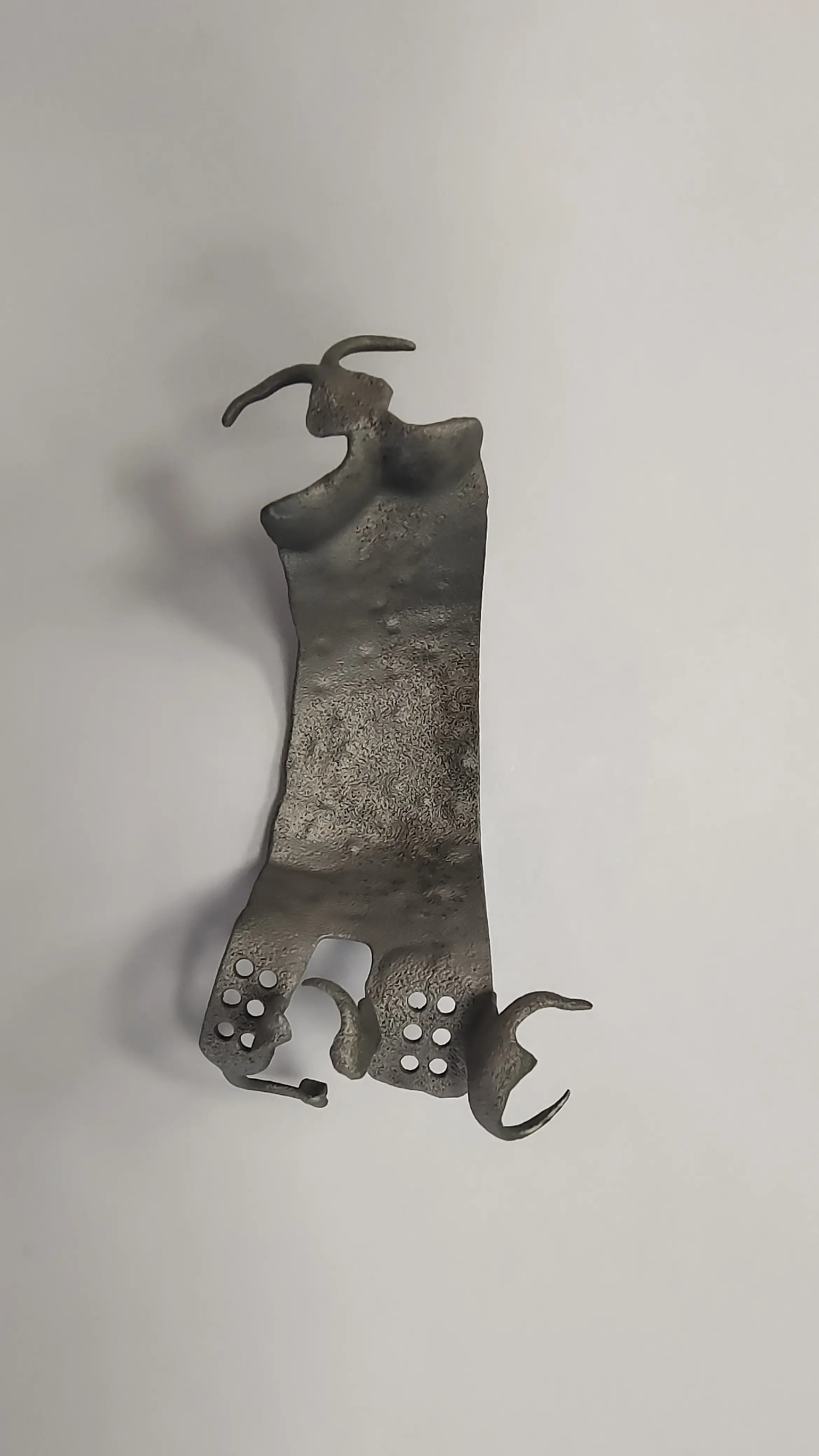
Twist and deform: The Achilles’ Heel of Metal Additive Manufacturing.
- reason: Rapid heating (laser melting) and large thermal gradients during cooling can lead to significant residual stresses. These stresses exceed the material’s yield strength at high temperatures, causing the part to warp or curl away from the build platform. Large flat surfaces and overhangs are particularly susceptible to damage.
- Solution:
- Strategic support: Design and generate strong support structures that strategically anchor parts and counteract shrinkage forces, especially on large overhangs and edges.
- Best direction: Orient the part to minimize large unsupported areas and maximize thermal symmetry. The sloped surface helps dissipate heat more evenly.
- Gradual heating and cooling: Utilize optimized print platform preheating and controlled chamber cooling (optimized cooling cycle) to reduce thermal gradients.
- Parameter optimization: Fine-tune laser power, scan speed, fill spacing, and layer thickness (possibly thicker layers) to achieve gentler heat input/output cycles. Stress Relief Cycle During Build ("Interlayer annealing") can be very effective.
- Substrate bonding: Ensure strong adhesion to the build platform through optimized plate preparation, suitable surface coatings or strategic base plate heating profiles. A dedicated sacrificial interface layer can also help.
- Simulation tools: Use simulation software to predict residual stresses and deformations forward Print, allowing modification of orientation, support, or scanning strategy to compensate.
-
Porosity: Hidden Weaknesses.
- reason: These internal voids severely impact part density, mechanical integrity (fatigue strength, tensile strength) and corrosion resistance. Types include:
- Gas porosity: Trapped gases from powdered raw materials (moisture, adsorbed gases) or shielding gas turbulence.
- Lack of Fusion (LOF): Incomplete melting due to insufficient interlayer bonding due to insufficient energy density (low power, high speed), large layer heights or powder contamination.
- Keyhole porosity: Collapse of unstable vapor cavities formed during deep penetration with very high energy densities (especially above the vaporization point).
- Solution:
- Powder quality: Crucial! Highly spherical powder from certified sources with controlled particle size distribution. Ensure meticulous powder handling: drying protocols, contamination control, protective gas purity and thorough powder screening/remediation.
- Parameter accuracy: Calibrate laser parameters carefully. Keep laser intensity consistent across the entire build area. Optimize energy density (J/mm³), balancing power, speed, hatch spacing and layer thickness to avoid LOF or keyholes. Scan path strategy optimization is important.
- Gas flow control: Design and validate efficient laminar protective airflow systems that effectively remove process emissions (spatter, fumes) without introducing turbulence of trapped gases.
- Hot isostatic pressing (HIP): For critical applications, HIP is used to post-process parts to eliminate internal porosity through simultaneous high temperature and pressure.
- reason: These internal voids severely impact part density, mechanical integrity (fatigue strength, tensile strength) and corrosion resistance. Types include:
-
Surface roughness and dimensional error: Bridging the gap between digital and physical precision.
- reason: The layer-by-layer nature and powder sintering/melting physics result in:
- Ladder type: Angular artifacts inherent on curved or sloping surfaces.
- Powder adhesion: The semi-sintered powder is partially fused to the surface.
- Dross/Recast Layer: The molten pool resolidifies and splashes at the support.
- Residual stress: Causes distortion that affects final size.
- Thermal expansion/contraction: During processing.
- Calibration error: Laser focusing/positioning, recoater alignment.
- Solution:
- Printing strategy: Choosing thinner layers (significantly fewer steps), optimized recoater blade/blade systems and speeds to minimize powder splash/drag, contour scanning strategies for smoother sidewalls. Support removal design affects downstream finishes.
- Compensation and calibration: Uses distortion compensation algorithms based on material and geometric profiles. Implement a strict machine maintenance and calibration program (laser optics, recoated blades, galvanometers).
- Powerful post-processing: Develop dedicated SOPs for critical surface treatments: shot peening, abrasive flow machining (AFM), CNC machining of critical interfaces, electropolishing, grinding. Think of post-processing as an integrated stage of your additive manufacturing workflow.
- reason: The layer-by-layer nature and powder sintering/melting physics result in:
-
Cracking and delamination: Catastrophic failure.
- reason: Fractures between layers (delamination) or within layers (solidification/thermal cracking) usually result from:
- Residual stress: Severe internal stresses exceed the material’s fracture toughness at that temperature.
- Material embrittlement: Compositional issues (e.g., excess sulfur/phosphorus impurities), sensitive microstructure due to rapid cooling. Certain alloys (e.g. high-strength aluminum, certain tool steels, superalloys) are more likely to occur.
- Parameters are incorrect: Cooling rate too high, insufficient overlap between layers or scanned tracks (poor remelting).
- Solution:
- Stress management: Implement strategies to mitigate deformation/porosity (orientation, support, IPS/annealing cycles). Consider heating the printed plate during the molding process to achieve higher ductility (~500°C+).
- Material Selection/Quality: Choose a grade developed specifically for AM (such as an AM-specific aluminum alloy). Guaranteed exceptional powder purity.
- Parameter refinement: Optimize scan parameters for smoother thermal gradients. Adjust energy input based on alloy type.
- Hot isostatic pressing (HIP): Although primarily intended to increase porosity, HIP can also improve grain bonding and repair microcracks in some materials.
- reason: Fractures between layers (delamination) or within layers (solidification/thermal cracking) usually result from:
- Support removal difficulty: A necessary evil turned into a nightmare.
- reason: Due to improper adjustment of interface parameters, the integration of support and parts is too complete. Dense bracing or inaccessible internal bracing. Brittle alloys are prone to cracking during disassembly.
- Solution:
- Intelligent design: Leverage generative design tools. Minimize bulk support. Focus on the interface only where it’s really necessary. Design sacrificial anchors and reachable detached labels.
- Parameter adjustment: Fine-tune power/speed Specifically Create strong but fragile interfaces at contact points rather than complete blending ("vVBO" – Variable volume separation option parameter).
- Advanced removal technology: Equipment investment in wire EDM, CNC machining jigs/fixtures, optimized thermal degreasing cycles for polymer composites for bonded metal deposition (BMD), cavitation shot peening.
- Design for Manufacturability (DfAM): Work with design engineers to orient/model parts that require minimal and easy support.
Conclusion: win-win cooperation
Overcoming these barriers to metal 3D printing requires multidisciplinary expertise: deep metallurgical knowledge, precision equipment operation, complex process optimization, meticulous design foresight (DfAM), and powerful post-processing capabilities. It is rarely a single panacea but a symphony of carefully controlled variables.
At GreatLight, we focus on turning these challenges into predictable results. As a professional manufacturer focusing on rapid prototyping Precision metal partswe bring everyday solutions:
- Advanced SLM expertise: Utilizing state-of-the-art SLM printers operated by experienced engineers, they capture the parametric fingerprint of various alloys.
- Integrated Material Handling: Strictly control powder quality, drying, screening and recycling protocols.
- Post-integration processing: provide real One-stop post-processing service – HIP, precision machining (CNC), heat treatment, surface finishing (sandblasting, AFM, polishing) – all in one place, ensuring seamless quality control.
- In-depth DfAM consultation: Our team works with customers to optimize designs for manufacturability, leverage simulation for stress/deformation prediction and customize support strategies.
- Quick customization: We handle it quickly Custom materials and complex geometriesefficiently provide high-precision rapid prototyping solutions.
Don’t let persistent printing issues hold up your project. Entrust your precision metal prototyping to GreatLight, one of China’s leading rapid prototyping companies, and experience world-class expertise.
[CTA: Solve Your Metal Printing Headaches Today!]
Frequently Asked Questions (FAQ) about metal 3D printing issues
-
Q: How big of a problem is warping? Will it ruin my build?
- one: Warpage is a critical problem prevalent in metal additive manufacturing, especially for large or flat parts. It can cause the recoater blade to collide with the part, halting the entire build prematurely. Even when completed, warped parts often do not meet dimensional tolerances and may require over-machining or become unusable. Proactive management through orientation, support, and thermal control is critical.
-
Q: Can I visually inspect pores in printed metal parts?
- one: Typically, you cannot detect porosity with the naked eye; it requires destructive testing (metallography – cutting, polishing, microscopy) or non-destructive testing (NDT) methods such as X-ray computed tomography (CT scan), ultrasonic or dye penetration testing. Surface-damaged pores may sometimes be visible, but internal defects require specialized equipment.
-
Q: Are certain metal alloys easier to 3D print without cracking than others?
- one: Absolutely. Alloys designed specifically for AM (e.g., Scalmalloy®, Specialty AM Nickel Alloy/Tool Steel) often contain additives that improve weldability and reduce crack susceptibility. Titanium alloys (such as Ti-6Al-4V), 316L stainless steel and maraging steel generally have good processing properties. High-strength aluminum alloys and high-temperature alloys such as IN738LC are very susceptible to cracking without professional parameter tuning and dedicated building strategies.
-
Q: Why is post-processing so important for metal AM parts?
- one: Print metal parts directly ("Completed") typically have rough, uneven surfaces unsuitable for functional use, residual stresses, internal porosity, and rarely meet tight dimensional tolerances. Post-processing steps such as stress relief, HIP (for voids/cracks), machining (for tolerances and complex geometries), and surface finishing are critical to achieving functional, reliable end-use parts that meet industry standards.
- Q: How does GreatLight ensure consistent quality and quick turnaround on custom materials?
- one: Consistency stems from Deep understanding of the process. For custom materials, we conduct rigorous parameter development activities (Design of Experiments – DoE) to establish optimized printing profiles ("parameter group") meet material specifications. Our integrated facilities (printing + post-processing) ensure seamless workflow control. Advanced inspection tools (CT scans, CMM) verify the quality of each batch, while experienced engineers carefully monitor and adjust processes throughout production.
- [CTA: Achieve Reliable Prototyping Speed & Quality – Partner with GreatLight!]