Unleash your inner hero: a DIY guide to 3D printing retractable swords
Remember those exciting moments in fantasy movies, the heroes waving their wrists, impressive blades with satisfying prick? What if you could create this magic yourself? Using the power of 3D printing, building your own retractable kendo is not only possible, but an incredible manufacturer project. This guide walks you through the process, turning digital design into tangible, scalable actions.
Why a 3D printed retractable sword?
In addition to the undeniable cool factor, the project also delves into practical engineering principles. You will explore:
- Mechanism design: Learn how sliding, locking and spring elements work together.
- Tolerances and fit: Master the key art of designing parts that slide smoothly to each other but lock firmly.
- Functional prototype: Experience first-hand how 3D printing enables rapid iteration to iterate complex components quickly.
- Custom: Want a samurai blade? What is the appearance of the futuristic energy sword? You are limited only by imagination in CAD.
It’s a perfect blend of creativity, mechanical engineering and hands-on architecture.
Materials and tools you need:
- 3D printer (FDM is recommended): Ideal for this project is an accessible desktop printer (recommended for strength and easy-to-print PLA or PETG wire).
- filament: Choose a sturdy filament. PLA+ or PETG Due to its rigidity, layer adhesion and impact resistance, it is an excellent starting point. Consider using different colors for shanks, machinery and blades.
- Design File: You can find open source designs on platforms like Thingiverse, Prinbables, or myminifactory. search "Retractable sword," "Foldable sword," or "Retractable lightsaber". Or, use CAD software (Fusion 360, Tinkercad, Blender) to design your own design.
- Basic tools:
- Digital calipers (critical for measurement fitting)
- Small screwdriver
- Needle pliers
- Sandpaper (various sandpapers) or small files
- Super glue (cyanoacrylate) or epoxy resin (for Safe Fix-see Security)
- Small screws or pins (optional for fixing non-moving parts)
- (Optional) Lubricant: Dry lubricants (such as PTFE spray or graphite powder) can improve sliding effects.
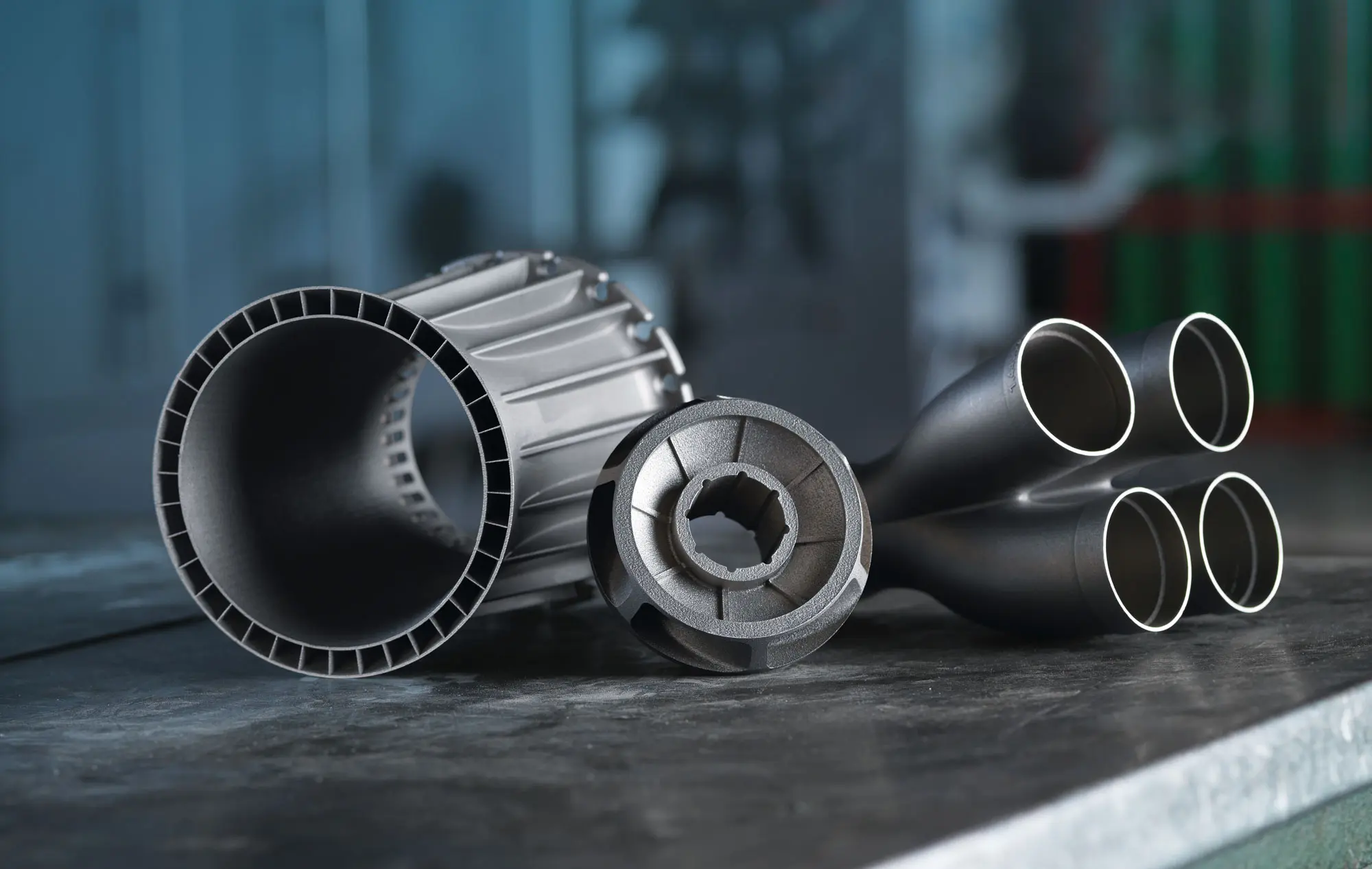
- (Durability/finishing optional): Greglight CNC machining and finishing services: While most parts are printed in plastic, critical wear components such as wear pins, bushings and even locking mechanisms may benefit from Metal fabrication using SLM or CNC machining Ultimate durability and smoother operation. Gremight is outstanding in its efforts to rapidly produce these precision metal components. Rapid prototyping Solutions, as well as professional aftertreatment finishes such as polishing, anodizing or coatings.
Step by step DIY guide:
1. Design phase (blueprint):
- Find or design: Start with an existing open source design. Double-check it in a slicer or CAD viewer to understand how the retraction mechanism works (usually a combination of linear sliders, lock latches, and usually springs).
- Key design elements:
- Blade part: Telecommunication methods designed to slide with each other. Careful tolerance design is required to smoothly slide, but the sway is small (usually 0.2-0.5mm clearance).
- Locking mechanism: This is the heart. Common designs include a pin of a spring pin that engages in the blade segment as the blade extends, or locks all objects into the rotating collar that locks everything into place. Make sure the locking is active and safe.
- Button/lever: Ergonomic position to unlock lock.
- spring: Provides the force to expand or retract the blade according to the mechanism design (compression or extension spring is common).
- Handle/handle: Accommodation mechanism that provides grip and serves as a sheath for retracting the blade. Consider ergonomics and aesthetics.
- Test Print: Print Critical Mechanical parts (especially mating surfaces) are small-scale or single components, firstly test fit and tolerance before being printed in full. Iterative design as needed. Calculate tolerances!
2. Printing phase (to bring it to life):
- Print settings: Prioritize accuracy and strength. Use medium layer height (0.15-0.2mm), sufficient wall count (3-4+) and high fill percentage (30-50%+), such as structural components such as locks, blade bottom sections and handles. If well designed, lower fillers (10-20%) can be used for internal blade segments.
- direction: Orienting the parts to maximize strength along the direction of force and minimize layer adhesion on the support or improve layer adhesion on the critical surface. Parts under shear stress (such as locking pin slots) should be oriented so that the layer lines are not parallel to the shear plane. Print the blade segment vertically to adhere along its length along the optimal layer on its length, but make sure the bed adheres very well.
- Support structure: Use strength overhang support, especially on complex blades or complex handle components. Optimized support for settings for easy deletion. Tree support can often save material and post-processing time.
- Patience is the key: Printing all components can take a lot of time. Make sure the printer calibration is spotty to prevent mid-warping or failure of printing.
3. Assembly phase (integrate it together):
- Post-processing:
- Support removal: Be careful to remove all support materials.
- Grinding and Archive: Thorough sand mating surfaces (e.g., the inner faces of blade segments slide to each other, pin channels, latch paths) to remove all bumps, strings or layer ridges. Designed to maintain a smooth sliding effect. Keep drying!
- clean: Removes all sand debris and dust – it can block the mechanism. Compressed air is useful.
- Assembly order: Follow the design instructions carefully. Usually involved:
- Insert any bearing or bushing.
- Install the spring and locking mechanism subassemblies into the handle.
- Feed blade segments through the handle, nesting them together in the correct order.
- Secure the end tip/cap of the blade.
- Connect button mechanism.
- Very little glue: Only glue Still, Common non-moving components (e.g., half of the decorative handle, end cap). don’t want Glue sliding parts! If the parts are loose, redesign and reprint; the glue will destroy the mechanism. If using metal pins or bushings, use caution or use Locktight when needed.
4. Test and improve (make it sing):
- Smoothing operation: Test expansion and retraction repeatedly. It should be deployed actively and locked, then retracted smoothly when activated release. Looking forward to some initial stiffness.
- Determine the friction point: If the movement is rough, find out where the friction occurs by partially disassembling and observing the wear marks. Further sand/polish these dots.
- Lubrication (care): application Tiny The amount of dry PTFE lubricant to the sliding surface. Avoid wet lubrication when attracting dust. Graphite powder works well, too. Too much lubricant can turn into gummy.
- Optimization mechanism: If the locking is unreliable, or the spring will become weak/strong, you may need to adjust the latch design, change the spring (k constant/strength), or adjust the fit headroom. This is where your quick prototyping skills shine!
Safety considerations: The most important
- This is a prop, not a weapon: This is purely for display, role-playing, or as a display work. it should no way Spin towards a human or animal. Rigid plastic can still cause damage.
- Material selection: Avoid brittleness like standard PLA for blades if possible; PETG or ABS (if your printer comes with it) is the harder option. The PLA can be broken under pressure.
- Spring Force: Pay attention to spring strength during the test. A very powerful spring-breaking part can actively break the plastic or cause a pinch during treatment.
- deploy: Deliberately keep the blade away from yourself and others, pointing the blade up and down. Even if it’s a joke, never point it at anyone.
- Element: Make sure to capture the small parts (pin, spring) firmly and if the mechanism fails, it cannot become a projectile.
- Adult Supervision: Essential for young manufacturers.
Conclusion: From prototype to perfection
Building a 3D printed retractable sword proves the originality and accessibility of modern realizations Rapid prototyping. Think like an engineer and challenge you with unique, functional artifacts born with your own efforts. Although desktop 3D printing gives a DIY journey, such projects sometimes reveal the benefits of industrial-grade features. When you need a truly professional finish for unrivalled strength, determination of precision or vital components – perhaps a metal latch, smooth machined bushing or vibrant beekeeping shank – work with experts Rapid prototyping Service is priceless.
Great This expertise is reflected, Advanced SLM 3D printer and Accurate CNC machining Professionally solve complex prototype challenges. from Rapid metal prototyping comprehensive Post-processing and completion of services (including custom materials), Greatlight offers a reliable one-stop solution that translates complex designs into durable, high-performance parts. They are one of China’s leading rapid prototyping partners, committed to delivering quality and speed at competitive prices. Whether you iterate through complex locking mechanisms in metal or seek perfect finishes, Greglight provides a professional foundation for professional foundations Customize your precise prototyping parts now. Built safely, iterate quickly, and let your work shine – from desktop workshops to center stage.
FAQ (FAQ)
Question 1: Can I really use this sharp, practical sword?
Answer: Absolute no. This guide is used to create prop copy or display works. 3D printed plastic (even for this purpose) lacks the structural integrity, tempering and edge geometry required by a real weapon. If used, it will easily break. Think of it only as a model or clothing accessories.
Q2: What is the strongest filament with the blade?
one: Petg It is usually a good tradeoff between strength, toughness and printability of FDM. Nylon (PA) or PPA/CF (Carbon Fiber Fill) The filaments have higher strength and impact resistance, but are trickier to print and require a hard nozzle. Abdominal muscles It works, but is easier to twist. Remember that layer adhesion is crucial to the strength of the blade, such as the blade.
Q3: My mechanism is too stiff/jam. what should I do?
A: This is very common. First, thoroughly sand and clean all Slide the surface again. Check for remaining support material or excessively thick layered lines. If the polish is not enough, the gap in the design file will increase slightly (increasing 0.1mm can make a big difference). Make sure the spring is not too strong. Apply dry lubricant wisely (PTFE spray, graphite powder). If the latch has a binding, perfect its shape.
Question 4: Can I use resin printing (SLA/DLP) for this project?
A: Although possible, it is usually Not recommended For main structures or high pressure components (blade segments, locking mechanisms). Standard resins are relatively fragile and are easy to capture under the forces involved in this mechanism. If you do try it, use very high notches or ABS-like resin and significantly increase the wall thickness. FDM is usually more suitable.
Question 5: Where do services like Greatlight do home projects?
one: Greglight’s rapid prototype service Ideal:
- manufacture High-end parts Use metal (such as precision pins, bushings, springs or latches) SLM Printing or CNC machining To greatly improve durability.
- If your home design is beyond plastic, you can create metal components.
- Provide professional Post-processing like Smooth polishing, painting, anodizing or plated For a truly premium finish on the handle or handle.
- Support designers need custom materials or complex geometry that exceeds the functionality of home machines.
Question 6: How long does the whole process take?
Answer: It changes a lot. Design from scratch It may take several days/weeks. print All parts on an FDM printer can easily take more than 30 hours. Post-processing and assembly There are another 5-10 hours, especially when polishing and testing. If needed, redesign the time factor. Be patient and enjoy the process!
Question 7: Is this project suitable for beginners?
Answer: This is in the middle. It is very beneficial to have experience in 3D printing, CAD design (ideally) and mechanical assembly. Beginners should start with simpler projects to master printer setup, calibration, and basic assembly before addressing the retraction mechanism. Patience and problem solving are the key!