Unlocking Creativity: The Final Guide to 3D Printing Shadow Boxes
Looking for a truly unique way to show off precious souvenirs, curate miniature scenes or create fascinating wall art? 3D printing provides unparalleled freedom to design and make custom shadow boxes – intricate display cabinets that add depth and size to your valuables. Forget the limitations of prefabricated frames; with 3D printing, your shadow box can be as unique as the story you want to tell.
This guide delves into the process in depth, giving you the ability to go from concept to display. Let us light up your thoughts!
Why 3D printing a shadow box?
- Unrivaled customization: design Accurate Required size, shape, compartment, texture and theme. Want curved walls, integrated lighting channels, custom mounting hardware or sizes that fit a specific collection? You can control everything.
- Complex geometric shapes: It is impossible to create complex layered depths, ornamental frames or structural elements through traditional woodworking or ready-made solutions.
- Quick iteration: Designing a prototype, printing, testing the object that fits you and perfecting the model in hours can significantly speed up the creative process compared to manual production.
- Material versatility: Choose from a wide range of materials – from vibrant and easy-to-print plastics to complex metals for the desired aesthetic and durability.
Making 3D Printed Shadow Boxes: A Step-by-Step Guide
-
Conceptualization and design: Digital blueprints
- Define purpose and content: What will it show? What mood or story should be conveyed? Consider the required size, depth layer and object placement.
- Modeling software: Embrace tools like Tinkercad (beginner), Fusion 360, Blender, or Onshape. Key elements include:
- Back panel: Base. Design wall mounting holes or bracket slots.
- Depth wall/compartment: Use vertical walls to create layers to create depth. These can be simple boxes or complex outlines.
- Frame/front facade: Design and decoration. This could be a simple border or a complex framework with integrated capabilities. Remember to design a rabbit (stair groove) to keep the lid flush.
- Cover break/lip: Keeping a clear cover (acrylic/glass) is essential. Design fit lips on the inner edge.
- Lighting Integration (optional): The mount of the LED strip channel, fiber slot or small bulb holder can be designed directly into the structure.
- prototype: Print small-scale test pieces to check thickness, interlock joints or critical dimensions.
-
Material selection: Balanced aesthetics and functions
- PLA: The first choice for enthusiasts. Offers huge color options, easy to print and paint with good surface effect. Ideal for decorating items in a stable environment.
- PETG: strengthen. Stronger than PLA, stronger, more durable, with better temperature resistance. Great for larger boxes or pieces that require longevity.
- ABS: Need a fence, but with excellent strength and heat resistance. Easy to bend. Applicable to functional parts in demanding settings.
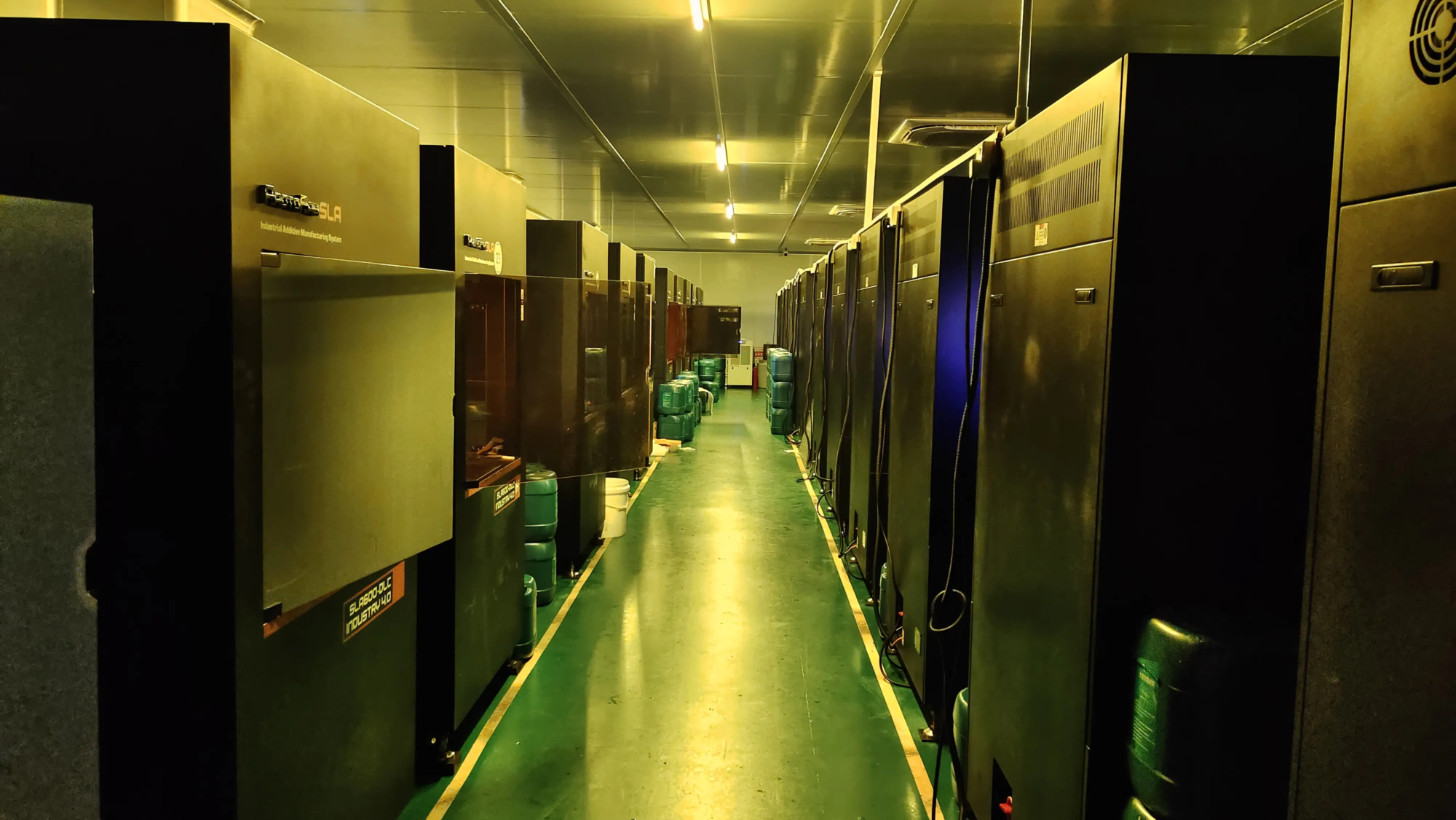
- Resin (SLA/DLP): Can produce incredibly smooth surfaces with detailed details. Perfect for gorgeous frames or intricate decorative elements. Need after treatment (cleaning, curing). Durability varies.
- Metals (such as aluminum, titanium alloy): For truly premium, durable and unique shadow boxes – think heirlooms, building fixtures or high-end displays. Here, like Greatlight Shins, work with expert manufacturers. Their industrial selective laser melting (SLM) printers are available through desktop printers with excellent strength and sophisticated finishes (polishing, anodizing, powder coating). Greatlight offers a one-stop solution from technical design consultation to precise printing and professional post-processing.
-
Printing process: one layer
- direction: Position the model to minimize support to critical visible surfaces, ensure layer lines alignment (e.g., perpendicular on depth walls), and maximize bed adhesion.
- Layer height (resolution): Lower heights (e.g. 0.1-0.15mm) produce smoother surfaces, but increase printing time. Balancing the needs of detail with practicality. For resin, the height of the layer can greatly affect the surface quality.
- support: It is crucial for overhanging. The support of the tree usually minimizes scars on the surface of the model. Optimize position angles to reduce support requirements.
- filling: 10-30% is usually enough for shadow boxes. Unless structural integrity is critical, higher fillers will unnecessarily increase weight. Use ability to use with good strength/weight ratio.
- The first layer and the bed adhere: The first layer of perfection is crucial. Use adhesive (glue sticks, hair spray) or specialized construction surfaces. Ensure beds.
- SLM Metal Printing (Industrial): Greatlight utilizes advanced SLM technology and meticulously fuses metal powder layer by layer with high power laser to create dense, near-mesh metal components based on complex CAD data. This approach deals with complex geometry and is ideal for sculptural shadow boxes with metal components.
-
Post-processing: promotion is completed
- Support removal: Use the rinsing cutter to carefully remove the support. The sand blocks are flush.
- Grinding: Start the roughness (~120 grain size) to upgrade the main defects and layer lines, thereby extending (400-1000+ grit) to make the painting/varnish smooth base.
- filling: Fill the remaining tiny layers of lines after sanding with a specialized 3D printed filler or primer filler spray.
- start up: Apply high-build filler primer to a multi-layer coating. After drying, gently sand between coats.
- Painting and decoration: Use acrylic, enamel or spray paint. Consider weathering effects, spray gun or add texture. Sealed with a sheer jacket (matte, satin, gloss).
- Metal Finishing: Gremight specializes in comprehensive metal post-processing:
- blasting: For uniform matte texture.
- Hand polishing/polishing: For high gloss.
- Rolling/vibration finish: Used to smooth complex geometric shapes.
- Anodizing: Added bright colors and corrosion resistance (aluminum).
- Powder coating: Any ral or pantone color is very durable, decorative finish.
- Beadd Explosion/Satin Finish: Exquisite aesthetic choice.
- Their one-stop service ensures that the final product is delivered to your specifications.
- Assembly and display: bring it to life
- Transparent cover: Cut clear acrylic shelf material into size (or professionally attached glass). Easy Acrylic stores usually offer precise cutting services.
- thickness: 1/16" Or 1/8" Acrylic is common. 1/8" Feeling stronger. Glass provides quality clarity, but heavier.
- Install: Use a designed slot or hole. Careful use of solvent cement, acrylic is recommended, if necessary, secure the lid in the lip/clip, silicone clear sealant or discrete removable clips. For glass, the best glass dot or seal may be the best.
- Object placement: Use preservation grade adhesives, such as museum gel or archive mounting tape to protect delicate items without damage. Consider micro stands or pins.
- Optional lighting: Install LED strip lights (use cold white or warm white depending on your mood, adjustable strips are flexible). Connect to power supply. Spread strips for soft light.
Conclusion: Light your memory and imagination
3D printing transforms the concept of shadow frames from a simple display case to a dynamic, profound personal artwork. The process of blending digital design freedom with tangible creation allows you to create a space that perfectly respects important souvenirs, tells vivid stories or simply attracts your eyes. From the initial sketch in CAD to the final paint coating (or the polished metal finish of Greatlight), every step gives you vision. While desktop FDM/resin printers open the world to amateurs, the possibility of taking advantage of Greatlight’s premium SLM metal prints and expert finishing services provides the possibility for truly outstanding, durable and unique masterpieces. Embrace the layers of numbers and physics – Start building a box of shadows and light today.
FAQ About 3D printed shadow box
Q1: Can I really print the entire shadow box?
Answer: Absolutely! If your printer tool is large enough, you can print the entire structure – the back panel, depth layer and decorative frame. Often, printing/varnishing after printing in modular segments (base, wall, front frame) and assembled. Complex lighting is most integrated in the design process.
Q2: What are the best materials for beginners?
A: It is highly recommended to use PLA. It is easy to print, with countless colors, the sand is good, and the price is reasonable. PETG is the next step once comfortable, which can provide better durability.
Q3: How to get a super smooth finish?
A: Resin printing can produce the smoothest surface of the build board. For FDM (PLA/PETG/ABS), achieving extreme smoothness requires significant post-treatment: thorough grinding, filling primer, fine sanding between primer coatings and careful painting. Industrial metal finishes, such as anodized or highlight polishing, produce maintenance-free, stunning surfaces.
Q4: Is the metal 3D printed shadow box practical?
Answer: Yes! Metals such as aluminum or stainless steel alloys offer unparalleled durability, refinement and unique aesthetics (polished, satin, colored anodized). They are ideal for permanent installations, high value displays or works of art. Working with expert rapid prototyping companies ensures design optimization for metal printing, management of complex support structures, and application of perfect finishes.
Q5: How much does a 3D printed shadow box cost?
Answer: The cost varies greatly:
- DIY FDM/Resin: Major material costs ($20-$80+) power-up/time. A large number of post-treatment consumables (paint, sandpaper, filler) add to the cost.
- Simple professional plastic printing: Online service charges based on plastic quantity/material type (+ settings).
- Industrial metal printing: Due to the cost of materials and complex machinery (SLM), it is much higher. Greatligh focuses on competitive prices for rapid prototyping of high-precision metals.
Question 6: How to fix the lid (acrylic/glass)?
Answer: Common methods include:
- Design a deep lip/clip profile to make the back cover friction.
- Use cautiously, removable plastic clips to print separately.
- Secure with transparent silicone sealant around the edges of the inner frame (permanent).
- For glass with metal frames, the best frame or method is the best.
Question 7: Where can I find design files or inspiration?
A: Explore repositories like Thingiverse, cults3d, or myminifactory "Shadow box" design. Use these as a starting point or inspiration. Modifying existing designs in CAD is a great way to learn! Pinterest and Instagram are also treasures of visual thought.
Q8: Why choose Greatlight for part of my 3D printed shadow box project?
one: Greglight is a major rapid prototyping partner, especially for demanding metal components:
- Advanced Technology: The most advanced SLM printers seamlessly handle complex geometric shapes.
- Material expertise: Various metals (ALSI10MG, TI64, SS316L, etc.).
- One-stop completion: Comprehensive interior trim (polished, anodized, powder coating) for unparalleled aesthetics and durability.
- Accuracy and speed: Commitment to high-quality, accurate-size parts is delivered quickly.
- Custom Solution: A collaborative approach to bringing your unique high-quality shadow box concept to life. They handle heavy work and allow you to focus on a creative vision.
Unleash your memory and design potential. Start sketching, modeling, printing or consulting an expert to create a truly glowing shadow box.