Taming Chaos: Revolutionary Design of 3D Printed Storage Box Design
In a world flooded with gadgets, tools, components and collectibles, custom storage is more than just a luxury. This is required. Gone are the days when settlement is fragile, out of place solutions. Input 3D Printing: A technology that fundamentally changes how we change our organization by tailoring storage boxes tailored to our exact needs and space. This in-depth dive explores the exciting potential of 3D printed storage boxes, from material innovation to complex design and how professional manufacturing partners unlock possibilities that were previously unavailable.
Why 3D Printing Reigns Supreme is for custom storage:
- Unrivaled customization: This is the core advantage. Need a box with a specific internal compartment for complex electronic parts? Unique tool compartment holder? A perfect box for a collection of odd shapes in drawer? Excellent 3D printing. The design software allows you to define each inner partition, external contour, latch position and mounting point with precise accuracy. Forgot to adjust your items into the box; the box is built for project.
- Design freedom and complexity: Traditional manufacturing (injection molding, metal formation) struggles economically with complex geometry, internal structure or low volumes. 3D printing flourishes in complexity. Imagine the box:
- Integrated interlock hinges and latches printed in one go.
- Curve formation maximizes space and ergonomic formation.
- The internal honeycomb structure provides strength while minimizing weight and material use.
- Seamless integration of branding, tags or feature features such as cable ports goes straight into the design.
- Modular section that captures extensible storage systems together.
- Diversity of materials: 3D printing provides an impressive material palette, each bringing unique benefits to storage solutions:
- Plastics (PLA, ABS, PETG, Nylon, ASA): Affordable, lightweight and perfect for less demanding families, hobbyists or prototype needs. Provides good impact and color diversity.
- Engineering thermoplastics (Peek, Pekk, Ultem): Provides excellent thermal stability, chemical resistance and high mechanical strength to demanding industries such as aerospace, chemical treatments or high functional storage.
- Metal (stainless steel, aluminum, titanium): The gold standard for durability, lifespan and harsh environments. The metal box has excellent pressure resistance, impact resistance, corrosion resistance, flame retardancy, EMI shielding and an inherently high-quality feel. This is where industrial-grade storage finds its future.
- Rapid prototype and iteration: The design test cycle is very fast. After testing the prototype, do you need to adjust the size or adjust the layout of the compartment? Redesign and reprint within hours or days significantly shortens development time compared to traditional tool-dependent methods.
- Small volume and on demand production: Ideal for mass production that is not economical or necessary professional applications. Create small batches, i.e. single units tailored to a specific machine or unique tool set without the high setup costs of molds or molds.
The key role of precision manufacturing partners:
Creating functional, durable and true custom storage boxes requires expertise and industrial-grade features, especially in demanding requirements or in advanced materials such as metals. Here, dedicated rapid prototyping manufacturers become valuable partners.
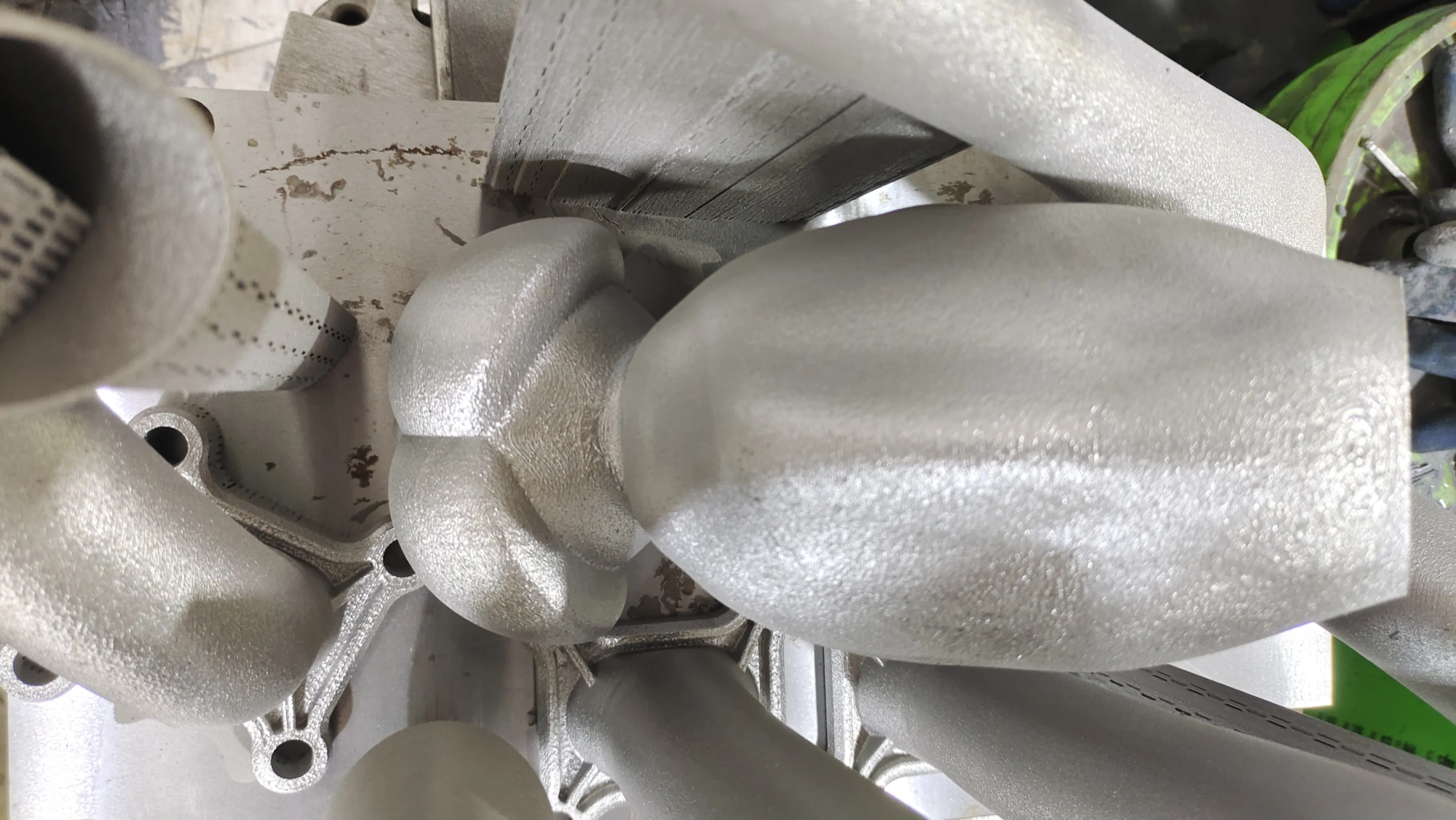
consider Greata leader in professional rapid prototyping. Take advantage of the latest Selective laser melting (SLM) Metal 3D printing technology, they solve complex metal parts prototyping and production challenges. Their advanced printers can produce complex storage box geometry in stainless steel, aluminum alloys, and titanium (often impossible structures through traditional machining).
Key benefits of Greglight’s 3D printing storage solutions include:
- Advanced Metal Printing (SLM): A powerful, precise and highly complex metal housing with outstanding material properties.
- One-stop post-processing excellence: In addition to printing, they offer expert finishes – essential to aesthetics and functionality. This includes precise machining for mating surfaces, polishing/bead blasting, heat treatment for improved characteristics, surface coatings (anodizing, plating, painting) and meticulous inspection.
- Material expertise and customization: They deal with a wide range of metal and advanced plastic materials that adjust solutions based on thermal, chemical, mechanical and aesthetic needs.
- Speed and Agility: It is crucial to understand the time on the market, especially during product development, where they focus on fast turnaround without sacrificing quality.
- Precise focus: Ensure the dimensional accuracy and tolerance required for functional fit, hinge, latch and stacking functions.
Applications outside the bench:
3D printed storage boxes cover a wide range of uses:
- Electronic and PCB prototypes: ESD security box for sensitive components, custom case for single board computer.
- Industrial Tools: The organizer of the CNC bit, specialized fixtures, holds custom tools or parts.
- Automotive and Aerospace: Safe, lightweight, refractory carriage for critical tools or key tools or parts in motion or flight.
- Medical and Dental: Disinfectable containers for instruments or implants, specific to the organizer of the patient.
- End User Products: High-end collector case, modular DIY organizer, perfectly mounted drone gear case.
Design for success: Main considerations
- Functions first: Clearly defines what the box needs to be fixed, preventing (dust, shock, emi?), and how to access/open.
- Material selection: Match the material to the environment (temperature, chemicals, UV exposure), required strength, weight limit and budget. Metals provide the ultimate durability barrier.
- Wall thickness: Ensure sufficient thickness of structural integrity according to the material. Thin walls risk cracking; excessively thick wall waste material and add weight. Consult manufacturing guidelines (SLM has specific requirements).
- Tolerances and fit: Include appropriate tolerances for lid, hinge or sliding mechanism. Explain material shrinkage (especially metals in SLM) and finishing process during printing. The tight-fitting type may require post-surgery.
- Interlocking and attachment: Design powerful hinges, latches or buckles to fit directly into models of single-piece prints. Consider separate pins or hardware used to require an application.
- Post-processing requirements: What factors (fabricated surfaces, polishing, adding seals) can affect the final design and tolerances.
Conclusion: Embrace the future of the organization
The era of universal, all storage is fading. 3D printer design engineers, manufacturers and enthusiastic amateurs can all create storage solutions that are as unique as protecting items. From simple stackable boxes to complex integrated metal organizers that can withstand extreme conditions, there are great possibilities. While consumer FFF printers can treat plastic solutions admirably, leveraging the full potential of industrial strength, precision metal boxes require collaboration with experts in advanced additive manufacturing, e.g. Great. They master SLM printing and comprehensive post-processing to ensure prototypes and finished parts meet the highest standards of quality, durability and functionality. Whether you iterate over a prototype of a new product or ask for a metal that only metal can provide mission-critical storage, embracing 3D printing can unlock new tissue accuracy and toughness. Perfect, infinitely custom storage boxes are no longer a dream, but an easy reality to achieve.
FAQ (FAQ)
Q1: What are the main advantages of 3D printed storage boxes compared to purchase?
Answer: Key advantages include Super customer-friendly (Very suitable for your item/space), Free design (Complex internal structure, integrated features), Rapid prototyping Used for testing designs, Production on demand Avoid using tool costs and get High performance materials (such as durable metal) is not typical in mass-produced boxes.
Q2: Which material is best for durable, long-lasting storage boxes?
one:
- plastic: PETG, ABS, nylon has good impact and weather/chemical tolerance (very suitable for general use).
- Engineering Plastics (PEEK, ULTEM): For high calories, chemicals and strength.
- Metal (stainless steel, aluminum): Ultimate durability, pressure resistance, fire safety, corrosion resistance and high-quality feel. Essential for industrial or harsh environments.
Q3: How strong is the 3D printed metal storage box with traditionally made?
A: Using industrial metal 3D printing process to generate Selective laser melting (SLM) From experts such as Greatlight, the final metal parts can achieve material properties (density, tensile strength) very close, sometimes exceeding those made by casting or processing. Post-treatment like heat treatment further enhances strength. They are exceptionally strong and durable.
Question 4: Can I design my own storage box without becoming an expert?
Answer: Yes, no. User-friendly CAD software in Fusion 360, such as Tinkercad or simplified interfaces, allows hobbyists to design basic boxes. However, engineering expertise can significantly benefit from complex functional designs, especially for metal printing that requires specific considerations such as support, thermal stress and overhang. Specialized companies like Greatlight offer design consulting and optimization services.
Q5: Cost comparison? Is it expensive?
A: It can be very effective for a simple plastic box printed on a personal FFF printer. For complex designs or high-performance metal boxes printed by industrial SLM, each unit cost is higher than the plastic equivalent produced in batches. But when you consider the value of extreme customization, the rapid design iteration, avoiding low-capacity tool costs, and high durability/life (especially metal), 3D printing can often provide excellent value for solution-specific needs. Complex designs that are suitable for a large number of styling will eventually be reduced Each unit Large scale, but lack of customization.
Question 6: What kind of post-processing is involved, especially for metal boxes?
A: The metal parts of the SLM printer require critical post-processing:
- Support removal: Carefully remove the printed support structure.
- Heat treatment: Relieve internal stress and enhance material properties.
- Precision machining: Achieve accurate planar mating surfaces of cover or critical dimensions.
- Surface finish: Polish, beads burst, rolling for aesthetics. Anodized (aluminum) or passivation (stainless steel) for corrosion resistance.
- examine: Ensure dimensional accuracy and quality.
Companies like Greatlight focus on seamlessly handling the entire workflow ("One-stop" Serve). Plastic parts require less post-treatment and usually only support removal and light-colored sanding.
Question 7: Can Greatshile work with complex designs and different materials?
Answer: Absolute. Using advanced SLM technology, Greatlime specializes in production Highly complex metal geometry It is difficult or impossible to use other methods. They work with various materials, including various Stainless steel, aluminum alloy, titanium and nickel superalloyIn addition to advanced engineering thermoplastics, deep expertise is provided to recommend and handle the best materials required for specific storage applications.