Unlocking performance: The revolutionary impact of 3D printing on boost technology
Superchargers have long been forcing the heartbeat of the sensing system, providing raw power by compressing air into the engine’s intake. However, traditional manufacturing methods often impose design limitations that limit efficiency, weight and thermal management. Enter Metal 3D printinga destructive force that redefines what is possible. For engineers and performance enthusiasts, additive manufacturing (AM) is not only another option, but also a paradigm shift.
Why 3D printing is the game changer of superchargers
1. No compromise complexity:
Conventional CNC machining struggles with complex internal channels or organic shapes. Especially 3D printing Laser Powder Bed Fusion (LPBF/SLM)build components layer by layer, enable:
- Optimized internal cooling channel: Following the bending conformal approach of airflow dynamics, greatly reducing hot soaking.
- Lightweight topology: Hollow construction and lattice reinforcements reduce weight without sacrificing strength.
- Merge components: Multiple parts (shell, manifold, pipe) are combined into a single printing unit, eliminating leakage points and assembly time.
2. The most cutting-edge materials science:
The harsh environment of the supercharger requires high-performance metals. SLM 3D printing unlocks materials other than traditional casting or forging:
- Aluminum alloy (ALSI10MG, ScalMalloy®): Ideal for lightweight housings with excellent thermal conductivity.
- Stainless steel (17-4 pH, 316L): For components that require corrosion resistance and durability.
- Nickel Superalloy (Inconel 718/625): Withstand extreme temperatures (>700°C) in turbine section.
These materials have high fatigue resistance and strength to weight ratio, which are crucial for high RPM applications.
3. Quick iteration and customization:
A prototype that takes months to create a supercharged rotor or housing through traditional methods. Using AM, the function prototype is ready skyallowing accelerated R&D cycle. For supercars or motorsports, geometry can be tailored to specific engine diagrams, track conditions, or fuel types without the minimum order quantity.
4. Performance growth:
- Enhanced aerodynamics: The organic blade design of the rotor or impeller increases the air volume and reduces turbulence.
- Thermal efficiency: Integrated heat exchanger and coolant channels have lower outlet temperatures to charge the air.
- Reduce inertia: The lighter rotor rotates faster, reducing turbo lag.
Advantages of SLM 3D printing: Accurate power supply
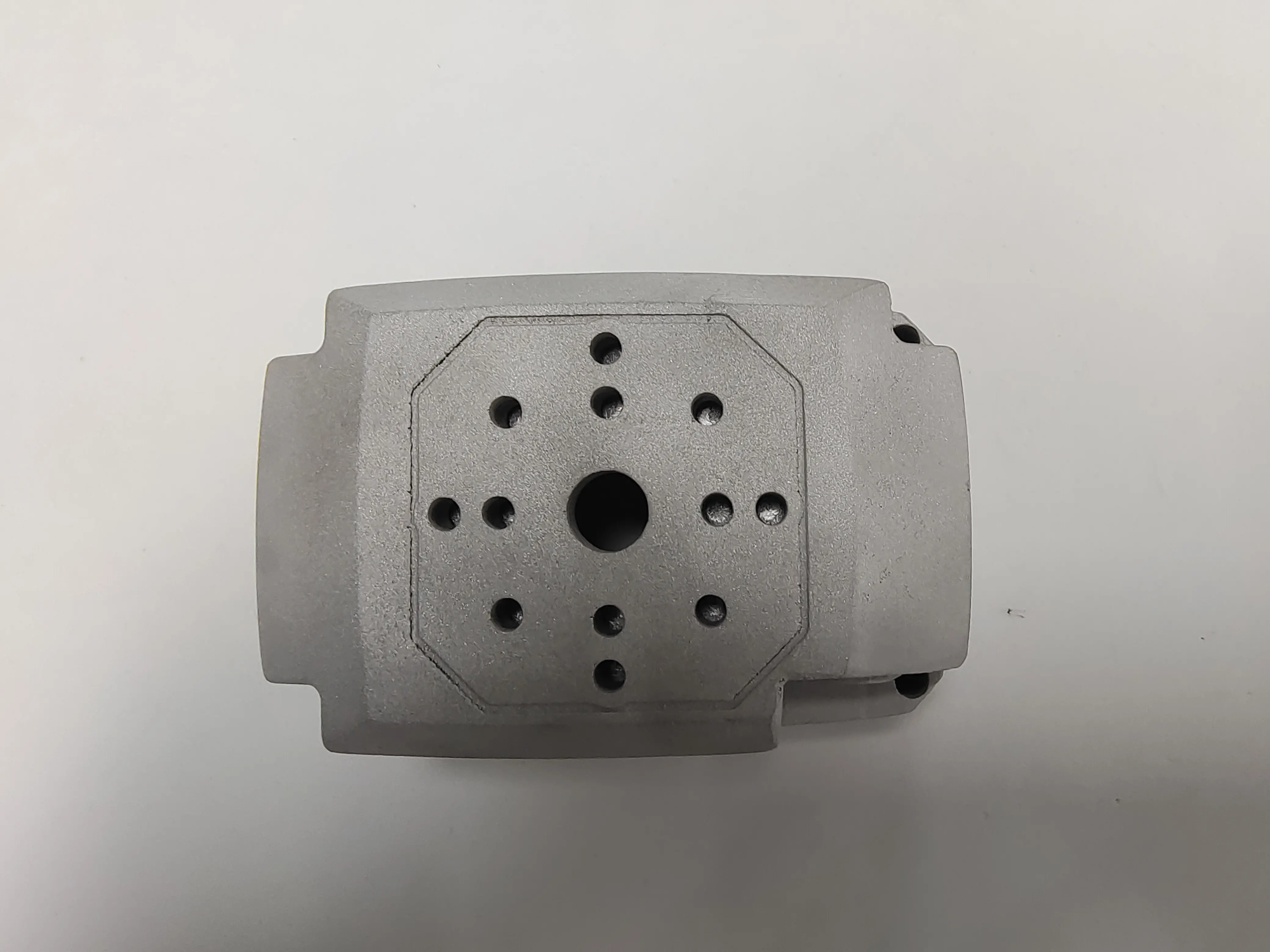
Selective laser melting (SLM)Greglight’s core technology is the gold standard for supercharged components. High power lasers fuse metal powder into completely dense parts with near mesh accuracy. Key benefits include:
- Tolerance accuracy: ±0.05–0.1 mm, which is crucial for interfering with fitting components.
- Material integrity: 99.5%+ density ensures leakage-proof operation at high pressure.
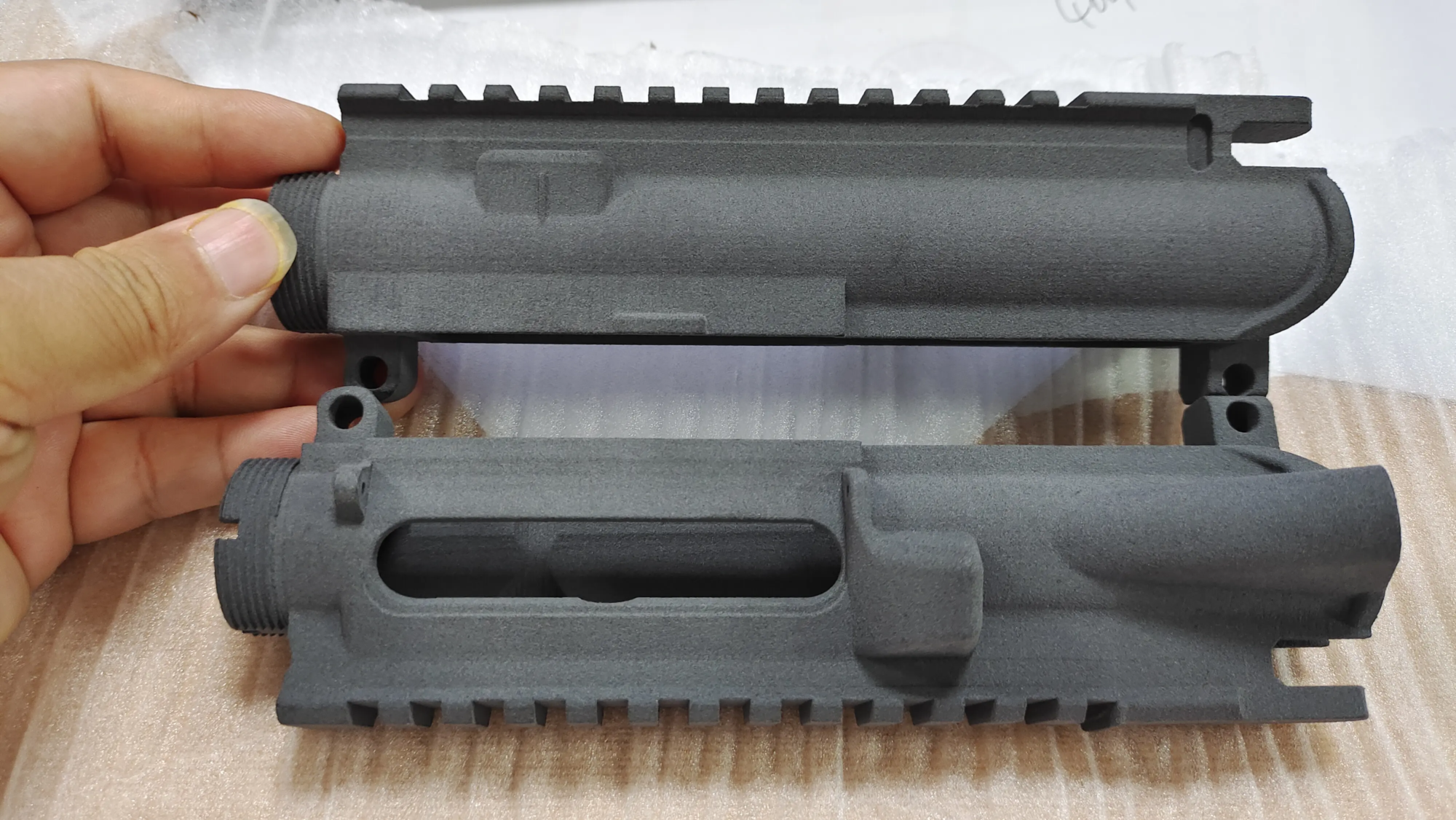
- Surface quality: The surface surface of ASPRINT (RA 10–30 μm) can be further enhanced by CNC machining or post-treatment.
Design for additive manufacturing: smarter work
Successful 3D printed superchargers depend on DFAM principle:
- Pressure simulation: Tools like ANSYS or Ntopology optimize wall thickness and support structure to prevent warping.
- Direction strategy: Partial orientation during printing can affect the grain structure and minimize support.
- Cloud design: Ensure that the powder removes complex internal voids in the channel.
Working with experts like AM, such as Greatlight, ensures that designs utilize these principles from concept to validation.
Real-world verification: a case study
A racing customer approached the good highlight, redesigning a traditional root-type supercharged rotor with thermal fatigue. ALSI10MG printed using SLM:
- Weight loss twenty two% Through the internal lattice structure.
- Peak operating temperature drop 65°C Due to the embedded cooling channel.
- Rotor speed increases 12% No vibration instability.
The part was printed in 15 days, heat treated and precisely produced – tool-based manufacturing for 6 months.
Overcoming the Challenge: Post-processing is the Key
Metal 3D printing is only half the journey. Comprehensive post-processing ensures aviation-grade reliability:
- Stress relief: Oven treatment relieves residual stress.
- Buttocks (heat etc. applied): Eliminate microporosity in key load parts.
- CNC completed: For bearing surfaces or sealing surfaces, micron-level accuracy is required.
- Surface reinforcement: Bead blasting, polishing or coating enhances fatigue resistance.
As a provider End-to-end solutionGreatlight handles these steps under a roof to ensure quality.
Conclusion: Future printing
3D printing has transformed the supercharger from a static workpiece to a dynamic peak efficiency system. By combining design freedom, advanced materials and rapid prototyping, AM can provide unprecedented power density and thermal control. For OEMs, tuners and race engineers, adopting this technology is not optional, and it is the ultimate competitive advantage.
Greatlight’s expertise as a leader in rapid prototyping ensures that you not only make components, but also design revolution. and No upfront tool cost,,,,, Acceleration timelineAnd military-grade quality control, we have the ability to turn your most ambitious supercharged concept into a track and field reality.
FAQ: 3D printed supercharger assembly
Q1: 3D printed supercharger parts and forged/casting durability?
A: Correctly printed and post-processed SLM parts meet or exceed the mechanical properties of traditionally manufactured components. Materials such as Inconel 718 exhibit upcreep resistance and tensile strength at temperatures above 650°C. Fatigue life is enhanced through topological optimization.
Q2: Can 3D printing replicate complex rotor or impeller blades?
Answer: Absolute. AM excels in the 5-axis CNCs that cannot produce complex geometry, including twisted blades, cavity-filled cores and bioinspired airflow characteristics. The CFD-guided design maximizes pressure ratio and surge limits.
Q3: Which parts can be cost-effective to 3D printing?
A: For custom/small volume runs (<1,000 units/year), AM eliminates tool costs, making it highly economical. High-volume scenarios may still be beneficial for casting, but the hybrid method (print tool insert) slash lead time.
Question 4: How does Greatlight ensure quality control?
A: We have deployed in-process monitoring (melt pool sensor), CT scan of internal defects, material certification of AMS/ISO standards, and coordinate measurement machine (CMM) verification. Each step complies with the AS9100 aerospace protocol.
Q5: Do I need to redesign the supercharger for AM?
Answer: Not sure. Greatlight uses topology optimization and simulation tools to provide design consulting to suit AM’s existing CAD models. However, performance growth is maximized through specially constructed geometry.
Q6: What is the typical delivery time for a 3D printed prototype?
A: Prototype parts with basic post-processing can be shipped 3-7 days. Complex systems that require hip or CNC finishes require 10–15 days. Serial production scalability seamlessly uses multi-laser SLM systems.
Push the boundaries of forced induction with great highlights
As a high-level ISO certified rapid prototyping manufacturer, we combine Tip-in-one SLM 3D printer Have deep metallurgical expertise to solve your most demanding challenges. From hypersonic heat shields to 300-PSI supercharged rotor kits, our one-stop service covers design, printing, post-processing and verification. Ask for a quote to see how the next generation additive manufacturing industry turbocharges your project.