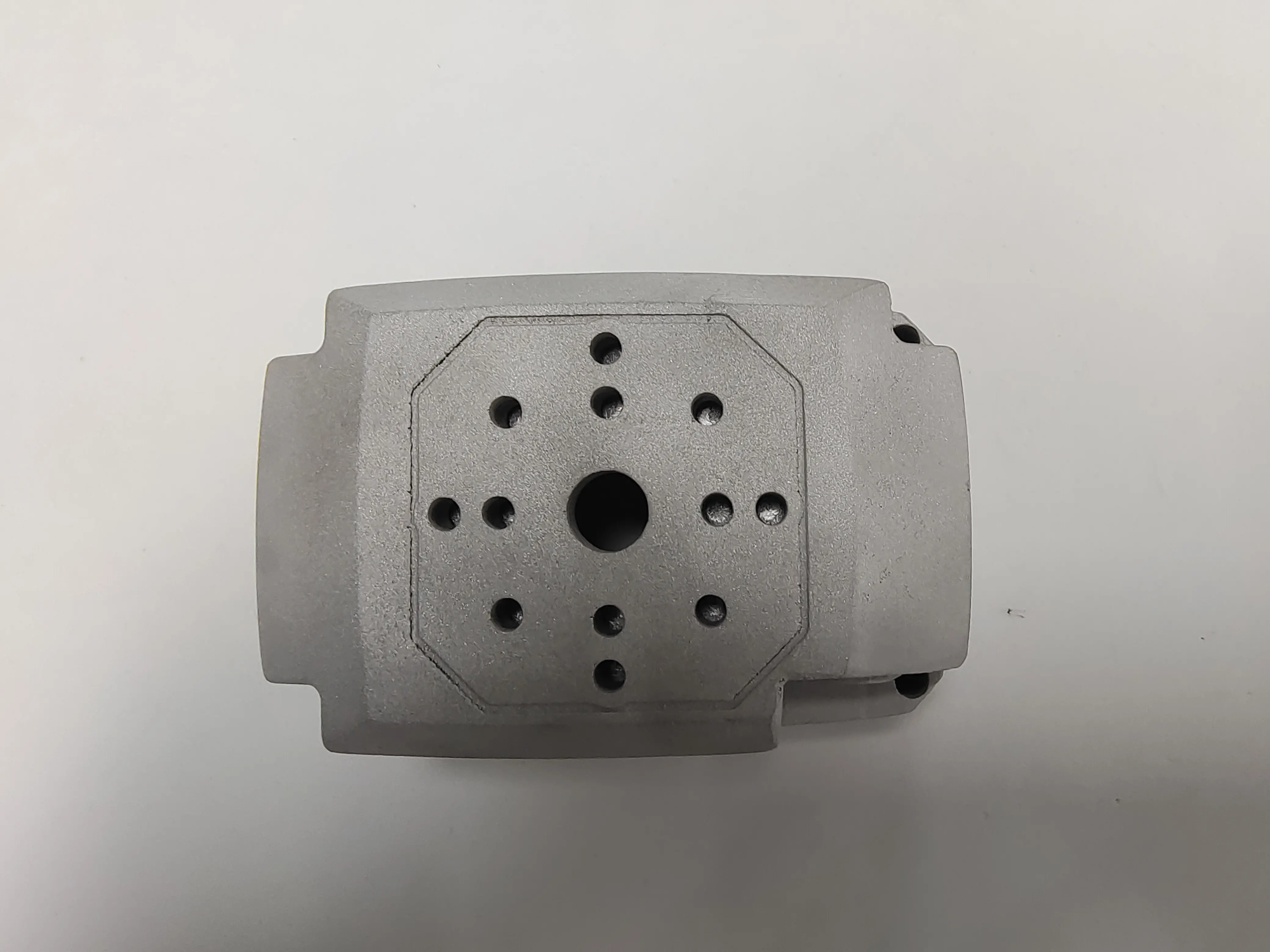
Upgrade your gaming storage: The ultimate guide to 3D printing a Nintendo Switch stand
If you’re a Nintendo Switch fan who’s been overwhelmed by the pile of tiny game cartridges, you’re not alone. It’s no secret that those iconic cards the size of your fingernail are easily lost. This is the magic of custom 3D printed gaming stands. In addition to solving the clutter problem, designing and producing your own scaffolds can open up a world of personalized organization. With professional services like GreatLight, getting industrial-quality 3D printing has never been easier and more affordable. Let’s dive into how to create the perfect home for your game library.
Question: Why does standard storage fall short?
The Retail Switch game box is functional, but bulky. Off-the-shelf plastic storage boxes often lack character or precise fit. Generic solutions rarely consider:
- Mixed Collection: Gamers often use a mix of physical cartridges, special editions, and accessories that require integrated storage (such as Joy-Con straps or Amiibo cards).
- Space efficiency: Finding a solution that fits neatly on a shelf, in a drawer, or inside the Switch travel case requires specific dimensions.
- Reachability and Visibility: Find the game you want quickly without digging through a bunch of games, saving valuable gaming time. Labels or visibility slots are key.
- Personal style: Why settle for utilitarianism when your storage can reflect your passion, stylish minimalism, or vibrant creativity?
Designing the Perfect Switch Bracket: Considerations and Possibilities
This is where 3D printing shines – unlimited customization. before batting "Print," Consider these design aspects:
- capacity: How many cartridges do you need to accommodate? Design a simple linear rack, a compact grid, a layered tower or modular units that snap together. Consider room for expansion!
- Layout and Accessibility: Should the cartridge slide in vertically or horizontally? Sloping slot aids visibility and retrieval. Includes finger notches or access slots.
- Comprehensive features: Improve your design:
- Dedicated slot for a spare microSD card or Amiibo figure.
- Built-in stand for Switch Lite or OLED device (stand included).
- Cable management ring for USB-C charger.
- Gorgeously decorated with inspiration from your favorite series (Mario bricks, Master Sword graphics, Poke Ball details).
- Mark the ridges to write a game title or insert a small label.
- Footprint and Stability: Will it sit on a table, shelf, or bedside table? Ensure a stable base design to prevent tipping, especially with taller stands.
- CAD/Design Tools: Start with platforms like Tinkercad for simplicity and platforms like Fusion 360/Blender for detailed control. There are tons of pre-designed templates available in repositories like Thingiverse or Printables that can be downloaded and customized, or used as inspiration.
Choosing the right materials: combining form and function
Material selection can significantly impact durability, aesthetics, and feel. For plastic stands, the following are popular options:
- PLA (polylactic acid):
- advantage: Eco-friendly (plant-based), wide color range (including translucent/metallic), easy to print, excellent detail resolution, affordable, low warpage. Great for decorative indoor stands.
- shortcoming: Will soften/deform under continued heating (>60°C/140°F) and has lower long-term impact resistance than PETG or ABS.
- PETG (polyethylene terephthalate):
- advantage: The perfect balance of strength, toughness and flexibility. More impact resistant than PLA, has good chemical/oil resistance and is available in food safety grades. More heat resistant (~80°C/176°F). The transparent/translucent options look great.
- shortcoming: It is slightly more complicated to print than PLA (maybe finer), has a smoother surface, and may retain fingerprints.
- ABS (acrylonitrile butadiene styrene):
- advantage: Very durable, strong, and more heat resistant (~100°C/212°F). Can be steam smoothed for a smooth surface.
- shortcoming: Requires a heated bed/enclosure and is prone to warping and layer adhesion issues if not printed correctly. Smoke is emitted during the printing process. Generally less beautiful and versatile than PLA.
- TPU/flexible filament: Not recommended for primary construction (too curved) but great for grips, non-slip feet or cushioning inserts when combining materials.
recommend: PLA is preferred due to its ease of use, aesthetics and indoor suitability. If you prioritize extra toughness or anticipate higher temperatures, choose PETG. Avoid using resins unless particularly detailed decoration is critical – they are brittle.
Bring your designs to life: a professional printing process
While DIY home printing is fun, professional services like GreatLight can provide superior quality, precision, and material selection:
- Design verification: Upload your STL file. Experts analyze its structural integrity (walls thick enough?), printability (supports overhangs?), and functionality (do the cartridge slots have the correct clearance?).
- Technology selection: For plastic brackets, Fused Deposition Modeling (FDM) Using PLA/PETG/ABS is standard and cost effective. For intricate artistic details or potential metal prototypes (such as a titanium stand, although that’s a bit overkill for a plastic stand), GreatLight utilizes advanced technology Selective Laser Melting (SLM).
- Precision printing: Industrial printers offer unparalleled accuracy, consistency and faster print speeds than most hobbyist machines. Layer lines are minimized.
- Materials expertise: Obtaining high-quality, uniformly produced filaments ensures vibrant colors, consistent flow, and predictable shrinkage/warping behavior.
- Automatic quality checks: The system can monitor printing in real time and reduce failure rates.
The finishing touch: professional post-processing
This step elevates a functional part into a quality product. GreatLight provides comprehensive organization:
- Support removal and cleaning: Carefully remove support material and clean thoroughly.
- Polishing: Smooth rough surfaces and reduce visible layer lines. Working with finer abrasive grains creates a polished feel.
- Painting and coating: High-quality acrylic paint or specialized paint for uniform color, extra protection or unique effects (metallic, glitter, glow-in-the-dark).
- Vapor Smoothing (ABS): Creates a high-gloss, seamless finish.
- assembly: If your design involves multiple printed parts or non-printed components (such as labels or magnets), expert assembly can ensure everything fits perfectly.
Why choose professional 3D printing (like GreatLight)?
In addition to convenience, professional services offer tangible advantages:
- Unparalleled quality and precision: Consistent results in size, shape and intricate details are important.
- Material flexibility: Get engineering-grade plastics specifically suited for functional parts.
- Scale and speed: Whether your campaign requires one prototype or hundreds, professionals can handle it efficiently.
- Expert guidance: Benefit from materials and design expertise to optimize the performance and manufacturability of your stent.
- One-stop service: design inspection, printing, and The post-processing was done flawlessly.
- Save time: Focus on the gameplay and let the professionals handle the production hassles.
Conclusion: Organize like a pro
The 3D printed Nintendo Switch gaming stand goes beyond simple organization. It’s a personalized expression of your gaming passion, designed to suit the quirks of your collection and your own style. While home printing offers accessibility, working with a professional service provider like GreatLight guarantees a durable, visually impressive end product forged using the finest materials and industrial precision, all at a price that is often surprising, especially for small batches. Stop losing your game cartridges and start displaying them proudly. Design your ultimate stand today and experience the difference professional additive manufacturing makes!
Frequently Asked Questions (FAQ)
Q1: What is the best material for the Switch game controller?
- For most home/desktop uses: People’s Liberation Army Ideal for its ease of printing, aesthetics (wide color range!), stiffness, indoor suitability and affordability.
- To improve durability, toughness, heat resistance or outdoor potential: polyethylene terephthalate is a better choice. Avoid using brittle materials such as standard resin.
Q2: Can I print a stand strong enough to travel?
- Absolutely. Material selection is key – PETG is highly recommended. Design thicker walls, reinforce key stress points, add comfortable non-slip TPU feet, and possibly incorporate a safety cover or latch mechanism to enhance travel value. Professional printing ensures strength and dimensional accuracy.
Q3: How much does it cost to have one professionally printed?
- Costs vary widely depending on scaffold size, complexity, materials selected, quantity and level of post-processing. Small, simple PLA mounts are very affordable. Larger, more complex PETG brackets with custom paint cost more. Services like GreatLight offer online quote calculators – upload your STL file to provide an instant estimate.
Q4: Do I need to design the bracket from scratch?
- not at all! Platforms like Thingiverse, Printables, and MyMiniFactory have thousands of great free Switch stand designs. You can download and print them as is, or use them as a basis for modifications. Professional printers can use these downloaded files as easily as your own designs.
Q5: How accurate do the cartridge slot dimensions need to be?
- Precision is crucial! Cartridge dimensions are approximately 31mm x 21mm x 3mm. The slot should have a slight Gap tolerance. generally:
- Width/Length: Add 0.2-0.5mm (e.g. slot width ~21.4mm).
- Height/Depth: Cartridge depth is approximately 2mm when inserted. Leave overhead clearance or make sure the slot is completely open.
- Professional printing ensures that this tolerance is reliably met.
Q6: Can I buy a metal Switch game stand?
- Technically it is possible, using technologies such as SLM (metal 3D printing). However, metal is often overkill – heavy and expensive. It is only suitable for ultra-premium decorative custom artwork or very specific heavy duty functional needs. PLA/PETG plastics are perfectly adequate and more common/cost effective.
Q7: What file format is required for professional printing?
- The standard is STL (stereolithography) File format. This represents the 3D geometry of the scaffold as a mesh that is accepted by almost all 3D printers and services. Make sure your design software exports clean, flawless STL for best results.