Making Miracles: An Introduction to 3D Printing Technology
Imagine holding a complex metal part designed hours ago, or a custom medical implant perfectly tailored to a patient’s anatomy, or a lightweight aerospace part designed with geometries that cannot be manufactured using traditional methods. This isn’t science fiction; This is tangible reality 3D printing. 3D printing, also known as additive manufacturing (AM), revolutionizes prototyping and production in countless industries by building objects layer by layer directly from digital designs. For engineers, designers, manufacturers and innovators, understanding this technology is no longer optional but essential.
Demystifying the process: How does 3D printing work?
In essence, 3D printing disrupts traditional manufacturing. 3D printing is not about cutting material out of a solid block (subtractive manufacturing like milling) or pouring material into a mold (forming manufacturing like injection molding) Add to Material appears exactly where needed. The process goes through the following key stages:
- Digital Blueprint: It all starts with a 3D model created using computer-aided design (CAD) software or generated from 3D scan data.
- slice: virtual private software "slice" Break down a 3D model into hundreds or thousands of extremely thin horizontal cross-sections. This generates instructions (G-code) for the printer.
- print: The printer interprets these instructions and builds the object layer by layer in sequence. Different technologies achieve this deposition in different ways (discussed below).
- Post-processing: After printing, parts often require finishing steps such as support structure removal, cleaning, sanding, polishing, heat treating (for metals), or painting to achieve the desired final performance and aesthetics.
Explore the Toolbox: Key 3D Printing Technologies
While the basic layer-by-layer approach is consistent, several different techniques exist, each suited to specific materials and applications:
-
Fused Deposition Modeling (FDM/Fused Filament Fabrication – FFF):
- How it works: The thermoplastic filament is heated and extruded through a nozzle, tracing each layer.
- Material: PLA (plain), ABS, PETG, nylon, TPU (flexible).
- advantage: Versatile, low machine cost, user friendly, wide choice of materials (plastic).
- shortcoming: Lower resolution, visible layer lines, anisotropic (weak Z-axis strength), limited support requirements for geometric complexity.
- Main uses: Prototyping, hobby projects, functional parts, jigs and fixtures.
-
Stereolithography (SLA):
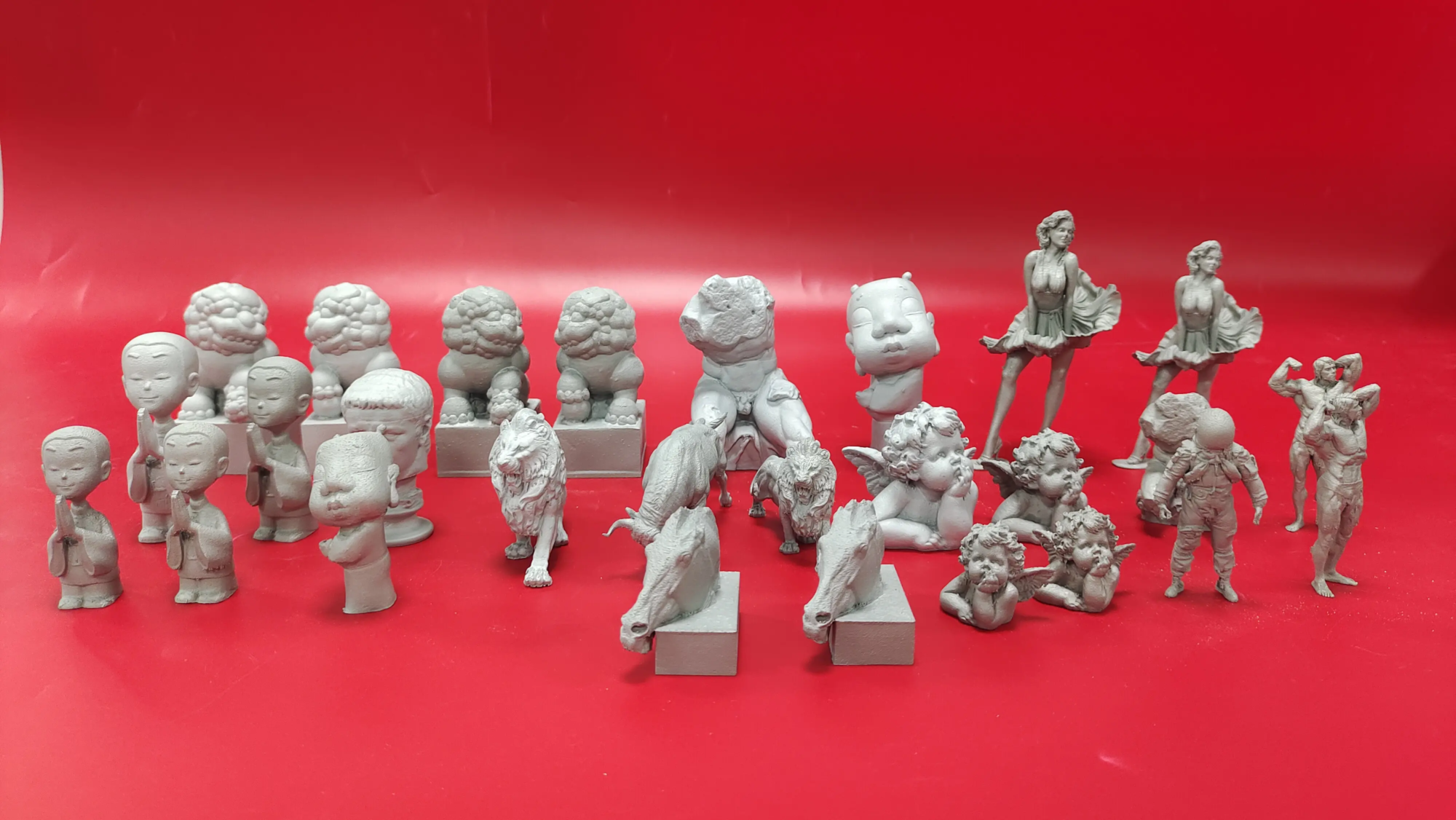
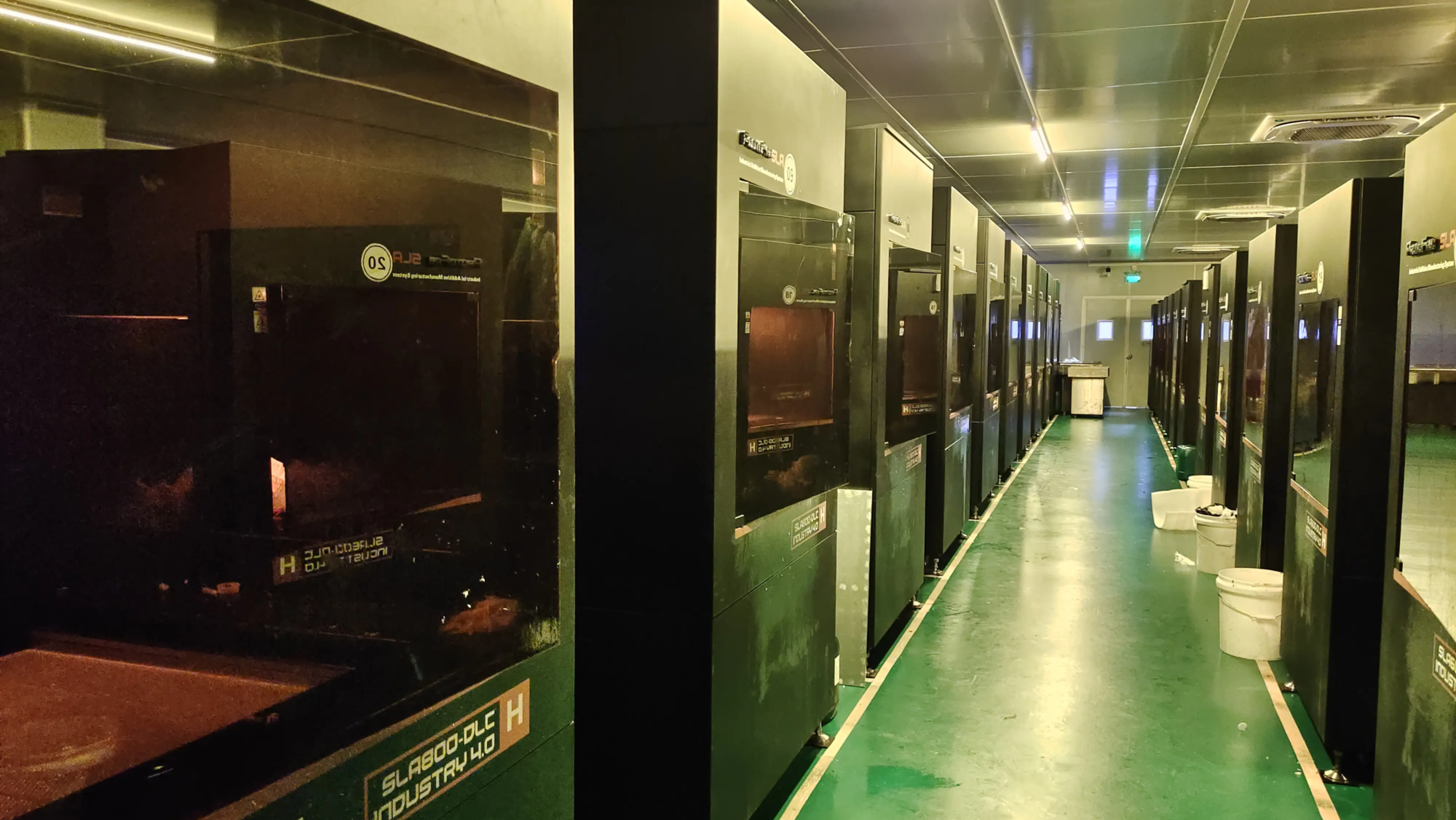
- How it works: A UV laser selectively traces the pattern onto a vat of liquid photopolymer resin, which cures layer by layer.
- Material: Various photopolymer resins (available in rigid, flexible, castable, dental biomaterials).
- advantage: Excellent surface finish and detail resolution, isotropic strength, smooth surface.
- shortcoming: Supports are often required, resin handling requires caution, and the material has limited properties and potential brittleness compared to engineering thermoplastics or metals.
- Main uses: Detailed prototypes, casting models, jewelry, dental applications, visual models.
-
Selective Laser Sintering (SLS):
- How it works: The laser selectively melts fine powder particles (plastic) inside a heated chamber.
- Material: Mainly nylon-based powder (PA11, PA12), sometimes TPU.
- advantage: Excellent mechanical strength (isotropic), high geometric complexity without supports (the powder bed supports itself), durable functional components.
- shortcoming: Compared to SLA/PolyJet, the surface finish is rougher and fully enclosed systems require powder processing.
- Main uses: Functional prototypes, end-use production parts (low-volume), complex piping, hinges.
- Metal 3D printing (focus on SLM and DMLS): This is what companies like huge light Really shine.
- Selective Laser Melting (SLM) and Direct Metal Laser Sintering (DMLS):
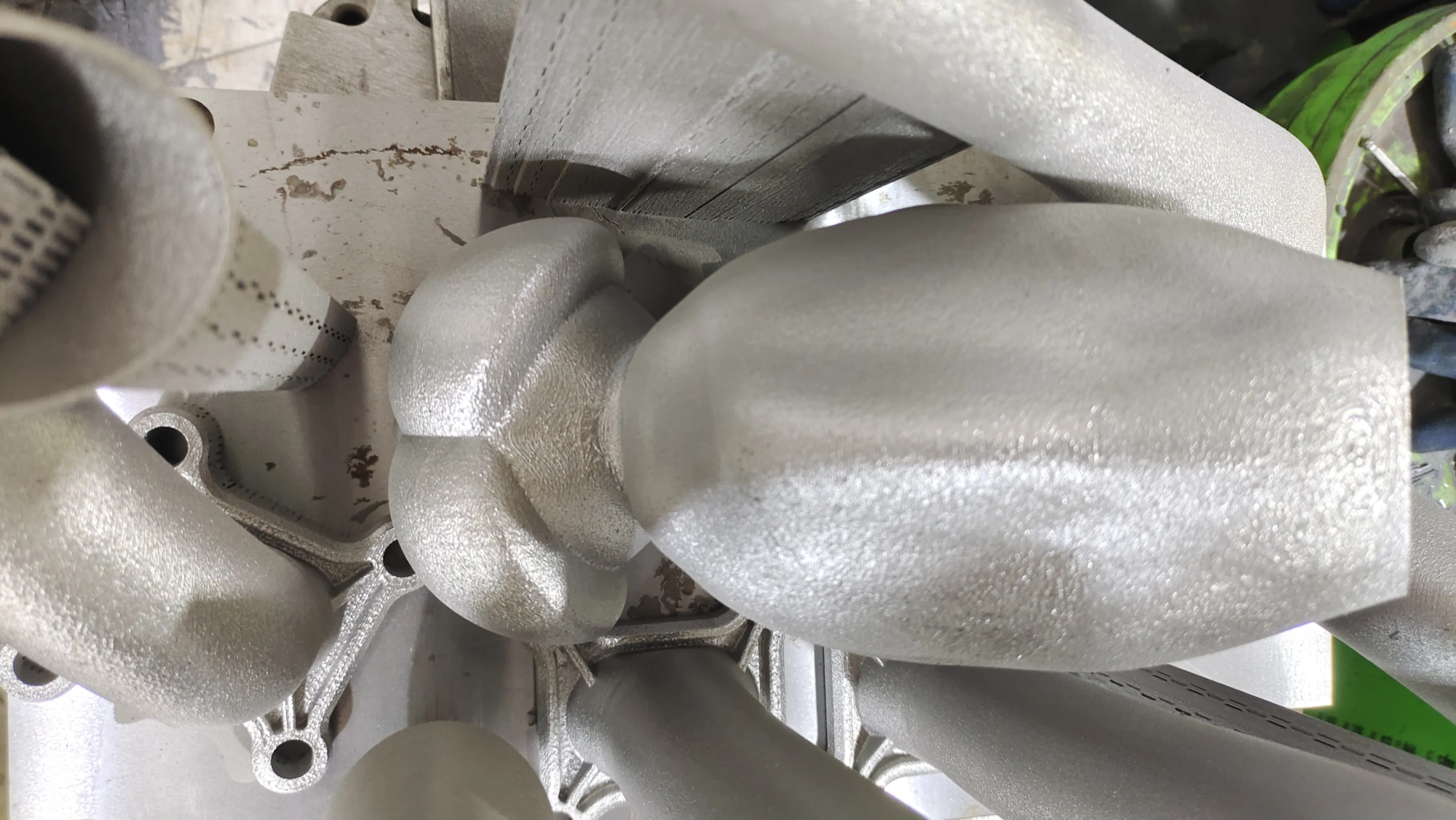
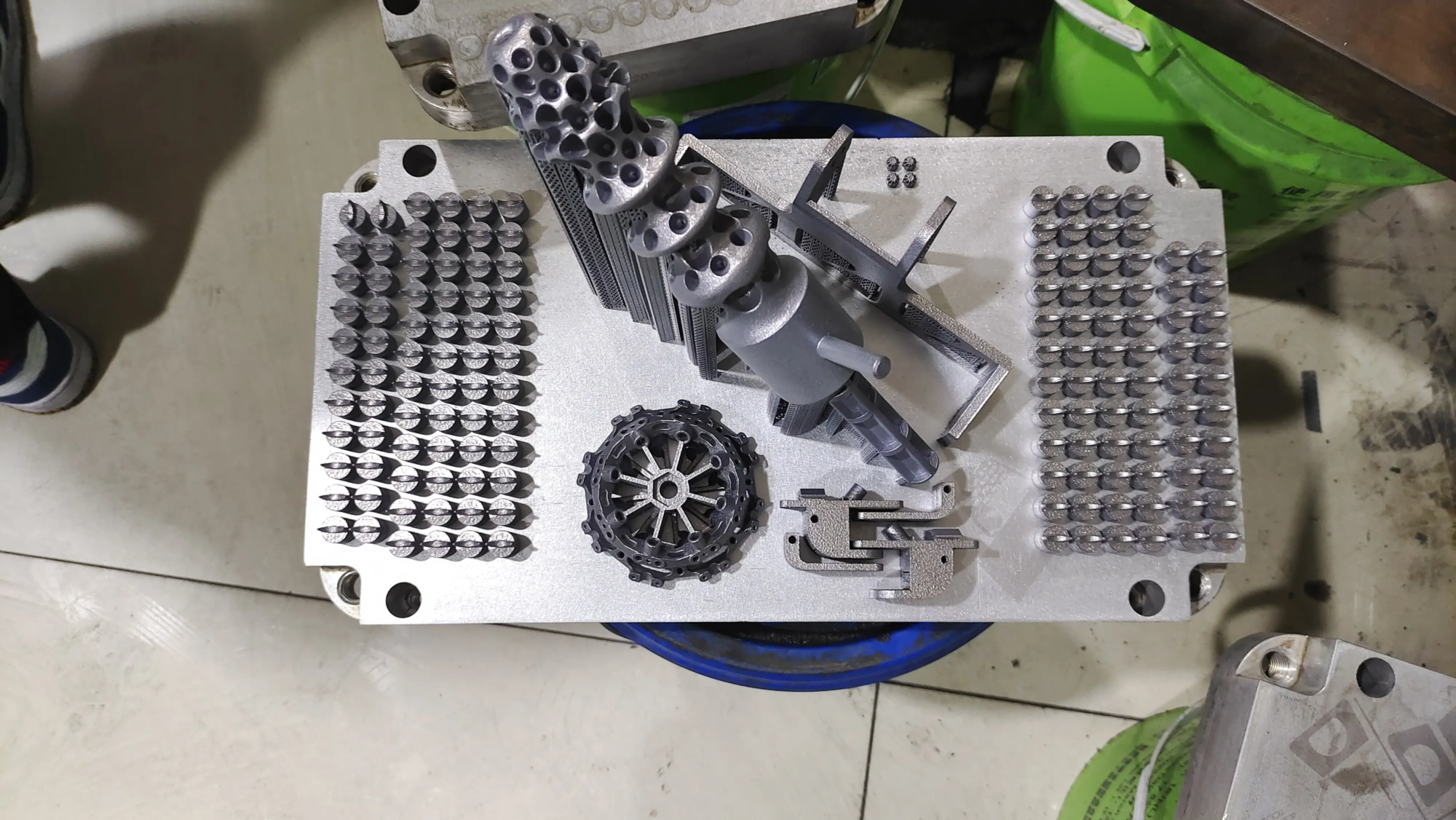
- How it works: Similar to SLS principle, but uses metal powder and a higher power laser to completely melt the powder particles together. DMLS is technically sintered but functionally achieves near full density and is often used synonymously with SLM. GreatLight uses advanced SLM equipment.
- Material: The range is wide, including titanium alloy (Ti6Al4V), aluminum alloy (AlSi10Mg), stainless steel (316L, 17-4PH), tool steel, Inconel, cobalt-chromium alloy.
- advantage: Create dense, nearly fully dense metal parts with complex internal geometries (channels, lattices) with mechanical properties comparable to traditional methods and enable lightweight designs through topology optimization.
- shortcoming: Higher machine costs, complex processes requiring controlled atmosphere (argon/nitrogen), significant thermal stresses requiring careful support design and heat treatment, and post-processing (support removal, HIP, machining) are often critical and complex. (That’s why working with an expert like GreatLight who manages the entire workflow, including advanced post-processing, is critical to success).
- Other metal additive manufacturing: Including electron beam melting (EBM), binder jetting, and directed energy deposition (DED).
- Selective Laser Melting (SLM) and Direct Metal Laser Sintering (DMLS):
Beyond Prototypes: Remarkable Applications
The versatility of 3D printing goes far beyond making visual models:
- Rapid prototyping: Dramatically reduce design iteration time (from weeks/months to days/hours).
- Customization and personalization: Medical implants (dental crowns, orthopedic implants), assistive devices, eyeglasses.
- Small batches and on-demand production: Make unique parts and save unnecessary inventory costs. GreatLight excels in this regard.
- Complex and integrated components: Consolidate components into a single printed assembly, reducing weight and potential failure points (aerospace, automotive).
- Tooling and fixtures: Create custom molds, fixtures and testers quickly and cheaply.
- Building and Construction: Scale models, structural components, art installations.
- Education and Research: Hands-on learning tools and custom experimental instruments.
Why embrace 3D printing? Main advantages
- Design freedom: Create previously impossible geometries (internal lattices, conformal cooling channels).
- speed: Accelerate prototyping cycles and significantly reduce time to market.
- Cost efficiency: Small batch production becomes economically feasible; material waste is minimized.
- Complexity integration: Simplify manufacturing and assembly by combining multiple parts into one.
- custom made: Economically tailor products to individual needs.
- Innovation: Enable new concepts and applications that were previously unfeasible.
Challenges and considerations
While additive manufacturing is transformative, it is not a one-size-fits-all solution:
- cost: Machine and material costs can be high, especially metal (Although GreatLight offers access without owning a machine).
- speed: High-volume printing can be slower than traditional batch production.
- Material restrictions: Performance, finish and color options vary by technology.
- Surface quality and accuracy: Careful design and post-processing for specific tolerances may be required.
- Design expertise: An understanding of Design for Additive Manufacturing (DfAM) principles is required.
- Post-processing: This is a critical and often unavoidable step for functionality and appearance.
Conclusion: The future is additive
3D printing is no longer just a prototyping curiosity; it is a powerful manufacturing tool that drives innovation in medicine, aerospace, automotive, consumer goods, and more. Especially for metal additive manufacturing utilizing technologies such as SLM, it unlocks unparalleled design freedom and provides solutions for complex functional components.
For professionals dealing with demanding rapid prototyping and just-in-time production of precision metal parts, navigating the complexities of technology selection, material handling, printing parameters and critical post-processing requires expertise you may not have in-house. This is where working with an experienced additive manufacturing supplier becomes extremely valuable.
exist huge lightwe focus on Metal rapid prototyping and productionutilizing cutting-edge SLM technology along with a comprehensive suite of advanced post-processing capabilities – from stress relief and heat treatment to precision CNC machining, sandblasting and fine finishing. We handle your entire workflow, ensuring your custom metal parts are delivered efficiently, at a competitive price, and meet the highest standards of accuracy and quality. Whether you are pushing the boundaries of aerospace components, require complex medical prototypes, or develop rugged industrial fixtures, GreatLight provides the reliable, expert technology partnerships needed to bring your innovative designs to life.
Unlock the potential of additive manufacturing with GreatLight. Let us handle the technical complexity so you can focus on your vision.
FAQ: Demystifying 3D Printing
Q1: Can 3D printing only be used on plastics?
Answer: Absolutely not! While plastics are common (filament for FDM, resin for SLA), 3D printing covers a wide range of material options, including metals (titanium, aluminum, steel), ceramics, composites, and even biomaterials. GreatLight focuses primarily on metal additive manufacturing.
Q2: How strong are 3D printed metal parts?
A: Modern metal additive manufacturing processes such as SLM/DMLS produce parts with mechanical properties (strength, hardness) that rival and sometimes exceed those of traditional forged or cast parts. Achieving this requires precise control during the printing process and appropriate post-processing (such as heat treatment), which GreatLight expertly manages.
Q3: Is 3D printing expensive?
A: Cost depends heavily on volume, materials, part size and complexity. While the unit cost of simple plastic parts can be very low, metal additive manufacturing is more expensive due to equipment and material expenses. However, for complex geometries, custom/low-volume production, and parts requiring design integration, AM often becomes extremely cost-effective, resulting in cost savings in other areas (assembly, tooling). GreatLight focuses on optimizing the cost efficiency of your specific project.
Q4: Can 3D printing replace traditional manufacturing (such as CNC machining)?
A: Generally speaking, not really. It complements it. Technologies like CNC machining excel at high-volume production, superior surface finishes, and absolute dimensional accuracy for simple geometries. Additive manufacturing excels at complex shapes, low-volume/custom parts, and lightweight designs. Typically, additively manufactured parts undergo CNC machining to achieve critical functionality, a post-processing service that GreatLight seamlessly integrates.
Q5: How long does it take to print a typical metal part?
A: Metal printing times vary widely. Small, simple parts may take several hours. Larger, dense, complex parts may take several days. Crucially, printing is only the first step. Proper design preparation (DfAM), post-processing (support removal + machining/finishing) and quality control can add significant time. Make sure the entire process is streamlined and clearly communicated with GreatLight.
Q6: What file format is required for 3D printing?
A: The most common format is STL (Standard Tessellation Language), which represents the outer surface geometry. However, newer formats such as 3MF (3D Manufacturing Format) are becoming increasingly popular as they provide more information (colors, textures, metadata) and better compression accuracy.
Q7: What materials can Honglaite process?
A: We focus on various metals suitable for SLM printing, including stainless steel (316L, 17-4PH), titanium alloy (Ti6Al4V), aluminum alloy (AlSi10Mg), Inconel (625, 718), cobalt-chromium alloy and tool steel. We also support prototyping in common plastics (FDM/SLA). Discuss your requirements with our team!
Question 8: How do I get started using GreatLight for a custom metal prototyping project?
A: Simply contact us and provide your CAD files and project specifications (material requirements, dimensions, tolerances, quantities, deadlines). Our engineering team will review your design for manufacturability (DfAM), provide expert guidance, make optimization recommendations as needed, and provide a competitive quote covering printing and necessary post-processing. We pride ourselves on clear communication and fast turnaround times.