Unlocking Potential: 3D Printing Twist Spring Guide Power
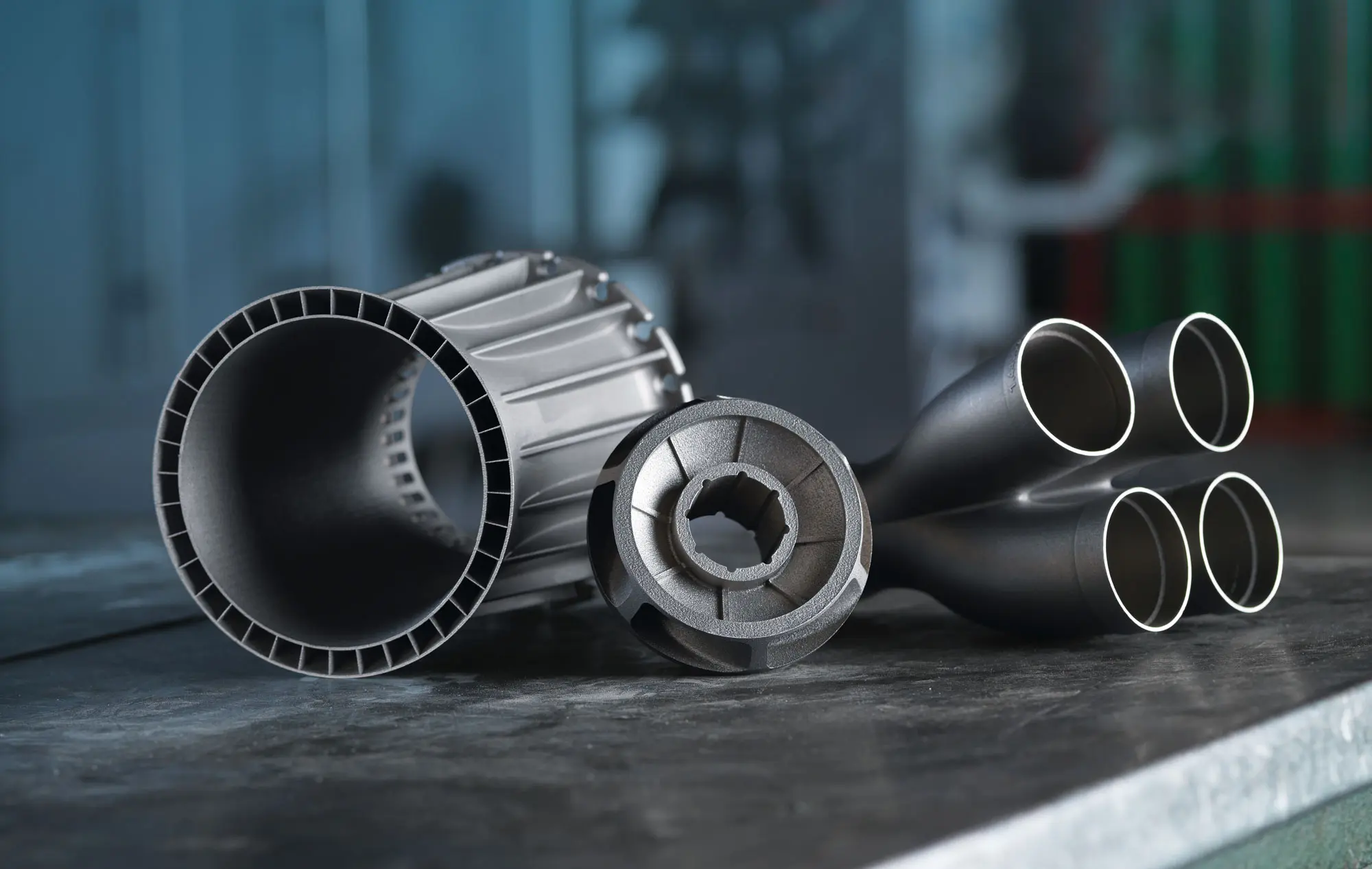
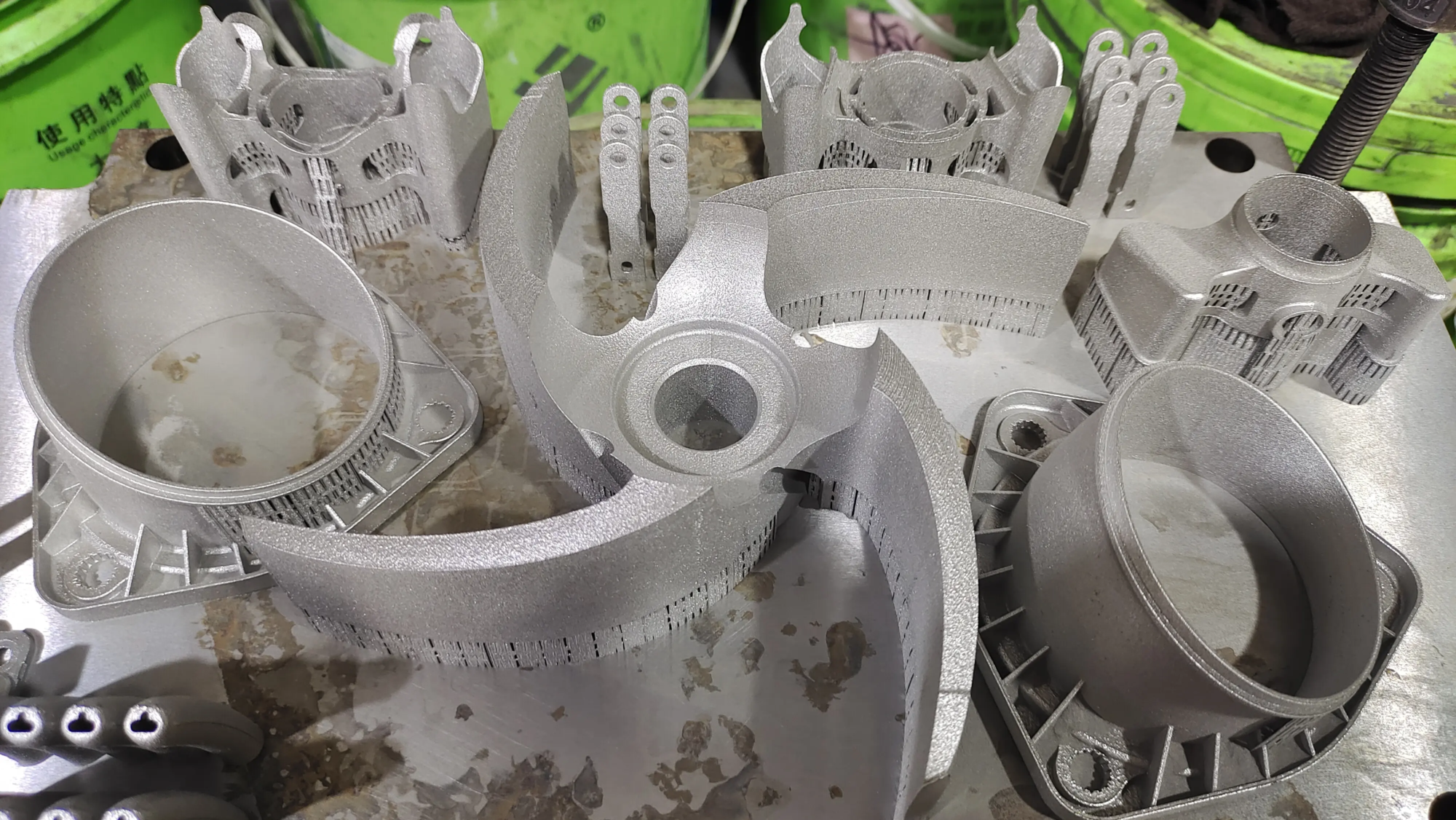
If you ever tinker with a mechanism that relies on torsional forces – think of vehicle suspension components, hinge dampers, robotic joints or complex industrial equipment – you know the key role of torsion springs. They store rotational energy, providing return force or balance. But uncontrolled spring can be inefficient or even dangerous. That’s Torsion Spring Guide Come in. Traditionally, guides are processed or molded and usually sacrifice the best design for manufacturing or cost. Enter Metal 3D printing, especially selective laser melting (SLM)which completely changes how we deal with these key components. Let’s explore why the 3D printing Torsion Spring guide becomes the preferred solution for demanding applications.
Why guide the torsion spring?
Before diving into the 3D printing aspect, review the basic purpose of the reversal guide:
- Path control and stability: Prevent the spring legs from bending, buckling or deviating under load, ensuring a consistent force is applied and rotation around the intended axis.
- Reduce friction and wear: The smooth guide surface minimizes friction on the spring coil or legs, thus extending the life of the spring and rail itself.
- Force direction optimization: Ensure precisely directing the force generated by the spring to where it is needed, thus maximizing efficiency.
- Safety: Contains springs that prevent uncontrolled movement or release that may damage surrounding components or personnel.
Revolution: Advantages of 3D Printing Guide
3D printing, dedicated to using high-power SLM printers with metal powder, unlocks unprecedented possibilities for torsion spring guides:
-
Geometric freedom and complex optimization: This is a game-changer. Forgot about the limitations of subtraction processing. SLM allows:
- Internal channels: Directly combined with conformal cooling or lubrication pathways in The guide structure greatly improves heat dissipation or reduces friction from the source.
- Lightweight, tall lattice: Use capability or other complex lattice structures to create ultra-lightweight support rods or support in the guide body, providing excellent rigidity when needed most without adding mass.
- Perfectly fit the surface: Design Guidelines for tracks and contact points, mirroring the exact geometry and paths of spring legs or coils, minimizing friction points and stress concentrations.
- Integrated installation and features: Eliminate complex components by printing mounting flanges, alignment pins, sensor mounts or functional surfaces directly onto the guide body on a single part.
-
Performance-oriented material selection: SLM uses high-performance metal alloys, ideal for spring guide applications:
- Stainless steel (e.g. 316L, 17-4ph): Excellent corrosion resistance, good strength and extensive chemical compatibility.
- Maraging Steels (e.g., 1.2709): Key structural guidelines for the special strength to weight ratio, toughness and dimensional stability are treated after heat treatment.
- Tool steel (e.g. H13): Advantageous wear resistance in high-contact areas of friction and wear is a major issue.
- Aluminum alloy (e.g., Alsi10mg): Good strength and thermal conductivity can be provided when weight is the most important and stress is moderate.
- Nickel alloys (e.g., Inconel 625/718): For extreme environments involving high temperatures, large amounts of oxidation or challenging chemical exposure.
-
Prototyping and Production Agility:
- Quick iteration: The quick and affordable guide design is very different without expensive tool changes. Iterate based on real-world spring interaction and performance data.
- The cost of complexity is not high: Unlike traditional machining, complex designs usually do not induce significant production cost penalty compared to simple designs in 3D printing.
- On Demand and Custom: Customized manufacturing guides for specific springs, loads and unique space constraints without the need for minimum order quantity, ideal for niche applications, legacy equipment or continuous improvement.
- Enhanced performance and durability:
- Optimized geometry reduces friction and pressure, allowing guides and springs to last longer and last longer.
- The strategic lattice suppresses vibrations caused by spring drives.
- Integrated cooling prevents overheating in high-cycle applications.
- Reduced assembly complexity improves the reliability of the overall system.
3D printing reverses the key applications of Sprip Guides
Where do these innovative guides make the most impact?
- Automotive and Aerospace: Suspension assembly, flap actuator, seat mechanism, gear shift lever that requires precise force control.
- Robots and automation: Robot joint actuator, mobile phone system, balance system requirements are light and powerful guide.
- Industrial Machinery: Heavy equipment, valve actuators, safety mechanisms, agricultural mechanisms.
- Medical equipment: Precision surgical tools, adjustable braces, controllable force transmission and compact ergonomic equipment are crucial.
- Consumer Products: High-end electrical appliances, ergonomic furniture mechanisms, sports equipment.
Design considerations
Designing effective 3D printed torsion springs requires expertise:
- Spring force and deflection: Accurately simulate spring behavior to define guide load requirements and contact machinery.
- Materials and finishes: Select alloys based on load, wear and environmental factors. Specify critical surface finishes (polished, coated, of course) to reduce friction.
- Key Tolerances: Identify the dimensions that require strict control over spring interactions and system integration. Leverage 3DP’s ability to more closely match tolerances in specific areas.
- Thermal management: For high-period applications, place the thermal mass strategically or merge the cooling channels.
- Support structure: Design orientations and support strategies to ensure manufacturability and promote ease of post-processing.
Manufacturing Advantages: GRESTLIGHT’s expertise
Creating high-performance, off-the-shelf 3D printing twist SPRING requires more than just a printer. It requires advanced Selective laser melting (SLM) Technical and in-depth process expertise – exactly where Great Good at it. As a leader in rapid metal prototyping, we have professionally solved complex partial challenges with state-of-the-art SLM equipment and production technology.
Our One-stop service Includes the entire process:
- Consulting design support: Collaborate to optimize your guide design for functionality and additive manufacturing (DFAM).
- Accurate SLM manufacturing: Leverage our advanced printers to enable tight tolerances and consistent material properties.
- Comprehensive post-processing: Heat treatment stress relief and strength, critical surface finishing processes (processing, grinding, polishing, blasting) and detailed support removal.
- quality assurance: Strict inspections (size verification, visual inspection, optional NDT) ensure that the guide meets specifications.
- Fast delivery: Focus on fast turnaround without compromising accuracy.
Whether you need a single prototype for verification or a custom production guide, Greatlight can provide fast, reliable and cost-effective solutions using a wide range of customizable metal materials.
in conclusion
The torsion spring guide that used to be a simple support assembly is fundamentally transforming through metal 3D printing. SLM technology frees engineers from traditional manufacturing limitations, thus achieving previously impossible geometry. This releases a significant benefit: the guide is lighter, stronger, more durable, friction-optimized, thermally managed and perfectly tailored to specific springs and applications. From accelerating prototype testing and refining performance to enabling custom or low-volume end-use parts, the 3D-printed Torsion SPRING guide represents a leap in motion control and mechanical efficiency. For designers pushing the boundaries of performance, additive manufacturing provides tools to unlock the full potential of torsion spring mechanisms.
FAQ: 3D Printed Torsion Spring Guide
Q1: Which metal material is best for 3D printing twist Spring Guides?
A1: Material selection depends on the application:
- Stainless Steel (316 liters, 17-4ph): The best versatile and resistant to corrosion and good strength.
- Maraging Steel (e.g., 1.2709): Ideal Critical Applications requiring the highest strength-to-weight ratio and dimensional stability (after heat treatment).
- Tool steel (e.g. H13): Best for overhead surfaces that are constantly contacting springs.
- Aluminum alloy (ALSI10MG): Ideal for lightweight applications with moderate pressure.
- Nickel alloy (Inconel 625/718): Required for extreme environments (high temperature, corrosive atmosphere). Such consultation with experienced manufacturers is key to choosing the best material.
Q2: What are the limitations of 3D printing guides compared to the guides for machining?
A2: While the advantages are significant, there are some considerations:
- Surface finish: The surface of the meter is usually of higher roughness than the precisely produced finish, so the critical contact area needs to be post-treated (polished, polished). This is the standard part of the Greatlight service.
- Batch material cost: The cost of raw metal powders may be higher than the large inventory processed, although this is often offset by reduced waste (no complexity principle) and lower secondary operations.
- Size limit: Making a large number of SLM printers imposes restrictions on the maximum single-piece guide size compared to large milling capabilities. Larger guides may require assembly.
Question 3: Can 3D printing guides handle the same forces and cycles as traditional guides?
A3: Absolutely, when designed and manufactured correctly. SLM produces completely dense metal parts. The use of appropriate high-strength alloys, such as Maraging steel, combined with topological optimization (e.g., lattice) and proper heat treatment can lead to guidance matching or exceeding static strength, fatigue resistance (endurance), and durability of conventionally processed or cast equivalents. Careful DFAM (design for additive manufacturing) is crucial.
Question 4: How are these guides customized?
A4: Very customized. This is one of the main advantages. Geometric freedom allows:
- Guide perfectly contoured into unique spring shapes/paths.
- Install flange, adjust mechanism or sensor port integration.
- Internal cooling channels are tailored to specific hot spots.
- Custom lattice fill density is exactly the strength, weight or damping when needed. For new designs, no expensive tool changes are required.
Q5: Is the production cost-effectiveness of 3D printing guide or is it just a prototype?
A5: They are becoming more and more feasible for both prototypes and Production:
- prototype: Clear winners – secondary faster and cheaper.
- Medium and medium yields: It is often highly cost-effective because of the elimination of tool costs and reducing assembly complexity. Complexity does not significantly increase the cost of each part.
- High volume: While traditional methods may become cheaper in very high volumes (> thousand), if 3D printing guides can save weight, performance growth or parts integration, it can still be the most economical solution overall, even with higher volumes. Its applicability increases with partial complexity.
Question 6: What about the delivery time to get the 3D printed torsion spring guide?
A6: Delivery time is much shorter than traditional methods involving mold or complex CNC setups. The specific time depends on size, complexity, material, completion requirements and order quantity, but Greatlight specializes in rapid turnaround for prototypes (usually a few days) and production batches. Using our advanced in-house SLM technology and simplified post-processing, we greatly compress the manufacturing cycle compared to conventional methods.
Ready to completely change your torsion spring application? Explore possibilities with high-precision, custom 3D printing guides. Contact Greatlight for consultation and quote now – Unlock excellent performance and speed with our advanced SLM capabilities!