introduce
In the ever-growing field of additive manufacturing, vector art It is the cornerstone of achieving the precision, scalability and complexity of 3D printed components. Unlike raster images, which rely on pixels and lose quality when scaled, vector graphics use mathematical equations to define paths, curves, and shapes. This makes them ideal for creating complex designs used in cutting-edge 3D printing technology, especially in Metal rapid prototypingwhere accuracy determines functionality.
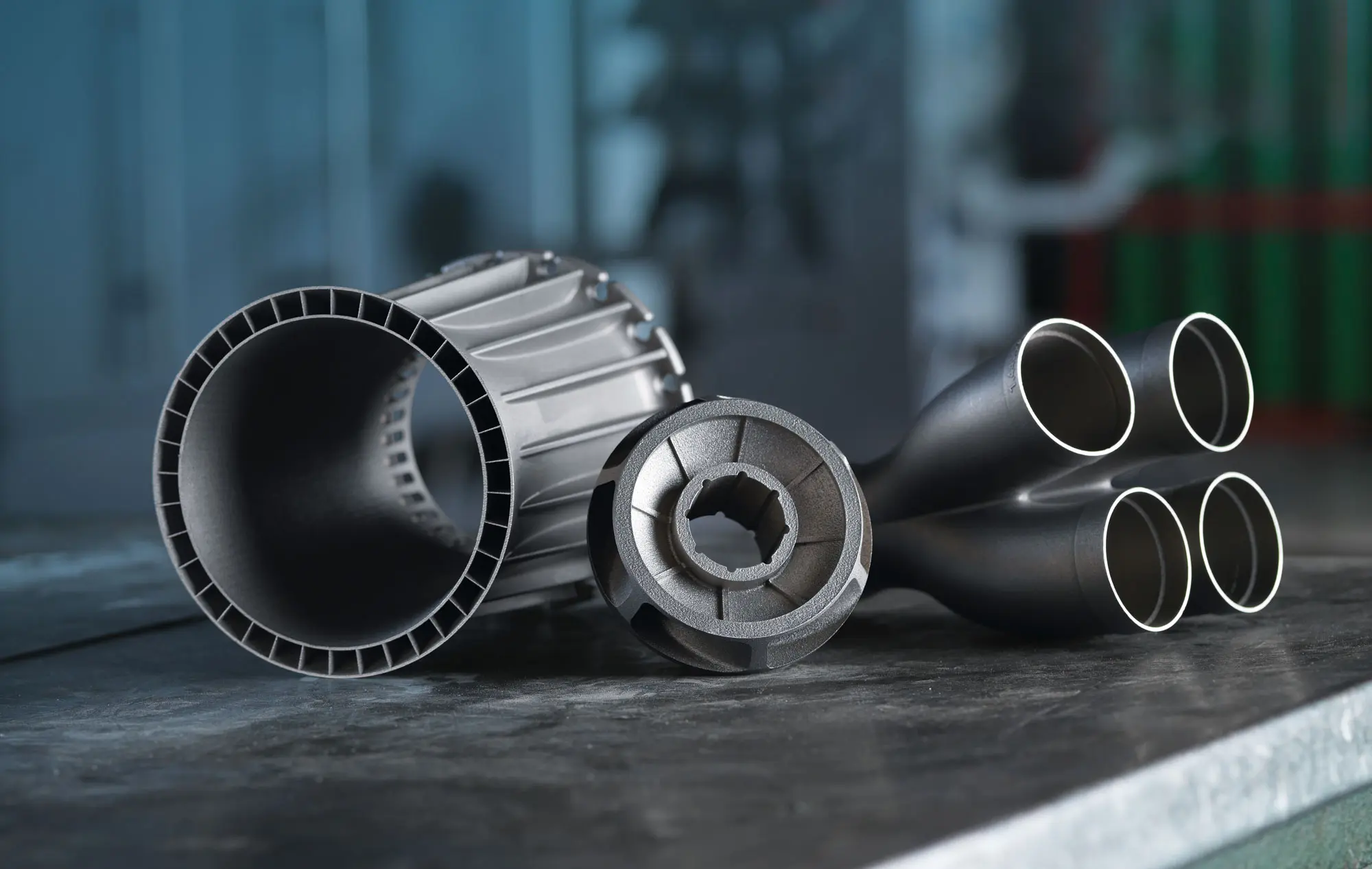
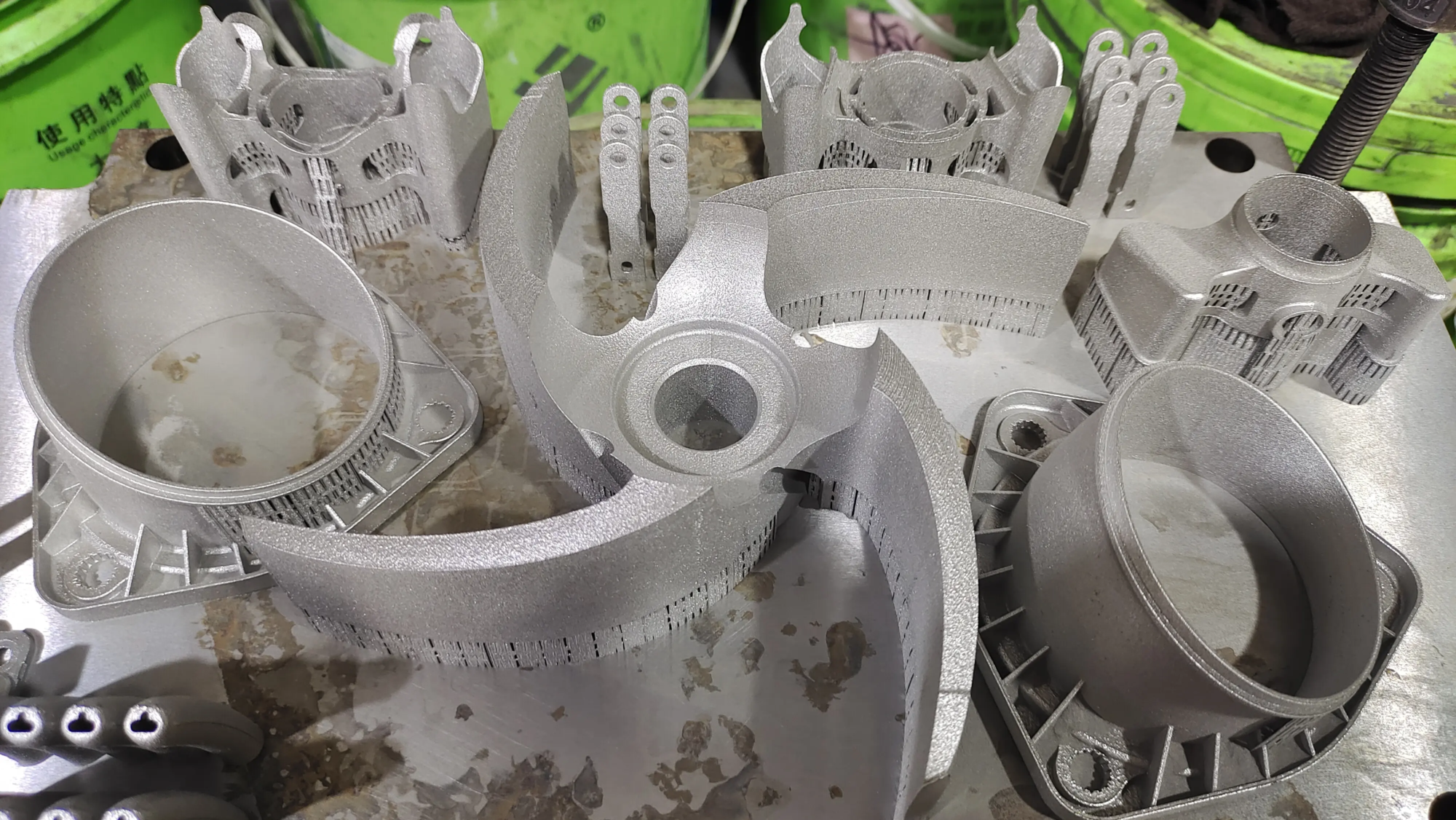
At GreatLight, our mission revolves around transforming vector-based designs into perfectly functional metal parts. with advanced Selective Laser Melting (SLM) Technology and a commitment to solving complex prototyping challenges, we thrive at the intersection of art and engineering. Here’s how vector art is fueling 3D printing innovation, and why it’s a blueprint for excellence.
Why vector art is important in 3D printing
1. Infinite scalability without loss of quality
Vector designs scale seamlessly, preserving crisp edges and smooth curves. Whether you’re prototyping tiny gears or turbine blades, vector files (.SVG, .AI, .DXF) ensure geometric integrity at any size, eliminating the pixelation or distortion that plagues raster formats.
2. Accuracy of complex geometries
Metal parts, especially those in aerospace or medical equipment, require micron-level precision. Vector art excels at defining:
- Curves and angles: Smooth Bezier curves translate into polished 3D printing surfaces.
- Hollow structure: Vector paths enable the design of lightweight lattices or internal channels not possible with traditional machining.
- Sharp details: Vectors make it easy to capture subtle elements like engravings or threads.
3. Workflow efficiency
Vectors simplify the path from design to print. They simplify slicing software operations, reduce computational stress and facilitate rapid iteration – an advantage when working on prototyping cycles under tight deadlines.
Vector Art and Metal 3D Printing: The GreatLight Advantage
GreatLight uses SLM 3D printing to fuse vector blueprints into solid metal parts. This is our approach:
Step 1: Design Translation
Our engineers optimize your vector files to improve manufacturability. We convert 2D paths into volumetric 3D models, ensuring uniform wall thickness and structural stability to prevent warping during SLM printing. Tools such as FEA simulation can validate pre-printed designs.
Step 2: Materials Science Expertise
From titanium to tool steel, our SLM systems can handle more than 20 alloys. Vector art compatibility ensures complex geometries print perfectly regardless of material behavior (such as thermal expansion).
Step 3: Master post-processing
Vector designs often include delicate features that require precision machining. glow offer One-stop post-processing:
- CNC machining ensures dimensional accuracy.
- Laser polishing enhances aesthetics.
- Heat treated to improve mechanical strength.
Case Study: Turbine Blade Prototype
The customer required lightweight nickel alloy blades with lattice core cooling ducts designed as vector paths. Our SLM process exceeds tolerance requirements (<0.05 mm deviation), enables post-polishing through electrochemical processing, and accelerates delivery by 40%, demonstrating the power of vector art in overcoming aerodynamic challenges.
Overcome common vector printing pitfalls
Vector design requires foresight to avoid print failures:
- Closed path: Uninterrupted curves ensure the solid is watertight; open paths can lead to slicing errors.
- Non-manifold edges: Overlapping lines can create ambiguities; our software automatically fixes such defects.
- Wall thickness: The vectors define the outline, but the design must accommodate the minimum feature threshold of the SLM (e.g., >0.3 mm for walls).
GreatLight proactively addresses these issues through DFM (Design for Manufacturing) consulting – bridging art and physics.
in conclusion
Vector art is more than just digital illustration; it is the strategic backbone of precise, scalable and ambitious 3D printing. In metal prototyping, where material costs are high and tolerances are tight, vector fidelity separates functional success from costly failure.
GreatLight is specifically designed to address this complexity. and Industrial SLM Printerin-house material customization and end-to-end finishing, we transform vector blueprints into high-quality metal prototypes faster, smarter, and more cost-effectively. Choose art enhanced by science—redefine what’s possible in partnership with GreatLight.
FAQ: Vector Art and 3D Printing
Q1: Can I use any vector files for 3D printing?
one: Not universal. Format such as SVG or DXF works best. High resolution EPS files are acceptable, but complex gradients/effects may need to be converted to solid shapes for printing. Our engineers review pre-production files to ensure compatibility.
Question 2: How thin can the walls of a vector designed metal part be?
one: With SLM printing, walls can be reached reliably 0.2–0.3 mm. Thinner structures run the risk of collapse during powder removal. We recommend iterative prototyping to verify ultra-fine functionality.
Question 3: Do vectors work with organic shapes (such as statues)?
one: Yes, but organic models usually start with a grid. Vector art is good at making precision parts (gears, housings). A hybrid workflow combines vector-defined mechanical elements with sculpted meshes.
Q4: How does GreatLight handle color/texture details in vectors?
one: Vectors define geometric shapes, not textures. The colors in the vector file are used as layer guides. Post-processing such as dyeing, plating, or ceramic coating can add aesthetic customization to your print.
Q5: What is the lead time for vector based metal prototypes?
one: Standard item delivery 5–7 days (Ship after design approval). Complex geometries with multi-stage finishing may extend to 10-12 days. Expedited service can shorten the time by 30-50%.
Enhance your prototypes with science-backed artistry. GreatLight combines advanced SLM technology with vector-driven design excellence to solve your toughest rapid prototyping challenges. Visit us to customize your metal parts at competitive prices – engineered with precision, perfected with passion. [Contact GreatLight Today]