Unleashing Efficiency: The Ultimate Guide to 3D Printing Weight Calculator and Material Costs
In fast-paced manufacturing, precision is crucial. Whether you’re prototyping an aerospace component or a medical implant, every gram impacts performance, logistics and cost. But manually calculating the weight and cost of 3D printed parts is a complex and error-prone task. Enter 3D printing weight calculator – Powerful tool for converting design files into actionable data. exist huge lightWe’ve been leveraging these tools to optimize metal rapid prototyping for customers around the world for more than a decade. Here’s how mastering weight and material calculations can improve your production process.
Why weight calculation is important
Weight is more than just a number, it’s a key driver of:
- cost structure: Material waste reduces profit margins; lightweight design cuts expenses.
- functional completeness: Aerospace parts need strength-to-weight ratio; medical devices need to be biocompatible and not bulky.
- sustainable development: Minimizing material usage reduces your carbon footprint.
Miscalculations can lead to budget overruns or compromised functionality. Therefore, algorithms in modern calculators analyze STL files to predict weight based on geometry, volume and material density.
How the 3D Printing Weight Calculator Works
These tools combine physical and digital modeling:
- geometric deconstruction: Split the 3D model into layers and voxels (3D pixels).
- Volume calculation: Calculate the total volume using a slice-based algorithm.
- Material Density Integral: Multiply the volume by the density (ρ) value stored in the database.
Simplify the formula:
Weight (grams) = Volume (cubic centimeters) × Density (grams/cubic centimeters)
example:
- Part volume:150 cubic centimeters
- Material: Titanium (ρ = 4.5 g/cm3)
- weight: 150 × 4.5 = 675 grams
GreatLight’s proprietary software takes into account the support structure, packing density and actual accuracy of the hollow sections.
Material Cost Guide: Metals Driving Industry Innovation
Material selection affects cost, performance and post-processing. Below, we detail the metals commonly used in SLM (Selective Laser Melting) printing:
| Material | Density (g/cm3) | Price/kg (USD) | Key applications | Advantages |
|---|---|---|---|---|
| Aluminum silicon 10 magnesium | 2.68 | $80–$120 | Automobile, heat exchanger | Lightweight and thermally conductive |
| 316L stainless steel | 7.90 | $100–$150 | ships, surgical tools | Corrosion resistant and durable |
| Titanium 6 Aluminum 4V | 4.43 | $300–$500 | Aerospace, orthopedic implants | High strength and biocompatibility |
| Inconel 718 | 8.20 | $500–$800 | Turbine blades, rocket engines | Heat resistance (>700°C) |
| Cobalt Chromium Molybdenum | 8.50 | $400–$600 | Dental restorations, joints | Wear-resistant, non-magnetic |
cost factors:
- raw material price: Based on fluctuations in global supply chains.
- Printing time: Larger/fused parts consume machine time and energy.
- Post-processing:Machining, heat treatment or surface finishing.
At GreatLight, customers can access real-time cost previews through our AI-driven platform prior to production.
strategic cost optimization
Reduce expenses without sacrificing quality:
- Topology optimization: The software trims excess material in non-critical areas.
- hollow: Internal lattice structure reduces weight by 30-60%.
- Batch printing: Nest multiple parts into a build to amortize machine costs.
Case in point: We used algorithmic lattice design to reduce the weight of an aerospace bracket by 47% and reduce costs by 22% compared to CNC machining.
Why work with Gretel? Precision and innovation
As a leader in metal rapid prototyping, huge light Combine cutting-edge SLM printers with comprehensive expertise:
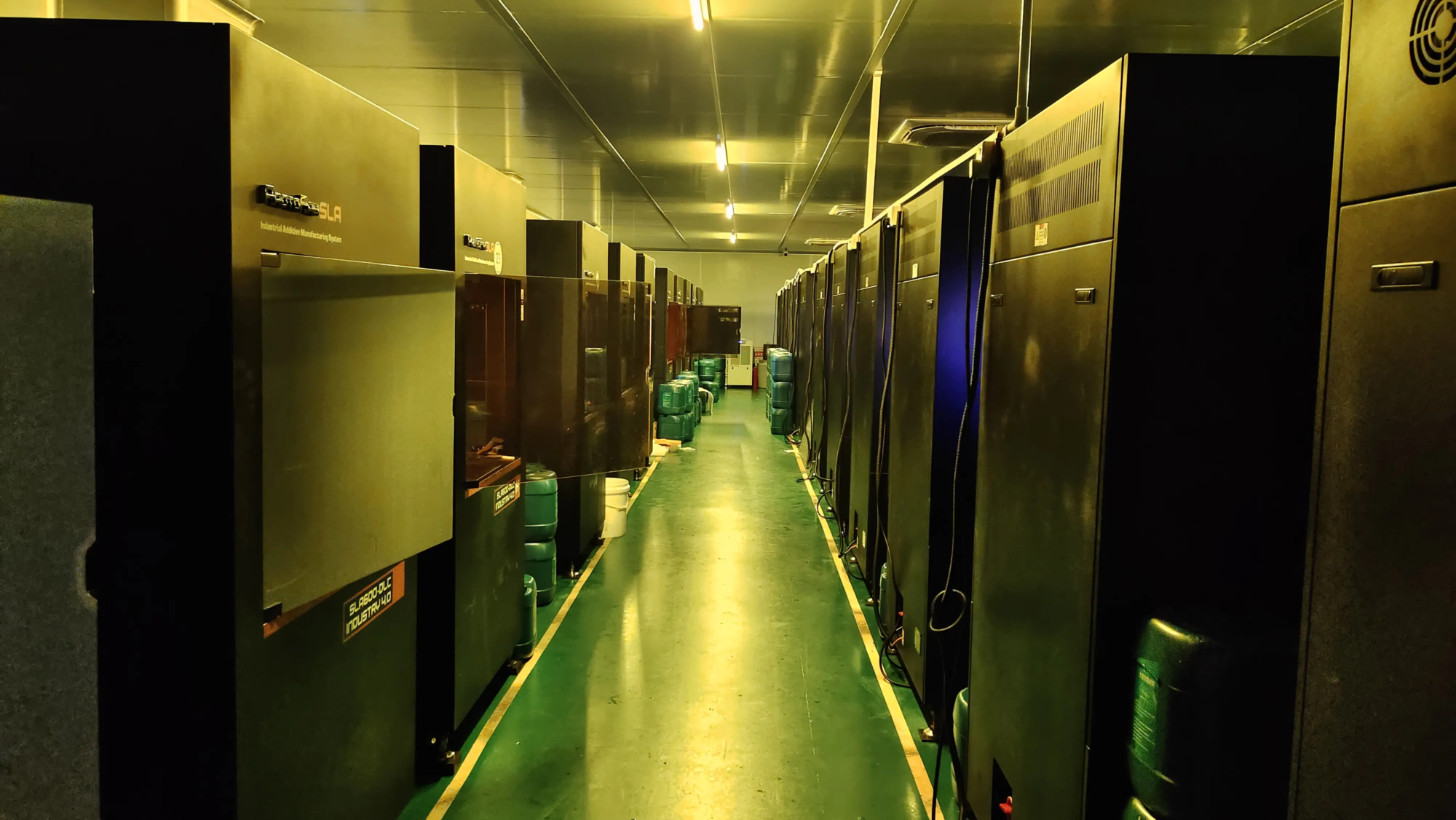
- 10+ Industrial SLM Systems: For monolithic parts, build volumes up to 500 × 500 × 500 mm.
- Closed loop workflow: From file analysis to post-processing (heat treatment, CNC finishing, EDM).
- End-to-end customization: Alloy modifications to meet unique thermal/mechanical needs.
- speed: Rush prototype delivered at 72 hours.
We enable customers to upload designs, view instant weight/cost quotes and dynamically adjust parameters – transformation "if what" Scenarios become reality.
in conclusion
The 3D Printing Weight Calculator is more than just software, it is a strategic ally for efficient production. By mastering material density, geometry and cost variables, manufacturers can achieve leaner budgets, greener processes and precision-critical components. In an industry where grams equal dollars, work with experts like these huge light Ensure your prototypes evolve from CAD models to market-ready solutions without compromise.
Ready to optimize your next project? Request a custom quote And leverage our SLM expertise today.
FAQ
Q1: How accurate is the online weight calculator?
A: Universal tools may miss support structure or porosity. GreatLight’s in-house software achieves ±2% accuracy by analyzing the interaction of the laser pool and coater.
Q2: Can I use SLM to print multi-material parts?
Answer: Not innate. SLM uses a single metal powder bed. However, we assemble multi-material components through brazing or joint design.
Q3: Will hollowing weaken the strength of the part?
Answer: Not when implemented strategically. Our engineers reinforce load-bearing areas while minimizing mass elsewhere, maintaining structural integrity.
Q4: Which material has the best cost-intensity ratio?
one: Aluminum silicon 10 magnesium Balance bearing capacity (approximately US$100/kg) with tensile strength (approximately 400 MPa). Great for functional prototypes.
Q5: How does GreatLight perform post-processing?
A: We offer CNC machining for tolerance refinement, sand blasting for texturing, chemical polishing for mirror finish, and HIP to eliminate voids.
GreatLight is your partner for industrial agility. With ISO 9001 certification and a zero-defect philosophy, we are able to quickly transform complex concepts into perfect metal realities.