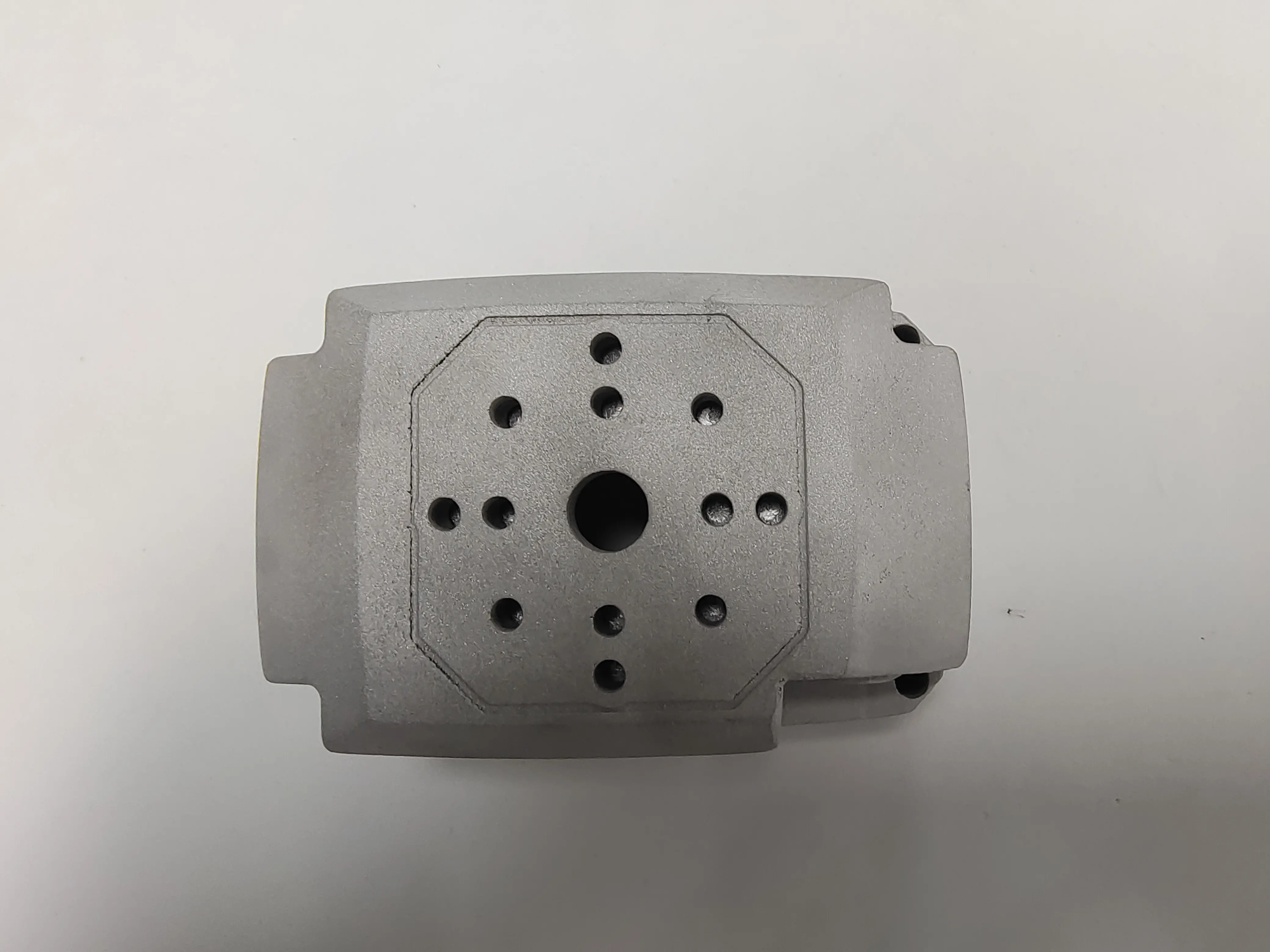
Unlocking Innovation: A Comprehensive Guide to 3D Printed Rod Holders
Fishing rod holders play a key role in countless industries – from marine applications that secure fishing rods to automotive systems that manage hydraulic lines, aerospace components and specialized industrial machinery. These components are traditionally machined or molded and face limitations when custom geometries, weight reduction, or rapid deployment are required. Enter 3D printing-special Metal Additive Manufacturing— Innovative solutions that reinvent pole seat design freedom and production agility. This guide takes an in-depth look at the design, materials, processes, and benefits of 3D printed rod supports, providing actionable insights for engineers and designers.
Why 3D printing dominates custom rod supports
Traditional manufacturing often struggles when faced with complex geometries or low- to medium-volume production. Internal channels or organic shapes are difficult to handle with traditional machining, while injection molding requires expensive tooling. 3D printing removes these barriers:
- Radical design freedom: Design lattice structures to reduce weight while maintaining strength, seamlessly integrate mounting features, or create fluid-optimized internal channels for hydraulic applications.
- Rapid prototyping to production: Test functional prototypes in days instead of weeks and quickly iterate designs based on real-world performance. Direct expansion to end-use production.
- Cost efficiency: Avoid expensive molds. Ideal for small batches, custom configurations or avoiding material waste (especially metal).
- Performance optimization: Achieve superior strength-to-weight ratio, corrosion resistance for harsh environments (salt water, chemicals) and site-specific customization.
Designing rod supports for additive success
Successful printing depends on Design for Additive Manufacturing (DfAM) principles:
- Topology optimization: Use simulation-driven tools (e.g., ANSYS, nTop) to redistribute material precisely where stress occurs, minimizing mass while maximizing load capacity.
- Support structural strategies: Use self-supporting angles to minimize overhang >45 degrees. Geometry is strategically adjusted to limit support in critical contact areas such as internal bores. SLM supports are different from FDM – designed to be thin walled (>0.8mm) minimizing post-processing.
- Embedded Intelligence: Integrate sensors, cables, or ancillary components into the design using custom voids during the printing process, bypassing the assembly step.
Key Materials: Choose Alloy or Polymer
The choice depends on the mechanical, thermal and environmental requirements of the application:
- Metal Strength (SLM Focus):
- Stainless steel 316L: Marine or chemical environments require corrosion resistance. Ideal for hydraulic rod supports subject to wet port environments.
- Aluminum alloy (AlSi10Mg): Light weight and moderate strength. Suitable for auto parts that focus on heat dissipation.
- Titanium (Ti6Al4V): Ultimate strength-to-weight ratio and biocompatibility. Aerospace or high performance marine applications.
- Engineering polymers:
- Nylon (PA6/PA12): Weather-resistant, medium-strength prototype or non-load-bearing bracket.
- Polyneck/Peck: Chemical/thermal stability for demanding industrial uses.
Honglaite SLM advantages: Utilizing advanced selective laser melting printers, we ensure the density of metal rod supports exceeds 99.7%, mechanical properties match the forged material, and meticulous parameter control of defect-sensitive parts.
SLM’s step-by-step production journey
Achieving the perfect metal pole stand involves synchronized stages:
- Digital Blueprint: Convert optimized CAD models into sliceable STL files.
- Machine calibration: Verify printer laser intensity, powder layer uniformity and inert atmosphere integrity (critical for reactive metals like titanium).
- print: High-precision lasers fuse the metal powder layer by layer (50-150μm layers). The supporting structure anchors the overhang.
- Post-processing:
- Support removal: meticulous CNC wire cutting or mechanical cutting.
- Stress Relief: Post-build annealing prevents warping.
- Surface Enhancement: Machining critical holes/surfaces, shot peening to increase fatigue strength, or polishing/anodizing to prevent corrosion/wear.
- Quality verification: Coordinate measuring machine (CMM), CT scan or tensile/compression testing.
Gretel’s one-stop expertise: From topology optimization to final polish, our integrated workflow handles laser sintering, porosity-reducing HIP processing, and aerospace-grade certification to accelerate your project.
Real-life Case Study: Redesigned Marine Rod Holder
A luxury boat builder needed corrosion-resistant, lightweight brackets to secure high-load fishing gear. Traditional stainless steel welds are heavy and prone to crevice corrosion. Solution:
- design: The weight of the topology-optimized AlSi10Mg scaffold is reduced by 40%. Internal drainage channels automatically drain away seawater.
- process: GreatLight prints via SLM, CNC reams for smooth rod insertion, and applies micro-arc oxidation for improved wear resistance.
- result: Cost reduction compared to CNC machining, 30% faster assembly, and zero field failures after two years of exposure to salt water.
Versatility extends to:
- Hydraulic/pneumatic system: Precision manifold brackets ensure leak-free connections.
- Robotics: Custom mounts for sensor rods in automated factories.
- Renewable energy: Sensor rod mounts to withstand extreme weather in offshore wind turbines.
A deep dive into cost-effectiveness
While the unit cost of 3D printing exceeds that of mass-produced injection molding, metal additive manufacturing dominates in the following scenarios:
- Mold investment exceeds USD 15,000+
- Sales volume is less than approximately 500 units per year
- Need to be customized according to unit
- Delivery time compression is crucial (SLM reduces production time by 60-70%).
Reducing material waste through additive manufacturing (near net shape) increases eco-efficiency compared to subtractive techniques.
Quality Assurance: Beyond the Layer Line
Industrial pole mounts require unwavering reliability:
- 3D scanning: Laser or CT inspection verifies the aperture’s accuracy in the micron range.
- Material certification: ASTM specified stretch strips printed with the part verify mechanical properties.
- Non-destructive testing (NDT): Dye penetrant testing or CT scanning can reveal defects beneath the surface – something that cannot be ignored in hydraulic systems.
Conclusion: The future is printed
3D printed rod holders transcend traditional limitations, blending artistry with engineering precision. They exemplify how additive manufacturing can solve niche complexities—reducing weight, increasing durability, and unlocking radical geometries that were hitherto impossible. For innovators who prioritize performance, adaptability and speed to market, adopting Metal SLM technology is not optional but imperative.
Work with Pioneer: GreatLight utilizes state-of-the-art SLM systems and deep metallurgical expertise to provide pole supports capable of withstanding harsh environments and rigorous loads. Our end-to-end guidance, from DfAM consultation to certified post-processing, ensures unparalleled quality while optimizing costs. Ready to redefine what’s possible?
FAQ: The Secret of 3D Printed Rod Brackets
Q1: What is the maximum load that the 3D printed metal pole bracket can bear?
A: Due to the optimized lattice, SLM-printed stainless steel or titanium stents are often able to withstand loads that exceed those of their traditional counterparts. Example: Our AlSi10Mg toolholders can withstand static loads of over 1,200 kg/cm² after heat treatment and are verified by Finite Element Analysis (FEA).
Q2: Can the rod and bracket be printed together?
Answer: Yes! Print-in-place components utilize complex gap designs (~0.4-0.6mm gap). Applications include valve assemblies, but consult an engineer regarding wear/friction nuances.
Q3: What is the corrosion resistance of printed marine brackets?
Answer: Due to the uniform microstructure, SLM machined 316L stainless steel has the same/better resistance to salt water corrosion than the forged form. Plating alternatives include marine aluminum alloys.
Q4: Does the metal printing rod holder need support?
A: Almost always, especially with rod holes or angled mounts. GreatLight uses algorithms to power generation, minimizing scarring while improving print integrity.
Q5: What makes metal printing more expensive than plastic?
A: Metal powder costs, inert gas requirements, longer print times, compression pressure, and extensive post-processing account for much of the premium, but it is still cost-effective compared to low-volume CNC.
Q6: How long does it take to produce functional metal stents?
A: Prototyping: 3-5 days. Mass production: 7-15 days (including finishing). GreatLight offers fast turnaround using specialized printers optimized for rod holders.
Q7: Can they be recycled?
Answer: Of course. Unused metal powder is screened and blended for reuse. The recycling method of scrap parts is similar to that of CNC materials, and titanium has a high recycling value.