Mastering 3D SPCE Modeling: Key to Unlocking the Potential of Metal Additive Manufacturing
In the field of metal additive manufacturing (AM), especially in high-risk industries such as aerospace, medical and automotive, standard CAD designs often fall short. Enter 3D SPCE (Professional Product Creation Engineering) Modelinga holistic approach to reimagining part design specifically for 3D printing needs. Unlike general-purpose CAD, SPCE integrates physics-based optimization, materials science and manufacturability analysis to produce parts that are not only printable but also optimized for performance, cost and reliability. At GreatLight, we use SPCE modeling and advanced selective laser melting (SLM) technology to change the way metal parts are conceived, prototyped and produced.
Why SPCE modeling is important in metal additive manufacturing
Metal 3D printing presents unique challenges: thermal stresses, support structure dependencies, anisotropic material properties and complex post-processing requirements. Traditional designs often result in distortion, residual stress or build failure, wasting time and resources. SPCE modeling addresses these issues by viewing design as an iterative, data-driven collaboration between features, materials, and processes. The result? Optimized components Repeatability, mechanical integrity and manufacturability——From the first printing.
Core SPCE modeling techniques explained
SPCE modeling encompasses several advanced techniques, each of which is critical to overcoming the limitations of metal additive manufacturing:
-
Topology optimization and generative design
SPCE software uses AI-driven algorithms (e.g., Altair Inspire, nTopology) to reallocate materials based on load paths and stress simulations. This minimizes weight while maximizing strength – perfect for aerospace stents or medical implants. Great Light Insight: Combine topology results with SLM-specific rule checks (e.g., minimum wall thickness) to ensure printability without manual rework. -
Intelligent Support Structure Engineering
Supports in metal SLM are more than just scaffolding; they manage heat dissipation and prevent deformation. SPCE modeling design supports:- contact based (Ultra-fine dots minimize scarring)
- lattice anchoring (Self-breaking structure, easy to disassemble)
- Functional integration (Supports double use as cooling channel)
Glow advantage: Our proprietary algorithm dynamically adjusts support density to reduce post-processing by up to 45%.
-
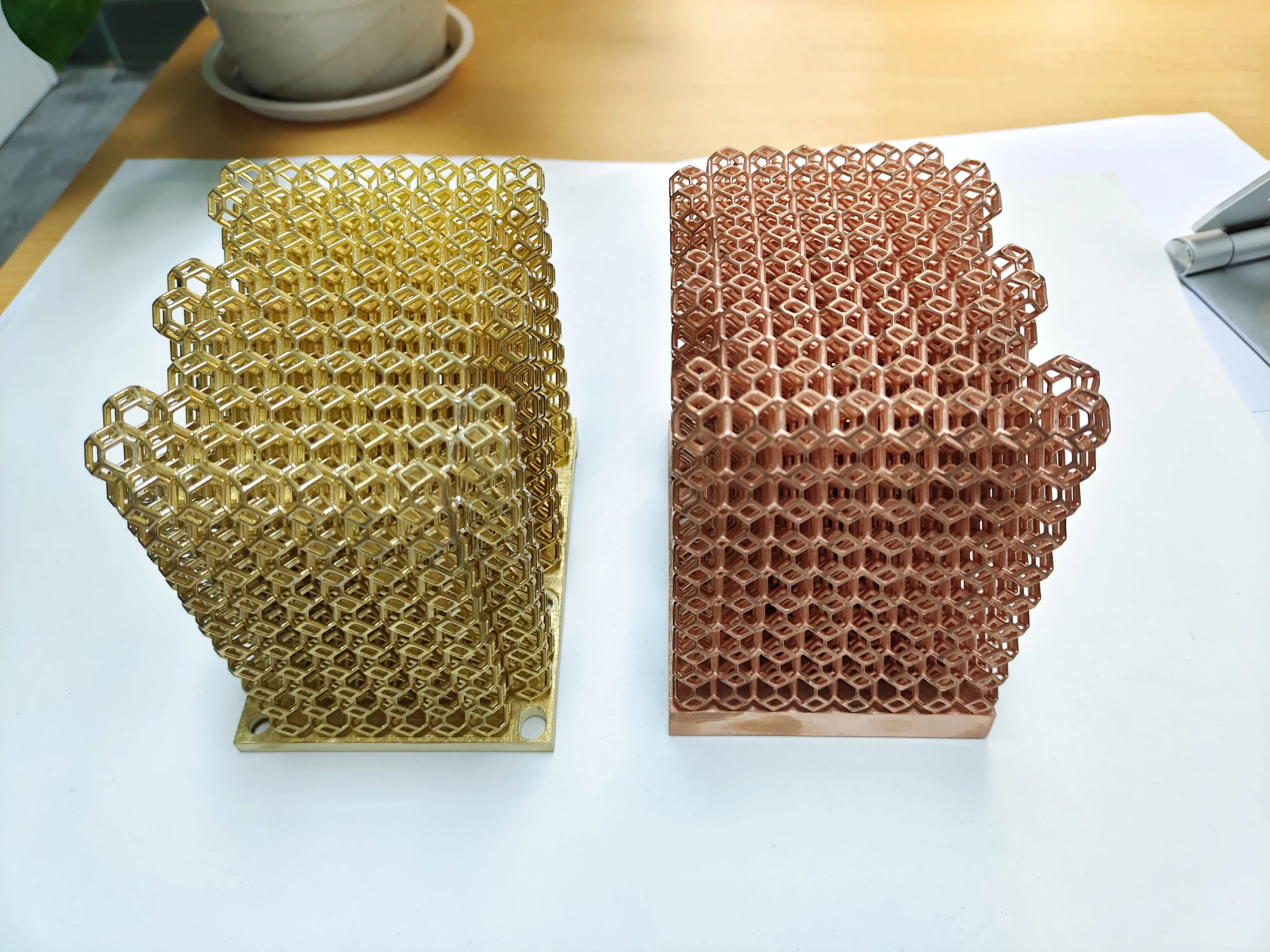
Lattice structure integration
Mesh enhances impact absorption, thermal regulation, osseointegration (implants) or lightweighting. SPCE focuses on:- Unit cell selection (Gyro vs. Diamond vs. Voronoi)
- graded density (site-specific rigidity/flexibility)
- SLM orientation parameters (Beam thickness > 0.4mm, achieving reliable fusion)
-
Multi-axis optimization
Part orientation directly affects mechanical properties and surface finish. SPCE software simulates multiple build scenarios to:- Minimize supports (lower material costs)
- Align critical surfaces parallel to the build platform for a smoother finish
- Prioritize the bearing axis along the grain growth direction
- Feature-specific resolution controls
Fine details (holes, threads, overhangs) can fail if not modeled properly. SPCE includes safeguards:- Minimum unsupported overhang: < 45°
- Escape hole for powder removal
- Compensation tolerance for warpage-prone features (±0.05mm)
Case Study: From CAD to SPCE Optimized Flight Components
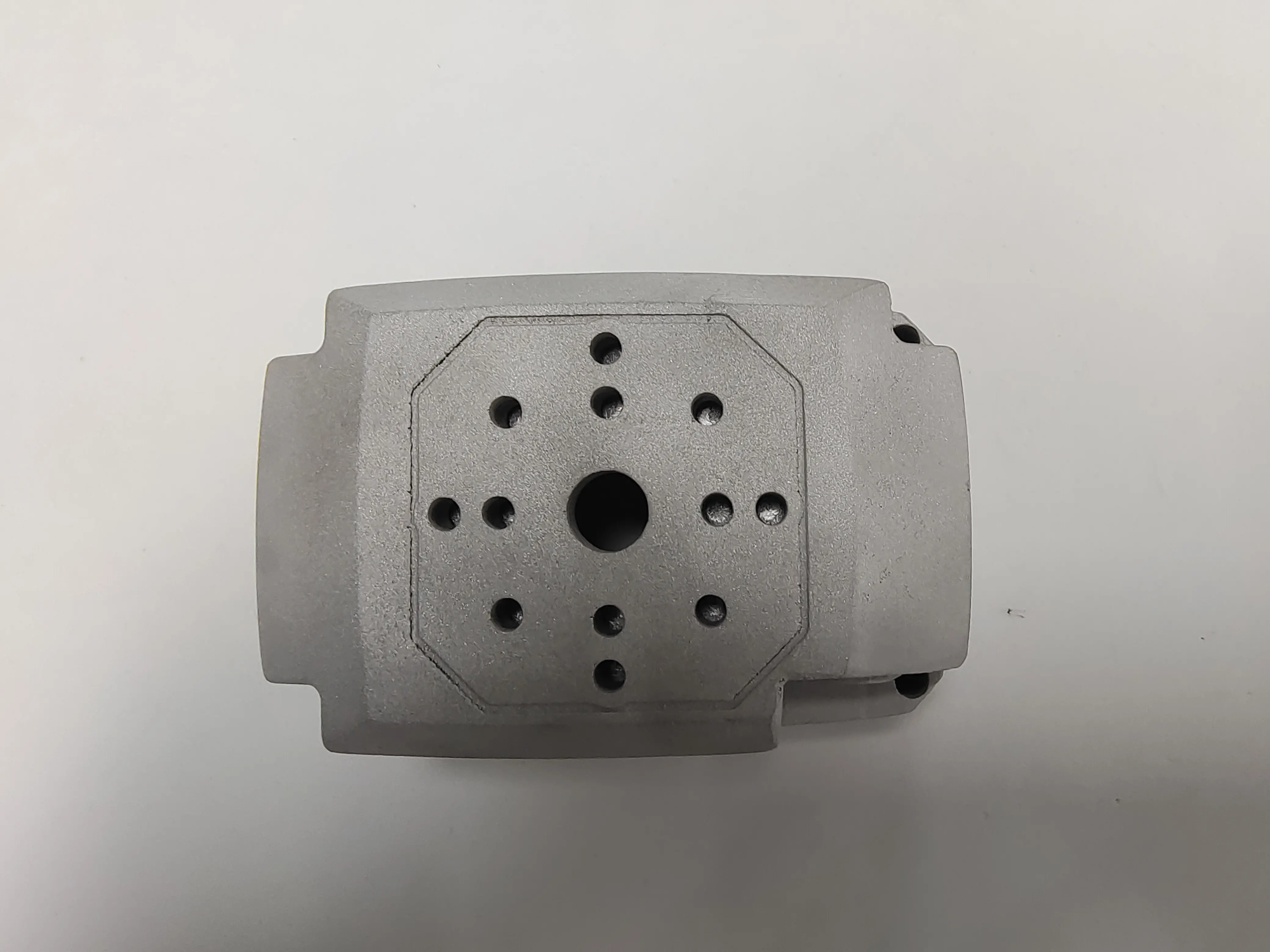
challenge: Aerospace fluid manifolds face chronic cracking due to thermal stress concentrations. Traditional redesigns add weight but don’t fix the glitches.
SPCE solution:
- Topology optimization redistributes material around pressure points.
- Lattice implantation minimizes residual stress.
- Direction ensures consistent thermal gradient cooling.
result: 30% weight reduction, zero cracks after build, and streamlined approvals through additive manufacturing material certification standards such as AMS7003.
GreatLight’s SPCE Methodology: Taking SLM Beyond Prototyping
At GreatLight, SPCE modeling is embedded into our workflow:
- Prepress verification: Physics-based simulation predicts stress behavior, eliminating bench test iterations.
- Material synergy: Model titanium (Ti-6Al-4V), aluminum (AlSi10Mg), stainless steel (316L) or nickel alloys based on SLM thermal curves to obtain isotropic properties.
- Post-processing integration: Design includes machining allowances for CNC finishing, surface smoothing compatibility (such as electropolishing) and heat treatment compensation.
As one of China’s premier rapid prototyping partners, we offer End-to-end SPCE driven SLM servicecombining proven SLM 3D printers, expert metallurgical engineering and fast turnaround, ensure precision parts meet AS9100 or ISO 13485 standards every time.
in conclusion
3D SPCE modeling is the cornerstone of reliable, high-value metal additive manufacturing. It bridges the gap between digital design and real-world performance by combining functional optimization with SLM process constraints. For engineers and manufacturers, adopting SPCE means faster innovation cycles, less waste, and components that realize the full potential of additive manufacturing. Partnering with experts like GreatLight ensures these technologies translate into tangible competitive advantages – whether prototyping next-generation turbines or delivering flight-ready components with unparalleled precision.
Frequently Asked Questions about SPCE Modeling and Metal Additive Manufacturing
Q1: Can SPCE modeling reduce production costs?
Yes. Optimized material distribution minimizes waste, while intelligent support reduces post-processing time. SPCE models typically reduce build volume by 20-30% without impacting performance.
Q2: Is SPCE only suitable for high-end industries?
not at all. While the aerospace and medical industries benefit from weight-critical/safety-critical results, SPCE can optimize automotive tooling, consumer electronics, or custom machined parts—anywhere quality efficiency or rapid iteration is valued.
Q3: Does SPCE support multi-material 3D printing?
Currently, SLM-based metal homogenization has the best performance. However, SPCE technology can optimize the interface of hybrid designs (e.g. stainless steel + Inconel) or embed subtractively manufactured inserts.
Q4: How does the lattice structure strengthen metal parts?
In addition to being lightweight, the lattice can improve energy absorption (crash components), thermal regulation (heat exchangers) and bone adhesion (implants) while maintaining functional aesthetics.
Q5: Does GreatLight handle certification/validation of SPCE designs?
Absolutely. Our design-make-test cycle includes documentation of materials analysis (SEM/metallography), mechanical testing (tensile/fatigue), and industry-specific certifications – critical for safety and durability.
Unleash your design potential huge light— The combination of SPCE accuracy and SLM power. Customize your next metal component with [contact our engineering team] Get a quick quote with unrivaled quality assurance.