Uncovering the Secrets of 3D Printing Annoying Boxes: A Comprehensive Guide
We’ve all encountered everyday objects that are designed to function seamlessly, but what about those items that are specifically designed to function seamlessly? obstruct? enter "annoying box" – A deceptively simple yet well-designed 3D printed puzzle that delights its creator but confuses its unsuspecting victims. As providers of complex manufacturing challenges, we huge light Think of projects like this as a perfect showcase for the precision and versatility of modern additive manufacturing. Let’s delve into what makes this quirky typography what it is.
What is that annoying box?
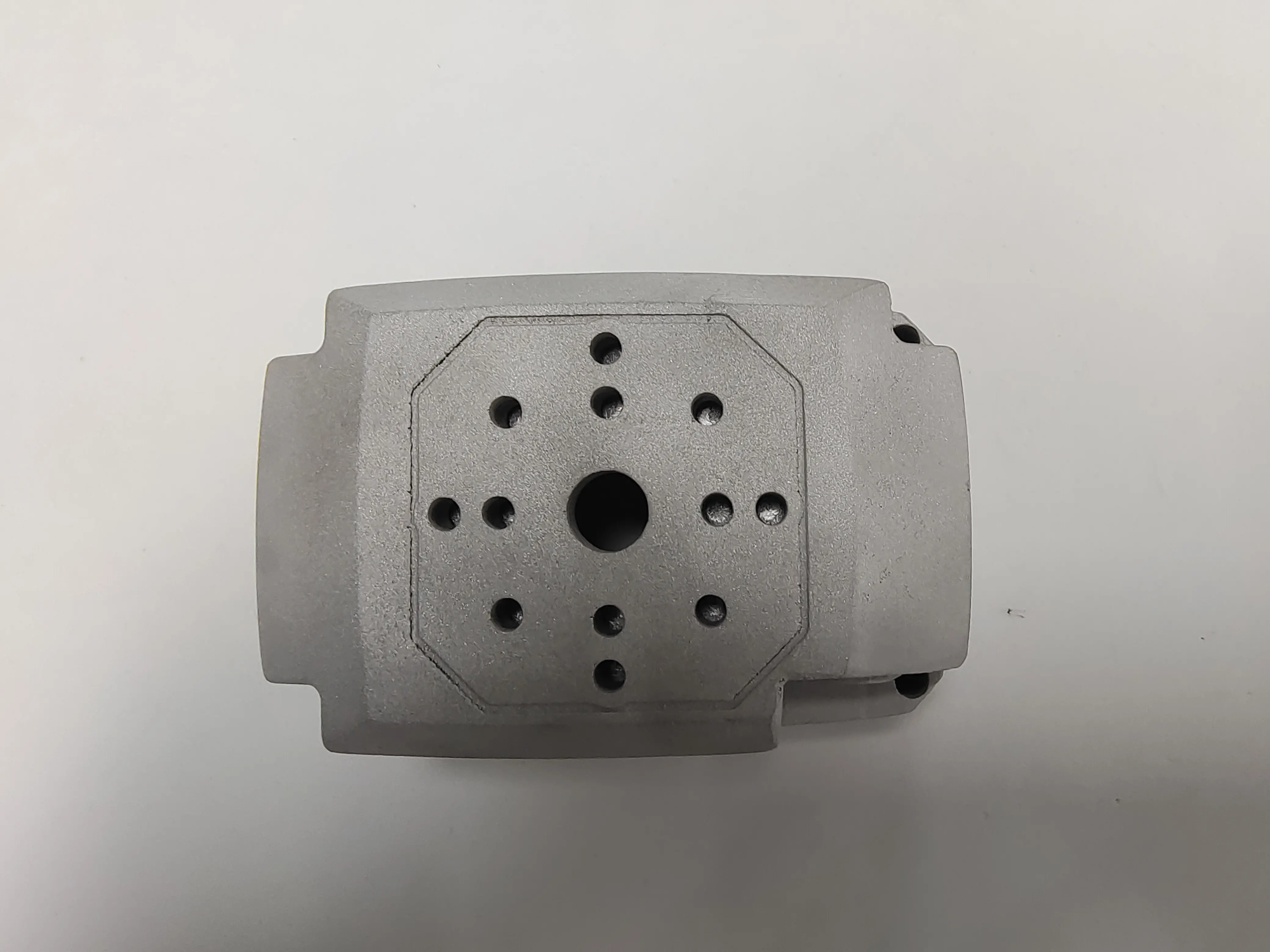
The annoying box appears to be a standard hinged container. Its mischief lies in the hidden locking mechanism that makes it impossible to open unless you know the exact (and often unconventional) method. As is customary, pushing, pulling or swinging it only adds to the frustration – hence the name! This was a wonderful test of the tolerances and mechanisms achievable with 3D printing.
Precision starts from design
Success depends on careful design:
- Hidden door latch: A sliding pin, rotary latch or magnetic lock hidden within the wall will block the cover.
- Key tolerances: The gaps between moving parts must be precise—too loose and the mechanism will fail; too tight and the parts will seize. Typically, an offset of 0.1mm–0.3mm is used between mating surfaces.
- Orientation question: Parts must be printed optimally to minimize support material and ensure that layer lines do not impede movement.
- Material selection: Flexibility and durability are key – PLA+ or PETG are best for beginners due to their rigidity; advanced users try composites like carbon fiber blends.
Optimize your printing settings
Things to note when implementing functional interlocking components:
- Floor height: Use layers ≤ 0.2mm for a smoother sliding surface.
- filling: 25-40% (Gyro pattern is recommended to ensure stability without affecting flexibility).
- support: Required for overhangs (e.g., latch cavities). enable "Support interface" for cleaner removal.
- speed: slow down! 40-50mm/s prevents vibration artifacts on complex features.
- Material matters: PLA/PETG ensures latch rigidity; Nylon or TPU allows for flexible snap closure.
exist huge lightwe utilize industrial grade SLM (Selective Laser Melting) Printers used for metal prototypes require extremely high precision in mechanisms such as locks or hinges. For nylon/polycarbonate prints that require toughness, SLS (Selective Laser Sintering) ensures consistency that cannot be achieved with consumer FDM printers.
Improved post-processing
Don’t skip the steps to complete the perfect mechanism:
- Support removal: Use a flat end mill and needle file to remove debris from the cavity.
- Sanding/priming: For binder jet printed metal or granular plastic, sand gradually from 120 to 400+ grit; prime nylon parts to reduce moisture absorption.
- lubricating: Apply dry lubricant (eg PTFE spray) to the sliding joints.
- Secondary finishing: Dye translucent pieces, plated plastic, or sandblasted aluminum prints for a professional look.
Need “plug and play” perfection? GreatLight provides turnkey post-processing – Anneal metal parts to increase elasticity, optimize tolerance fits for CNC machining, or apply a durable coating to finished prints.
Troubleshoot common worries
| question | solution |
|---|---|
| The latch won’t move | Check the tolerance gap; lightly sand the joint with a sanding rope. |
| Lid cannot be closed | Diagnose warpage via heat map; add chamfers. |
| Hinge snap/friction | Increase hinge diameter/column thickness by approximately 0.5mm. |
| Assembly misalignment | Embed guide pins/pins; align printer bed. |
Beyond Shenanigans: Functional Apps
This interesting mechanism has practical uses:
- Safe storage: Make child-resistant containers for medicines or valuables.
- Education Kit: Demonstrate engineering principles in the classroom.
- Prototyping: Test consumer interaction with hidden mechanisms (drawers, locks).
- Toy design: Enhance puzzle or escape room props.
For innovators quickly experimenting with safety equipment, GreatLight provides high-strength metal prototypes – Stainless steel, titanium or aluminum alloy – durable enough for rigorous real-world testing.
Conclusion: A combination of fun and functionality
The Annoying Box goes beyond novelty – it represents accessible and complex engineering made possible through additive manufacturing. Designing such mechanisms requires an understanding of microstructural dependencies, geometric tolerances, and smarter workflows, pushing hobbyists beyond beginner-level projects. Ready for a challenging custom prototype? Huilite cooperates with engineers around the worldcombined with advanced SLM printing Efficiently solve complex metal prototyping tasks with CNC milling, EDM, coating and custom finishing. Request a custom quote today to turn interesting ideas into precision parts!
FAQ: Demystifying the Annoying Box
Q1: Can I print annoying boxes in metal?
Absolutely. Metals such as aluminum are ideal for achieving strong latches and smooth slides via SLS/SLM methods – ideal for high stress applications. However, ultra-precision ±0.05mm hinge pins or threaded inserts may still require CNC machining.
Q2: Which CAD software is best for hidden mechanism design?
Fusion 360 excels in parametric capabilities. For simulated friction/physics integration, Onshape/SolidWorks is preferred. All allow tolerance-specific assembly simulation.
Question 3: My printed latch melts/bends under external force. How to fix it?
Choose high-strength materials: PETG, ABS or nylon. For heat resistance (automotive interiors, electronics), metal printing using SLM can seamlessly withstand temperatures of 500+°C.
Q4: Can GreatLight print multi-material components?
Yes! Print components in optimized materials (e.g. TPU latches + PLA body) and receive assembled prototypes through post-processing. We specialize in hybrid solutions that combine printed and CNC machined inserts.
Q5: How does draft angle affect hidden capture?
Light angles (±5°) have traditionally simplified mold extraction, but additive processes allow verticality. Instead, focus on drape thresholds specific to the printer’s nozzle thermal/cooling capabilities.
Q6: Why choose professional prototyping services instead of DIY?
Industrial machines enable higher accuracy (±0.025 mm vs. ±0.1–0.5 mm tabletop), a wider range of materials (Inconel, PEEK, tool steel), accelerated workflows, and reliably certified tolerances essential in the aerospace/medical sector. When making a prototype your Annoying box (or mission-critical component), lever Gretel’s expertise Perfectly executed. Submit your CAD files now!
PS: Explore an interesting blend of creativity and precision engineering. exist huge lightwe bridge imagination and industry—prototyping future innovations, one well-designed annoying box at a time.