Unleashing Mythical Craftsmanship: The Ultimate Guide to 3D Printing Dragon Scales
Dragons have captured the human imagination for thousands of years—symbols of power, mystery, and otherworldly beauty. Today, modern technology, especially 3D printing, transforms these mythical elements into tangible art, armor, and functional design. With its intricate overlapping patterns, organic textures and complex geometric shapes, Dragon Scale embodies the perfect fusion of creativity and engineering. This guide takes an in-depth look at 3D printed dragon scales, providing insights for designers, cosplayers, engineers, and artists, while exploring how professional services can take these creations beyond the limitations of DIY.
Why dragon scales? A combination of complexity and possibility
Dragon scales are not only decorative; They are biomechanical marvels. They ask for:
- Overlapping flexibility: The scales must be able to slide or bend without affecting the structure.
- Customizable patterns: Hexagonal, teardrop or organic shapes require parameter adaptability.
- Balance of strength and weight: For props or functional equipment, durability is crucial.
Traditional manufacturing cannot handle such complex assembly, but 3D printing is booming here. Layer-by-layer manufacturing offers unprecedented freedom to embed interlocks, hinges or textures that cannot be molded or machined by hand.
Design scale: from sketch to digital reality
Key software tools
- CAD platform: Fusion 360, Blender or Rhino for sculpting organic shapes.
- Parametric design: Use parameters from Grasshopper (Rhino) or Fusion to automate mode changes.
- Special generator: Tools like ScaleLab or custom scripts can quickly generate tileable scales.
design considerations
- interlocking mechanism: Tongue and groove joint or snap fit for assembly.
- Tolerance calibration: There is a 0.1–0.3 mm gap between scales, ensuring smooth movement without sagging.
- Texture & Thickness: Surface bumps add realism; wall thickness (1.5–3mm) balances strength and material efficiency.
Material Selection: Function-Driven Selection
Material selection depends on application:
- Polylactic acid/polyester fiber: Ideal for role play scales—lightweight, paintable, and cost-effective.
- TPU/flexible resin: For bendable use "skin" (e.g., articulated suits), Shore 90A TPU mimics leather-like movement.
- Engineering plastics: Nylon (PA12) provides high impact resistance for wearable devices.
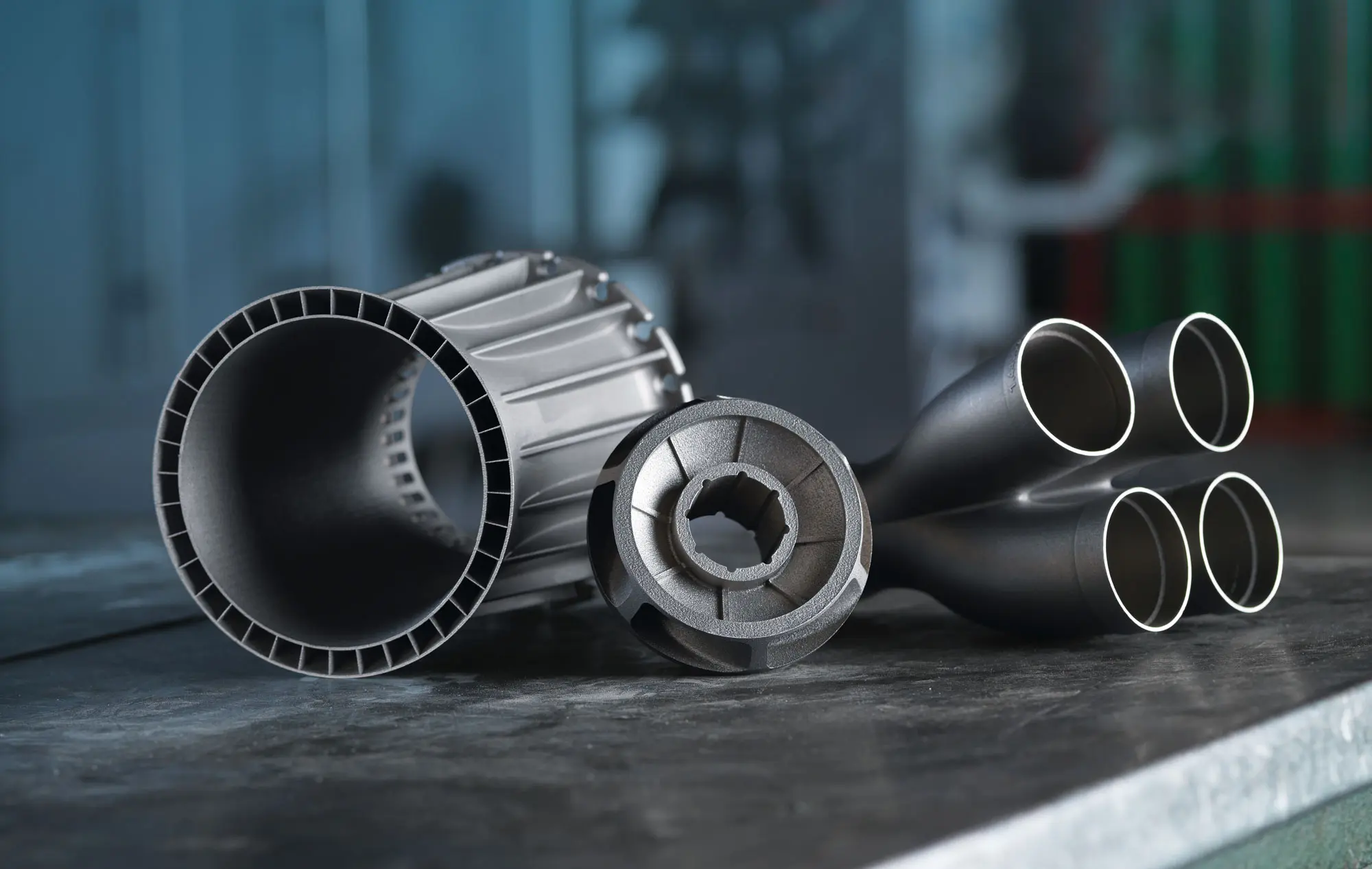
- metal alloy: Titanium or aluminum flakes via SLM/SLS for functional armor, heat-resistant components or aerospace designs.
Pro tip: At GreatLight we enable rapid prototyping of metals and polymers – SLM 3D printers produce aerospace grade titanium flakes, while post-processing ensures a perfect surface finish (polished, anodized or DLC coating).
3D printing workflow: Execution with precision
Step 1: Document Preparation
- Scale diagonally to minimize supports.
- Hollow models reduce weight/material usage (added resin drainage holes).
Step 2: Printing Technology
- Frequency Division Multiplexing/FFF: Best suited for PLA/TPU scales. Use layer height ≤ 0.15mm for a smooth texture.
- SLA/DLP: Microscopic textures that capture jewel-like details.
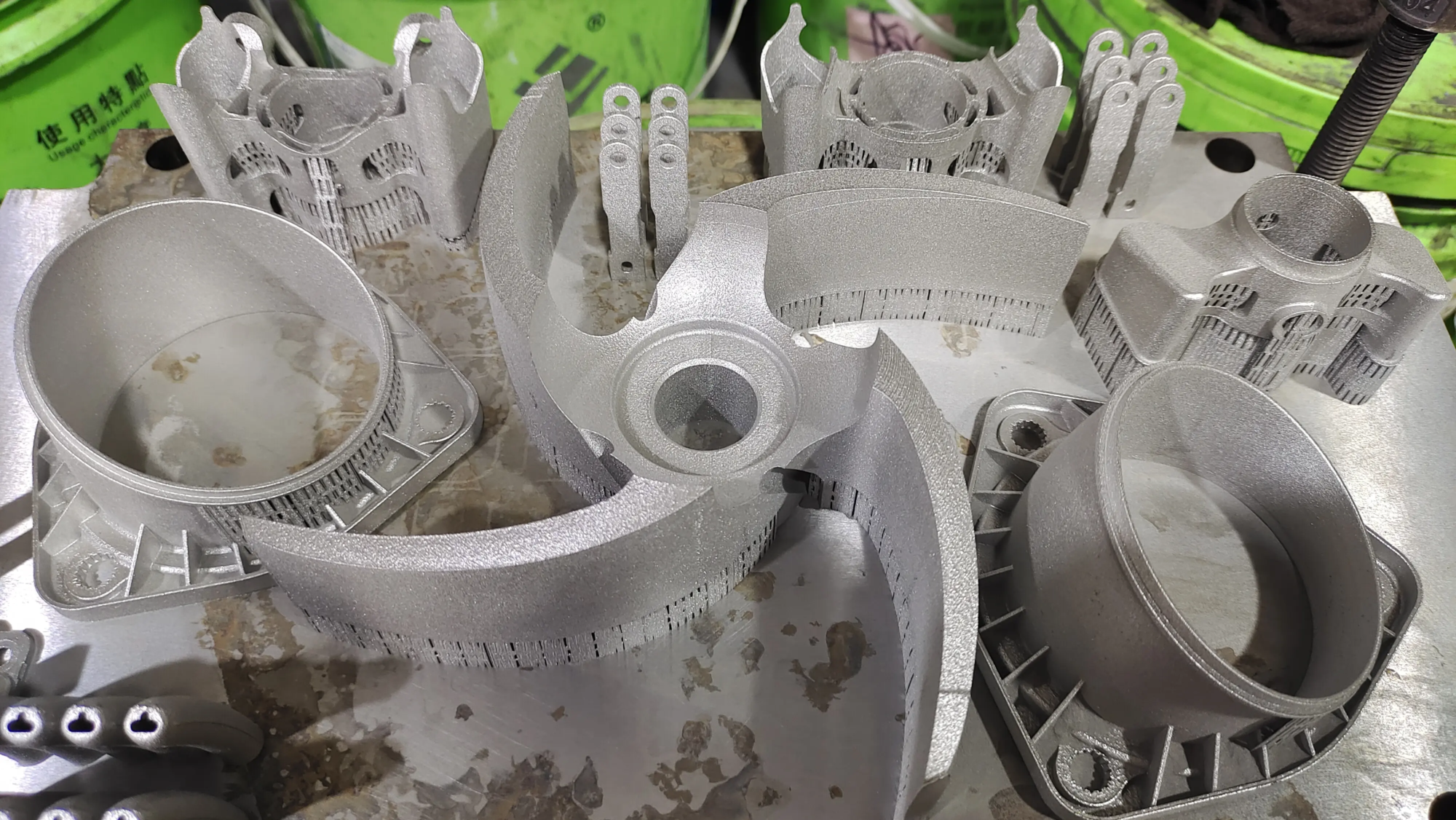
- SLM/DMLS: Our expertise in metal flakes – laser melting titanium powder into strong, lightweight structures.
Step Three: Overcome Challenges
- Warp: Heated chambers and calibrated bed temperatures in SLM printers prevent distortion.
- support structure: Soluble support (PVA) for FDM; self-supporting powder in metallic SLS.
Post-Processing: Where the Magic Happens
Transform original prints into masterpieces:
- Remove support: Precisely trimmed to preserve interlocking edges.
- smooth: Steam smoothing (ABS) or fluidized bed grinding (metals).
- finishing: Primed, airbrushed metal or plated scale.
- assembly: Mounted graduated fabric/mesh simplifies connection.
Guoguang advantages: Our one-stop solution includes CNC machined support points, powder coating and hand finishing for museum quality displays.
Beyond the Dragon: Practical Applications
Dragon Scales Beyond Fantasy:
- robotics: Bionic skin protects joints.
- architecture: Dynamic facade panels react to the weather.
- medical: Flexible TPU scale in ergonomic stand.
- car: Lightweight metal scale that serves as a catalytic converter guard.
Case Snapshot: Dragon Armor in a Film Studio
We make titanium chest plates for sci-fi productions:
- Material: Ti-6Al-4V, with strength and corrosion resistance.
- Process: SLM printing → CNC finishing → black DLC coating.
- Result: 500 scales assembled into lightweight (1.2kg) articulated armor, filmed under studio lights.
Why work with professional services?
DIY projects run into the limitations of Dragon Scale: the texture is not smooth, the fit doesn’t fit, or the material fails. GreatLight solves this problem by:
- Advanced SLM 3D Printer: Process metal/plastic with micron-level precision.
- Material mastery: Custom alloy, temperature-resistant polymer.
- End-to-end post-processing: From heat treatment to complex surface treatments.
- Speed and scalability: 24-hour volume production of prototypes regardless of complexity.
Authenticity, precision, durability – nothing less is required of your creations at scale.
in conclusion
3D printed dragon scales symbolize how technology blends myth and reality, allowing artists, engineers and innovators to achieve the impossible. Whether making LARP garments or aerospace protective shields, attention to design nuances, materials science and processing excellence are keys to success. For mission-critical projects, working with experts ensures your vision stands up to real-world use.
Ready to transform your dragon scale dreams into tangible glory? Explore professional rapid prototyping to advance your ambitions beyond the limits of your desktop.
FAQ: 3D Printed Dragon Scales
Q1: Can dragon scales be printed and moved flexibly?
Answer: Of course! TPU filaments or flexible resin form bendable scales. Optimize hinge thickness (1–2mm) and pattern density for natural articulation. Metal scales can be printed with integrated springs or loosely attached.
Q2: How to attach scales to fabric or armor?
A: Embed the socket/ring into the scale design for sewing integration. Metal alternatives include micro clasps, magnetic backing, or post-print adhesive pads.
Q3: What is the price of professional metal dragon scales?
A: Depends on material, volume, finish. For example:
- Titanium: $50-150/kg once effectively nested.
- Post-processing adds $20-$100 per batch.
Request a project-specific quote for accurate pricing.
Q4: How durable is the 3D printed scale outdoors?
A: Engineering polymers such as ASA/PA6 are UV/weathering resistant. Aluminum or titanium scales will last for decades outdoors – anodized/Cerakote coating adds protection.
Q5: Can I print iridescent/color-changing rulers?
Answer: Multi-material printing (color gradient) can achieve a smooth effect. Alternative: Print the metal base and apply an interference paint/vapor deposition coating.
For custom designs that challenge convention—whether it’s a flexible dragon wing membrane or turbine blade scales—leverage advanced prototyping [Your Company]. We transform complex visions into lasting realities quickly and cost-effectively. Customize your precision rapid prototyping project today – where myth meets metal.