Engineer’s Blueprint: A Comprehensive Guide to 3D Printing High-Performance Mechanical Parts
The world of machine parts manufacturing is undergoing a huge transformation. Gone are the days when complex geometries, custom designs, or tight prototyping schedules meant high costs and excruciating lead times. Enter industrial-grade 3D printing, a transformative force that enables engineers and designers to push boundaries. This guide demystifies the process of 3D printing metal mechanical parts, giving you the knowledge to use the technology effectively – whether you’re prototyping a revolutionary gearbox or producing critical end-use components.
Why choose 3D printing mechanical parts? Beyond the Hype
While 3D printing has captured the imagination with its novelty, its true power in mechanical engineering lies in its tangible advantages:
- Release geometric degrees of freedom: Internal channels, lattice structures, organic shapes or integrated components are difficult to handle with traditional machining. Additive manufacturing (AM) builds layer by layer, making the previous "impossible" Geometry optimized for strength-to-weight ratio, fluid dynamics, or thermal management. Conformal cooling channels within molds or topology-optimized brackets are thought to reduce weight without sacrificing integrity.
- Accelerate the innovation cycle: Rapid prototyping has been revolutionized. Iterate on designs in hours or days, not weeks. Rapidly test functional metal prototypes under real-world conditions, identify defects early, and refine concepts faster than ever before. Crucial to staying competitive.
- Simplify production and integration: Consolidate multiple traditionally machined parts into a single 3D printed component. This reduces assembly points, minimizes potential points of failure, reduces inventory complexity, and generally simplifies logistics. A triumph of efficiency and reliability.
- Complexity and cost-effectiveness of small batches: For complex parts that require complex machining setups and tooling, or for low- to medium-volume production, additive manufacturing can often provide significant cost savings by eliminating tooling investment and reducing material waste through near-net-shape manufacturing.
- Material diversity (especially metals): From strong stainless steel (316L, 17-4PH) and lightweight titanium alloys (Ti6Al4V) to high-strength aluminum (AlSi10Mg) and superalloys (Inconel 718, 625), advanced metal 3D printing meets demanding mechanical requirements: strength, hardness, corrosion resistance, heat resistance and fatigue life.
Dive Deeper: Printing Durable Metal Machine Parts
Metal additive manufacturing, specifically Selective Laser Melting (SLM) – Huilite’s core expertise – Dominant for functional mechanical components requiring high performance. What sets it apart is the following:
- process: High-power lasers meticulously melt fine metal powders layer by layer in precise patterns defined by CAD data, fusing them directly from the powder bed into strong, fully dense metal parts. This is a true metallurgical bond that, with appropriate post-processing, produces parts with mechanical properties that rival or sometimes exceed those of forged or cast materials.
- Excellent material: SLM uses aerosolized metal powders specifically tailored for flow and melting properties. huge light Offering a wide range of certified materials and with deep expertise in optimizing the parameters of each alloy, ensuring consistency and performance in critical applications.
- Precision control: Modern industrial SLM systems achieve excellent resolution and dimensional accuracy (typically ±0.05 – 0.2% tolerance), which is critical for parts requiring tight fits, bearing surfaces and precise interfaces.
- Uncompromising sophistication: SLM can easily handle internal features, undercuts, hollow sections and complex meshes that would be costly or impossible with subtractive methods, opening the door to next-generation designs.
Master Design for Additive Manufacturing (DfAM)
Transforming traditional design thinking is crucial. Key principles of DfAM for mechanical parts:
- Optimize loading path: Use topology optimization software early. It mathematically calculates the absolute minimum material distribution required to withstand a specific load, resulting in an ultra-light yet strong organic form.
- Strategically reduce support: Overhangs require support but add cost and post-processing work. Design angle ≥ 45 degrees from horizontal, usually self-supporting in SLM. Use self-supporting arches or bridges whenever possible. GreatLight’s engineering team provides DfAM expert review Optimize support placement and minimize post-processing challenges.
- Managing Thermal Stress: Uneven heating/cooling can cause residual stresses. Avoid sharp corners; use large fillets/radii. Strategically position parts on the build platform to minimize thermal stress build-up. Symmetry helps.
- Consider post-processing early: Incorporate dimensional accuracy (machining allowance), surface finish (roughness requirements), heat treatment (stress relief, hardening) or HIPing (hot isostatic pressing to increase fatigue life) requirements into the design phase. Have questions about achieving a specific finish or tolerance? that’s there One-stop post-processing expertise Very important.
- Using grids and gradients: Replaces solid mass with a functionally graded lattice structure to significantly reduce weight while maintaining stiffness/impact absorption. AM exclusive.
The production journey: from document to finished product
- Design and preparation: Create/validate CAD model → Perform DfAM optimization → Generate support structure (preferably with expert input) → Slice into layers (.STL/.AMF).
- Machine setup and printing: Prepare the build platform → load and calibrate metal powder → seal chamber → purge with inert atmosphere → start layer-by-layer laser melting → controlled cooling (GreatLight’s advanced SLM equipment ensures stable, high-quality builds).
- Post-processing (critical stage):
- Remove powder: Portions are removed from the powder; remaining powder is carefully removed.
- Support removal: Carefully separate the support structure (hand cutting, machining, wire cutting).
- Stress relief heat treatment: Perform before or after removing supports to relieve internal stresses and prevent warping/cracking.
- Hot isostatic pressing (HIP): Often critical for aerospace/critical parts, eliminating micropores and significantly increasing fatigue life.
- Surface treatment: Achieving functional tolerances and aesthetics: CNC machining, grinding, polishing, sandblasting, tumbling, plating, anodizing, painting of critical surfaces. A one-stop shop like GreatLight simplifies this complex stage. Material properties, such as the grains in titanium, are also stabilized here.
- Check and verify: Strict quality control using CMM (coordinate measuring machine), optical scanning to ensure dimensional accuracy → NDT (X-ray, CT scan) to check for internal defects → material testing (tensile, hardness, fatigue). Provide certification (material certificate, inspection report).
Conclusion: The future is printed
3D printed metal machine parts are no longer a novelty of the future; they are today’s engineering solutions that provide a real competitive advantage. The ability to quickly and cost-effectively manufacture complex, high-performance components drives innovation in aerospace, medical devices, automotive, industrial equipment and more. While mastering DfAM and navigation post-processing requires expertise, working with an experienced manufacturer can alleviate this challenge.
GreatLight rapid prototyping technology embodies this expertise. Advanced industrial SLM capabilities, deep materials knowledge covering stainless steel, titanium, aluminum and performance alloys, and comprehensive in-house knowledge One-stop post-processing, GreatLight specializes in solving complex metal prototyping problems. From initial DfAM consultation to delivering precise, proven finished components, they simplify the journey from concept to reality. Custom material requirements? Pressed for time? Complex geometric shapes? As one of the most important rapid prototyping companies in China, Gretel is able to solve high-demand projects efficiently and cost-effectively. Innovators looking to harness the power of metal additive manufacturing to create transformative machine parts will find a capable partner ready to bring their boldest designs to reality at the best prices. Explore custom precision machining solutions with GreatLight today.
Frequently Asked Questions (FAQ) about 3D printing mechanical parts
-
Q: When is metal 3D printing better than CNC machining of mechanical parts?
one: The advantages of metal additive manufacturing are complex geometries (internal channels, lattices), lightweight optimized structures, integrated components, parts requiring conformal cooling, customization, and low- to medium-volume production where CNC machining is prohibitively expensive. CNC remains efficient for simpler geometries, ultra-high volume runs, or parts that require extremely specific surface finishes that can only be achieved on specialized fixtures. -
Q: How strong are 3D printed metal parts compared to traditionally manufactured parts?
one: Modern metal additive manufacturing processes, such as SLM (GreatLight’s expertise), combined with appropriate post-processing (HIPing, heat treatment), produce parts with tensile strength, yield strength and hardness comparable to forged or wrought equivalents. Sometimes, removal of microscopic defects by hot isostatic pressing can significantly improve fatigue life. Mechanical properties are determined by material selection and precise process/post-processing control. -
Q: What are the tolerances for functional metal 3D printed parts?
one: Typical SLM tolerances range from ±0.05mm to ±0.2% (whichever is greater), depending on geometry, orientation, material shrinkage and post-processing. Achieving tighter tolerances (±0.025mm or less) often requires targeted post-CNC processing. GreatLight’s precision machining capabilities at one stop consistently meet the tight tolerance requirements critical to bearings, seals and components. -
Q: What is the biggest limitation or challenge right now?
one: Key considerations include:- Build envelope dimensions: Limited by printer chamber size.
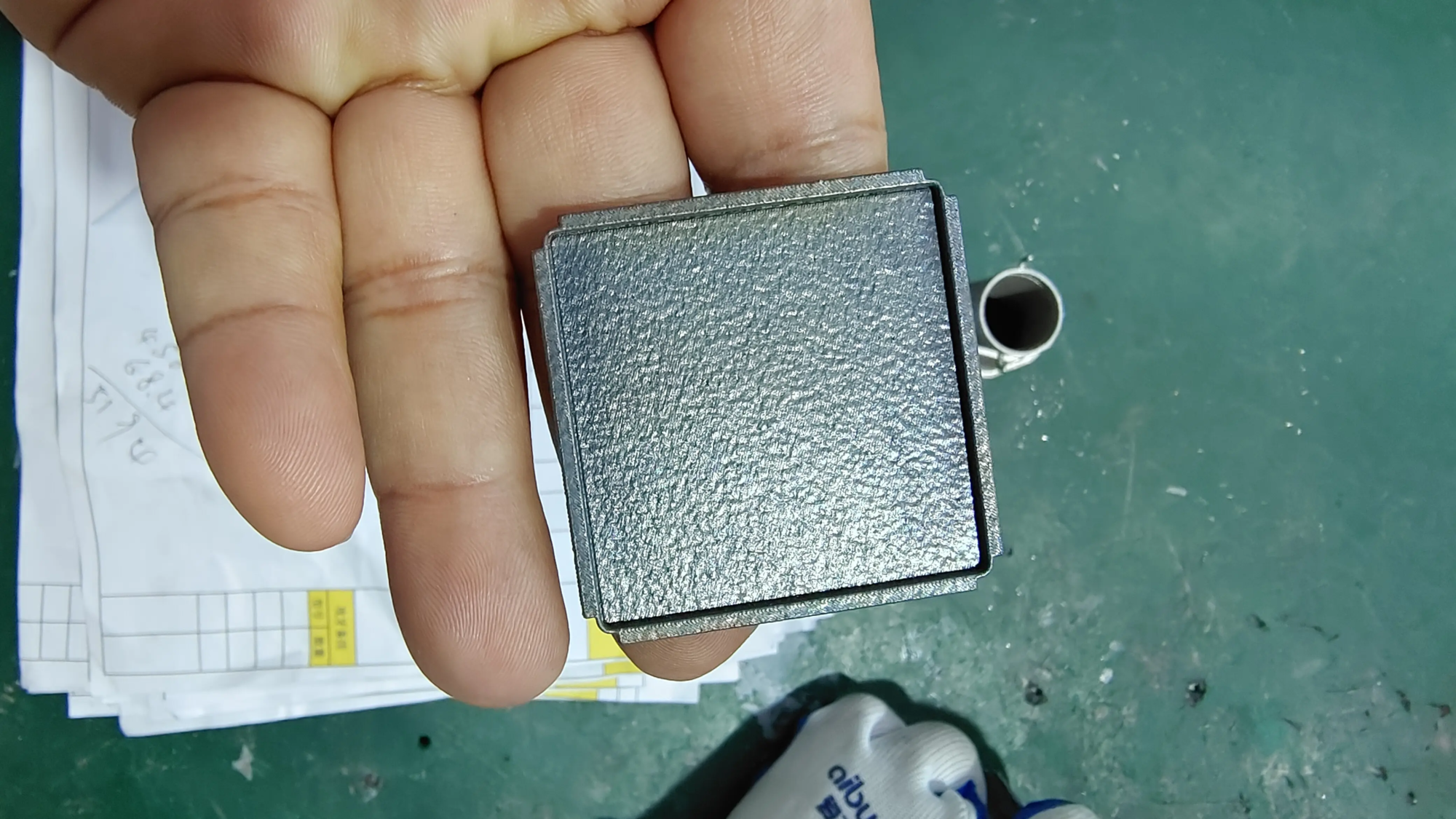
- Surface finish: The surface of printed parts is rougher than CNC machined parts; polishing/machining is often required.
- Cost of scale: For very simple parts and high volumes, the unit cost may not yet be competitive with large-scale injection molding or high-volume CNC.
- Process knowledge: Optimizing strength parameters (orientation, support, heat treatment) and avoiding defects requires deep expertise. Working with experts like GreatLight can reduce this risk.
- Powder cost: Metal powders are more expensive than bulk materials.
-
Q: What metals are usually printed on for mechanical parts?
one: Best options include:- Stainless steel: 316L (excellent corrosion resistance), 17-4PH (high strength, precipitation hardening).
- Titanium alloy: Ti6Al4V (best strength to weight ratio, biocompatibility).
- Aluminum alloy: AlSi10Mg, AlSi7Mg (light weight, good thermal properties).
- Nickel superalloy: Inconel 718 and 625 (extreme temperature/corrosion resistant).
- Tool steel: Maraging steel (ultra high strength).
GreatLight offers these standard materials and can advise on suitability and processing of custom materials.
-
Question: Giant light "one stop shop" Does post-processing help?
one: Consider sequential steps: Removal of fragile support structures can start stress relief early; HIPing requires chamber cycling for maximum consolidation; CNC machining requires dimensionally stable materials; surface preparation requires cleanliness. GreatLight combines powder removal, support removal, heat treatment (stress relief, aging, HIP), precision machining, surface preparation (sandblasting, polishing, plating/painting) and detailed QC inspection in one place. This ensures seamless coordination, faster turnaround, optimized quality control, and eliminates supplier management headaches. - Q: Is 3D printing cost-effective for end-use production parts or just for prototyping?
one: Definitely suitable for production! While prototyping is the initial driver, the aerospace, medical, automotive and energy industries are increasingly using additive manufacturing to produce certified series production parts when complexity, customization, weight reduction or performance benefits outweigh traditional costs. The economics continue to improve as suppliers like GreatLight advance in machines, materials, build speeds and optimized workflows. Explore rapid tipping points in applications.