Discover Planetarium in the Studio: A Comprehensive Guide to 3D Printing Orreries
There’s something undeniably fascinating about mechanical models of our solar system. This complex device, called an orrery, elegantly illustrates the orbital dance of the planets around the sun. Traditional orreries were crafted by master watchmakers, but modern 3D printing technology has democratized this art, allowing enthusiasts to create personalized wonders of the universe at home. Whether you’re an educator, hobbyist, or engineer, this guide will walk you through designing, printing, assembling, and perfecting your own 3D printed orrery—including when and why metal components can elevate your build.
Why Choose 3D Printed Orrery?
In addition to their aesthetic appeal, orreries are powerful educational tools. They visualize gravity, orbital mechanics, and scale in a tangible way that no textbook can match. 3D printing offers unprecedented flexibility: design custom planetary arrangements, experiment with gear systems, or recreate historical models with museum-quality accuracy – all without prohibitive costs.
Part 1: Designing your orrery – where precision meets creativity
Design is the cornerstone of a functional orrery. Key considerations:
- software: Open source CAD tools like Fusion 360, FreeCAD or TinkerCAD are great for beginners. For planetary mechanics, plug-ins such as Kepler Orrery Designer can automatically calculate gear ratios.
- Gear ratios and tolerances: Accuracy is non-negotiable. Simulating realistic orbital periods (for example, Mercury orbits 4.15 times per Earth year) requires precise gear reduction. Material shrinkage and printer tolerances (±0.1–0.2mm) are considered in the design.
- Scalability and complexity: Start simple (Sun-Earth-Moon) first and then upgrade to multi-planetary systems. Larger designs require a stable frame and bearings that minimize friction.
Prototyping Tips: Before printing large parts, first print a small test gear to verify mesh smoothness.
Part 2: Material Selection – Plastic, Metal and Hybrid Solutions
Material selection affects durability, aesthetics and functionality:
- Polylactic acid/PETG: Affordable and easy to print, perfect for planetary bodies and structural bases.
- Nylon(PA11/12): Provides flexibility and impact resistance to precision gears.
- metal parts: Highly stressed components (center shafts, high-speed gears) benefit from the strength and thermal stability of metal. Aluminum alloy reduces weight, while stainless steel prevents deformation under torque.
When to choose metal:
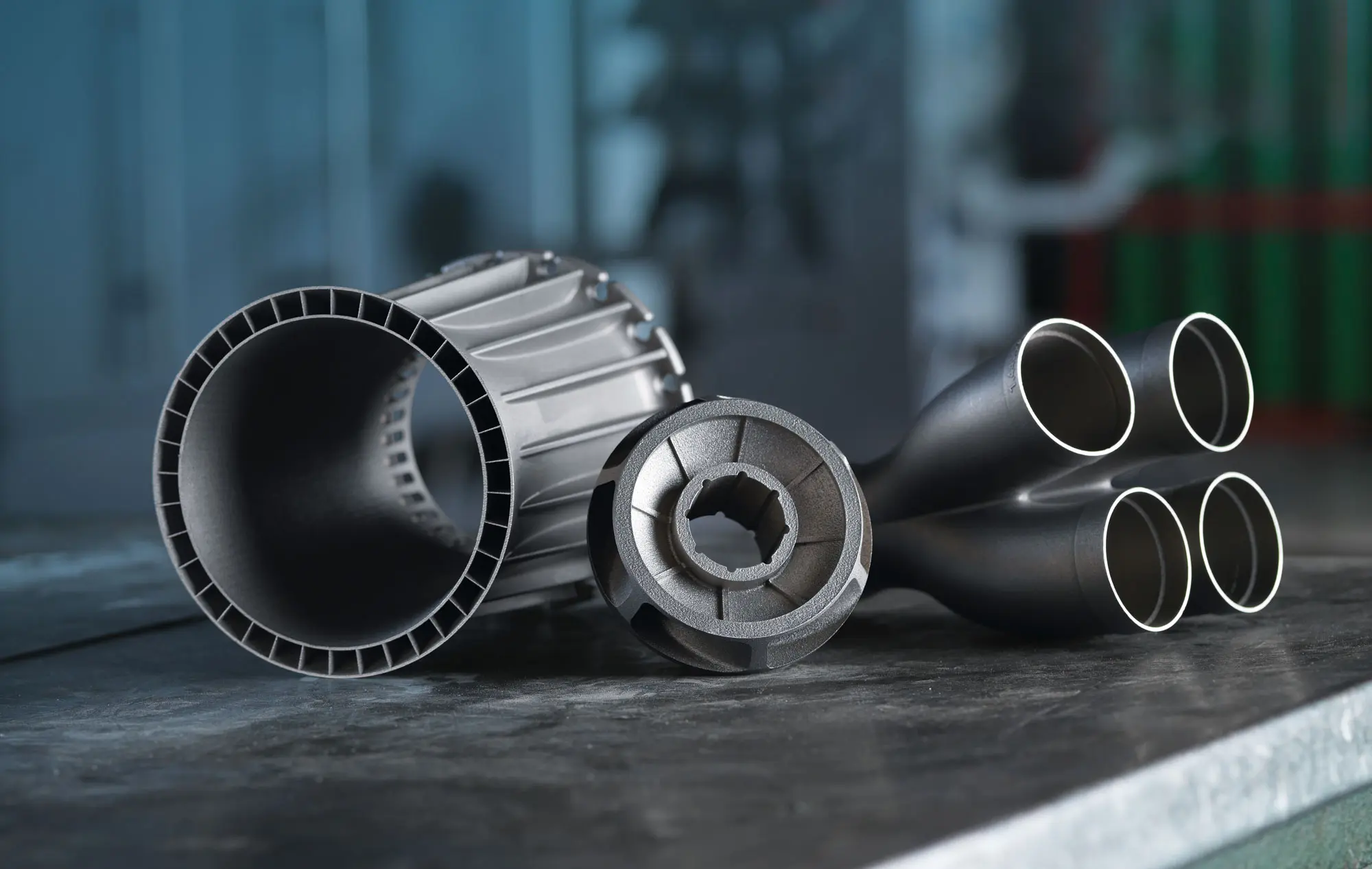
For complex, long-running mechanical installations or public displays, metal parts are far more resistant to wear than plastic parts. Brands like GreatLight focus on SLM (Selective Laser Melting) Metal 3D printing, using materials like titanium or tool steel, creates gears with micron-level precision, which is critical for ultra-smooth, maintenance-free operation.
Part 3: Printing Technology for Perfect Orbits
- direction and support: Avoid bracing on gear teeth – print vertically or at an angle to maximize surface quality.
- Floor height: Use a layer of ≤0.15mm to obtain a smoother meshing gear surface.
- speed and cooling: Print slowly (<40mm/s) and actively cool to prevent warping.
challenge: Twisted planetary arms can cause orbits to become misaligned. Heated build plates and enclosed chambers are critical.
Part 4: Post-Processing – From Print to Cosmic Elegance
The original print requires refinement:
- Remove support:Clamp/grind the support carefully to avoid damaging the tooth or shaft.
- Sanding and polishing: Use progressive grit (220–2000) to smooth PLA before polishing. Metal parts benefit from vibratory tumbling or electrochemical polishing, which results in a near-mirror finish.
- Painting and details: Planets use acrylic; add engraved labels via laser marking.
For professionals, Hong Laite provides one-stop CNC machining and finishing services – Sand blasted, anodized or nickel plated – ensuring a museum-quality aesthetic of metal parts.
Part 5: Assembly and Calibration – Precise Alignment
Assembly requires patience:
- Start by dry-fitting the parts and checking for friction points.
- Lightly lubricate the gear/shaft with silicone grease.
- Calibration: Test rotation based on astronomical data; adjust gear mesh as needed.
Professional restoration: If the gear seizes, apply thin PTFE lubricant or minimally ream the shaft hole to ensure clearance.
Part 6: Benefits Beyond Building
Why spend time researching a 3D printed orrery?
- educate:Teaching STEM principles through hands-on visualization.
- Customized: Design unique systems (alien planets, sci-fi models).
- sustainable development: Repair/modify parts indefinitely – never become obsolete.
- rapid prototyping: Iterate designs in hours/days compared to traditional weeks.
Conclusion: Your Universe is Perfect
Building a 3D printed orrery combines art, engineering, and astronomy into one rewarding project. While desktop printers work well with plastics, High strength metal parts Provides durability and precision for public or long-term installations.
At GreatLight, we support innovators through: Industrial-grade SLM metal 3D printing and precision machining. Our team solves complex prototyping challenges with a full suite of finishing services—from aerospace-grade gear systems to heat-resistant planetary carriers. Materials can be customized; delivery time is fast; expertise guaranteed. Control every detail, down to the micron.
Customize your cosmic vision now: Explore rapid prototyping solutions from sandbox to star at GreatLight – where ideas revolve around reality.
FAQ: Your 3D printed orrery questions answered
Q1: Can beginners build a functional orrery?
Absolutely! Start with a simplified kit or 2-speed design. Before attempting advanced CAD work, use the pre-designed models in Thingiverse/Cults3D.
Q2: Which planets can I actually include?
Scale limitations limit the usefulness of desktop models beyond Mars/Jupiter. Satellites can be implemented as subcomponents (e.g. Earth-Moon). For complete solar systems, drastically reduce the size or prioritize selected planets.
Q3: Will plastic gears wear out quickly?
PLA/PETG performs well under light use (e.g., classroom demonstrations). For continuous operation (museums, exhibitions), replace highly stressed gears with metal. GreatLight offers titanium/steel alternatives with heat-treated ruggedness.
Q4: How to calculate the accurate gear ratio?
The ratio is derived from the orbital period relative to the Earth (e.g. Venus orbit: Earth orbit ≈ 1:0.615). Free tools like LibreJS Orrery Designer automatically calculate the number of teeth.
Q5: Can I motorize my orrery?
Yes! Micro stepper motors (e.g., NEMA 8) operate quietly. Program the Arduino controller to adjust the speed. Avoid overly large plastic gears—it’s better to use metal parts.
Question 6: Why consider using metal 3D printing instead of plastic for critical components?
SLM metal printing offers unparalleled fatigue resistance, thermal stability and dimensional accuracy under stress. For axles, planet carriers or micro-gears, metal ensures decades of smooth operation.
Q7: Does GreatLight print the entire orrery?
We focus on Metal parts requiring high precision or durability. For hybrid projects, we print/machine metal gears, shafts, or frames, while recommending tabletop plastic for less stressed parts.
Ignite your prototyping journey: Request a quote for custom metal parts. Experience SLM technology tailored to your cosmic or terrestrial ambitions. ✨