Conquer the clutter: Design your ultimate workspace with a 3D printed toolbox organizer
The eternal struggle: You need a specific wrench, socket or screwdriver buried in the abyss of your tool box. As time passes, frustration mounts and productivity plummets. Traditional foam inserts and generic plastic trays often fall short, resulting in oddly shaped tools that rattle around or lose access to important items. Enter the game changer: Customized 3D printed toolbox storage pieces. It’s not just decluttering; It’s about building an ultra-efficient, personalized storage system and targeting your workflow and your Unique toolset.
Why 3D printing dominates tool organization:
- Unparalleled customization: This is the crowning glory of 3D printing. Your organizer won’t be forced into a universal slot. The cavity is designed to perfectly accommodate the contours of each Allen wrench, ratchet, pliers or specialty tool. Perfect for odd angles, handle configurations or delicate parts. Organize by project, frequency of use, or any system that makes sense you.
- Maximize space utilization: Make the most of every precious inch of your toolbox drawer. The 3D printed organizers allow for nesting, stacking and complex geometries, fitting snugly into drawer walls and awkward corners, minimizing wasted space and keeping tools locked securely in place.
- Unparalleled durability and longevity: Forget flimsy partitions that buckle under the weight. These organizers are printed from engineering-grade metal or high-strength polymer for durability. They are resistant to shock, vibration, oil and chemicals commonly found in workshops.
- Metal Miracles: For ultimate durability, metal 3D printing (such as Selective Laser Melting – SLM) provides an unparalleled strength-to-weight ratio. Aluminum storage boxes are lightweight yet strong and corrosion-resistant. Stainless steel options offer superior corrosion resistance and weight for heavy-duty tools. They can withstand extreme conditions effortlessly.
- Strong polymer: For many applications, advanced plastics such as nylon (PA), PETG, ASA or reinforced composites offer excellent impact resistance, chemical resilience and durability at lower cost and weight, making them ideal for organizing screwdrivers, small wrenches or non-metallic tools.
- Simplified integration: Design compartments for consumables and tools—bit slots, screw/nut/washer holders—to create a truly integrated kit. Integrate labels, pads for cushioning precision tools or holders for drills/drivers directly into the organizer structure.
- Evolution friendly: The toolset changes. With CAD design, updating the organizer is very simple. Need to add a new wrench? Simply modify the model and print the modified insert or extension module. As your collection continues to grow, your organization will future-proof.
Turn your vision into reality: a design and production journey
- The blueprint is brilliant: It starts digitally. Use CAD software (such as Fusion 360, SolidWorks, FreeCAD) to carefully model your storage box:
- Precision measurement: Accurately measure each tool and drawer/interior dimensions. The micrometer is your friend!
- Modularity: Consider designing separate modules for different tool types. This simplifies printing, cleaning and future modifications.
- Features: Includes finger lifts, textured grips, chamfers for easy insertion/removal, and channels for potential drawer lining materials.
- Get expertise: Not familiar with CAD? Reputable prototyping partners like GreatLight can work together to transform your requirements and sketches into functional CAD designs.
- Material matters: Choosing the best materials is crucial:
- SLM Aluminum: Best for lightweight, strong, durable organizers that are resistant to shop fluids and abrasion. Ideal for heavy-duty or professional setups.
- SLM stainless steel: Highest corrosion resistance and strength for use in harsh environments (marine, chemical exposure) or tools requiring maximum safety.
- Engineering plastics: Offers superior toughness and chemical resistance at a competitive price. Ideal for lighter loads, impact protection and faster turnaround.
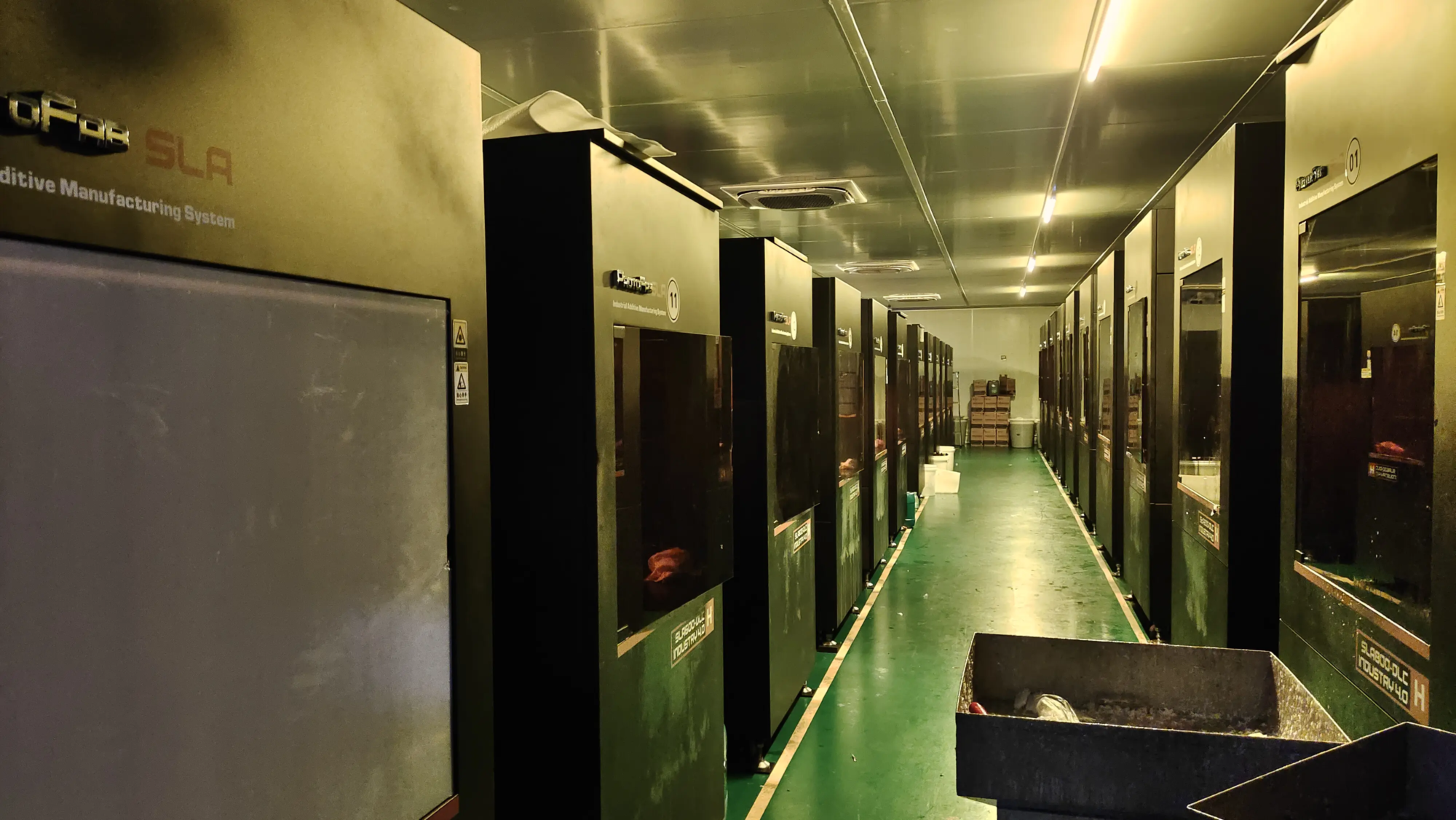
- Precision printing: Advanced platforms utilize industrial-grade machinery. SLM printers build metal organizers layer by layer, using lasers to fuse fine metal powders to create dense, strong parts. The plastic printer deposits material precisely based on the CAD model.
- Finishing touches: Post-processing improves the results:
- Processing: Ultra-tight tolerances are achieved through CNC machining on critical surfaces, such as perfectly flat bases.
- Surface treatment: The aluminum is anodized for color coding and enhanced wear resistance (GreatLight is available in Types II and III). Beadblasted/sandblasted for a uniform texture. Electropolished stainless steel for ultimate smoothness and corrosion passivation.
The GreatLight Advantage: Your Prototyping Partner
Transforming innovative organizer concepts into durable, functional reality requires expertise and advanced machinery. GreatLight emerges as premier rapid prototyping partner For professionals, engineers, and enthusiasts looking for a top-quality toolbox solution:
- Groundbreaking metal SLM expertise: Utilizing cutting-edge selective laser melting technology to create strong, lightweight aluminum and stainless steel storage boxes with complex geometries not possible with traditional methods.
- End-to-end service: From collaborative design assistance and precise CAD modeling to high-precision printing and comprehensive post-processing (machining, sandblasting, anodizing, polishing), GreatLight handles it all seamlessly.
- Material mastery: Get a wide range of specialty metal powders and engineering polymers tailored for demanding shop environments.
- Iterate quickly: Use functional prototypes to quickly test design concepts (often within days), make improvements based on feedback, and efficiently move to fully optimized production.
- Commitment to accuracy: Advanced metrology technology ensures your organizer components meet strict dimensional accuracy and performance specifications.
Evidence in the drawer:
Imagine an automotive technician replacing a generic pallet with a custom SLM-printed metal organizer. Their most commonly used sockets and ratchets have custom ergonomic sockets. The combination wrench is positioned vertically for instant visual identification. Professional pullers and gauges are securely placed in the corrugated nesting. The drawer closes smoothly. Finding the right tool right away saves countless hours every year, reduces frustration, protects valuable tools from damage, and increases professional efficiency.
Conclusion: From Chaos to Command
A disorganized toolbox is the enemy of efficiency. 3D printed organizers offer a revolutionary solution, transforming cluttered drawers into carefully organized command centers. The level of customization, space optimization and professional-grade durability achievable (especially for metal SLM printing) is unmatched by off-the-shelf solutions. By working with experienced rapid prototyping manufacturers such as huge lightleveraging their advanced SLM capabilities, materials knowledge, and comprehensive post-processing services, you can unlock the potential to create the ultimate tool organization system customized to your specific needs. Stop looking; start organizing. Transform your workspace and restore productivity with a custom 3D printed toolbox organizer.
FAQ: Answers to your 3D Printing Toolbox Organizer questions
-
Is metal 3D printing strong enough for a tool box organizer?
Absolutely. SLM printing produces almost completely dense metal parts. Aluminum organizers have an excellent strength-to-weight ratio that rivals or exceeds cast or machined aluminum parts. Stainless steel storage boxes are very strong and corrosion-resistant.
-
How do I design a tool organizer if I’m not an engineer?
The option exists! CAD software for beginners has a learning curve, but there are ample tutorials. Or, clearly outline your design concept and work with a prototyping company like GreatLight. Their engineering team focuses on turning ideas into manufacturable CAD models optimized for 3D printing.
-
Plastic vs. Metal: Which is Better?
- Metal: Best for ultimate durability, corrosion resistance (especially stainless steel), high machining accuracy, aesthetics/professionalism, and long-term resiliency for heavy tools/extreme conditions.
- plastic: Offers excellent impact resistance, cost-effectiveness, faster prototyping, lighter organizer, protects delicate tool finishes and organizes lighter tool sets. Great place to start.
-
How much does the procedure cost?
Fees vary based on:
- Organizer size and complexity: More materials and complex designs increase costs.
- Material selection: Metals (especially stainless steel) cost more than high-performance plastics.
- Quantity: Economies of scale apply.
- Post-processing: Post-processing services add cost.
Reputable companies like GreatLight will provide detailed quotes based on your CAD model and specifications.
-
How long does it take to get a custom storage box?
For SLM metal printing, initial prototypes typically take anywhere from a few days to a week or two, depending on complexity and queues. Complete production orders vary based on size and quantity. Plastic prototyping is usually faster. Shipping adds to shipping time. Discuss the timeline ahead of time.
-
If I add a new tool, can I modify the organizer?
Yes, this is a big advantage! Having the original CAD files means you (or your prototyping partner) can modify the design relatively easily to incorporate new tools, expand compartments, or add new modules.
-
Can GreatLight print notepads from my CAD files?
really. GreatLight specializes in manufacturing based on CAD files provided by customers. They review designs for manufacturability and make optimization recommendations when needed. If you lack CAD, work with them for design services.
-
Is there a limit to the size of the organizer?
SLM printers have build chamber dimensions (for example, common sizes such as 250x250x300 mm or larger). Very large organizers may require smaller interlocking modules strategically designed to be printed individually.
- Are 3D printed storage boxes suitable for mobile/travel tool boxes?
Excellent application! Custom organizers prevent tools from shifting and knocking during transportation, minimizing damage. Metal organizers add sturdiness, while printed plastic absorbs vibration.
Ready to eliminate toolbox clutter and create flawless organization? Explore the possibilities and work with experts like GreatLight to bring your ultimate custom storage box vision to life.