Revealing the anatomy of 3D printers: Precise engineering from frame to nozzle
3D printing has revolutionized prototyping and manufacturing, transforming digital models into a tangible layer of objects. Whether you are an engineer, a hobbyist or an industry professional, understand the insights that the internal operation of a 3D printer can unlock its features and limitations. This is a detailed breakdown of the anatomy of the 3D printer, integrating technical depth with practical insights.
1. Structural Framework: Stability starts here
this frame Form the backbone of any 3D printer, maintaining stiffness during high-speed movement. Common designs include:
- Open structure (For example, Prusa I3): Lightweight and easy to use.
- Enclosed cubic frame (e.g. Ultimaker): Minimizes temperature fluctuations and noise.
- Core system: Use synchronous belts for faster, no tremor movement.
Why it matters: Sturdy frame blocks "ring" Artifacts and ensure dimensional accuracy – key to functional prototypes.
2. Motion control system: precise movement
The system converts digital instructions into physical motion in the following ways.
- Stepper motor: Control the X/Y/Z axis with micro-step accuracy.
- Linear guide/rod: Guided motion smoothly (the durability of linear guide rails exceeds that of rods).
- Belt (GT2 timing belt): Transfer the motor rotation to the carriage, the tension needs to be adjusted to avoid skipping the layer.
- Lead screws/Z axis rod: Vertically lift the printing bed or extruder.
hint: Lubricate the tracks and belts regularly to reduce wear.
3. Hot end: Where plastic meets the accuracy
this "Heart" Material extrusion printing, including:
- nozzle: Brass (standard) or hardened steel (abrasive). Diameter (typical 0.4mm) affects details and speed.
- Heater block and ink cartridge: Heat the nozzle to 300°C.
- Thermistor: Monitor the temperature to prevent overheating.
- Hot break: Isolate the frozen area to avoid blockage.
Innovation Alert: Unlike the PTFE lining version, the all-metal hot end (such as V6) treats high-temperature materials such as nylon.
4. Cold junction and extruder: reliable feeding wire
Responsible for pushing the filament into the hot end:
- Direct drive: Installed on the printhead for quick retraction; ideal for flexible wire.
- Bowden: Reduce the weight of the print head (faster prints), but struggle with soft materials.
- Double gear extruder (For example, Bondtech): Prevents thin filaments from slipping through synchronous gears.
Material Insights: Soft TPUs require minimal gear tension; rigid PETs require higher strength.
5. Printing bed: The first floor is perfect
Horizontal beds ensure adhesion and dimensional integrity:
- Heating surface: Keep 50–110°C to prevent warping.
- Surface options:
- PEI sheets: Excellent PLA grip, ABS.
- Glass panel: Ultra-smooth finish (adhesive required).
- Automatic bed (ABL): Probe (inductance, capacitance or BLTOUCH) compensates for surface unevenness.
6. Electronics and firmware: "brain" operate
- Motherboard: Hosted microprocessors (such as ARM cortex) and motor drivers (such as TMC2209 for silent motion).
- power supply: Convert AC to DC; 24V system reduces current for safer and more efficient heating.
- firmware: Marlin or Klipper converts G code to motion, with features like input shapes to reduce vibration.
Professionals: Klipper enables advanced sports schooling for industrial-grade printing.
7. Auxiliary components: Improve usability
- shell: It is essential for ABS/PA printing by capturing heat and reducing warpage.
- Filigree jumper sensor: Pause printing when the spool is exhausted.
- Touch screen interface: Simplify control of multi-step workflow.
- camera: Monitor is integrated with remote printing.
8. Professional system: resin and metal printing
FDM printers lead the prototype, and Industrial additive manufacturing lever:
- Stereo-Lithography (SLA): UV laser curing liquid resin layer by layer.
- Selective laser melting (SLM): High power laser fuse metal powder (e.g., titanium, aluminum) for aerospace/medical applications.
Conclusion: Engineering will encounter innovation
The anatomy of 3D printers reveals the complex dance of machinery, electronics and materials science. Each component (from the frame guided by the resonant frequency to the nozzle of the low light) affects print quality, speed, and reliability. For enterprises seeking prototype accuracy, the use of industrial-grade technology is not negotiable.
Great As a leading rapid prototyping manufacturer, a leading prototype manufacturer operating in the cutting-edge SLM 3D Printer Ability to directly sinter the metal laser. In addition to printing, we also offer end-to-end solutions:
- One-stop post-processing: Heat treatment, CNC finish, polishing and coating.
- Customized material: Stainless steel, titanium, Inconel® and polymer composites.
- Sharp turn: Functional prototypes delivered in days rather than weeks.
We combine German-grade equipment with cost-effective manufacturing to serve the automotive, aerospace and medical fields. When every micron is important, trust Greatlime to transform your field of vision into flawless ready components.
Request an instant quote · Explore material selection
FAQ: Mystery 3D Printer Anatomy
Question 1: How to improve printing quality with heating beds?
A: It ensures that the first layer adheres evenly and prevents warping by maintaining the optimal material temperature.
Q2: Direct Drive and Bowden: Which is better?
Answer: The direct drive has the performance of flexible wire; Bowden is suitable for high-speed PLA/ABS printing. Match the extruder with material requirements.
Q3: Can Greatlight print complex metal parts?
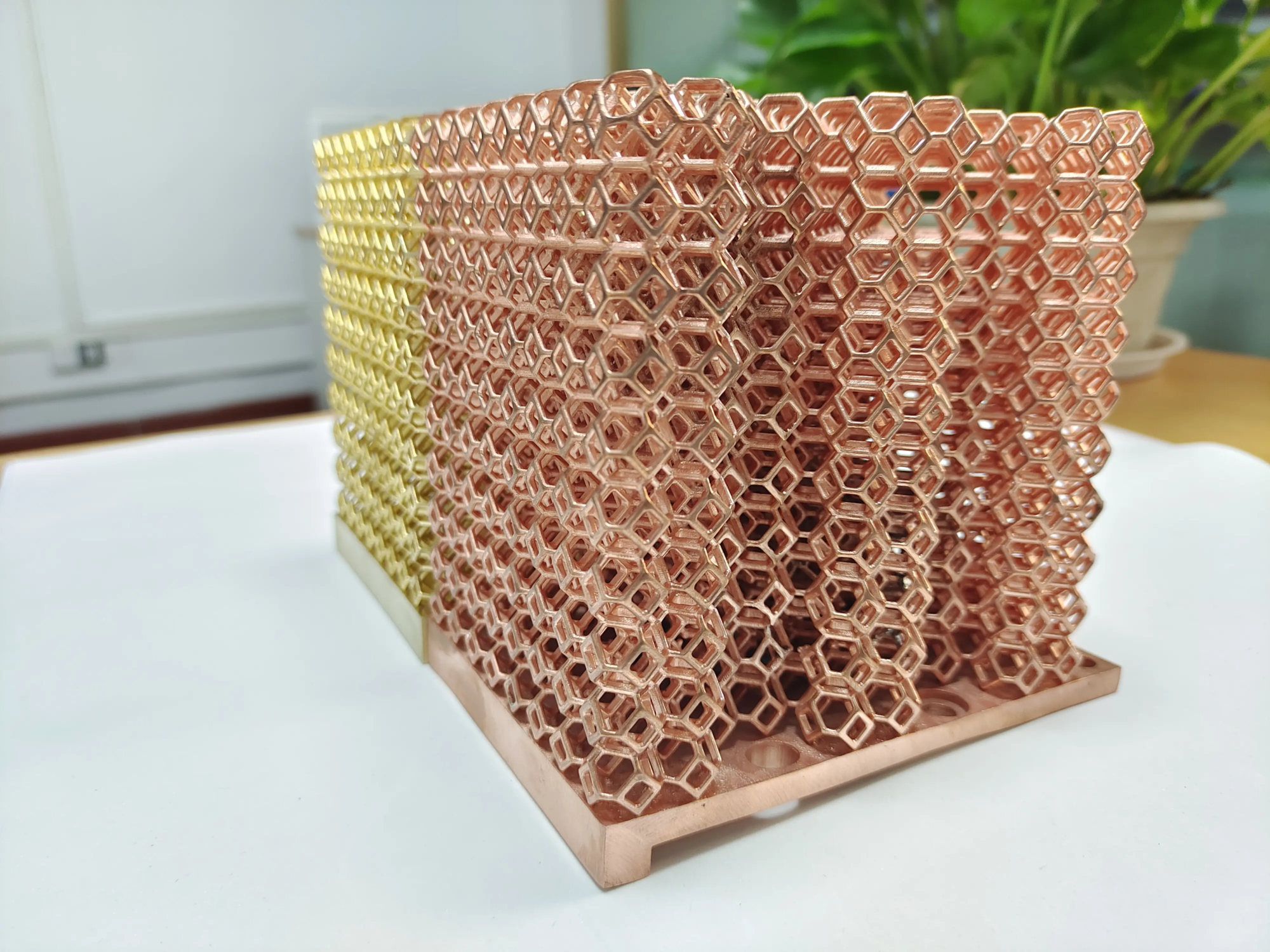
A: Yes. Our SLM printers can process complex geometries (e.g., lattice structures, internal channels) with a tolerance of ±0.1mm.
Question 4: What post-processing options do you provide?
A: Sanding, powder coating, nitration, EDM and precision processing – Ensure that the prototype meets the end-use requirements.
Q5: Why are shells crucial for high-end materials?
A: It blocks drafts, stabilizes the temperature and contains smoke, which is essential for erectile swelling materials that are prone to bending, such as ABS or particulate metals.
Question 6: How does Greatlight ensure partial accuracy?
A: We combine industry-leading SLM printers with in-process monitoring, CMM inspection and ISO 9001 quality control.
Question 7: Which materials cannot be printed in 3D?
A: Most thermosetting resins (epoxy, silicon) due to chemical curing, but we support polymers, alloys, ceramics and composites.
Transform concepts into reality with high-precision 3D printing –Contact Greglight now For tailor-made prototypes supported by engineering excellence.