Unleashing Hidden Potential: How Annealing Enhances the Strength of 3D Prints
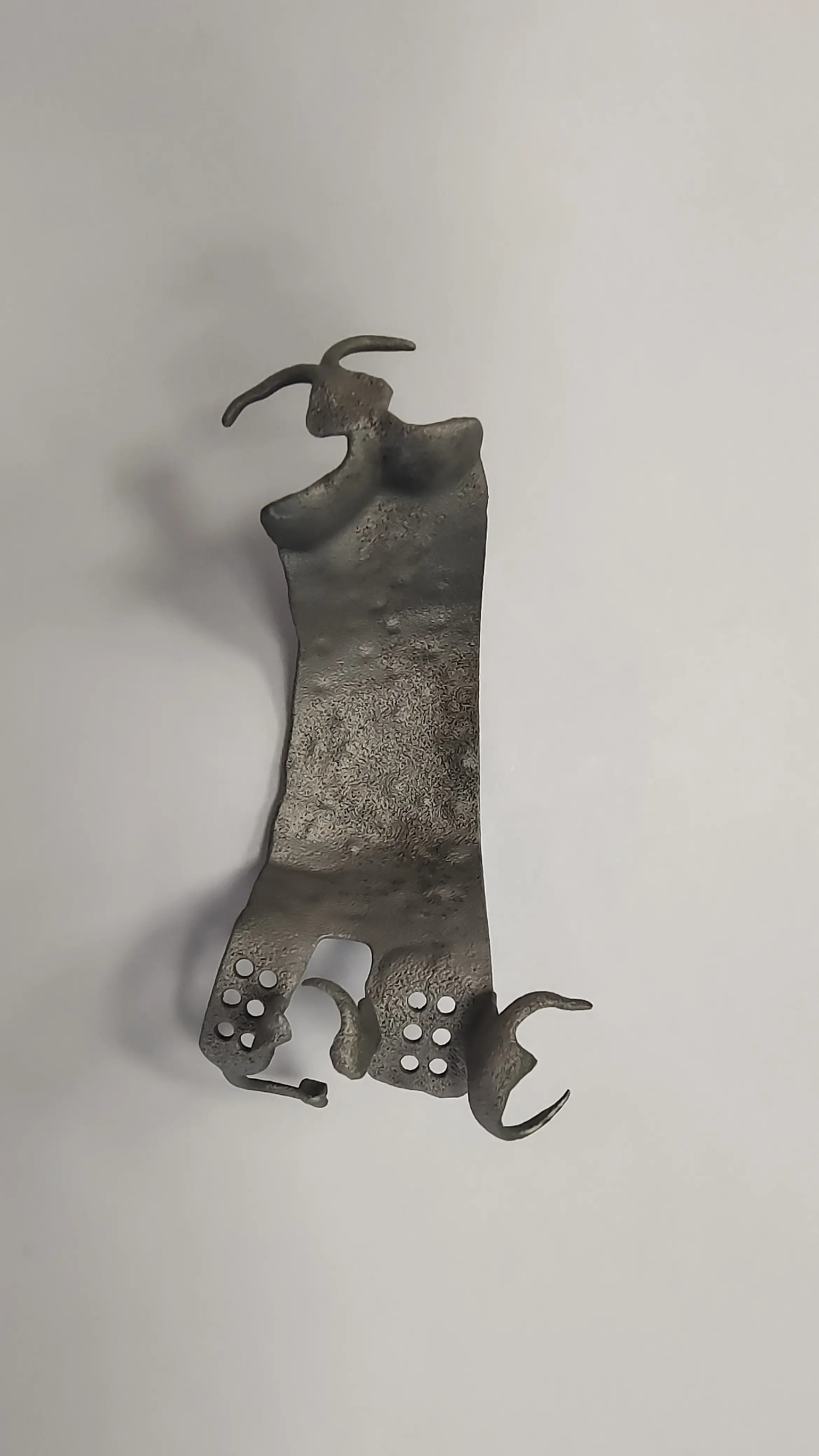
Have you ever printed a part like this? It seems Perfect, only to break or deform under pressure? you are not alone. While FDM 3D printing offers incredible freedom in design and rapid prototyping, the inherent layer-by-layer process often results in printed parts with internal stresses and weaker structures compared to traditionally molded parts. But what if there was a relatively simple post-processing step that could significantly improve the mechanical strength, thermal stability, and overall durability of your prints? Enter annealing.
Don’t think of annealing as a hack, but as tapping into the material’s inherent potential. Most extruded plastics inherently have molecular chains that can align and pack more densely. Annealing creates the controlled environment needed for this recombination to occur, bringing your print closer to the material manufacturer’s ideal spec sheet.
The Science Behind Strength Improvements
So, how do you put plastic in the oven to make it stronger? it’s all about Crystal structure and stress relief:
-
Relieve stress: As molten plastic filament is extruded layer by layer, it cools rapidly and unevenly. This uneven contraction creates locking internal stress. These stresses act like tiny cracks waiting to propagate, making the print brittle and prone to deformation under load or heat. Annealing gently heats the part above the glass transition temperature (Tg) but below the melting point (Tm). At these high temperatures, the polymer chains acquire sufficient mobility to drastically relax these internal stresses. Think of it like unwinding a tightly coiled spring.
- Increase crystallinity: For semi-crystalline thermoplastics such as nylon/polyamide or PETG, annealing is even more transformative. At annealing temperatures, amorphous regions within the polymer have the opportunity to reorganize into an ordered, closely packed crystalline structure. Crystal domains are significantly stronger, harder and more resistant to chemical attack than the amorphous region. By controlling heating and cooling to increase the overall crystallinity percentage, annealed parts experience significant improvements in:
- Tensile strength: The ability to resist pulling force.
- Bending Strength: The ability to resist bending forces.
- Heat Resistance (Heat Deformation Temperature – HDT): The temperature at which a material softens under load often increases dramatically.
- Creep Resistance: Reduces the tendency to slowly deform under long-term stress.
- Chemical resistance.
Not all plastics are equal: Materials suitable for annealing
The effects of annealing vary greatly depending on the polymer. Knowing your material is key:
- People’s Liberation Army: Although not semi-crystalline in nature like nylon and PLA will If annealed correctly, it will crystallize. Moderate increase in strength (10-25%) A lot of HDT jumps (meaning from ~60°C to 100°C+) are possible, allowing PLA parts to be used in warmer environments. However: Dimensional accuracy of PLA is most affected; precise scaling is critical. Temperature: ~80-110°C.
- ABS: Mainly amorphous, but annealed provides excellent stress relief. Strength gains are modest, but increased toughness (impact resistance) and reduced likelihood of warping are significant benefits. Temperature: ~95-110°C.
- Nylon (PA6, PA12): this star performer for annealing. Semi-crystalline nature means maximum yield. Expected increase in intensity 30-50% or moreHDT is greatly increased (commonly >150°C), chemical resistance is significantly improved, and moisture absorption tendency is reduced. Temperature: ~80-160°C (largely dependent on specific grade).
- Polyethylene glycol: A semi-crystalline material that responds well. Similar to nylon in terms of tensile/flexural strength and HDT, but perhaps slightly less pronounced. Compared with PLA, dimensional instability is less prone to occur during annealing. Temperature: ~70-100°C.
- PC (polycarbonate): Annealing is often performed to increase crystallinity and substantially increase HDT. Due to its high Tg/Tm and sensitivity, very controlled conditions are required. Temperature: ~100-140°C.
- Not suitable for: Avoid annealing amorphous plastics that are expected to remain clear (such as standard PLA or clear PETG*) as crystallization can cause opacity and potential brittleness. Flexible filaments (TPU/TPE) rarely provide meaningful benefits and often degrade.
Annealing Process: A Step-by-Step Guide
Annealing is not rocket science, but accuracy is important. Rushing or guessing at parameters can ruin a part.
-
Part design and printing considerations:
- geometry: Solid parts anneal more evenly. Hollow structures or thin walls may collapse or deform excessively. Avoid sharp corners; rounded corners better distribute stress during the annealing process.
- Filling and walls: Higher filling and thicker walls help resist deformation. For structural parts, strongly consider printing at least 3-4 perimeters and >40% infill before annealing.
- direction: Prints laid flat anneal more evenly. Consider how internal stresses arise due to print orientation.
- scale: Designers often enlarge critical dimensions in the vertical direction (Z-axis) by 2-5% to predict Z-axis shrinkage – experimentation is crucial!
-
Prepare:
- Sand and clean: Remove surface defects to prevent stress concentrations. Clean parts thoroughly.
- Digital caliper: Essential for accurate measurement of pre/post annealing dimensions.
- support: Choose how to support the part:
- Sand bed: Fine dry sand is loosely packed around the part to provide excellent, even conductive heating and prevent sagging. The most reliable method.
- Ceramic wool: If packed loosely, it has similar advantages to sand.
- flat: Avoid unless your part is very flat and rigid; the risk of slumping is high.
- Air: Only recommended for very strong shapes; most dangerous method.
- tool: Metal tray/aluminum foil tray for holding sand bed. Optional non-stick tray liners.
-
Annealing cycle:
- temperature: If available, consult the material data sheet. Start being conservative. Use the lower limit of the previously mentioned range (e.g., PLA: 85°C initially). Accuracy is important—an oven thermometer is valuable.
- time: A lot depends on the thickness and quality of the part. Rule of thumb: Approximately 30-60 minutes per millimeter of wall thickness for thick sections. A typical tabletop session usually takes 15-60 minutes total. Longer is not necessarily better – over-annealing can degrade the properties of the polymer.
- Heating and cooling: Place parts with sand supports cold Place in cold oven. Set oven temperature. Avoid rapid heating. Once the temperature is reached, start timing. After annealing, Turn off the oven and close the door. Let parts cool slowly and evenly Cooling within the furnace is critical to minimizing new stresses. This may take several hours. Resist the urge to peek!
- Check after annealing:
- Carefully remove the parts from the sand. Finally cool to room temperature.
- Measure key dimensions! Please note the shrinkage percentage (especially the Z axis) on future prints.
- Visually inspect for warping or deformation. Slight surface texture changes are common.
Tradeoffs: Dimensional Accuracy and Appearance
Annealing is not magic without consequences:
- Size changes: Due to recrystallization and residual stress relief, shrinkage is inevitable, mainly in the Z-axis (layer height direction). Changes in X/Y are usually small or even slightly increased. For precision functional parts, pre-printing often necessitates the design of very large geometries or scaled models. Dimensional tolerances often greater than ±1% are expected. Sand bed supports minimize warping period Annealed but does not prevent shrinkage.
- Surface finish: Parts may become slightly rough, "orange peel" texture. Shiny finishes often turn matte. Color may vary slightly, especially opacity. If appearance is more important than strength, annealing may not be appropriate.
- Mechanical Performance Tradeoffs: Increased stiffness often results in decreased impact resistance/toughness Some original material. However, the overall strength-to-weight ratio is usually significantly improved.
Despite these changes, for parts where high strength, stiffness and temperature resistance are critical (functional gears, housings near heat sources, automotive parts, work fixtures) the trade-offs tend to be overwhelmingly positive.
Conclusion: Is Annealing Right for You?
Annealing if:
- You demand the highest possible strength, stiffness and heat resistance from your FDM prints.
- You work primarily with nylon, PETG, ABS, or are willing to optimize PLA annealing.
- Your parts can tolerate dimensional changes (or you can compensate for them in your design).
- Appearance gives way to function.
Forget about annealing if:
- Precise dimensional tolerances are absolutely critical.
- Surface finish is a top priority.
- You only print visual prototypes or decorative items.
At GreatLight, while our advanced SLM (Selective Laser Melting) metal 3D printing technology itself can produce high-strength, dense metal parts that often require controlled heat treatment for optimal performance, we recognize the critical role played by FDM. We know it’s important to unlock the full potential of plastic prototypes and functional parts. Whether you require complex plastic prototypes reinforced by annealing, complex metal parts manufactured using SLM and precise thermal post-processing such as stress relief or hot isostatic pressing, or comprehensive finishing services, our expertise can provide a solution.
Don’t settle for less than potential. Harness the power of annealing FDM parts to achieve unparalleled functional strength and thermoelasticity. For mission-critical metal prototypes requiring extreme precision and material integrity, explore GreatLight’s SLM capabilities and expert post-processing.
Frequently Asked Questions (FAQ) about Annealing 3D Printed Parts
Q: Is annealing the same as burning/melting my print?
Answer: No. Annealing occurs below the melting point (Tm). You carefully heat to a temperature above the glass transition temperature (Tg) but safely below the melting temperature. It softens the plastic enough to rearrange the molecules without liquefying it.
Q: How much stronger will annealing make my part?
A: Gain varies greatly based on materials and geometries. Expected:
- PLA: Tensile/flexural strength 10-25%, HDT (+40°C+) significantly improved.
- Nylon/PETG: Strength/stiffness is significantly improved by more than 30-50%, HDT is common >150°C.
- ABS: Moderate strength gain (~10-20%), better toughness/impact resistance.
Q: Why is my PLA part shrinking/warping so much?
Answer: PLA is prone to significant Z-axis shrinkage (2-5%+) during the crystallization process. Warping can be minimized by using a sand bed period Heating, but shrinkage itself is inherent. Scale the Z axis accordingly in the CAD software forward Print specialized annealed parts.
Q: Will annealing make the print brittle?
Answer: Excessive annealing or annealing at too high temperature will degrade the polymer and reduce toughness (impact resistance). This risk can be minimized by following conservative time/temperature guidelines and allowing the part to cool slowly. Semi-crystalline materials such as annealed nylon retain good toughness.
Q: Can I anneal resin (SLA/DLP/LCD) prints?
Answer: Generally not. UV resins cure by photopolymerization rather than melting of the thermoplastic. Depolymerization/degradation occurs at relatively low temperatures before any beneficial annealing effects occur. Heating only standard FDM thermoplastics.
Q: What is the best way to support parts during annealing?
one: loosely packed in dry sand (in a metal tray/aluminum foil pan) is the gold standard. It provides uniform heat conduction and physical support