

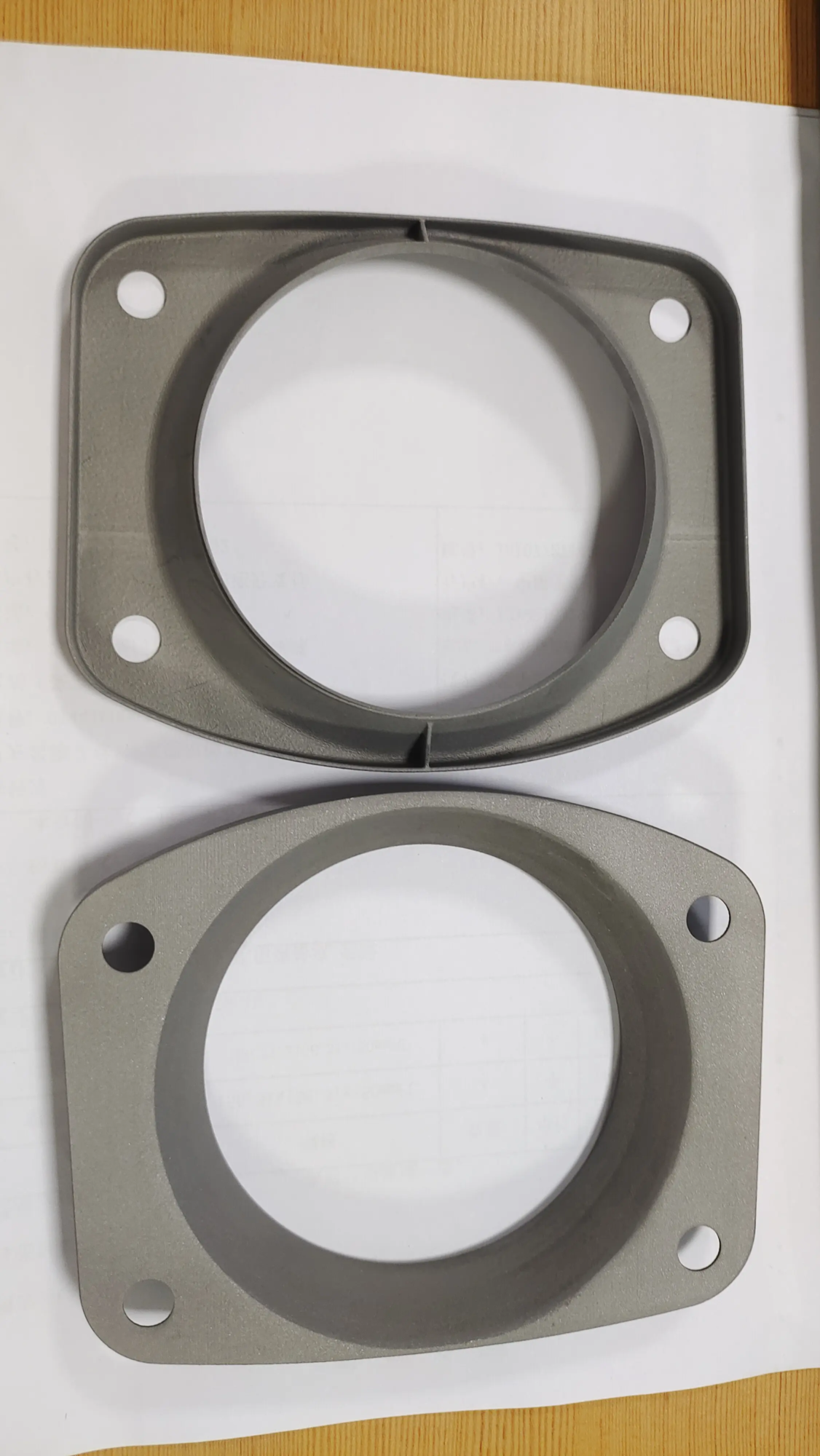
Aquila X2 review: The perfect stepping stone towards professional prototyping
The home † 3D printing market is flooded with affordable options like the Voxelab Aquila X2. This FDM printer promises to enter the maker world, but how well will it transition from hobbyist tinkering to legitimate prototyping potential? As professional rapid prototyping manufacturers, we put Aquila X2 through rigorous testing to reveal its true capabilities and limitations. This is our candid assessment.
Unboxing and first impressions
The Aquila X2 arrives carefully packaged. Assembly is easy – just 20-25 minutes – thanks to partially pre-assembled components, clear tutorials and intuitive cable management. The sturdy all-metal frame and dual Z-axis rods immediately stand out, providing greater stability than its predecessor. While the display isn’t a touchscreen, a responsive knob interface simplifies navigation. The initial setup is suitable for beginners, but novices should carefully calibrate the bed level using the manual knob underneath the removable magnetic PEI plate.
Performance Breakdown: Aquila X2 Highlights and Weaknesses
Print quality:
- advantage: Optimally tuned, the printer achieves impressive PLA and PETG detail for its price range. Items such as mechanical prototypes and functional clips are well structured.
- shortcoming: Consistency will be unstable for larger prints or complex geometries. Small layer shifts due to changes in belt tension can reduce accuracy—critical for tolerance-sensitive parts. Stock cooling also struggles with tiny bridges.
Speed and stability:
- Print reliably at speeds of 50–60 mm/s while maintaining quality. If the speed exceeds 70 mm/s, artifacts become apparent, compromising the dimensional accuracy necessary for engineering verification.
Material Compatibility:
- The PTFE-lined hot end reliably handles PLA, PETG and basic ABS through the housing. However, without upgrading hardware, structural engineering resins such as nylon, PC or carbon fiber composites remain out of reach, which is a significant limitation for demanding prototyping applications.
Professional Prototype Suitability: Harsh Verdict
for Enthusiasts and educational prototypesthe advantages of Aquila X2 are: low cost, easy to use, good PLA/PETG output is enough. for Functional prototypes require precision, special materials or perfect repeatabilityHowever, limitations arise:
❌ Insufficient dimensional repeatability (±0.2−0.3mm variation).
❌ Limited material versatility – no high temperature/high strength capabilities.
❌ Post-processing Burden: Blurring surfaces require manual sanding/filling for a professional finish.
These shortcomings explain why industrial-scale prototyping relies on more sophisticated technologies, e.g. SLM metal printing and precision machining services For end use verification.
GreatLight: Bridging the Prototyping Gap
Our Aquila X2 testing confirmed the fact that affordable desktop printers can unleash creativity but lack the rigor of mission-critical development. that’s there glow rapid prototyping dominant. We leverage advanced infrastructure that home machines cannot provide:
✔️ Industrial SLM 3D Printer: Directly sinter titanium, aluminum 6061, tool steel, etc. into fully dense prototypes that meet production-grade specifications.
✔️ Ultra-precision CNC machining: Achieve micron-level tolerances (±0.01mm), complex geometries and optimized surface finishes.
✔️ Material mastery: Thousands of alloys, polymers and composites – certified for aerospace, medical and automotive compliance.
✔️ Seamless post-processing: CNC polishing, plating, heat treating and custom finishing – all integrated into one workflow.
✔️ Agile customization: Fully engineer-backed solutions from concept → functional prototype → series production.
example: We recently delivered machined aluminum automotive bushings with a surface roughness of ≤ 5μm and a CTQ dimension of ±0.015mm – a requirement that FDM printers such as the Aquila X2 cannot achieve.
in conclusion
The Voxelab Aquila X2 is a commendable budget printer that’s perfect for education, hobby projects, and basic PLA/PETG prototyping. But the transformation from "quickly" arrive "Reliable industrial prototypes"? It goes down exponentially. Specialty applications require material diversity, dimensional rigor, batch-to-batch consistency and post-processing skills – the hallmarks of expert suppliers, e.g. huge light. We handle complex, load-bearing, regulated part manufacturing every day without sacrificing speed or economy.
Stop compromising prototype integrity. Go beyond desktop limitations. Partners provide superior solutions.
FAQ: Answers to your prototyping questions
Q1: Is Aquila X2 suitable for functional mechanical prototyping?
A1: Limited scope.


