A complete guide to 3D printing of clear dragons: design, printing and post-processing
Unleashing Magic: Why the Clear Dragon is Fascinated by 3D Printing Fans
Articulated dragons are not just models, but also feats of engineering art. These fabulous creatures are dedicated to interlocking segments, hinges and joints that can twist, pose, and even "fly" Once assembled. Promoted by creators such as Cults3D and Thingiverse designers, they have become the ingenious benchmark for testing 3D printer accuracy and operators. Unlike rigid prints, articulated dragons require careful calibration, but reward you with a vibrant masterpiece.
Why print articulated dragons?
- Skill Development: Great for mastering tolerance calibration, layer adhesion and support removal.
- Mechanical Insight: Learn how to transform digital design into functional objects.
- Show potential: A dragon shows off the features of your printer – for a monitor for customers or amateurs.
Advanced Printing Guide: Engineering a Flawless Dragon
🔧Step 1: STL selection and preparation
Choose a proven design (such as the Flexi Rex variant or a dedicated dragon model). Key features of priority:
- Modular segment: Look for pre-cutters/limbs to avoid manual cutting.
- Integrated Pin: Self-locking joints reduce component headaches.
- Non-planar details: The wings and scales should have organic overhangs ≤45° to minimize support.
⚙️Step 2: Printer calibration
Faults usually result from calibration gaps. Dial in these settings:
- Layer height: 0.1-0.15mm, used for smooth joints.
- tolerance: 0.2–0.4mm clearance between moving parts (tested with calibration cube).
- speed: ≤40mm/s for complex parts.
- Material: PLA+ (for stiffness) or PETG (flexibility). Avoid ABS unless closed.
🛠Step 3: Slicing Strategy
- support: use "Tree" or "Organic" Support only on severe overhangs (>70°).
- direction: Print dragon upright Limit joint stress.
- filling: 15–20% energy to lose weight without sacrificing strength.
🖨Step 4: Print and Monitor
- The first floor: Ensure perfect adhesion – Use small parts such as claws, such as claws.
- cool down: 100% fan after layer 3 to prevent sagging hinges.
- Pause point: Pause by inserting the magnet into the base or wing.
Post-processing: From plastic to art
After printing, refining is crucial:
- Support deletion: Use a cutting knife to cut slowly; use 400-grain sand contacts.
- Joint lubrication: Apply PTFE dry lubricant to the pivot for fluid movement.
- Painting (optional):
- Prime with fill primer to hide the layered lines.
- Use a spray gun to perform gradients on scale.
- Sealed with matte varnish.
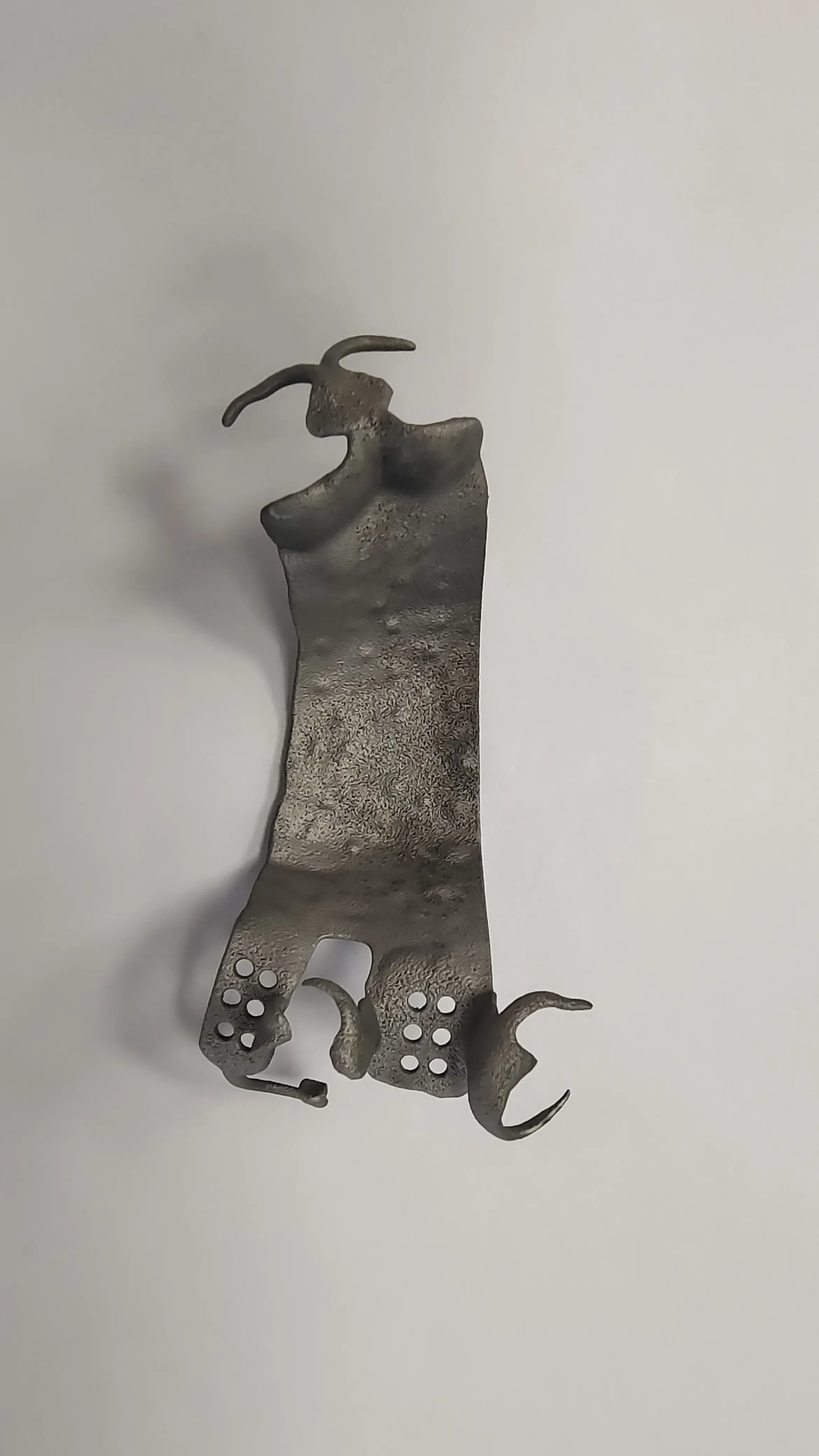
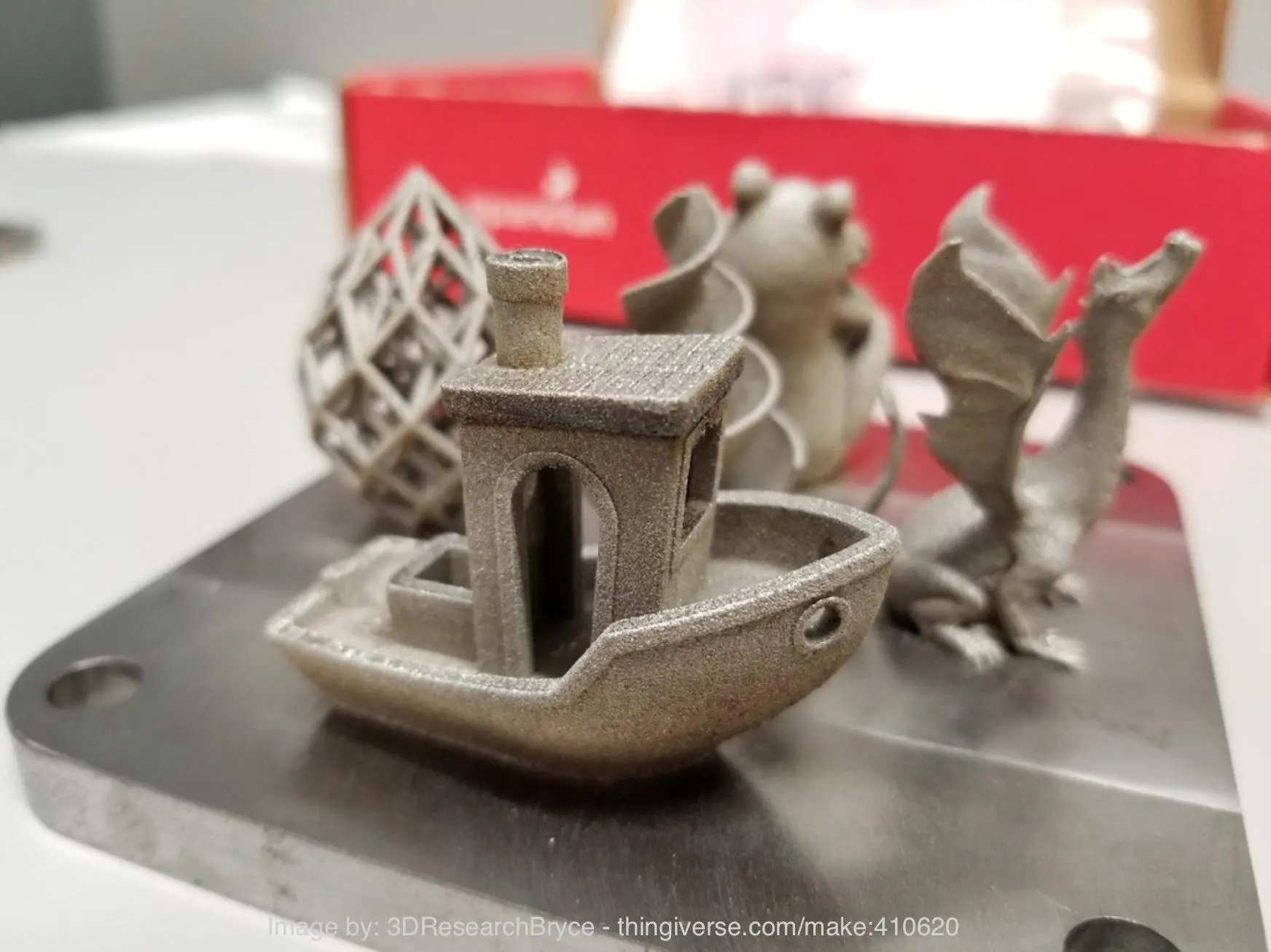
▶q Expert tips: For Metal Dragon variants (for example, display pieces), consider outsourcing to professional services. The company likes it Great Use an industrial SLM (Selective Laser Melting) printer to produce articulated dragons in stainless steel, titanium or aluminum. These versions offer museum-grade durability and complex details that are not available for FDM/DIY printing.
Conclusion: Imagination fits engineering
The articulated dragon encapsulates the magic of 3D printing – transforming digital art into tactile, dynamic miracle. While DIY printing teaches valuable skills, feel free to take advantage of professional services with materials or tolerances outside of desktops. Projects like this emphasize why 3D printing remains a portal for innovation, whether for enthusiasts, engineers or artists.
For those seeking metal manufacturing Great Illustration precise manufacturing. With advanced SLM printers, they can quickly prototypify aerospace-grade pronunciation parts, providing complete post-processing (heat treatment, polishing) and fast turnaround. → Explore the customized metal dragon prototype
FAQ: Articulated Dragon Printing
Q1: Why are my dragon’s joints constantly breaking?
A: It may be caused by low filler (using 20%), thin pin diameter (<1.5mm), or brittle material (switching to PETG). Increase the wall count to 3–4 for reinforcement.
Question 2: Can I scale the dragon for smaller printers?
A: Yes, but avoid scaling the joints below 75% – tolerance becomes difficult to control. Compensate with a lower height (0.08mm).
Q3: How to fix rigid joints and print after printing?
A: Use a hair dryer to heat the connector briefly and then gently bend it. Sand surface or lubricant.
Question 4: Which brands offer premium dragon STL?
Answer: Check:
- cults3d: 3dprintingworld’s “Low Poly-Grained Dragon”
- Thingiverse: “Magical Dragon” by Lucky_13
- Paid: “Ancalagon” miniature on Myminifactory
Q5: Can I print a clear dragon with metal?
Answer: Absolute. Professional services like Greatlight use SLM printing for metal dragons – ideal for jewelry or industrial prototypes. Expect more details, but more costly.
Question 6: My dragon’s wings are constantly twisting. Solution?
A: Increase cooling, reduce bed temperature (PLA: 50–55°C) or angle up during slices.
Challenged by dragon printing? Greglight’s engineers solve complex rapid prototyping puzzles every day – submit your project as an accurate solution. 🔥