Open up the world of DIY creation: an essential guide to getting started with a 3D printer kit
The allure of 3D printing is undeniable—translating digital designs into tangible objects, layer by layer. While pre-assembled printers offer convenience, Beginner 3D Printer Kit Deepens understanding of technology and provides immense satisfaction. Not only is it cheaper to build your own machine; This is a crash course in the basics of additive manufacturing. This guide gives you everything you need to embark on this exciting journey with confidence.
Why start your 3D printing journey with a kit?
- Cost effectiveness: Kits offer significant cost savings compared to pre-assembled kits. By assembling it yourself, you only pay for the components, not assembly labor.
- Unparalleled learning experience: Teach you how to assemble the kit how Your printer features – frame machinery, extrusion system, motion control, wiring and firmware. This knowledge will be invaluable for future troubleshooting, modifications, and upgrades.
- Customization potential: The kit provides a solid foundation. As your skills improve, you’ll understand exactly how (and why) to add upgrades like automatic bed leveling, direct drive extruders, or improved cooling ducts.
- Problem-solving confidence: Overcoming build challenges builds confidence and deepens your connection with your machine, making future maintenance less daunting.
Choosing the perfect starter kit: key considerations
before batting "purchase," Evaluate these key factors:
- Budget: Starter kits typically cost $150 to $500. Determine your upper limit beforehand. Remember to budget for filament, tools (needle nose pliers, hex keys) and consumables.
- Build volume: How big of a photo do you need to print? The small printer (150x150x150mm) is sufficient for printing miniature models and small parts; the larger size (220x220x250mm+) allows for larger projects. Let’s start from reality!
- Printing technology: FDM (Fused Deposition Modeling) kits dominate the beginner scene. They melt plastic filaments (such as PLA or PETG) through heated nozzles. Avoid resin (SLA) kits initially – they involve more complex post-processing and chemicals.
- Core design (important!):
- i3 style: Prusaclone dominates. Open framework, easy to access, excellent community support. Generally reliable. (Examples: Creality Ender 3 V3 SE/KE, AnkerMake M5C)
- Bed Sling (Cartesian): Move the build plate (Y-axis). Common, but movement can cause vibrations in taller prints. (Ender 3 Family)
- Core XY: The frame precisely moves the tool head in the X/Y direction and the platform moves in the Z direction, reducing vibration for faster/smoother printing. The learning curve is a little steeper. (Example: QIDI Tech X-Max 3 Kit)
- delta: The jib allows for a very tall, slim build and fast printing. Calibration can be tricky, but the mechanics are fun. (Example: FLSUN V400)
- Community and documentation: Is there a large, active user community (Facebook group, Reddit subreddit e.g. r/3dprinting, Discord)? Is there a comprehensive official Assembly manual and Troubleshooting guide? Strong community support is crucial for beginners.
- Features included: Find the “must-haves” that will ease early frustration:
- Ability to automatically level the bed (ABL – CR touch, BLTouch)
- Magnetic/spring steel PEI print bed (strong adhesion, easy part removal)
- Dual Z-axis screws (increased stability)
- Direct drive extruder (or convertible Bowden) for flexible filament
- Filament beat sensor
- Silent stepper motor driver (e.g. TMC2208/2209)
Best kit recommendations for beginners:
- Creative Ender 3 V3 SE/KE: Updated classic with ABL, PEI beds, quiet drive. Great community, perfect place to start. (Note: KE has a touch screen and lawn mower)
- AnkerMake M5C: Fast printing, excellent core design, "Easily start the module" For beginners. Application control.
- Issue SV06/SV07: Solid Prusa i3 clone with direct drive, PEI bed, great features/value. Great community.
- TusTech X-Max 3 (CoreXY): Enhanced engineering, significantly faster/more stable printing, active cooling chamber. Advanced beginner/intro to coreXY.
- FLSUN V400 (Delta): Suitable for enthusiasts who pursue speed and high printing results. Excellent automatic calibration. Unique motion system experience.
Assembling your kit: a step-by-step journey (overview)
Preparation is key: Clear out a large, well-lit workspace. Organize components with manual parts lists. Basic tools typically include metric hex wrenches, screwdrivers, needle nose pliers, scissors, tweezers, and a small spirit level/level.
- Frame assembly: Build infrastructure with precision. Make sure the corners are truly square. Tighten the bolts evenly, but don’t overtighten!
- Movement system: Install the linear rod or V-roller, lead screw (especially Z axis), belt (X/Y axis) and pulleys. Seat belts must be tightened (Comfortable, but pluckable like a guitar string).
- Electronic installation: Carefully install the motherboard, power supply unit (PSU), display module and motor according to the wiring diagram. Use zip ties/clips to route wires neatly to prevent tangling. Triple check polarity!
- Hot end and extruder: Assemble the extruder mechanism (to push the filament) and the hot end (to melt it). Make sure the heater box and thermistor wiring are secure and securely away from moving parts/hot surfaces. Calibrate E-Steps after assembly.
- Build a platform: Install heated bed, surface (such as PEI board) and leveling hardware/probes.
- Power on and initialization: Connect the mains power supply securely. Turn on the power and confirm that the fan is spinning and the display is activated. Please follow the manual for initial homing/calibration steps.
- First firmware flash and setup: Many kits require an immediate firmware flash. Follow instructions carefully. Correctly enter basic settings such as bed size.
- Make the bed flat (vital!): Perform manual leveling carefully (#papertest#). Then, run the ABL routine (if equipped). Proper bed adhesion can solve about 80% of printing failures for beginners!
- Test print: Load up the filament, slice a simple test model (Benchy is a classic), and start printing! Monitor the first level closely.
Overcome common first-time printing hurdles
- Bed sticking issues: Use 90%+ IPA to clean your bed. Adjust Z axis offset/proximity. Correct packed bed temperature/nozzle temperature (e.g. 210/60C PLA). Reduce first layer speed.
- Poor squeezing/beating: Check whether the nozzle is clogged. Confirm extruder tension. Accurately calibrate E-Steps. Verify that the filament diameter set in the microtome is correct.
- Moving layers: Tighten belt/pulley. Make sure the motor does not overheat/. Avoid collisions – Make sure the bed/probe cable cannot get snagged.
- Threading: Enable/optimize retraction settings in slicers. Gradually reduce the nozzle temperature. enable "wipe" or "slide" feature.
- First level defects: Relevel/calibrate Z offset. Wait for the bed to reach maximum temperature. Clean the nozzle/bed surface thoroughly. Increase first layer height/slightly thicker extrusion width.
Patience is crucial: Troubleshooting is part of the learning process. Use forums, official documentation, and YouTube tutorials from trusted creators. Don’t lose heart!
Beyond Kits: When DIY reaches its limits – unleash the professional power of GreatLight
While building a plastic FDM printer kit is powerful, you’ll inevitably run into projects that require functionality beyond its scope:
- Ultra-high precision and accuracy: Microscopic details, tight tolerances (<0.1mm).
- Industrial grade performance: Tensile strength, heat/corrosion resistance.
- Advanced materials: Engineering thermoplastics (ABS, Nylon, PEEK), resins or specialty flexible filaments.
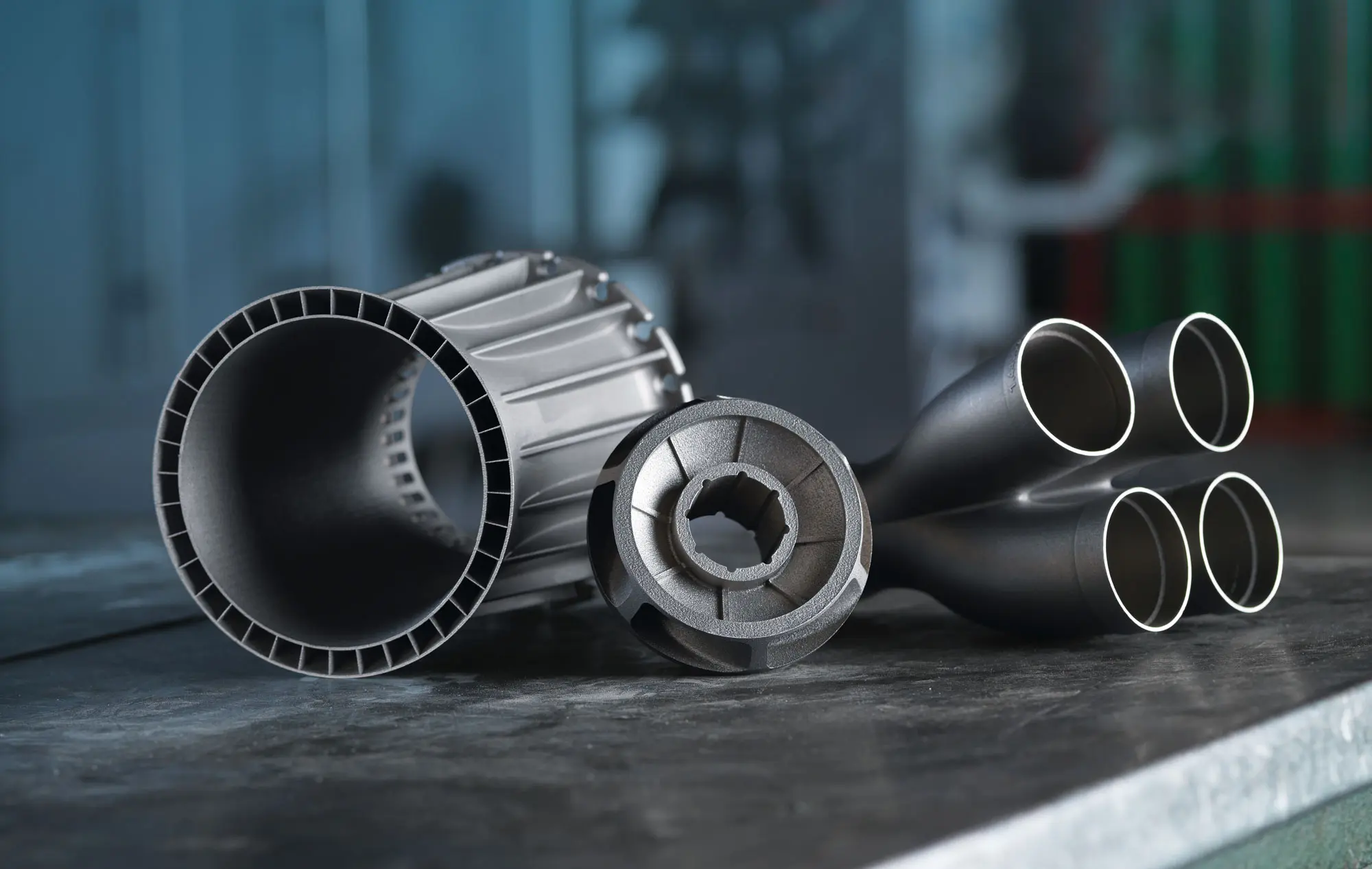
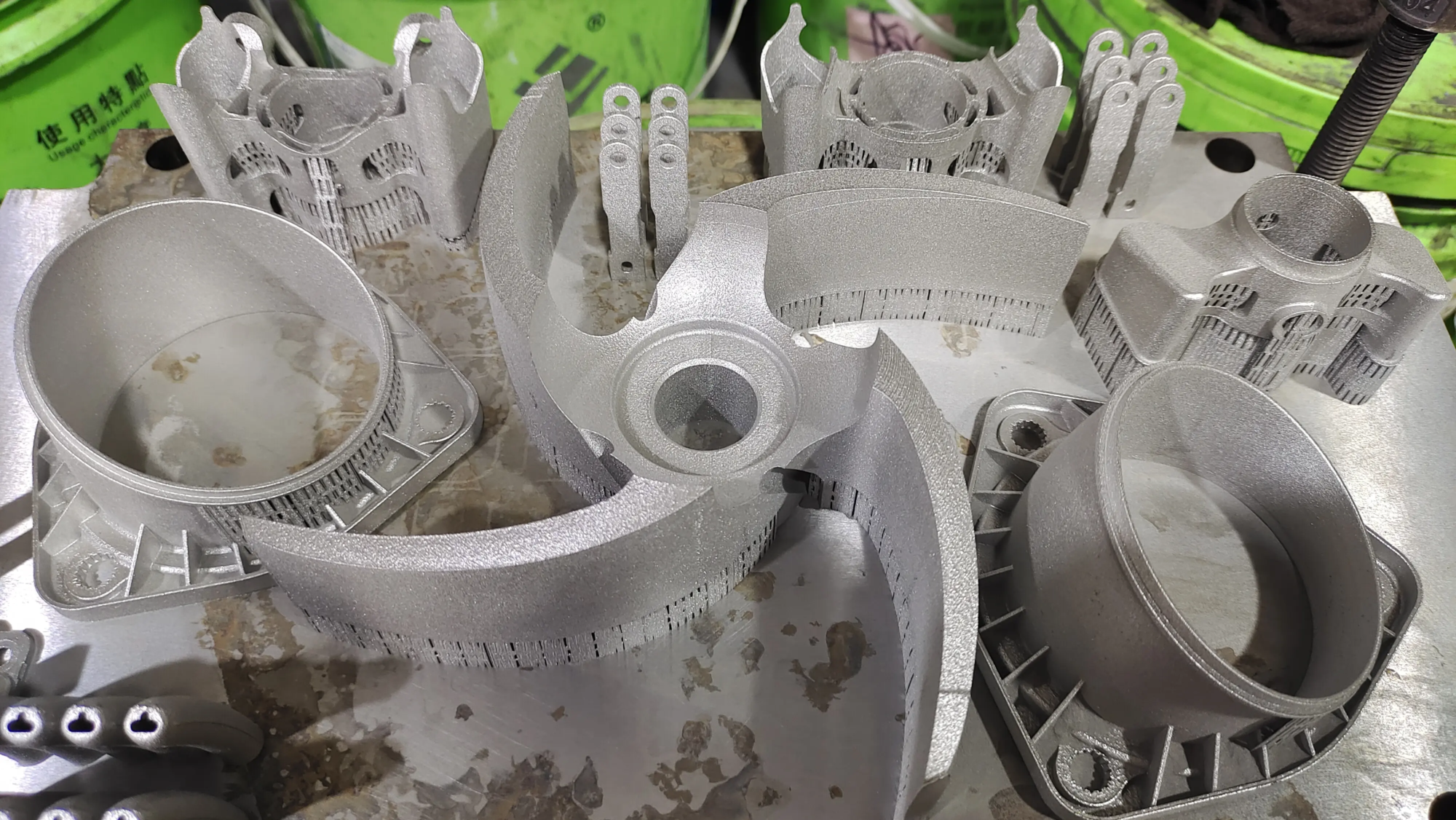
- Metal printing: Stainless steel, titanium, aluminum, cobalt chromium alloy.
- Complex geometric shapes: Real overhangs, complex meshes, internal passages inaccessible to FDM.
- Mass production: Reliably repeat hundreds/thousands of identical parts.
- Excellent surface finish: Direct printing of cosmetic grade finishes.
- Large scale: Parts greatly exceed standard build quantities.
This is where GreatLight turns your vision into reality.
Your partner in professional rapid prototyping and manufacturing:
- Cutting edge metal acceleration: With high quality SLM (Selective Laser Melting) Printers † are managed by dedicated experts who deeply understand the mechanics of convergence.
†Scientific explanation of SLM: Using high-power laser, ultra-fine metal powder is selectively melted layer by layer accurately based on CAD data, and nitrogen/argon atmosphere control is implemented to prevent oxidation and achieve densification of more than 99.5%. Compatible with complex geometries. - Material mastery: Processing various alloys, including stainless steel (316L, 17-4PH), titanium (Ti6Al4V), aluminum (AlSi10Mg), Inconel, copper, etc. Verify manufacturability by computationally simulating material behavior.
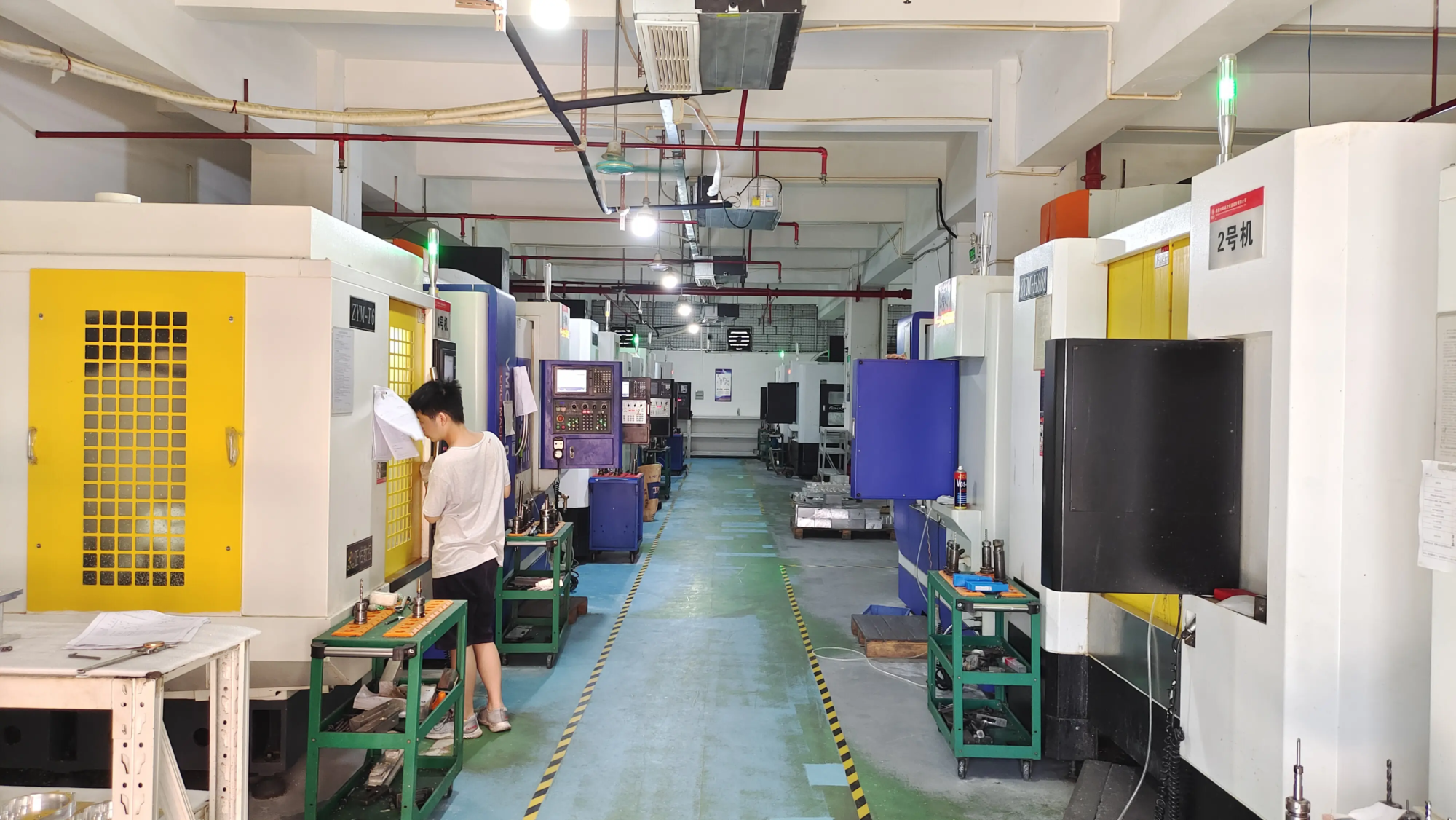
- True end-to-end expertise: Not just printing. One-stop excellent post-processing: Stress-relief annealing suppresses residual stress, ensures dimensional stability, and alters microstructure refinement…. CNC precision machining (±0.01mm) of critical mating surfaces Post-processing… System polishing/media blasting/promotes high gloss/customized aesthetic textures…Comprehensive coating/anodizing/implantation graded sterilization ensures required biocompatibility for medical devices…Functional surface modification significantly enhances corrosion/wear performance…Quality Verification: Non-destructive CT scan formally checks porosity segregation integrity, exceeds ASTM requirements, backed by rigorous reporting…complete functional metrology, meticulous verification of specifications against GD&T certified drawings.
- Quick customization: Respond quickly, execute low- and medium-volume orders, accelerate iterative prototype design ➔ trial production, and quickly optimize NPD delivery cycle. Experienced engineers provide design and manufacturing consultation!
- Respect the budget: Optimize nesting to maximize powder utilization and reduce overhead for cost-effective construction of metal 3D printing… Transparent pricing that follows fair market value ensures ROI for customers worldwide. Professional Crowdfunding SME/Business applications are proudly accepted.
Boost your project: Whether your goals involve regeneratively efficient complex heat exchanger architectures… Aerospace certified flight-critical fixtures… Robust defense equipment… Biocompatible bone scaffolds to advance regenerative medicine… Complex tools enabling automotive lightweighting… or unique artistic wearable sculptures… The combination of our deep engineering insights… Excellence… Manufacturing literacy… Streamlined workflow orchestration… What sets GreatLight apart is what makes us truly One of China’s leading rapid prototyping experts…………………… Embrace complexity – Submit quotes on complex CAD models effortlessly………….