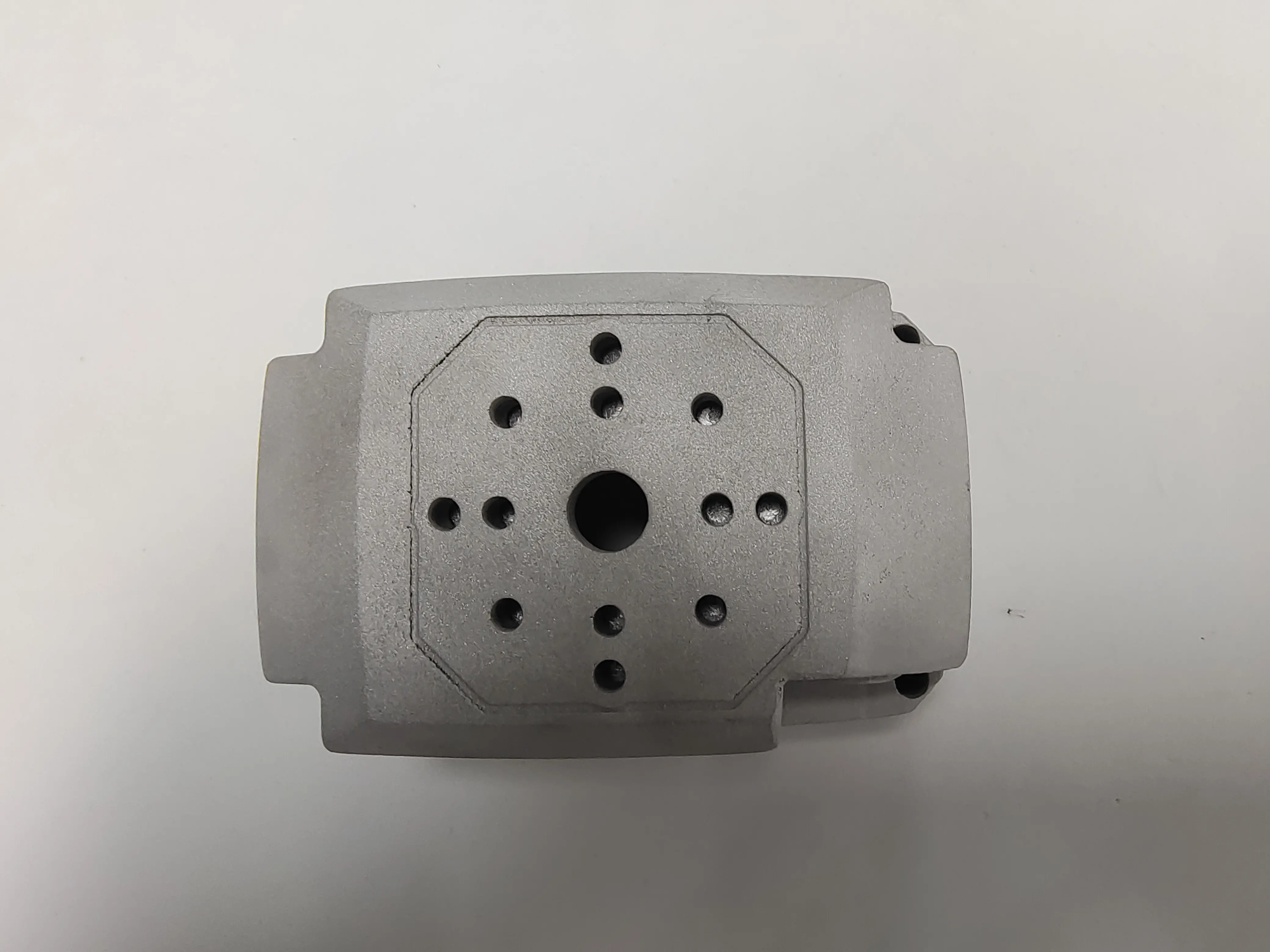
The complex world of 3D printed guns: Material selection, practicality and first responsibilities
The intersection of 3D printing and firearms is a topic mired in high complexity, significant legal restrictions, and deep ethical considerations. Although discussions usually focus on "printing guns," The reality is far more nuanced. This blog takes an in-depth look at the landscape of polymer filaments relevant to firearms, focusing on Prototypes, non-regulated components (such as grips, stocks, or accessories), replica props for training or demonstration, and functional components for use by authorized manufacturers. Crucially, We emphasize that attempting to manufacture a functional firearm or regulated component (such as a receiver/frame) without a proper federal license (FFL) is illegal in most jurisdictions, including the United States.
It is critical to understand the special requirements for firearm-related parts, even non-regulated parts. Failure is not just an inconvenience; This can be disastrous. Therefore, material selection becomes a key safety pillar.
Key criteria for selecting filament:
When evaluating filament for any firearm-related application, several factors dominate:
- Strength and durability: Components must withstand significant mechanical stress, impact and repeated use cycles without cracking, deforming or shattering.
- Heat resistance: Friction and potential thermal environmental exposure require materials that do not soften or deform at moderate temperatures.
- Dimensional stability: Accuracy is key; parts must maintain precise dimensions under load and changing environmental conditions (humidity, temperature).
- Interlayer adhesion: Weak layer lines are potential points of failure. Strong interlayer bonding is non-negotiable for structural integrity.
- Toughness/Impact Resistance: The ability to absorb impact energy without rupture is critical to safety.
Evaluate common filaments:
While no off-the-shelf FDM polymer filament can perfectly replicate forged steel or advanced composites, some options are clearly better suited than others for demanding applications:
-
PLA (polylactic acid):
- advantage: Easy to print, readily available, cheap, and has good initial stiffness.
- shortcoming: Low heat resistance (deformation around 60°C), is known to be brittle, has poor long-term durability under pressure, and is prone to creep and degradation over time, especially outdoors.
- judgment: Strongly discouraged. While common for trivial prints, its brittleness and low heat resistance make it fundamentally unsafe and unsuitable for any firearms-related applications, even non-load-bearing accessories. Their failure modes are often sudden and catastrophic.
-
ABS (acrylonitrile butadiene styrene):
- advantage: Good toughness, higher heat resistance than PLA (softening ~100°C), better impact resistance, and medium durability.
- shortcoming: There is no way to fix the warping issue during printing, requires a case, emits unpleasant fumes during printing, and weakens significantly over time with exposure to UV/sunlight.
- judgment: one History options Suitable for some prototyping/DIY projects due to its balance of toughness and cost. acceptable Some Carefully printed non-critical prototypes or accessories that have been fully annealed. However, its UV sensitivity and tendency for layer-line stress concentration limit its reliability in critical applications.
- PETG (polyethylene terephthalate):
- advantage: Excellent interlayer adhesion, very good toughness and impact resistance, high chemical resistance, good moisture resistance, easier to print than ABS without excessive warping, moderate heat resistance (~80°C).
- shortcoming: It is not as rigid as PLA/ABS at room temperature, is prone to wire drawing, will exhibit creep under sustained load, and has a softening point that is still below the critical gun operating temperature.
- Conclusion: The most practical compromise Is one of the common consumables used for prototyping and non-regulated accessories. It combines ease of printing,