Mastering High-Temperature Applications: A Guide to the Best Heat-Resistant 3D Printing Supplies
Beyond the scope of standard PLA and ABS, many engineering and industrial applications require 3D printed parts that can withstand extreme heat. Whether it’s an automotive component under the hood, a specialty tool near a furnace, or an electronic enclosure undergoing thermal cycling, choosing the right heat-resistant filament is critical to functionality, safety, and longevity. At GreatLight, as a leader in professional rapid prototyping and advanced metal 3D printing (SLM), we face these challenges regularly and understand the critical role material selection plays. Let’s take a deeper look at the top heat-resistant filaments available for FFF/FDM printing and explore their unique benefits.
Why is heat resistance important?
Traditional 3D printing filaments such as PLA begin to soften sharply around 50-60°C and may warp or deform unexpectedly even under moderate heat loads. Heat-resistant filaments have significantly higher glass transition temperatures (Tg) and heat distortion temperatures (HDT), allowing them to maintain structural integrity and dimensional stability in environments with high heat resistance requirements. Main applications include:
- Automotive (under-the-hood parts, fluid handling)
- Aerospace (piping, internal components)
- Electrical engineering (connectors, housings near heat sources)
- Industrial manufacturing (jigs, fixtures, tooling near machinery)
- Food handling and medical (parts requiring sterilization)
Top Contenders in Heat-Resistant Arena:
-
PEEK (polyetheretherketone):
- peak: Often the undisputed champion. Offers excellent thermal stability (Tg ~143°C, HDT up to 260°C+), excellent mechanical strength and stiffness, excellent chemical resistance and inherent flame retardancy.
- Advantages: Unmatched strength-to-weight performance, excellent abrasion resistance, biocompatibility grade, sterilizable (autoclavable).
- challenge: Printing requirements are extremely demanding: high extruder temperatures (370-420°C), heated chambers (>120°C), specialized build plates (e.g. PEEK on glass/PI film), precise cooling control, excellent filament drying and a closed printer are required to prevent warping and delamination. Material costs are high.
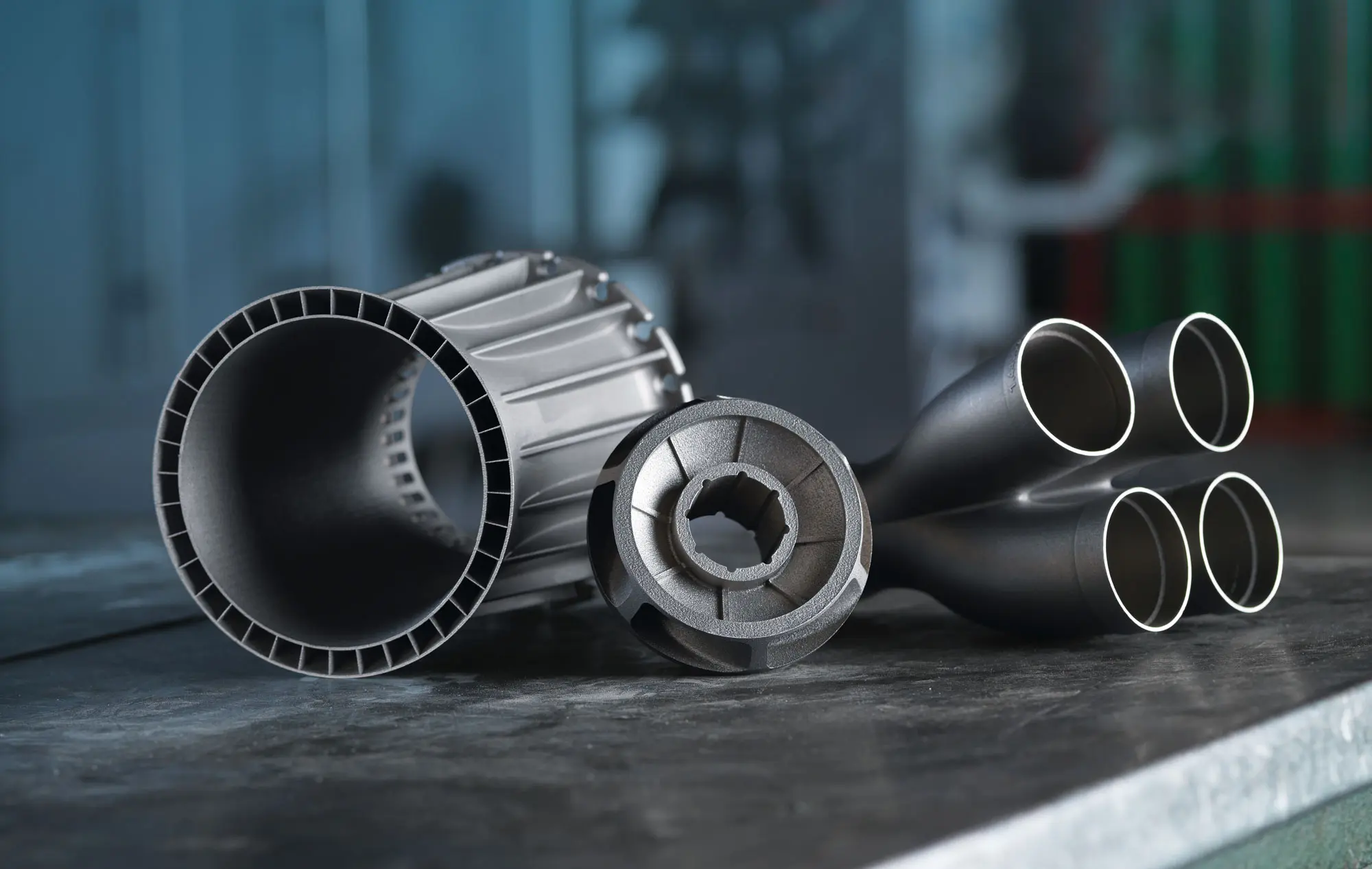
- Best for: Ultimate performance aerospace, demanding automotive, high performance engineering prototypes, medical implants/devices, oil and gas components. When the limits of PEEK polymer are reached, GreatLight’s advanced SLM capabilities can also be extended to metal alternatives such as titanium or Inconel.
-
PEI (Polyetherimide) – ULTEM Brand:
- Senior main force: The ULTEM brand is widely recognized. Excellent heat resistance (Tg ~217°C, ULTEM™ 1010 HDT ~200°C @ 0.45MPa), strong mechanical properties, excellent chemical resistance (especially hydrocarbons), V-0 flame retardant rating out of the box. Offers a good balance of performance and is slightly (although still more demanding) easier to print than PEEK.
- Advantages: Excellent strength to weight ratio, high dimensional stability, inherently flame retardant, recyclable, sterilizable (steam autoclave, gamma radiation, EtO).
- challenge: High printing temperatures (typically 340-380°C for extruders), requires heated bed (150-180°C), enclosed printers are highly recommended, must be printed dry (highly hygroscopic), prone to deformation without careful bed bonding and chamber temperature control. The cost is high.
- Best for: Aerospace (FAA certified grades available), medical/surgical devices, semiconductor manufacturing equipment, high thermal and electrical insulators, food processing parts.
-
PEKK (polyetherketoneketone):
- A close relative of PEEK, it offers the following advantages: Performance scaffold similar to PEEK (Tg ~156°C, HDT ~140-160°C @ 1.8MPa), offering superior toughness and potentially lower crystallinity (reduced warpage). Generally has a wider processing window.
- Advantages: Excellent strength, stiffness, heat resistance and chemical resistance (even better than PEEK in some solvents), low thermal conductivity, and good biocompatibility. It is generally considered to be slightly easier to print than PEEK in terms of adhesion, but still more demanding.
- challenge: High temperatures (360-380°C extruder), heated chambers (>100°C) and meticulous drying are still required. The cost is comparable to or slightly higher than PEEK. Compared to PEEK/PEI, there are currently fewer commercial filament suppliers.
- Best for: Aerospace components that require toughness, high-performance engineering components that require lower warpage than PEEK, protective covers for chemical processing equipment, complex medical equipment.
- PCTG (polycyclohexyl dimethylene terephthalate glycol):
- More accessible performers: The heat resistance (Tg ~85°C, HDT ~80°C) is significantly better compared to PLA or ABS, while maintaining relatively user-friendly printing characteristics. Known for its toughness and transparency (when unpigmented).
- Advantages: Good impact resistance and ductility, good chemical resistance (acids, oils), better UV stability than ABS, minimal warping, offers food safety ratings, easier to print (extruder: ~235-250°C, bed: ~70-80°C).
- challenge: The heat resistance is significantly lower than PEEK/PEI/PEKK. Strength and stiffness are also lower. If cooling is insufficient, thermal creep may occur.
- Best for: Functional prototypes requiring more heat than PLA/ABS, containers/lenses requiring transparency and toughness, tool handles, wearable devices, fixtures requiring moderate thermal stability.
Bonus Mentions:
- Polycarbonate (PC): Tough, high strength, HDT around 100-110°C (HDT can be higher for blends such as PC-ABS). The printing temperature is approximately 280-310°C. Requires a heated bed (~100-120°C) and usually an enclosure. Hygroscopic – Requires drying. Easily deformed/stressed. Good impact resistance.
- High temperature nylon: Variants such as nylon PA 6/66, PAHT (high temperature) or glass/carbon fiber nylon. By reinforcing the fibers, the Tg is approximately 80-100°C and the HDT is significantly increased (up to 180-200°C+). Excellent toughness and wear resistance. Requires drying (~70-90°C) and printing at ~260-280°C. Easily deformed/absorbent. Ideal for tough functional parts requiring higher HDT with fiber assistance.
Precautions for printing high-temperature filament:
Successfully printing with high-performance thermoplastics requires more than hitting temperature numbers:
- Printer capabilities: Make sure your printer has adequate extruder temperature range and thermal stability. For PEEK, PEI, PEKK, highly insulated, actively heated chambers are crucial. Use a windscreen.
- Build the board: Adhesion is crucial. Use specialized surfaces: Garolite/G10 (PEEK/PEKK usually like it), high temperature PEI board, specialized tape. High bed temperatures are a must.
- Filament drying: Treat moisture as your enemy! These materials are Very Hygroscopic. Add desiccant to seal and store. Dry immediately before printing (PEEK/PEI: approx. 120-150°C for 4-6 hours; PEKK: approx. 120-140°C; PCTG/PC/Nylon: approx. 75-85°C).
- cool down: High temperature materials often require minimal or zero cooling fans to avoid warping/delamination and ensure layer adhesion. Manage thermal creep carefully.
- shell: PEEK, PEI, PEKK are non-negotiable. Essential for maintaining even temperatures and preventing warping/cracking.
Conclusion: Choosing the right material for your prototype
Selecting the best heat-resistant filament requires balancing performance requirements with cost, printability, and available printer features. While PEEK, PEI and PEKK represent the absolute pinnacle of extreme heat resistance, strength and chemical resistance, their demanding processing requirements and high cost make them less suitable for casual printing. PCTG, PC and reinforced nylon offer compelling options for applications requiring moderate heat resistance and easier printing.
At GreatLight, solving complex rapid prototyping challenges – especially where extreme temperatures and harsh environments are involved – is our specialty. In addition to advanced additive manufacturing of plastics, our core expertise lies in rapid prototyping of metals using state-of-the-art Selective Laser Melting (SLM) technology. For parts that exceed the capabilities of PEEK or require the ultimate strength, conductivity or hardness of the metal, GreatLight offers