The Art of Textured Surfaces: An Expert’s Guide to 3D Printing Blurred Skin
In the extremely precise world of 3D printing, achieving a perfect, smooth surface is often the initial goal. However, sometimes texture is the key – the difference between a glossy prototype and a functional grip, the difference between a generic model and a visually interesting part, or the difference between an unrealistic rendering and a real prototype that mimics real-world finishes. where is this blurry skina powerful but often underutilized slicing feature, has attracted attention. It deliberately introduces controlled surface roughness on 3D printed parts, opening up a world of practical and aesthetic possibilities.
Demystifying Blurred Skin: Not a Bug, It’s a Feature!
Contrary to what the name suggests, blurred skin is not an unwanted artifact or printing defect. this is a intentional strategy Managed in slicer software settings. Think of it as a simulation "texture paint" or "blank" Apply effects directly during printing.
How does it work behind the scenes? Rather than laying a perfectly straight perimeter path, the Slicer introduces small changes Along each perimeter:
- Controlled deviation: The nozzle path is not traced perfectly. It swings slightly inward and outward randomly perpendicular to the intended perimeter line within a defined maximum distance (
Fuzzy Skin ThicknessorDistance). - Exact point spacing: These deviations occur at very close intervals and are specified as
Fuzzy Skin Point Distancedetermines the granularity of the texture. Smaller dot spacing produces a finer, sandpaper-like texture; larger spacing produces a more pronounced wavy effect (Fuzzy Skin Point Spacing). - Frequency control: this
Fuzzy Skin DensitySettings effectively control how often these deviations occur, affecting the overall intensity and coverage of the entire surface texture rather than the extent of individual lesions.
The result? A printable surface that intentionally deviates from smoothness to provide enhanced functionality or visual characteristics.
Why embrace fluff? Release core applications
Far from new, Fuzzy Skin solves specific challenges:
- Excellent grip and ergonomics: This is arguably its most valuable application.
- Functional tools: The anti-slip properties of tool handles (screwdriver, pliers control handles), knobs, levers, buttons, handles of sporting goods and ergonomic interfaces have been significantly improved.
- Everyday items: Pen holders, toothbrush handles, remote controls – anything that needs to be handled safely.
- Medical and assistive devices: Improved gripping surfaces for prosthetics or assistive devices.
- Enhance visual appeal and realism:
- Prototype authenticity: Simulate textured plastic, leather, rough-cast metal finishes, or weathered surfaces directly on prototypes to convey the feel of the material more effectively than painting alone.
- Hidden layer lines: While not a complete replacement for post-processing, blur skinning effectively disrupts the visibility of regular layer lines, providing a more uniform texture appearance.
- Aesthetic design elements: Use it selectively on specific faces of your model to create visual contrast (smooth vs. textured) for fine art or design-focused prints.
- Improved tactile feedback: Buttons, dials, and controls benefit from tactile feedback indicating location or function without having to rely on visual cues.
- Reduce glare: Textured surfaces diffuse light more effectively, minimizing unwanted reflections on features or displays.
- Hide minor surface imperfections: Minor cosmetic imperfections inherent in FFF/FDM printing (tiny pimples, tiny scars) become less noticeable in the overall grain pattern.
Master the Settings: Your Blurred Skin Toolkit
Success in blurring skin depends on understanding and adjusting its key parameters:
- Inside or outside? (
Only On Outside): Key settings! Almost everyone wants to apply textures External perimeter only. Enabling it on interior walls will create messy infill interference and compromise strength. enableOnly On Outside. - Blur skin thickness (
Fuzzy Skin ThicknessorDistance): This defines Maximum radial distance The nozzle path can deviate from the original peripheral path (e.g., 0.2mm). Controls the overall “depth” or amplitude of the texture’s swing. Larger values = larger texture features, but may affect dimensional accuracy. - surface density (
Fuzzy Skin DensityorFrequency): How to control frequently Deviation occurs. Sometimes inversely proportional to point distance. Values typically range from 0.01mm to 0.2mm-0.3mm.- Smaller density/smaller dot spacing (< 0.1mm): Density deviation = finer grained texture (like fine grit sandpaper).
- Greater density/larger spot spacing (>0.1mm): sparser bias = rougher, more wavy texture (like rough sandpaper waves).
- Comprehensive effect: High thickness + low density = large, wavy hills and valleys. Low thickness + high density = fine-grained pebbles. experiment!
Materials matter: get the right feel
The printing material significantly affects the final texture:
- People’s Liberation Army: Excellent candidate. Response is good and textures are predictable. Has good stiffness so fine details can be preserved.
- Polyethylene glycol: The effect is also very good. Slightly softer than PLA/ABS, can produce a texture with slightly smoother peaks and valleys due to surface tension. Has good impact resistance and is suitable for functional grips.
- ABS/ASA: Powerful, but prone to stringing/flickering at texture peaks on high settings. May need adjustment.
- TPU/flexible material: Very effective for high grip applications due to the inherent softness of the material. The low thickness and high density settings create a very grippy surface. Pay attention to the consistency of the extrusion.
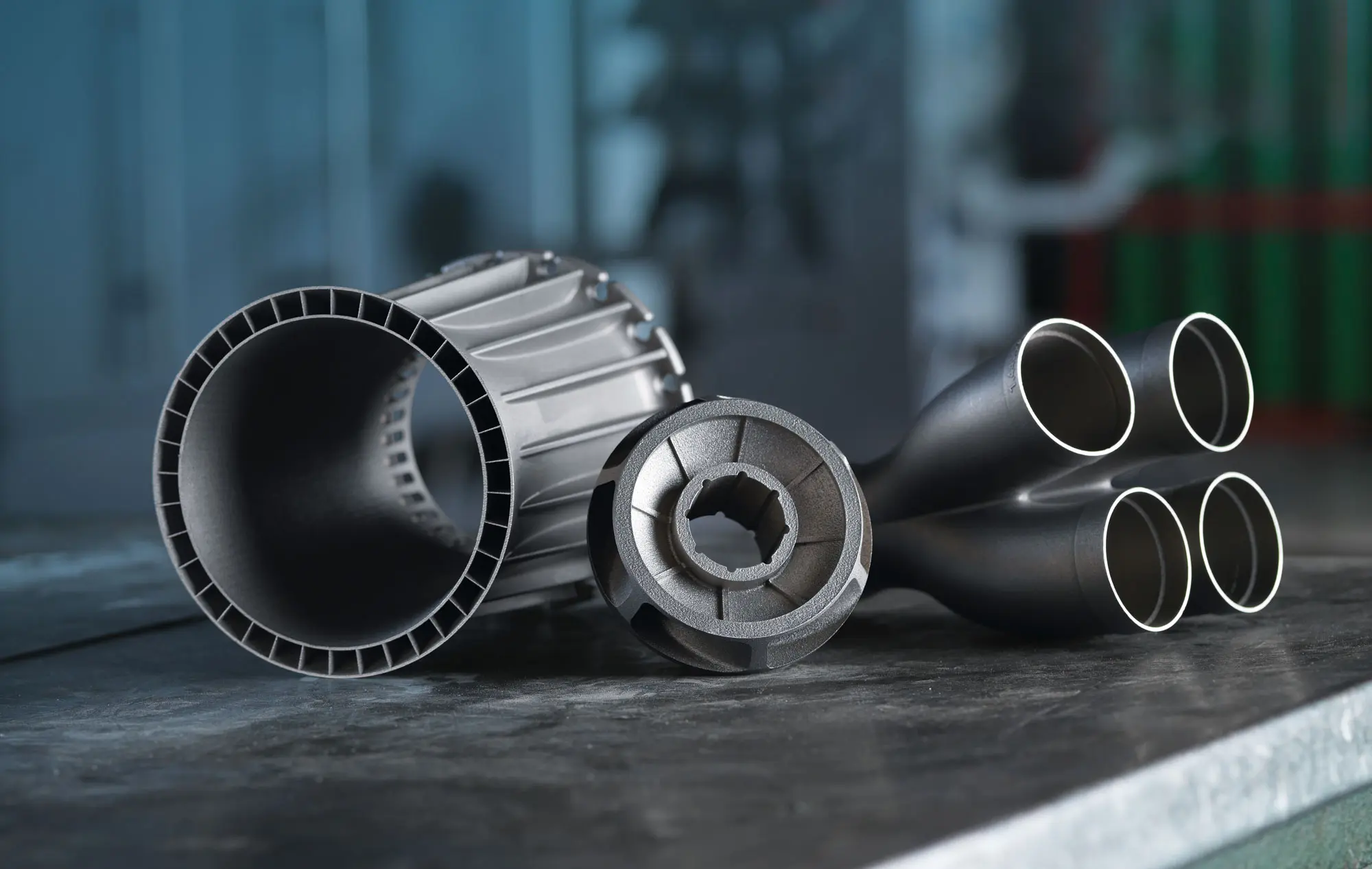
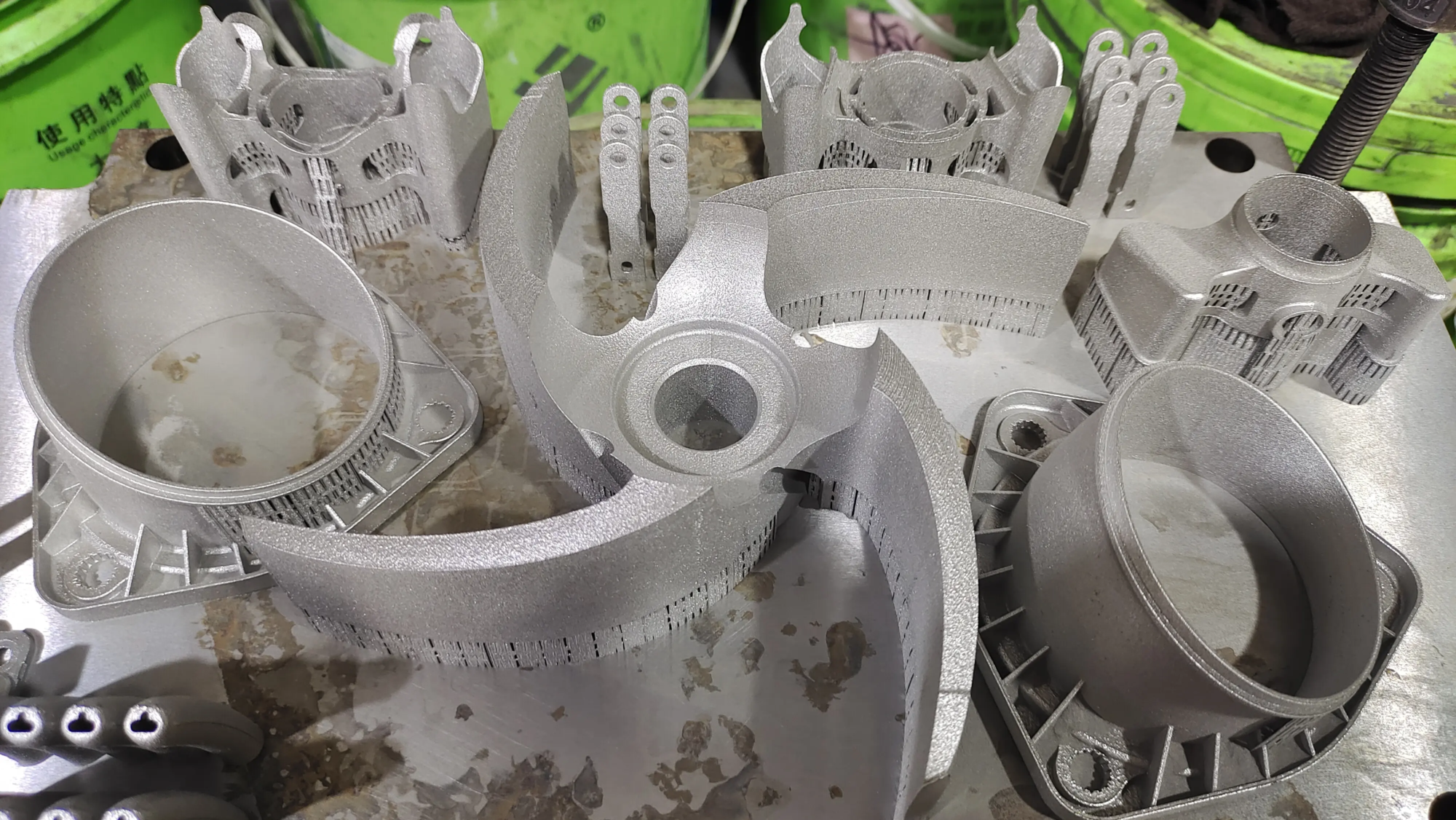
- Metal print? Yes! Although inherently smoother than FDM, sintered metal Parts (printed using SLM/DMLS/PBF) can exhibit textured surfaces influenced by laser parameters and powder properties. Post-processing Processes such as sandblasting, chemical etching, laser texturing or media tumbling are the primary methods of achieving intentional textures on metals such as aluminum, stainless steel, titanium and Inconel, providing a functional hold or aesthetic finish. (Here, GreatLight’s advanced SLM technology and extensive post-processing expertise are critical to achieving specific tactile or visual effects on complex metal prototypes and final parts.)
Practical Application: Blurring the Highlights of Skin
- Functional prototyping: Creation of ergonomic evaluation models (drill housing, tool handles), functional handles of mechanical test pieces. Allow engineers to feel the expected grip texture forward Working on expensive molds.
- Low-volume manufacturing and end-use parts: Cosmetic accessories, custom ergonomic computer mice/keyboards, specialized jigs and fixtures that require operator gripping.
- Characters and games: Texture surfaces to simulate fur, scales, stone, or armor plates without complex multi-material printing.
- Art and Design: Sculptural pieces where the tactile experience is crucial, vase pattern prints with interesting textures.
- car model: Create textured dashboards, buttons and handles for interior design validation.
Limitations and Notes
- Dimensional accuracy: blurry skin Increase The effective size of the printed portion outwards. If tight external tolerances are critical, compensate in CAD or via horizontal extension settings. Internal dimensions are largely unaffected.
- Printing time: Significant increase due to highly non-linear peripheral paths. Plan accordingly.
- support: Can make the support interface more confusing. Prefer organic or tree-supported textured surfaces.
- Drape: Radical textures can push the limits of printable angles. Enable/add support as appropriate.
- Loss of fine detail: Very complex edge details or sharp corners can be blurred or rounded.
- Not suitable for sealing surfaces: Avoid using Fuzzy Skin on surfaces that require water/air tightness and are not sealed with post-treatment.
- Material-specific challenges: As mentioned above, TPU requires careful flow adjustment and ABS may be stringy.
in conclusion
Blurred skin is more than just a simple novelty effect. It is a strategic design and manufacturing tool in FFF/FDM printing workflows (conceptually related to surface finish in other processes such as metal additive manufacturing). By mastering its parameters and understanding its material interactions, manufacturers and designers can unlock significant functional advantages – notably unparalleled grip enhancements – as well as powerful aesthetic possibilities for prototypes and low-volume production parts.
For complex projects that require complex textures, especially transitions to Metal rapid prototypingworking with experts equipped with advanced technology is crucial. GreatLight leverages its industry-leading SLM 3D printers and deep expertise in metal processing Provide comprehensive solutions. Whether you need a functional textured plastic prototype or a complex metal part with a defined grip created through precision printing and expert post-processing, GreatLight can deliver Custom rapid prototyping services To meet stringent requirements, ensuring optimal surface functionality and aesthetics directly from phased development to production-ready components. Manufacture your custom precision parts quickly and at the best prices.
FAQs about blurred skin printing
Q1: Does Fuzzy Skin use any additional filament?
A1: Yes, at least that’s the case. Because the perimeter path swings out slightly, it uses a little more filament than a completely smooth perimeter. This increase is usually negligible unless very aggressive settings are used over large areas.
Q2: Will Fuzzy Skin make the printing effect stronger?
A2: Not for structural strength per se. Creating a textured surface does not automatically add interior materials or change the fill. It mainly affects the appearance and grip of the outer surface. Strength depends on core parameters such as number of walls, infill, orientation and material. A poorly adjusted blur skin can even slightly weaken a thin-walled part due to excessive deviation.
Question 3: How to prepare the CAD model for Fuzzy Skin?
A3: Generally no special preparation is required! Slicers modify tool paths externally. Just make sure the geometry is varied and waterproof. Consider applying horizontal shrink/expansion compensation in CAD or slicer forward If external dimensions are important, use blur skin ("blurred skin design