3D printed manifold breakthrough: revolutionizing fluid and gas systems
In the complex world of fluid dynamics and gas control, manifolds are the unsung heroes. These critical components serve as central hubs that distribute or collect liquids and gases in complex systems ranging from rocket engines and medical equipment to high-performance automobiles and industrial machinery. Traditionally, manufacturing manifolds involves complex machining, welding and assembly, processes that are often fraught with complexity, lead time and cost constraints. Enter 3D printing (additive manufacturing), especially metal 3D printingit is changing a variety of designs and production, unlocking unprecedented possibilities.
Understand the multiple challenges
The core function of a manifold seems simple: to move fluid efficiently. However, achieving optimal flow, minimal pressure drop, resistance to corrosion and pressure, and integration in tight spaces requires complex internal geometries. Think of curves, channels, ports, and internal features that often intersect in complex ways. Traditional subtractive manufacturing (CNC machining) struggles with this – machining sharp turns, smoothing internal channels, or integrating multiple parts into a single unit can be difficult or impossible. This often results in designs with compromised manufacturability, or assemblies made from a large number of individually machined and welded parts, increasing potential leak points, weight and assembly time.
How 3D printing is revolutionizing manifold production
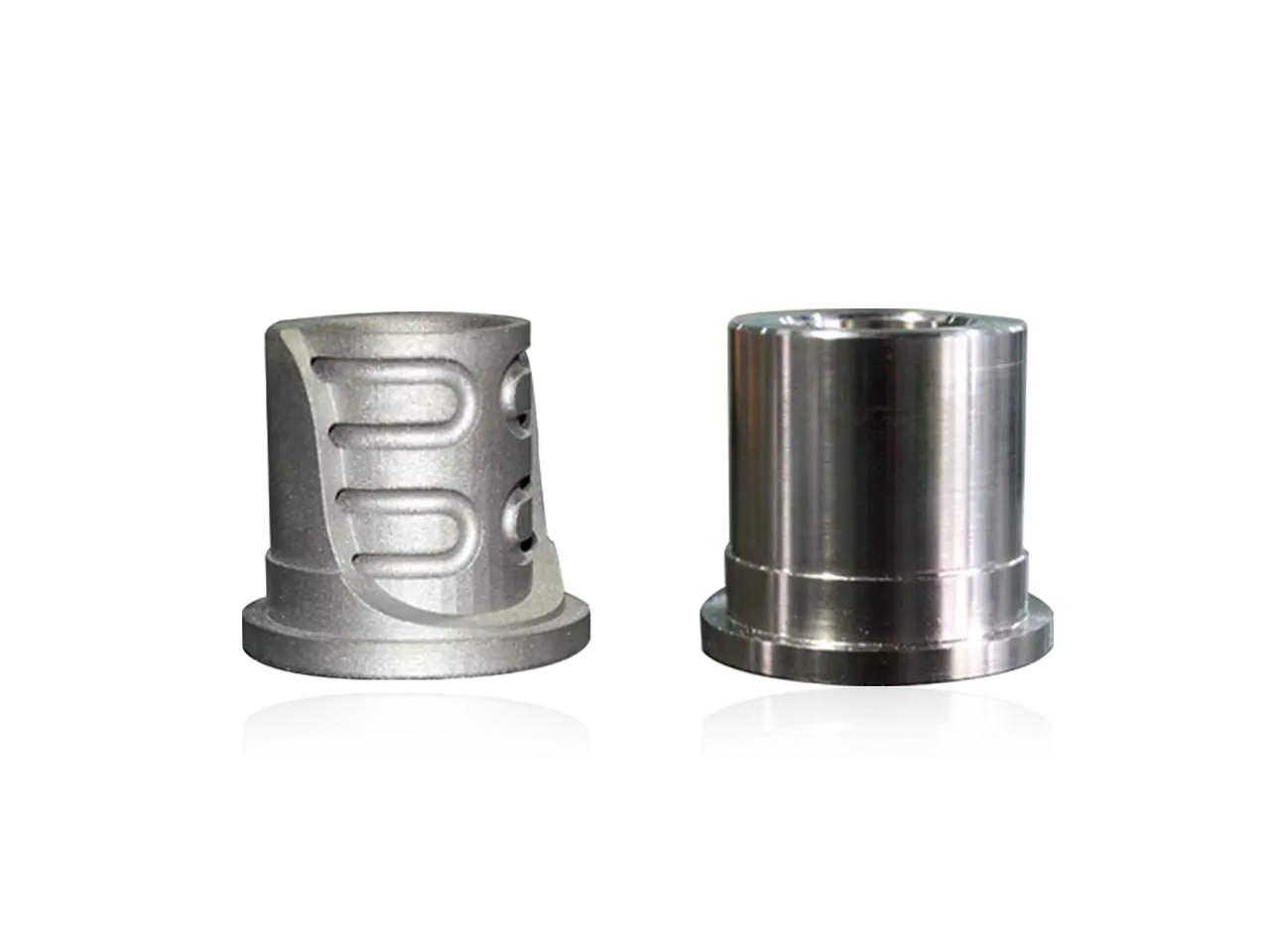
Metal 3D printing, especially Selective Laser Melting (SLM)changing the rules of the game. The technology uses fine metal powders to build parts layer by layer and fuse them together with a high-power laser. This additional method bypasses the limitations of traditional methods:
- Design freedom: SLM allows engineers to design complex internal channels with smooth transitions, optimized curves (to reduce turbulence), and even lattices for lightweighting—geometries that were previously impossible to fabricate. Internal features are not limited by tool entry angle.
- Partial merge: Multiple components (inlets, outlets, internal channels, valve seats, mounting flanges) can be integrated into a single monolithic printed part. This eliminates assembly steps, reduces potential leak paths, enhances structural integrity, and simplifies maintenance.
- Optimized process: Computational fluid dynamics (CFD) analysis can be used to design manifold channels that are precisely optimized for flow characteristics. SLM can then accurately reproduce these optimized designs, minimizing pressure drop and maximizing efficiency directly within the printed assembly.
- Rapid prototyping and iteration: Design changes can be implemented digitally and quickly printed. This significantly speeds up development cycles, allowing functional testing of complex manifold designs to be completed in days instead of weeks or months.
Key Benefits of 3D Printed Manifolds
The SLM-driven approach delivers tangible benefits:
- Lightweight: Optimized internal structures and topology optimization techniques enabled by 3D printing create manifolds that are significantly lighter than machined/welded manifolds, which is critical for aerospace and automotive applications where every gram counts.
- Enhanced performance: Smoother internal channels reduce turbulence and pressure losses, thereby increasing system efficiency (fuel consumption in engines, flow rates in bioreactors). Consolidation increases reliability by eliminating potential leak points.
- earlier Shorten delivery time: Eliminating tool set-ups, complex fixtures and extensive welding/post-processing can significantly reduce production time, especially for complex designs or low to medium volumes.
- Material efficiency: Compared to machining away a large portion of a solid blank, additive manufacturing uses significantly less raw material, minimizing waste. This is in line with sustainable manufacturing goals.
- Unparalleled Customization: Easily adjust designs to accommodate specific pressures, flow rates, space constraints, or material requirements without significantly increasing cost.
Material selection for robust performance
SLM printing excels in high-performance metal alloys, which are critical for demanding manifold applications:
- Stainless steel (316L, 304L): It has excellent corrosion resistance and good strength and is widely used in chemical processing, HVAC and medical industries.
- Titanium alloy (Ti-6Al-4V): Offering a high strength-to-weight ratio, excellent corrosion resistance and biocompatibility, it is ideally suited for aerospace fuel systems, F})-medical implants and racing cars.
- Nickel alloy (Inconel 625, 718): Excellent resistance to extreme temperatures, oxidation and corrosion, making it ideal for corrosive media, rocket thrusters and turbine manifolds.
- Aluminum alloy (AlSi10Mg, Scalmalloy): Provides lightweight solutions with good thermal conductivity and strength for automotive cooling systems and aerodynamics.
Transformative applications across industries
3D printed manifolds are making waves in:
- Aerospace and Defense: Fuel system manifolds, hydraulic control units, environmental control systems (ECS), rocket engine components – require lightweight, reliable components with complex cooling passages.
- Automobiles and Motorsport: Intake/Exhaust Manifolds, Fuel Rails, Brake/Fuel Distribution Blocks, Turbo Coolant/Oil Lines – for optimized performance and weight savings.
- Medical technology: Hemodialysis equipment manifolds, ventilator components, precision fluid handling systems in diagnostics—leveraging biocompatibility and complex microfluidic pathways.
- vitality: Heat exchangers (oil and gas, nuclear), fuel cell manifolds require complex internal geometries for efficient reactions.
- Industrial machinery: Coolant manifolds for machining tools, pneumatic/hydraulic distribution systems in automation equipment.
Why partner with GreatLight to develop 3D printed manifolds?
exist huge lightwe specialize in pushing the boundaries of metal additive manufacturing. As a specialist rapid prototyping manufacturer, we provide deep expertise and state-of-the-art resources for your most challenging and diverse projects:
- Advanced SLM technology: Equipped with an industrial-grade Selective Laser Melting (SLM) printer, it is capable of producing high-resolution, dense and mechanically sound metal parts using a variety of alloys.
- End-to-end service: We provide real One stop solution Covering design support (including DfAM – Design for Additive Manufacturing), rapid prototyping, high-quality printing and comprehensive Post-processing. This includes key steps such as precision machining, heat treatment (stress relief, HIP – hot isostatic pressing to increase density), surface finishing (sandblasting, polishing) and meticulous inspection.
- Material mastery: We work with a variety of metals, allowing us to select the best alloy based on your manifold’s specific pressure, temperature, corrosion and biocompatibility requirements. Custom material processing options available.
- Speed and accuracy: Need a complex manifold prototype next week or an urgent need for a small batch? Our focus is rapid manufacturing Ensure timely delivery of your critical parts without sacrificing accuracy or quality.
- Customized expertise: Complex geometries, challenging specifications, unique material needs – our team is dedicated to solving tough manufacturing problems. We work with you to transform innovative, multifaceted concepts into tangible, high-performance parts.
- Cost effectiveness: Leveraging reduced assembly, efficient material usage and optimized production workflows, we deliver value, especially for complex custom parts not possible with traditional methods.
huge light: A combination of complexity and functionality. We are one of China’s leading rapid prototyping companies, dedicated to enabling innovation through advanced metal additive manufacturing solutions.
in conclusion
Manufacturing manifolds will never be the same. 3D printing, pioneered by SLM and other technologies, breaks the limitations of traditional manufacturing. It gives engineers the freedom to design, optimize fluid dynamics, integrate parts, reduce weight and accelerate development like never before. This means the manifold is not just a component, but a performance-enhancing asset – lighter, more efficient, more reliable and faster to build. For industries operating on the cutting edge, 3D printing manifolds is no longer an option; breaking new ground is a strategic necessity. Partnering with a specialist rapid prototyping manufacturer like GreatLight ensures you are leveraging this transformative technology to achieve optimal performance and efficiency in your fluid and gas systems.
FAQ: 3D Printed Manifolds
-
Q: Are 3D printed manifolds as strong and reliable as traditionally manufactured manifolds?
one: Yes, when produced using mature metal additive manufacturing processes such as SLM and with appropriate post-processing (especially heat treatment such as HIP), the mechanical properties (strength, fatigue resistance) of 3D printed metal manifolds can be comparable to, and sometimes exceed, traditional forged alloys. Integrity generally enhances structural integrity. -
Q: Can I print a manifold with internal channels that twist another way or have complex curves?
one: Absolutely! This is one of the core advantages. By experimenting with structures to avoid duplication, SL can produce complex internal paths, sharp turns, branches and complex geometries that are impossible to subtract. CFD optimized designs can be manufactured literally. -
Q: What are the main limitations of 3D printed manifolds?
one: Limitations include build size limitations of the printer, the potential need for internal surface finishing based on flow requirements (techniques such as electropolishing exist), potential geography to remove residual powder in highly complex internal volumes, and higher cost per part at very high volumes compared to casting. However, SLM works well for low- to medium-volume and complex designs. -
Q: How is the surface finish inside and out, can it be improved?
one: The printed surface exhibits a characteristic roughness. huge light Provide a set Post-processing solutions: Precision machining of sealing surfaces or critical interfaces, conventional sandblasting or polishing of external surfaces, advanced polishing techniques including centrifugal finishing or electrochemical polishing (ECM) to improve internal flow characteristics. -
Q: Are 3D printed manifolds suitable for high pressure applications?
one: Yes, very suitable. Pressure integrity can be significantly enhanced using appropriate alloys (e.g., Inconel, titanium) and post-processing such as hot isostatic pressing (HIP) to eliminate internal porosity. Design freedom also allows for structural reinforcement where needed. - Q: How do I get started with GreatLight’s 3D printed manifold project?
Vaccination A: Contact our engineering team! Simply provide your initial design concept (STP, STL file or blueprint) and specifications (materials, pressure ratings, temperatures, flow rates, environmental conditions, quantities). We will assess feasibility, provide design recommendations for Additive Manufacturing (DfAM), provide cost estimates, and guide you through prototyping and production. We make rapid prototyping of high complexity possible.