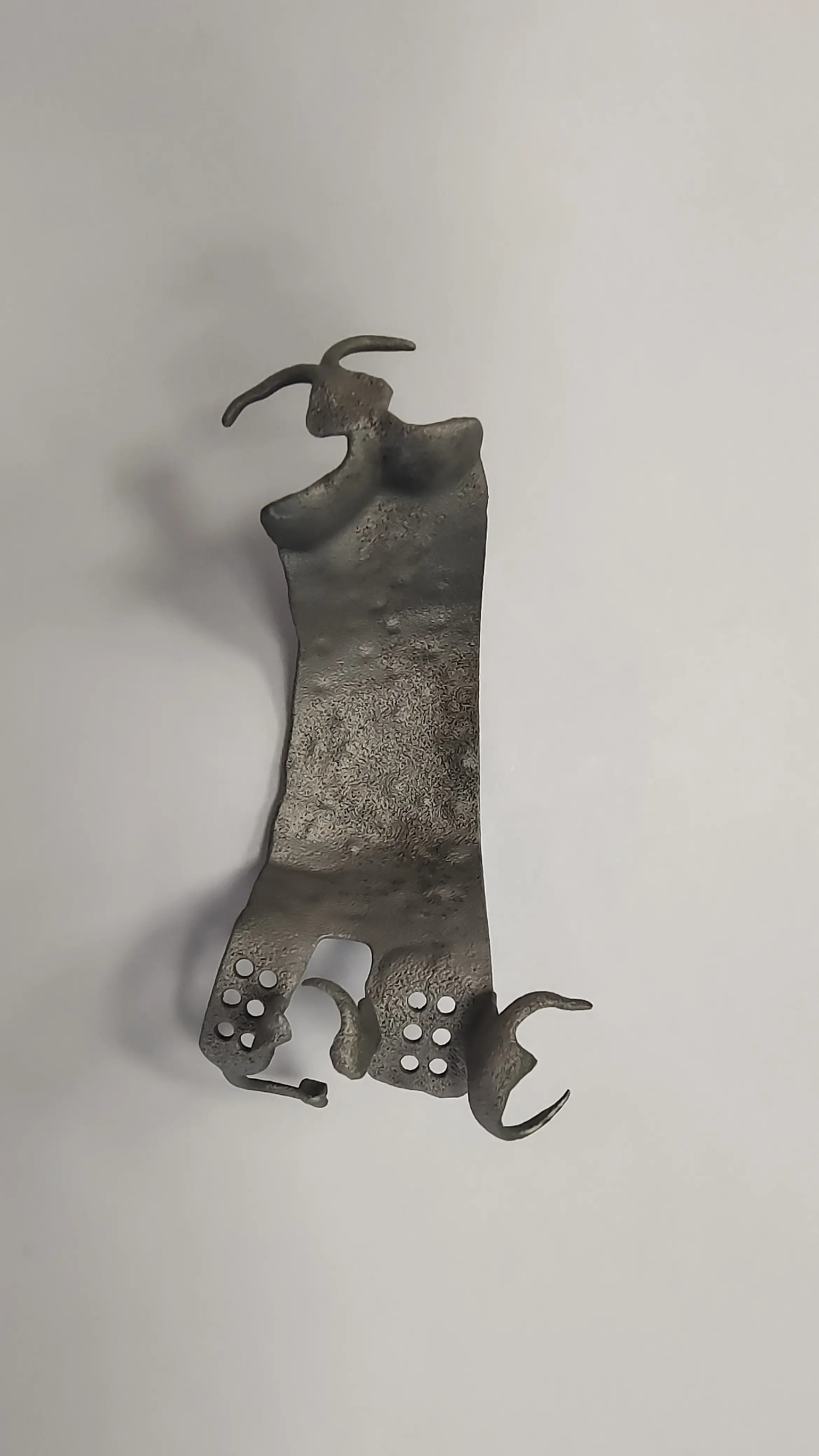
Unconventional Driving: How Bryson Dechambeau’s 3D-P printed golf clubs are changing the game (and manufacturing)
Professional golf’s resident scientist and disruptor, Bryson DeChambeau, is never afraid to push the boundaries. From single-shot irons to a relentless pursuit of swing speed, he’s constantly looking for an edge. His latest innovation isn’t just a new training regimen or diet plan, but something fundamentally different: Golf clubs manufactured using advanced metal 3D printing technology. This isn’t just a gimmick; it represents a major leap forward in equipment design and manufacturing, with implications far beyond the fairways.
From CAD to Course: Bryson’s Printing Precision
The clubs making headlines are DeChambeau’s wedges, specifically the 4-degree loft wedge he’s used so well at the 2023 Wyndham Championship and beyond. They are not forged from a billet of steel or cast in a mold. Instead, they are crafted layer by layer using Direct Metal Laser Sintering (DMLS)a specific type of industrial additive manufacturing (AM) commonly known as metal 3D printing.
process:
- Digital design: Starting with sophisticated computer-aided design (CAD) software, engineers (including Bryson himself) modeled the club head with geometries that couldn’t be achieved through traditional milling or casting. This freedom allows for thorough optimization.
- Materials Science: Club prints from cobalt chromium alloySelected for its excellent strength-to-weight ratio and durability, which is essential for withstanding repeated high-impact blows.
- Manufacturing layer by layer: Using DMLS technology, high-power lasers precisely fuse fine particles of cobalt-chromium alloy powder to build the clubhead structure one ultra-thin layer (usually around 20-60 microns) at a time.
- Post-processing: After printing, the parts undergo critical post-processing stages: stress-relieving heat treatment to increase durability, removal of support structures, CNC machining for precise face milling and groove cutting (in compliance with USGA/R&A specifications), meticulous surface finishing, and strict quality control.
Why choose 3D printing? Performance advantages
Bryson didn’t turn to 3D printing because it was cool. It provided tangible performance benefits he couldn’t ignore:
-
Radical Center of Gravity (CG) Positioning: Traditional manufacturing constraints limit the height and depth of CG placement in the wedge-shaped head. 3D printing eliminates these limitations. DeChambeau’s printed wedges feature an extreme cavity design that allows the center of gravity to be significantly lower and further back. Why is this important?
- Increase launch angle: The lower center of gravity promotes higher launch trajectories – crucial to keeping greens firm.
- Enhanced moment of inertia (MOI): Placing the mass deep behind the face significantly increases the MOI, making the club more forgiving on mishits from higher or lower face levels. Even if the hit isn’t perfect, the shot stays on line and less distance is lost.
- Improve rotation consistency: More stability at impact means a more consistent rate of rotation across the entire clubface.
-
Optimized mass distribution: In addition to CG placement, AM also allows Topology optimization. Software algorithms determine the optimal distribution of materials based on structural load paths. This means strategically removing material where it is not needed (saving weight) and strategically adding material where it enhances stability and strength. Result: A lighter overall head weight can be achieved although Improve fault tolerance and durability.
-
Perfectly designed micro-grooves: While the main grooves are milled after printing, the additive process enables complex surface textures and microfeatures designed to maximize friction and spin generation, which was verified not only by track and field data but also by sophisticated robotics testing friction coefficients.
- Customized release: This is a cornerstone advantage. Every printed club is available truly customized. Adjusting CG placement, face design, weight or geometry specifically for Bryson’s unique swing mechanics, angle of attack and desired ball flight? This can be achieved without significant restructuring costs. welcome to mass customization.
The manufacturing revolution behind the club
Bryson’s wedges have demonstrated long-standing capabilities in the demanding aerospace, medical and motorsports industries and are now making inroads into the mainstream consumer sports market. Key manufacturing aspects revealed here:
- Complex geometric shapes: Shapes that were not possible by subtractive (milling) or forming (casting) methods have become routine.
- Merge parts: Complex internal features or components can often be printed as a single part, increasing consistency and reliability.
- Material efficiency: Additive processes are inherently less wasteful than milling large pieces of stock.
- Prototyping speed: Although DMLS is not always "quickly" For final production (especially post-processing), it significantly shortens the prototyping cycle. Design iterations that might take weeks using traditional tools can be printed and tested in days.
- Small batch and custom production: Very economical for low-volume, high-value parts, especially custom parts.
Impact on golf (and beyond Bryson)
Bryson’s success validates the technology’s suitability for professional competition (both USGA/R&A approved!). This opens the door for other manufacturers to seriously explore additive manufacturing technology to produce complex club heads such as drivers, woods, irons, and especially wedges. What we can expect:
- higher performance "player wedges": The Premium Series features borrowed AM technology for enhanced forgiveness without sacrificing a sense of precision.
- Tailor-made accessories: A true design club dream just for you Become closer to reality.
- Innovation acceleration: Expect faster experimental design cycles that take advantage of the freedom of additive manufacturing.
Conclusion: More than just golf clubs
Bryson DeChambeau’s 3D-printed wedges aren’t a passing fad. They represent a fundamental shift in the way high-performance, geometrically complex metal parts are conceived and manufactured. DMLS technology has proven its ability to overcome traditional limitations, opening new dimensions in CG placement, quality optimization and customization that are critical to elite golf performance.
Although currently a niche application due to cost and time constraints (each wedge reportedly takes ~30 hours to print) forward Extensive finishing! ), which highlights the unparalleled advantages of additive manufacturing in solving extremely complex design challenges. As technology advances and processes mature, the principles pioneered by Bryson golf bags—design freedom, optimized quality characteristics, rapid prototyping and custom manufacturing—will increasingly resonate in industries that require precision-engineered metal solutions. The golf club of the future is more than just a swing; It is computationally designed and printed.
Frequently Asked Questions About Bryson DeChambeau’s 3D Printed Golf Clubs and Technology
1. Are Bryson’s 3D printed clubs really tournament legal?
Yes. The specific wedges used by Bryson are designed and manufactured to comply with the rules of golf governed by the USGA (United States Golf Association) and the R&A (Royal & Ancient Golf Club). Seek and obtain approval prior to competition use. Key tolerances cover groove specifications and head dimensions, which AM achieves when using qualified materials (cobalt-chromium alloy).
2. What technology is used specifically for 3D printing?
The club is used Direct metal laser sintering (DMLS/SLM). This industrial additive manufacturing process uses high-power lasers to selectively melt and fuse ultrafine metal powders (in this case, cobalt-chromium alloys) layer by layer to accurately build complex club head structures based on digital CAD models.
3. Are they actually more durable than traditional forged/cast clubs?
The cobalt-chromium alloy used in Bryson clubs is inherently strong, wear-resistant and durable. While toughness is a key advantage, the printed metal parts undergo rigorous post-processing, including heat treatment (stress relief/hot isostatic pressing – HIPing), which significantly enhances their fatigue strength, metallurgical integrity, and ability to withstand repeated high impact forces from golf balls. They are designed to withstand PGA Tour level competition.
4. Why isn’t this widely used by other majors/major manufacturers yet?
Several reasons:
- cost: DMLS printing of dense metal parts such as golf club heads, coupled with the extensive post-processing required, has a much higher unit cost than high-volume casting or forging. Economies of scale are not yet favorable.
- Production time: Printing a complex club head can take hours and then days of post-processing. Scaling up to mass production is currently impractical.
- Existing methods are valid: Traditional forging and casting techniques remain highly optimized and cost-effective for large-scale production. Currently, the performance improvements brought by AM are most significant for radical designs such as the Bryson Extreme Wedge.
- Optimization knowledge: Designing truly optimized additively manufactured parts requires expertise beyond traditional club design.
5. Will a rough surface finish affect performance?
In the end no. Although "at the time of printing" The surface can be rough, the surface of a Bryson club will experience Precision CNC milling After printing. This creates the precise groove geometry defined by USGA/R&A rules and ensures a consistent high-friction surface texture. The rest of the head also receives specialized finishing to achieve the desired aesthetic and functional smoothness. The benefits come from the internal structure and mass distribution achieved by the print, rather than the print surface itself.
6. What does Bryson see as the main performance advantage?
DeChambeau emphasized extreme forgiveness This is due to a unique low and deep center of gravity (CG) position combined with a high moment of inertia (MOI). This allows the ball to be hit significantly higher or lower than a traditional wedge (a common mis-hit), maintaining higher ball speed and spin consistency without sacrificing the precision feel it demands. Higher launch angles are also critical.
7. Where can I learn more or explore custom metal 3D printing projects?
If Bryson’s groundbreaking club demonstrates the potential of advanced metal additive manufacturing to achieve previously impossible geometries and performance, imagine what it could do your The most demanding rapid prototyping or precision production needs. While custom golf clubs remain a niche application that requires expertise, the underlying technology – Direct metal laser sintering (DMLS/SLM) – Unleashing unparalleled possibilities in aerospace, medical devices, motorsport and high-end industrial applications.
huge light Be at the forefront of this revolution. As a leading professional rapid prototyping manufacturer, we have:
- The most advanced SLM 3D printer: Our advanced metal additive manufacturing equipment can handle complex jobs like DeChambeau clubs that require precision.
- In-house expertise: Our engineers specialize in solving rapid prototyping problems for complex metal parts, leveraging the benefits of DMLS/SLM to optimize geometry, strength and weight.
- True one-stop organization: us