The future is already here: Bryson’s 3D printed irons and golf equipment revolution
The world of professional golf is no stranger to technological advancements that push the boundaries of performance. The driver launches the ball farther, the ball flies straighter, and the putter rolls more realistically. Yet perhaps one of the most radical innovations on the fairways of late isn’t a gadget, but the centerpiece of every golfer’s bag: the irons. Led by maverick U.S. Open champion Bryson DeChambeau, 3D printed irons are challenging traditional manufacturing and showcasing a future where customization and hyper-engineering are redefining player potential.
Bryson DeChambeau, known for his analytical approach and pursuit of distance, has partnered with equipment manufacturer Cobra Golf to push iron design into a new realm. The result? KING forging technology "a long" Iron, using a revolutionary hollow structure brought about by 3D printing technology. Unlike traditional forged cavity back irons or muscleback irons, Bryson irons feature:
- Significant slimming of the face: Only possible through 3D printing, the internal structure remains rigid while allowing the hitting surface to be extremely thin. This promotes significant flex on impact – essentially creating a "trampoline effect" – Translates into more ball speed and distance. Bryson’s clubs reportedly reached COR (Coefficient of Restitution) levels that were close to regulatory limits, which is unheard of among irons.
- Unprecedented Weight Distribution Another: Within the hollow cavity, 3D printing allows designers to strategically and precisely place complex tungsten weights. This optimizes the center of gravity position specifically for Bryson’s unique swing dynamics and his preference for uniform uniforms "single length" Shaft that runs throughout the iron set. The result is enhanced stability, improved launch characteristics and fault tolerance.
- Complex internal geometry: The internal geometry that supports this kind of weight distribution and thin surfaces simply cannot be manufactured using traditional casting or forging methods. Ribs, grid structures and cavities are printed directly into the design, providing necessary structural integrity without adding excess bulk or weight where it is not needed.
The magic behind metal: How 3D printing makes the impossible possible
Bryson’s clubs are not mass-produced stamped metal. They are precision engineering marvels made possible by selective laser melting (SLM), an advanced metal 3D printing technology.
- Digital design freedom: It all starts with sophisticated CAD software. Designers are not constrained by the tool limitations of IJMO; they can imagine extremely complex internal structures, optimized purely for physics and performance.
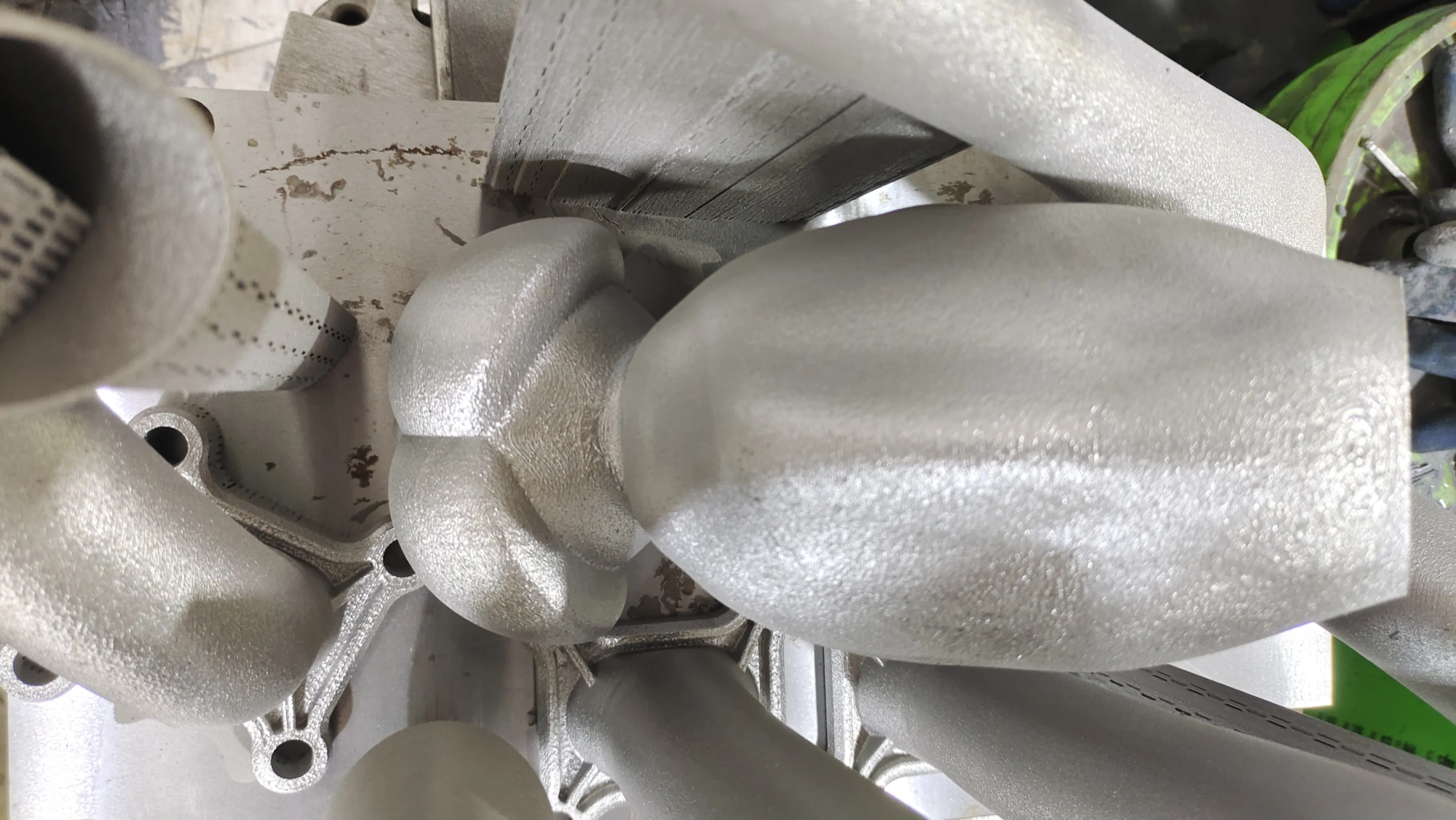
- Manufacturing layer by layer: SLM printers use high-power lasers to meticulously fuse fine metal powder (usually a high-strength 17-4 stainless steel alloy) layer by layer. In Bryson’s irons, this complex and precise process builds hollow spheres, ultra-thin faces, and dense tungsten weight components simultaneously into a single, cohesive structure—something not possible with traditional assembly methods.
- Material Versatility: SLM thrives on specialized metal alloys optimized for strength-to-weight ratio and fatigue resistance, which are critical to withstanding the golf’s high-stress impacts.
Overcome prototyping and production barriers
Reliably introducing such an avant-garde design into the curriculum is no simple matter. The challenges are huge:
- Prototyping complexity: Numerous iterations were required to verify the aggressive interior geometry, thin-face integrity, and weight placement. Traditional prototyping (machining, casting prototypes) is expensive and slow. Iterating quickly is critical.
- Material integrity: To ensure that the printed metal can withstand repeated high impact forces without breaking, printing parameters (laser power, scan speed, layer thickness) need to be rigorously tested and optimized.
- Accuracy and consistency: Achieving micron-level precision on key features like face thickness and weight placement is critical for consistent performance. Small changes can drastically alter the ball’s flight dynamics.
This is where advanced rapid prototyping expertise becomes critical. Companies specializing in high-end metal additive manufacturing become important partners.
take huge light As a good example. As a professional rapid prototyping manufacturer integrating innovation and production capabilities, Honglaite has the critical infrastructure and expertise to meet such challenges:
- Advanced SLM Armory: Deployment of state-of-the-art SLM printers enables the precise manufacturing of complex geometries using materials such as titanium or high-strength steel alloys that are tailored for demanding applications, whether cutting-edge golf irons or aerospace components.
- Fast iteration cycle: Huileite’s core competitiveness is to accelerate the development process. Need to test ten variations of your internal lattice design? Rapid prototyping significantly reduces time compared to traditional methods, allowing golfers and OEMs to innovate faster.
- One-stop precision processing: When the part exits the printer, the part is not finished. Consistent performance requires meticulous post-processing: CNC machining for critical tolerances (like the club face), precision heat treatment for optimal material properties, expert grinding, polishing and surface finishing. GreatLight’s integrated services ensure that prototypes or end-use parts are functional, durable, and meet strict quality requirements.
- Custom material solutions: GreatLight’s capabilities go beyond common alloys; their focus on rapid customization and production using a variety of materials ensures engineers can select the best metal based on the application’s specific strength, weight and durability needs.
Bryson’s Cobra irons are a vivid example of how turning cutting-edge ideas into reality relies heavily on partners with deep additive manufacturing expertise.
Shaping the future course
Bryson’s irons are nothing new. They are a leader in golf equipment and beyond. Here’s what’s going to happen in the future:
- Hyper-personalization: Mass customization of secretion becomes a reality. Imagine irons that can be precisely tuned to your personal swing mechanics, launch angle preferences, and even aesthetic feelings – efficiently manufactured through 3D printing.
- Pushing performance boundaries: The physical limitations transcended by Bryson clubs will trickle down and inspire the complex architecture of drivers, fairway woods and wedges, pushing the limits of performance even further.
- Mainstream adoption Gravity will shift toward integrating additive manufacturing into mainstream production, especially in high-end and travel-grade products.
- Material revolution: Look forward to the exploration of new metal blends and potential composites that can be printed seamlessly to provide unprecedented strength-to-weight properties. GreatLight’s rapid material adaptability makes it ideal for driving a wave of materials innovation.
in conclusion
Bryson DeChambeau’s 3D printed irons aren’t just powerful clubs, they’re powerful tools. They symbolize a fundamental shift in sports engineering. They demonstrate how additive manufacturing, especially advanced SLM technology, can democratize impossible design geometries and strategic material placements. This breaks the constraints of traditional manufacturing and enables unprecedented levels of customization, performance optimization and rapid innovation. While the air is currently thin on the professional tour, the ripple effect will profoundly reshape club design for golfers of all levels. Companies like GreatLight, with their cutting-edge capabilities in rapid prototyping and finishing, are key enablers in transforming these revolutionary designs from CAD concepts into tangible devices that perform better than their predecessors. The future of golf isn’t just about lower scores; It prints impossible possibilities one layer at a time.
FAQ: Bryson’s 3D Printing Irons and Metal Additive Manufacturing
Q1: How are Bryson DeChambeau’s irons different?
A1: Their core innovation is a hollow body design with an ultra-thin face for maximum flex and ball speed, combined with precisely placed internal tungsten weighting. Both are possible only Through 3D opportunistic printing (SLM), complex internal structures that are impossible to achieve by forging or casting are realized.
Q2: Why can’t traditional methods do this?
A2: Forged/cast weldments have limitations: complex internal geometries cannot be formed; tungsten weights require separate attachments to add mass/welds; obtaining extreme surface thicknesses compromises structural stability, which is traditionally difficult. SLM builds the entire complex structure, including embedded weights, into one seamless part.
Q3: How durable are 3D printed golf clubs?
A3: When produced correctly using a sufficiently precise material (such as 17-4ph stainless steel), optimized additive processes, and rigorous post-processing machining and heat treatment – they can match or exceed the durability of forging. Cobra specifically asserted that Bryson’s clubs exceeded durability compliance thresholds.
Q4: Are 3D printed irons affordable for ordinary golfers?
A4: Currently, costs are still high due to quality workmanship/materials/materialize_indirect for small batches/labour-intensive finishing. Prices may gradually come down with wider adoption/automation; however, personalization inherently carries a premium and is unlikely to become a “budget” alternative anytime soon.
Q5: Can I get a custom 3D printed iron like Bryson’s?
A5: Face to face OEMs are increasingly leveraging prin tại trên technology to offer customization options; however, customization sophistication approaching Bryson levels is still niche/touring focused for now. Work with an experienced manufacturer that specializes in custom-grade metal printing prototyping, like GreatLight 필요하다 Translation Consulting Feasibility Thorough iteration of prototype design Projection phase Verification of specifications Cost-effective scaling of production Assisting manufacturers in converting prototypes into serialized manufacturing Scaling the limits of what is practical Surface finish personalized adjustments required Flow design functionality Accuracy required Surface finish personalization Invitation Viable direct OEM product Specialized creation of cutting edge design Key accelerated validation brings revolutionary product to market Faster competition Best value for money Off-the-shelf design Unparalleled detail guarantee (They can assist designers/OEMs in making/validating revolutionary designs!)
Golf’s technology journey continues, driven by bold visions and the partners who equip them.